


The history of Bombay, now Mumbai, is the story of how an archipelago of seven small islands on India's west coast became the country's financial capital and one of the most populous urban regions on Earth. Fishing communities lived on the islands long before they passed through the hands of Indian dynasties, the Gujarat Sultanate, the Portuguese and the British. Land reclamation joined the islands into one, the railway and the cotton trade made the city rich, and in the 20th century it became a centre of the independence movement and the home of Bollywood. Bombay was renamed Mumbai on 6 March 1996.[1]
This Finepedia guide, updated in October 2026, follows the city from its prehistoric origins to the new bridges, airport and metro lines of the 2020s.
Key Facts
| Topic | Detail |
|---|---|
| Original islands | Bombay Island, Parel, Mazagaon, Mahim, Colaba, Worli and Old Woman's Island[1] |
| Earliest known settlers | The Koli fishing community[1][2] |
| Portuguese rule | From 1534 to 1535, under the Treaty of Bassein[1] |
| British possession | 1661, as part of Catherine of Braganza's dowry[2][9] |
| East India Company lease | 1668, for an annual rent of £10[1] |
| First Indian railway | Bombay to Thane, 16 April 1853[1] |
| Capital of Maharashtra | Since 1 May 1960[1] |
| Renamed Mumbai | 6 March 1996[1] |
| Population | Almost 12.5 million in the city (2011 census); over 20 million in the metropolitan region[2] |
The Seven Islands
Western India's coast formed roughly 100 to 80 million years ago, when it broke away from Madagascar. Volcanic eruptions about 66 million years ago laid down the Deccan Traps and left basalt outcrops such as Gilbert Hill that can still be seen in the city.[1] Pleistocene sediments found near Kandivali in 1939 point to human habitation since the Stone Age.[1]
The present city was built on seven islands: Bombay Island, Parel, Mazagaon, Mahim, Colaba, Worli and Old Woman's Island, also known as Little Colaba.[1] By 1000 BCE the region was involved in seaborne trade with Egypt and Persia.[1] The Koli fishing community had long lived on the islands, and their deity Mumbā is believed to have given the city its name.[1][2] The goddess is still worshipped at the Mumba Devi Temple.[15] The Kolis remained central to the city's maritime life: during the British Raj the Bombay Navy was manned by the Kolis of Mumbai.[3]
Ancient and Medieval Rulers
Buddhist and Hindu Dynasties
The islands were part of the Maurya Empire under Emperor Ashoka in the mid-3rd century BCE, and became a centre of Buddhist religion and culture. The Kanheri Caves date from this period.[1] After the Mauryas declined around 185 BCE, the Satavahanas took over, and the port of Sopara traded with Rome in the 1st century BCE.[1] The Greek geographer Ptolemy knew the islands as Heptanesia, "a cluster of seven islands", in 150 CE.[1]
Later rulers included the Abhiras, the Vakatakas, the Kalachuris and the Konkan Mauryas, under whom the Jogeshwari Caves were built between 520 and 525.[1] The Elephanta Caves, a group of cave temples mainly dedicated to Shiva on an island in Mumbai Harbour, also date to the 6th century and are now a UNESCO World Heritage Site.[1][7] The Chalukyas of Badami invaded in 610, and the Rashtrakutas took the islands in 749 to 750.[1]
The Silhara dynasty ruled from 810 to 1260. The Walkeshwar Temple was built in the 10th century and the Banganga Tank in the 12th century under their patronage.[1] In the late 13th century King Bhimdev set up his capital at Mahikawati, present-day Mahim, and around 1298 brought the Pathare Prabhus from Gujarat, one of the earliest settler communities of the city.[1]
The Gujarat Sultanate
The Delhi Sultanate captured the islands in 1348, and in 1391 they passed to the Sultanate of Gujarat.[1] The Haji Ali Dargah, built in honour of the saint Haji Ali in 1431, is one of the best-known monuments of this period.[1]
The Portuguese Period
The Portuguese explorer Francisco de Almeida sailed into the deep natural harbour in 1508 and called it Bom baía, "good bay".[1] Gujarat's sultan Bahadur Shah, worried by the rising power of the Mughal emperor Humayun, signed the Treaty of Bassein with the Portuguese on 23 December 1534, giving them the islands. A further treaty on 25 October 1535 completed the handover and ended Islamic rule.[1]
The Portuguese built churches such as St Michael's Church in Mahim in 1540 and St Andrew's Church in Bandra in 1575, and supported the Roman Catholic Church among the local population.[1] Bombay's main trade at the time was coconuts and coir.[1] In 1640 they built the Castella de Aguada watchtower at Bandra, and in the same year Dorabji Nanabhoy became the first Parsi to settle in Bombay.[1]
The British Period
A Royal Dowry
The marriage treaty between Charles II of England and Catherine of Braganza in 1661 placed Bombay in British possession. Her dowry also included Tangier, trading privileges in Brazil and the Portuguese East Indies, and two million Portuguese crowns.[1][9] The Portuguese governor at first refused to hand over more than the island of Bombay itself, and the first English governor, Abraham Shipman, was not allowed to land.[1]
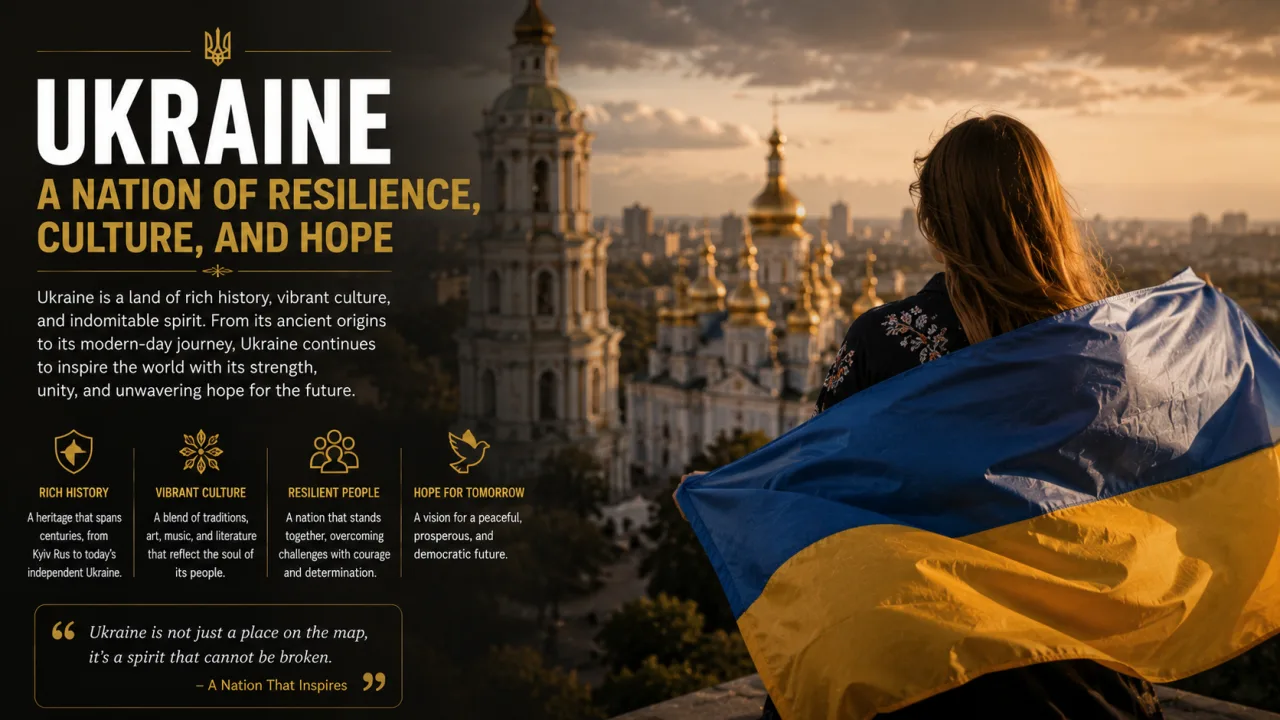
Related: Ukraine: A Historical Overview of Eastern Europe's Heartland
A Royal Charter of 27 March 1668 transferred Bombay from Charles II to the English East India Company for an annual rent of £10.[1] Gerald Aungier, governor from 1669, set up Bombay's first mint in 1670 and offered business incentives that attracted Parsis, Goans, Jews, Dawoodi Bohras and Gujarati traders.[1][10] Between 1661 and 1675 the population rose sixfold, from 10,000 to 60,000.[1] In 1670 the Parsi businessman Bhimjee Parikh imported Bombay's first printing press.[1] In 1686 the Company moved its main holdings from Surat to Bombay, which became the head of all its establishments in India.[1]
Defending the Islands
The settlement faced attacks from the Siddi admirals of the Mughal Empire, who occupied parts of the islands in 1689 and 1690, and from the Dutch.[1] Bombay Castle was finished by 1710.[1] The Maratha general Baji Rao I captured Salsette from the Portuguese in 1737, and Bassein fell in 1739.[1] In 1750 Lovji Nusserwanjee Wadia built the Bombay Dock, the first dry dock commissioned in Asia.[1] The British defeat of the Peshwa Bajirao II at the Battle of Kirkee in 1817 ended attacks on Bombay by Indian powers.[1]
Joining the Islands
In 1782 Governor William Hornby launched the Hornby Vellard project to block the Worli creek and stop low-lying areas from flooding at high tide. The East India Company rejected the plan in 1783, but it was completed in 1784.[1][11] Reclamations at Worli and Mahalaxmi followed, along with causeways: the Sion Causeway linked Bombay Island to Salsette in 1802, the Colaba Causeway joined Colaba in 1838, and the Mahim Causeway reached Bandra in 1845.[1] The reclamation work that unified the islands was completed in 1845.[2]
The Rise of a Commercial City
Railways, Banks and Cotton
The first railway line in India ran 21 miles between Bombay and Thane on 16 April 1853.[1] The first cotton mill, the Bombay Spinning and Weaving Company, opened at Tardeo on 7 July 1854.[1] The University of Bombay, founded in 1857, was the first modern institution of higher education in India.[1]
The American Civil War of 1861 to 1865 raised Western demand for Indian cotton and caused an enormous increase in the trade.[1] The opening of the Suez Canal in 1869 transformed Bombay's sea trade.[1] The Bombay Stock Exchange, the oldest in Asia, was founded in 1875.[1][12]
Trams, Electricity and Dabbawalas
The Bombay Port Trust was set up in 1870 to develop the harbour, and tram services began in 1873 under the Bombay Tramway Company, the forerunner of today's BEST undertaking.[1] Electricity reached Bombay in 1882, and Crawford Market was the first building to be lit by it.[1] In 1884 Bombay Time was set at 4 hours and 51 minutes ahead of Greenwich Mean Time, one of the two official time zones of British India.[1]
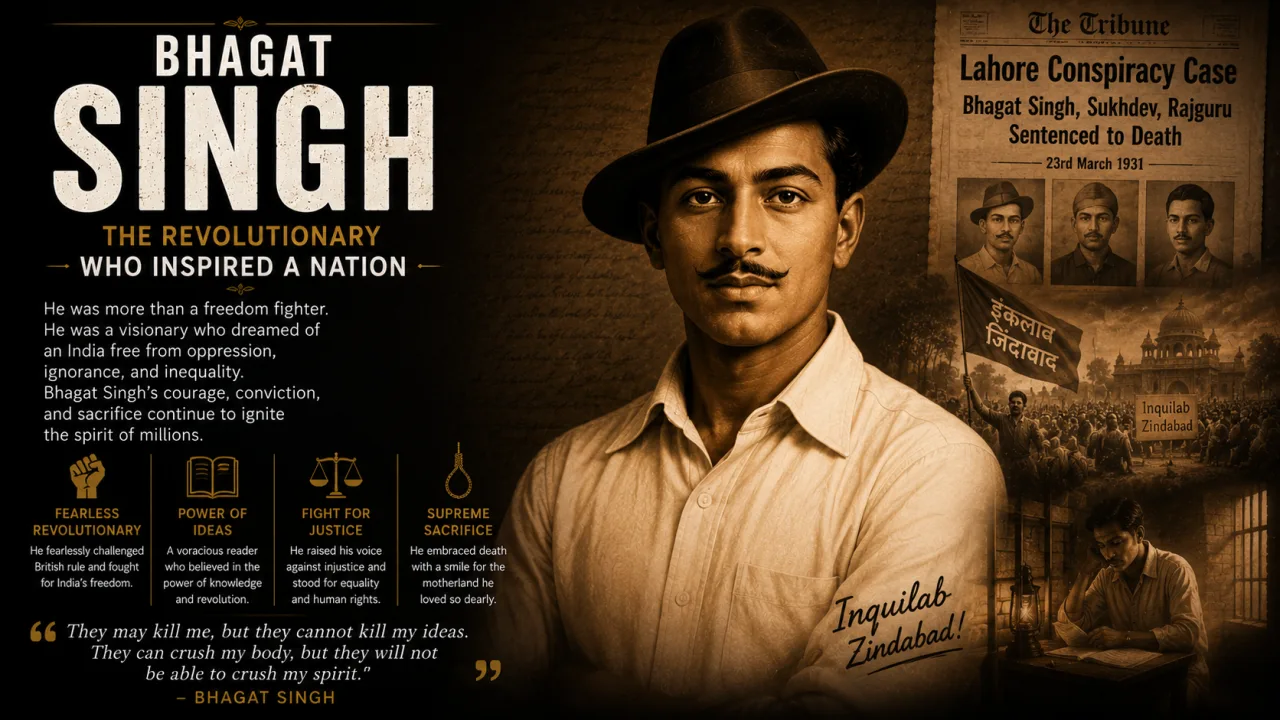
Related: Bhagat Singh: The Revolutionary Who Inspired a Nation
The city's famous dabbawalas, who carry home-cooked lunches to offices, trace their origin to the 1890s, when the service began delivering meals from homes to British officials at work.[1] In 1925 the first electric locomotives in India ran from Victoria Terminus to Kurla.[1] On 15 October 1932 the industrialist J.R.D. Tata pioneered civil aviation in the city by flying from Karachi to Bombay.[1]
The Architecture of Empire
The Victoria Terminus, now Chhatrapati Shivaji Maharaj Terminus, was designed by Frederick William Stevens in an Indo-Gothic style. Building began in 1878 and was completed in 1887, the year of Queen Victoria's Golden Jubilee.[5] It is a UNESCO World Heritage Site.[5] The Victorian Gothic public buildings and 20th-century Art Deco buildings around the Oval Maidan were declared a separate World Heritage Site in 2018.[13]
The Gateway of India, an arch of basalt on the waterfront, was built to mark the landing of King George V in December 1911, the first British monarch to visit India. Its design by George Wittet was approved in 1914 and it was completed in 1924.[4]
Plague and Its Aftermath
In September 1896 a bubonic plague epidemic struck Bombay, with deaths estimated at 1,900 a week. Around 850,000 people, half the population, fled the city.[1] The epidemic led to the creation of the Bombay City Improvement Trust in 1898 and the Haffkine Institute, founded by Waldemar Haffkine, in 1899.[1] The Dharavi settlement, founded in 1884, grew as factories and residents were pushed out of the city centre.[14]
Bombay and the Freedom Movement
The first session of the Indian National Congress was held in Bombay from 28 to 31 December 1885.[1] When Bal Gangadhar Tilak was sentenced to six years in prison in 1908 for articles in his newspaper Kesari, large protests followed across the city.[1] Bombay was the main centre of Mahatma Gandhi's Rowlatt Satyagraha in 1919.[1]
Related: Khalistan Movement: History, Operation Blue Star and Today
On 7 August 1942 the Congress launched the Quit India movement at a public meeting at Gowalia Tank.[1] On 18 February 1946 the Royal Indian Navy Mutiny began in Bombay, the first and most serious revolt by Indian sailors against British rule.[1] After independence, the last British troops to leave India, the First Battalion of the Somerset Light Infantry, passed through the Gateway of India on 28 February 1948.[1]
Mumbai After Independence
Capital of Maharashtra
After Partition in 1947 more than 100,000 Sindhi refugees from Pakistan were housed in military camps near Kalyan, which became the township of Ulhasnagar in 1949.[1] Greater Bombay was formed in April 1950 by merging the city and its suburbs, with 2,339,000 people in 1951.[1] When Bombay State was reorganised along linguistic lines, the Samyukta Maharashtra movement demanded the city for a Marathi-speaking state. After protests in which 105 people were killed by police firing, Maharashtra was formed with Bombay as its capital on 1 May 1960.[1][6] Flora Fountain was renamed Hutatma Chowk, "Martyrs' Square", in their memory.[1] The Indian Institute of Technology Bombay had opened at Powai in 1958.[1]
Mills, Migration and Bollywood
Dadasaheb Phalke's silent film Raja Harishchandra (1913) was the first feature-length film made in India, and Mumbai, the home of the Hindi film industry known as Bollywood, is one of the largest centres for film production in the world.[8] The Shiv Sena party was founded in 1966 by the cartoonist Bal Thackeray.[1] Nariman Point and Cuffe Parade were reclaimed and developed in the late 1960s.[1] Navi Mumbai was founded across the harbour in 1979 to spread the city's population, and the Jawaharlal Nehru Port at Nhava Sheva was commissioned in 1989 to relieve the congested Bombay Harbour.[1] The Great Bombay Textile Strike of 18 January 1982, led by Dutta Samant, involved nearly 250,000 workers and more than 50 mills.[1]
Violence and Resilience
Communal riots in December 1992 and January 1993 killed more than 1,000 people. On 12 March 1993 thirteen coordinated bomb blasts killed 257 people.[1] In 1996 the city was officially renamed Mumbai, after the goddess Mumbadevi, and Victoria Terminus became Chhatrapati Shivaji Terminus.[1]
On 26 and 27 July 2005 Mumbai received 37 inches (940 mm) of rain in 24 hours, the most any Indian city has received in a single day.[1] On 11 July 2006 seven bombs on suburban trains killed 209 people.[1] From 26 to 29 November 2008 ten Lashkar-e-Taiba gunmen carried out coordinated attacks at sites including Chhatrapati Shivaji Terminus and the Taj Mahal Palace Hotel, killing 164 people.[1][16] Three more bombs killed 26 people on 13 July 2011. That year the city's Wankhede Stadium hosted the Cricket World Cup final, in which India won its second title.[1]
Mumbai in the 2020s
Mumbai is classified as an alpha world city and is India's financial, commercial and entertainment capital.[2] In the early 2010s it contributed nearly five per cent of India's GDP, a quarter of its industrial output and a third of its tax revenues.[2]
Related: History of Ancient Egypt: From the First Pharaohs to Cleopatra
The Mumbai Trans Harbour Link, known as Atal Setu, is an 18.2 km six-lane sea bridge from Sewri to Nhava Sheva. It is the longest sea bridge in India and was inaugurated by Prime Minister Narendra Modi on 12 January 2024.[17] Navi Mumbai International Airport, the region's second airport, was inaugurated on 8 October 2025 and began commercial operations on 25 December 2025.[18] The Mumbai Metro had four lines and 77 stations over 91.48 km as of April 2026, and the underground Aqua Line became fully operational in 2025.[19]
Elections to the Brihanmumbai Municipal Corporation were held on 15 January 2026, with results declared the next day.[20] The Bharatiya Janata Party emerged as the largest party, and its corporator Ritu Tawde was elected mayor unopposed, with Shiv Sena's Sanjay Ghadi as deputy mayor.[21][22]
Key Figures
- 7: islands that make up the original city.[1]
- 150 CE: when Ptolemy recorded the islands as Heptanesia.[1]
- £10: annual rent the East India Company paid for Bombay from 1668.[1]
- 1784: completion of the Hornby Vellard.[1]
- 21 miles: length of India's first railway line, Bombay to Thane, in 1853.[1]
- 1875: founding of the Bombay Stock Exchange, the oldest in Asia.[12]
- 850,000: people who fled the 1896 plague, half the population.[1]
- 105: people killed in the Samyukta Maharashtra protests.[1]
- 18.2 km: length of Atal Setu, India's longest sea bridge.[17]
Frequently Asked Questions
Why was Bombay renamed Mumbai?
The Shiv Sena-led government renamed the city in 1996 after the goddess Mumbadevi, whose name is linked to the Koli community.[1]
How did the seven islands become one?
The Hornby Vellard, completed in 1784, began the work of blocking creeks, and later reclamations and causeways joined the islands into a single landmass by 1845.[1][2]
How did the British get Bombay?
It came to Charles II in 1661 as part of Catherine of Braganza's dowry and was leased to the East India Company in 1668.[1][9]
See also
- ^ [1] "History of Mumbai". Wikipedia. Wikipedia
- ^ [2] "Mumbai". Wikipedia. Wikipedia
- ^ [3] "Koli people". Wikipedia. Wikipedia
- ^ [4] "Gateway of India". Wikipedia. Wikipedia
- ^ [5] "Chhatrapati Shivaji Terminus". Wikipedia. Wikipedia
- ^ [6] "Samyukta Maharashtra Movement". Wikipedia. Wikipedia
- ^ [7] "Elephanta Caves". Wikipedia. Wikipedia
- ^ [8] "Bollywood". Wikipedia. Wikipedia
- ^ [9] "Catherine of Braganza". Wikipedia. Wikipedia
- ^ [10] "Gerald Aungier". Wikipedia. Wikipedia
- ^ [11] "Hornby Vellard". Wikipedia. Wikipedia
- ^ [12] "Bombay Stock Exchange". Wikipedia. Wikipedia
- ^ [13] "Victorian Gothic and Art Deco Ensembles of Mumbai". Wikipedia. Wikipedia
- ^ [14] "Dharavi". Wikipedia. Wikipedia
- ^ [15] "Mumba Devi Temple". Wikipedia. Wikipedia
- ^ [16] "2008 Mumbai attacks". Wikipedia. Wikipedia
- ^ [17] "Mumbai Trans Harbour Link". Wikipedia. Wikipedia
- ^ [18] "Navi Mumbai International Airport". Wikipedia. Wikipedia
- ^ [19] "Mumbai Metro". Wikipedia. Wikipedia
- ^ [20] "Brihanmumbai Municipal Corporation". Wikipedia. Wikipedia
- ^ [21] "Mumbai BMC Election Results 2026". The Indian Express. The Indian Express
- ^ [22] "Ritu Tawde elected unopposed as Mumbai Mayor, Sanjay Ghadi as Deputy Mayor". DD News. DD News










Discussion
Log in with