








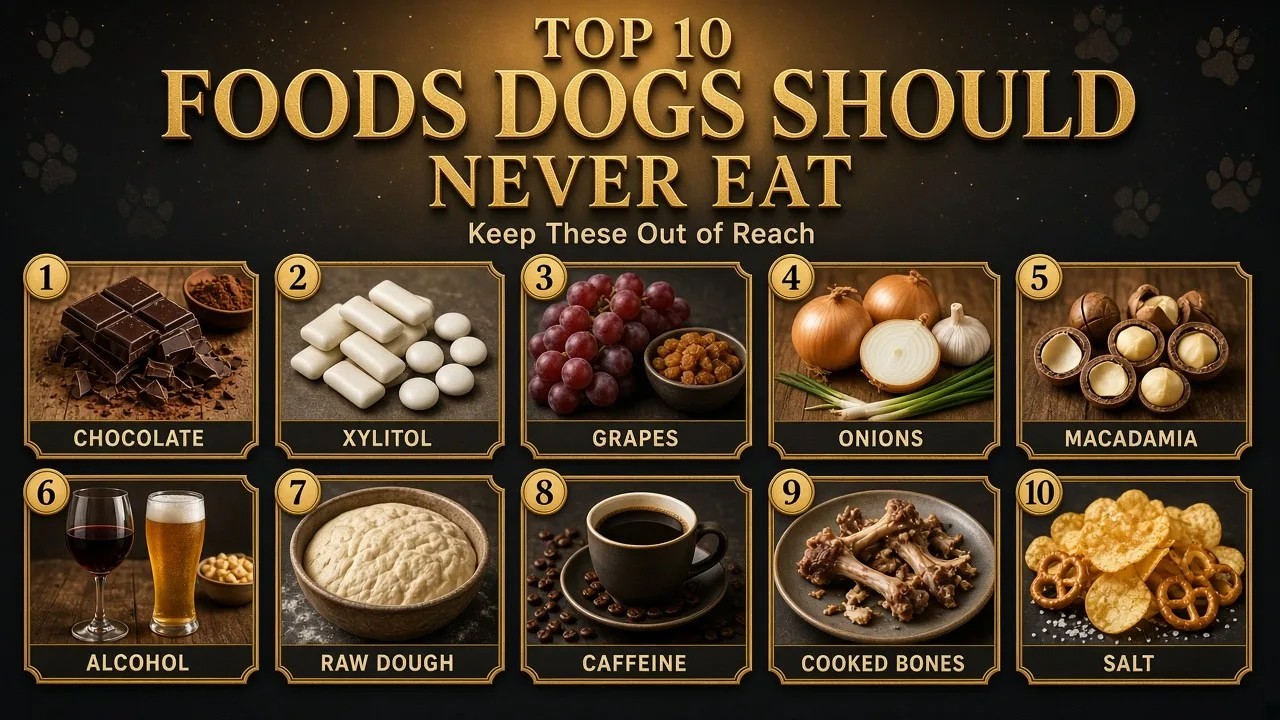
Foods dogs should never eat include chocolate, xylitol, grapes, onions and macadamia nuts, ten common kitchen items that can poison a dog in small amounts.
Most dogs will happily eat anything that falls off the kitchen counter, and many owners share scraps from their plate without a second thought. The problem is that a dog's body handles some human foods very differently from ours. A sweetener that is harmless in a person's chewing gum can crash a dog's blood sugar within an hour, and a handful of raisins has been linked to sudden kidney failure.
This guide explains the ten foods that veterinary toxicologists warn about most often. For each one you will find a Quick Facts table, what the harmful substance is, the warning signs, and practical ways to keep it out of reach. The information is drawn from the Merck Veterinary Manual, the ASPCA Animal Poison Control Center, the US Food and Drug Administration and other veterinary sources. It is general guidance, not a substitute for a vet. If you think your dog has eaten something on this list, call your veterinarian or an animal poison control line straight away.
How We Chose These Foods
This is a safety list, not a ranking of which food is deadliest. Toxicity depends on the dog's weight, the amount eaten, the exact product and the individual animal, so a food lower on the list can still be an emergency. We included foods that veterinary references describe as toxic or seriously harmful to dogs and that are commonly found in ordinary homes.
Some popular items from older lists, such as milk, avocado flesh and plain popcorn, are covered in a separate section on foods to limit. They can upset a dog's stomach, but the evidence does not put them in the same danger class as chocolate or xylitol. Human medicines are not foods, but because they cause so many pet poisonings we include a short note on them too.
Foods Dogs Should Never Eat at a Glance
| No. | Food | Harmful substance or risk | Main danger | Signs can start |
|---|---|---|---|---|
| 1 | Chocolate | Theobromine and caffeine | Heart rhythm problems, seizures | Within hours |
| 2 | Xylitol (sugar-free products) | Xylitol sweetener | Severe low blood sugar, liver failure | As soon as 30 minutes |
| 3 | Grapes, raisins and currants | Tartaric acid (proposed) | Acute kidney failure | 6 to 12 hours |
| 4 | Onions, garlic and chives | Sulfur-containing oxidants | Destruction of red blood cells (anaemia) | Usually a few days |
| 5 | Macadamia nuts | Unknown toxin | Weakness, tremors, high temperature | Within 12 hours |
| 6 | Alcohol | Ethanol | Low blood sugar, breathing problems, coma | Quickly after drinking |
| 7 | Raw yeast bread dough | Expanding dough and ethanol | Bloated stomach and alcohol poisoning | Within hours |
| 8 | Coffee, tea and caffeine | Caffeine | Racing heart, tremors, seizures | Within hours |
| 9 | Cooked bones and fatty scraps | Bone splinters, excess fat | Choking, gut blockage, pancreatitis | Hours to days |
| 10 | Salt and very salty foods | Sodium chloride | Salt poisoning (hypernatremia) | Within hours |
1. Chocolate
| Attribute | Details |
|---|---|
| Harmful substance | Theobromine and caffeine, known as methylxanthines |
| Most dangerous forms | Cocoa powder and unsweetened baking chocolate |
| Mild signs from | About 20 mg of methylxanthines per kg of body weight |
| Seizures from | About 60 mg per kg or more |
| Typical signs | Vomiting, restlessness, fast heart rate, high temperature |
Why It Is Dangerous
Chocolate is made from the roasted seeds of the cacao tree, which contain two stimulants called theobromine and caffeine. Dogs absorb these compounds easily but clear them slowly. According to the Merck Veterinary Manual, the half-life of theobromine in dogs is about 17.5 hours, so a single binge can keep affecting the body for a day or more.
The compounds overstimulate the nervous system and the heart. The Merck Veterinary Manual notes that mild signs such as vomiting, diarrhoea and heavy drinking can appear at about 20 mg per kg of body weight, heart effects at 40 to 50 mg per kg, and seizures at 60 mg per kg or more.
Which Chocolate Is Worst
The darker and more bitter the chocolate, the more theobromine it contains. Veterinary reference figures show a clear gap between products.
| Product | Approximate methylxanthine content |
|---|---|
| Cocoa powder | 28.5 mg per gram |
| Unsweetened baking chocolate | 15.5 mg per gram |
| Semisweet and dark chocolate | 5.3 to 5.6 mg per gram |
| Milk chocolate | 2.3 mg per gram |
| White chocolate | 0.04 mg per gram |
In practice, a small bar of milk chocolate may only upset a large dog's stomach, while the same weight of baking chocolate or cocoa powder can be life-threatening for a small dog. White chocolate contains very little theobromine, but its fat and sugar can still cause stomach upset.
Warning Signs
- Vomiting and diarrhoea
- Panting, restlessness and hyperactivity
- Excessive thirst and urination
- Racing or irregular heartbeat
- Muscle tremors and seizures in severe cases
Interesting Facts
- Chocolate poisoning is most common in dogs because they eat indiscriminately and often find chocolate at home.
- Livestock have died after eating cocoa by-products, and dogs have been poisoned by eating garden mulch made from cocoa bean hulls.
- Vets can use a chocolate toxicity calculator that combines the dog's weight with the type and amount of chocolate eaten.
2. Xylitol (Sugar-Free Gum and Sweets)
| Attribute | Details |
|---|---|
| What it is | A sugar alcohol sweetener, also called birch sugar or wood sugar |
| Common sources | Sugar-free gum, mints, sweets, baked goods, some nut butters |
| Low blood sugar from | Doses above about 100 mg per kg of body weight |
| Liver damage risk | Doses above about 500 mg per kg |
| Onset | As soon as 30 minutes, sometimes delayed 12 to 18 hours |
Why It Is Dangerous
Xylitol is a popular low-calorie sweetener, and it is one of the most dangerous ingredients a dog can swallow. In people, xylitol has little effect on insulin. In dogs, the FDA explains, it is absorbed quickly and can trigger a powerful release of insulin from the pancreas, which makes blood sugar fall sharply.
The FDA says this drop can happen within 10 to 60 minutes of eating xylitol, and untreated it can quickly become life-threatening. Larger doses can also damage the liver. The Merck Veterinary Manual reports that liver injury signs may not show until 24 to 48 hours after ingestion, which is why vets often keep dogs in hospital for monitoring even when they seem fine at first.
Where Xylitol Hides
The FDA lists many products that may contain xylitol, several of which do not look like food at all.
- Sugar-free chewing gum and breath mints
- Sugar-free sweets, chocolate bars and desserts, including low-sugar ice cream
- Baked goods made with sugar substitutes
- Some peanut and other nut butters
- Toothpaste and mouthwash
- Chewable vitamins, cough syrups and some over-the-counter medicines
Warning Signs
- Vomiting
- Weakness, tiredness and reduced activity
- Staggering and loss of coordination
- Collapse and seizures
- Later, signs of liver failure such as yellowing gums or abnormal bleeding
Interesting Facts
- Gum can slow the absorption of xylitol, so signs may be delayed for several hours.
- Cats seem far less affected, partly because most cats ignore sweet foods, but ferrets can develop low blood sugar much like dogs.
- Vets advise using only pet toothpaste for dogs and checking the label of any nut butter used as a treat or to hide pills.
3. Grapes, Raisins and Currants
| Attribute | Details |
|---|---|
| Foods involved | Grapes, raisins, sultanas, Zante currants and tamarinds |
| Proposed toxin | Tartaric acid |
| Main danger | Acute kidney injury and kidney failure |
| First signs | Vomiting or diarrhoea, usually within 6 to 12 hours |
| Safe amount | None established |
Why It Is Dangerous
For years vets knew that grapes and raisins could cause kidney failure in some dogs but could not explain why. More recent research points to tartaric acid, an organic acid found in high amounts in these fruits. The Merck Veterinary Manual explains that dogs lack some of the transporters other species use to clear organic acids, so the acid can build up in the kidney's filtering cells.
The amount of tartaric acid varies from fruit to fruit, which may explain why some dogs eat grapes without trouble while others become seriously ill. Merck notes that, as a rough guide, more than one grape or raisin per 4.5 kg (10 pounds) of body weight may carry enough tartaric acid to pose a risk. Because no truly safe dose has been established, vets treat any exposure as a concern.
Warning Signs
- Vomiting or diarrhoea within the first 12 to 24 hours
- Loss of appetite, tiredness and weakness
- Belly pain and dehydration
- Drinking and urinating more, then producing little or no urine
- Ammonia-smelling breath as kidney function fails
Significance
Once the kidneys stop producing urine, most dogs do not survive without dialysis, and even then the outlook is guarded. Quick treatment makes a large difference: a dog that is made to vomit and given intravenous fluids before signs appear generally has a good prognosis. Raisins hide in many foods, including fruit cakes, hot cross buns, trail mix, cereal bars and festive puddings.
Interesting Facts
- Dogs that ate cream of tartar, a baking ingredient made from a tartaric acid salt, developed kidney injury, which helped researchers link tartaric acid to grape poisoning.
- True currants of the Ribes genus, such as blackcurrants, have not been linked to kidney injury, but Zante currants, which are dried grapes, have.
- Anecdotal reports describe kidney problems in cats and ferrets, though no published cases exist for these species.
4. Onions, Garlic and Chives
| Attribute | Details |
|---|---|
| Plant family | Allium, which also includes leeks and shallots |
| Harmful substance | Sulfur-containing oxidant compounds |
| Main danger | Damage to red blood cells, causing anaemia |
| Risky amount | Signs reported in dogs after 15 to 30 g of raw onion per kg |
| Onset | Usually a few days after eating |
Why It Is Dangerous
Onions, garlic, chives and leeks contain sulfur compounds that are released when the plant is chopped, cooked or chewed. Once absorbed, these compounds damage red blood cells, which then break apart. The result is a type of anaemia that leaves the body short of oxygen.
The Merck Veterinary Manual states that garlic is three to five times more toxic than onion, and that dogs are the second most sensitive species after cats. Concentrated forms are especially risky. Dried onion flakes, garlic powder and dry onion soup mix pack a lot of the plant into a small spoonful, and these powders are common in gravies, stocks, baby food and seasoned leftovers.
Warning Signs
- Tiredness and weakness
- Loss of appetite
- Fast breathing and fast heart rate
- Pale or yellow gums
- Red or brown urine
- Reluctance to exercise or collapse
Significance
Allium poisoning is easy to miss because signs usually appear a few days after the meal, once red blood cells have already been destroyed. Merck notes that the damage peaks around three days after exposure. A dog that steals one onion ring may be fine, but regular scraps of onion-rich food can add up, and severe cases may need oxygen or a blood transfusion.
Interesting Facts
- Cooking does not make onions or garlic safe; cooked and powdered forms are just as harmful.
- Some homemade dog treat recipes and supplements promote garlic, but veterinary toxicology references treat it as a hazard.
- Leeks and shallots belong to the same plant family and carry the same risk.
5. Macadamia Nuts
| Attribute | Details |
|---|---|
| Toxin | Not yet identified |
| Species affected | Dogs are the only species with reported signs |
| Signs reported from | About 2.4 g of nuts per kg of body weight |
| Onset | Within 12 hours |
| Recovery | Usually within 12 to 48 hours |
Why It Is Dangerous
Macadamia nuts are one of the odder entries on this list, because nobody knows exactly what makes them toxic. The Merck Veterinary Manual reports that dogs are the only species in which signs have been recorded, and that signs have appeared after as little as 2.4 g of nuts per kg of body weight. For a 10 kg dog, that is only a small handful.
The good news is that macadamia poisoning is usually not fatal. Most dogs recover within one to two days, often without specific treatment. The bigger danger often comes from what the nuts are mixed with, such as chocolate coatings, cookies containing raisins, or the high fat content of mixed nuts.
Warning Signs
- Weakness, especially in the back legs
- Wobbly walking and loss of coordination
- Vomiting
- Tremors
- High body temperature and low energy
Interesting Facts
- In one study, dogs given 20 g of nuts per kg developed signs within 12 hours and were normal again within 48 hours without treatment.
- Macadamia nuts are grown commercially in Hawaii, Australia and other warm regions, and are a common ingredient in cookies and chocolate gifts.
- Other nuts such as almonds, pecans and walnuts are not known to share this toxin, but the ASPCA notes their high fat can cause vomiting and possibly pancreatitis.
6. Alcohol
| Attribute | Details |
|---|---|
| Harmful substance | Ethanol |
| Common sources | Beer, wine, spirits, cocktails, alcohol-soaked desserts |
| Absorption | Rapid, so signs can develop quickly |
| Main dangers | Low blood sugar, low body temperature, breathing problems |
| Severe cases | Coma and death |
Why It Is Dangerous
Dogs are much smaller than people and far less able to process alcohol, so even a few laps of a drink can affect them. The ASPCA Animal Poison Control Center lists vomiting, diarrhoea, poor coordination, depression, difficulty breathing, tremors, changes in blood acidity, coma and death among the possible effects.
Because alcohol is absorbed so quickly, the ASPCA stresses that owners should seek veterinary help promptly. Hidden sources matter too: rum-soaked cakes, liqueur chocolates, punch bowls at parties and drinks left on low tables are common causes.
Warning Signs
- Stumbling and poor coordination
- Vomiting and drooling
- Unusual sleepiness or confusion
- Slow or difficult breathing
- Tremors, collapse or loss of consciousness
Interesting Facts
- Alcohol can lower blood sugar in dogs, which adds to the danger alongside its direct effects on the brain.
- Some household products, such as mouthwash and hand sanitiser, also contain alcohol.
- Many dogs dislike the smell of alcohol, but sweet drinks and creamy cocktails can still tempt them.
7. Raw Yeast Bread Dough
| Attribute | Details |
|---|---|
| Hazard | Unbaked dough made with yeast |
| Physical risk | Dough expands in the warm stomach |
| Chemical risk | Yeast produces ethanol as it ferments |
| Worst outcome | Stomach bloat and twisting, alcohol poisoning |
| Typical setting | Dough left to rise on a counter or table |
Why It Is Dangerous
Raw bread or pizza dough poses a double threat. The Merck Veterinary Manual describes the dog's stomach as a warm, moist incubator where the yeast keeps working. The dough swells, stretching the stomach and reducing its blood supply, much like the life-threatening condition called gastric dilatation and volvulus, or bloat.
At the same time, the yeast ferments sugars and produces ethanol, which is absorbed into the blood. Merck notes that death is usually caused by the effects of the alcohol rather than the swelling, though the risk of bloat is a real concern for large, deep-chested breeds.
Warning Signs
- Trying to vomit without bringing anything up
- A swollen, tight belly
- Lethargy and weakness
- Wobbly walking and disorientation
- Low body temperature, seizures or coma in severe cases
Interesting Facts
- Sticky dough is hard to bring back up, so vets sometimes need to remove it surgically.
- Baked bread is not toxic in this way, because baking kills the yeast and drives off the alcohol.
- Dough left to rise on a counter for hours is an easy target, so keep it out of reach until it goes in the oven.
8. Coffee, Tea and Caffeine
| Attribute | Details |
|---|---|
| Harmful substance | Caffeine, a methylxanthine like theobromine |
| Common sources | Coffee grounds and beans, tea bags, energy drinks, caffeine pills |
| Reported lethal dose | 100 to 200 mg per kg, though harm occurs at lower doses |
| Half-life in dogs | About 4.5 hours |
| Typical signs | Hyperactivity, racing heart, tremors, seizures |
Why It Is Dangerous
Caffeine is a close chemical cousin of theobromine, and the ASPCA groups coffee and caffeine with chocolate because they cause the same type of poisoning. Caffeine stimulates the nervous system and the heart, and a dog's smaller size means a modest amount can be a large dose.
The Merck Veterinary Manual gives the reported lethal dose of caffeine in dogs as 100 to 200 mg per kg, but warns that severe signs and death can occur at much lower doses and that sensitivity varies between dogs. Concentrated products are the biggest worry. Caffeine tablets, energy drinks, coffee beans, ground coffee and used grounds in the bin all contain far more caffeine than a splash of milky coffee.
Warning Signs
- Restlessness and hyperactivity
- Vomiting and panting
- Increased thirst and urination
- Fast or irregular heartbeat
- Tremors and seizures
Interesting Facts
- Chocolate-covered coffee beans combine both caffeine and theobromine in one snack.
- Many pre-workout powders and weight-loss supplements contain caffeine or related stimulants.
- Caffeine clears from a dog's body faster than theobromine, but a large dose can still cause serious heart problems.
9. Cooked Bones and Fatty Scraps
| Attribute | Details |
|---|---|
| Main hazards | Bone splinters, gut blockage, excess fat |
| High-risk items | Cooked chicken and pork rib bones, fat trimmings, greasy leftovers |
| Physical injuries | Choking, cuts to the mouth and gut, constipation |
| Medical risk | Pancreatitis from fatty foods |
| Typical setting | Barbecues, holiday meals and kitchen bins |
Why It Is Dangerous
A bone looks like the most natural treat for a dog, but cooked bones are a common cause of emergency visits. The American Kennel Club explains that cooked bones splinter into sharp shards that can cause choking or injure the mouth, throat and intestines. Larger chunks can lodge in the gut and cause a blockage, and fragments can get stuck near the end of the digestive tract, causing pain and straining.
Fatty scraps bring a different danger. Rib bones, pork fat, poultry skin and greasy leftovers can trigger pancreatitis, a painful inflammation of the pancreas. The AKC notes that it can range from mild to severe and can be deadly in the worst cases. The ASPCA adds that raw bones can also injure or block the digestive tract and may require surgery.
Warning Signs
- Gagging, coughing or pawing at the mouth
- Vomiting, sometimes with blood
- Straining to pass stool or constipation
- A painful belly and hunched posture
- Lethargy, diarrhoea and loss of appetite (often signs of pancreatitis)
Interesting Facts
- Poultry bones are among the most likely to splinter, which is why vets warn about leftover roast chicken and turkey.
- Chewing does help clean teeth, which is why many vets suggest purpose-made dental chews instead.
- Keep platters of bones out of reach during meals and use a bin your dog cannot open.
10. Salt and Very Salty Foods
| Attribute | Details |
|---|---|
| Condition | Salt poisoning, also called hypernatremia |
| Common sources | Salty snacks, rock salt, homemade play dough, sea water |
| Signs reported from | About 2 to 3 g of salt per kg of body weight |
| Reported lethal dose | About 4 g per kg in dogs |
| Protective factor | Constant access to fresh water |
Why It Is Dangerous
Salt is not toxic in normal amounts, and dog food contains the sodium a dog needs. The danger comes from eating a large amount at once, or from salt combined with too little water. As sodium levels in the blood rise, water is pulled out of the brain cells, which can lead to neurological damage.
The Merck Veterinary Manual gives the acute lethal dose of salt in dogs as about 4 g per kg, with signs possible after 2 to 3 g per kg. Most cases do not come from crisps alone but from concentrated sources: homemade salt dough and play dough, rock salt used on icy paths, salt used in the past to make dogs vomit, and swallowing sea water while playing on the beach. Very salty snacks such as crisps, salted popcorn and pretzels still add up and are best kept off the menu.
Warning Signs
- Vomiting and diarrhoea
- Extreme thirst and urination
- Lethargy and depression
- Tremors and wobbly walking
- Seizures in severe cases
Interesting Facts
- Merck reports dogs developing salt poisoning after swimming or playing in the ocean without fresh water to drink.
- Plain, air-popped popcorn with no salt or butter is not toxic, but buttered and salted cinema popcorn is a poor choice for dogs.
- Paw-safe ice melt products are available for owners who live in snowy areas.
Foods to Limit, Not Necessarily Toxic
Several foods often appear on lists of foods dogs should never eat even though they are less dangerous than the ten above. They are still best avoided or given only in tiny amounts.
| Food | What the risk is | Practical advice |
|---|---|---|
| Milk and dairy | Many dogs lack enough lactase to digest lactose, causing diarrhoea | Skip milk; small amounts of plain yoghurt are tolerated by some dogs |
| Avocado | Persin is highly toxic to birds, rabbits and horses; dogs are more tolerant but can get stomach upset, and the stone can choke or block the gut | Never give the stone, skin or leaves |
| Raw meat and raw eggs | May carry Salmonella and E. coli, a risk to pets and the people handling them | Ask a vet before starting any raw diet |
| Other nuts | Almonds, pecans and walnuts are high in fat and can cause vomiting or pancreatitis | Avoid salted and flavoured nuts |
| Citrus | Peels, stems and seeds contain oils that can irritate the stomach | A small piece of fruit is unlikely to cause harm |
| Coconut | Fresh flesh and milk contain oils that may loosen stools | Only small amounts |
| Sugary foods | Regular sugar is not poisonous but contributes to weight gain and dental problems | Choose dog treats instead of sweets |
A Note on Human Medicines
Human medicines are not foods, but they are a frequent cause of pet poisoning. Painkillers such as ibuprofen and paracetamol (acetaminophen), antidepressants, cold remedies and many prescription drugs can seriously harm a dog, and some chewable or flavoured tablets also contain xylitol. Never give your dog a human medicine unless your veterinarian has prescribed it, and keep pill organisers and handbags out of reach.
What to Do If Your Dog Eats Something Toxic
Speed matters more than anything else. Many of these poisons are far easier to treat in the first hour or two, before the dog shows signs.
- Move your dog away from the food and remove any leftovers.
- Note what was eaten, roughly how much, and when. Keep the wrapper or packet, which helps the vet check ingredients such as xylitol.
- Call your veterinarian, an emergency clinic or an animal poison control line straight away, even if your dog seems fine.
- Do not try to make your dog vomit unless a vet tells you to. Some home methods are unsafe, and vomiting is not right for every poison.
- Follow the vet's advice, which may include bringing the dog in for treatment and monitoring.
Treatment depends on the poison. Common steps include inducing vomiting under veterinary care, giving intravenous fluids, controlling heart rhythm or seizures, giving sugar for xylitol cases, and monitoring the liver, kidneys or blood for several days.
Frequently Asked Questions
What is the most dangerous food for dogs?
There is no single answer, because the risk depends on the amount and the size of the dog. Xylitol, grapes and raisins, and dark or baking chocolate are among the most serious, because small amounts can cause liver failure, kidney failure or heart problems. Any suspected ingestion of these three should be treated as an emergency.
How much chocolate can kill a dog?
It depends on the chocolate and the dog's weight. Veterinary references note that mild signs can start at about 20 mg of methylxanthines per kg, and seizures at about 60 mg per kg. Cocoa powder and baking chocolate are many times stronger than milk chocolate, so a small amount can be dangerous for a small dog. A vet can calculate the risk.
Can one grape hurt a dog?
Possibly. There is no established safe dose for grapes or raisins, and some dogs seem far more sensitive than others. One veterinary guide suggests that more than one grape or raisin per 4.5 kg of body weight may pose a risk. Because outcomes are unpredictable, vets recommend calling for advice after any grape or raisin is eaten.
Is peanut butter safe for dogs?
Plain peanut butter without xylitol is generally fine in small amounts and is a popular way to give pills. The danger is that some brands, especially those marketed as low-sugar or sugar-free, contain xylitol, which can cause dangerously low blood sugar. Always read the ingredients list before sharing any nut butter with your dog.
How long after eating something toxic will a dog show symptoms?
It varies by poison. Xylitol can cause signs within 30 minutes, chocolate and caffeine within a few hours, and grapes and macadamia nuts within about 12 hours. Onion and garlic damage often takes several days to show. Because some poisons work slowly, a dog that looks normal can still be in danger, so call a vet straight away.
Are cooked bones bad for dogs?
Yes. Cooked bones become brittle and can splinter into sharp pieces that cause choking, cuts in the mouth and gut, constipation or a blockage that needs surgery. Fatty bones and scraps can also trigger pancreatitis. Purpose-made chews are a safer way to satisfy a dog's urge to gnaw.
Can dogs eat avocado?
Avocado is much more dangerous to birds, rabbits and horses than to dogs. Dogs are more tolerant of persin, the natural toxin in avocado, but it can still cause stomach upset, and the large stone can cause choking or block the intestines. It is safest to keep avocados, especially the stone, skin and leaves, away from your dog.
Conclusion
The foods dogs should never eat are mostly ordinary items found in every kitchen: chocolate, sugar-free gum, grapes, onions, macadamia nuts, alcohol, raw dough, coffee, cooked bones and salty foods. What they share is that a dog's body cannot handle them the way ours can, and the damage is not always obvious until hours or days later.
The best protection is simple prevention. Keep these foods out of reach, read labels for xylitol, use a secure bin and make sure guests and children know not to share snacks. If an accident does happen, call your vet or a poison control line straight away, because early treatment gives your dog the best chance of a full recovery. For more about our four-legged companions, explore the Animals section of Finepedia and our guide to the best dog breeds.
- Merck Veterinary Manual: Chocolate Toxicosis in Animals
- Merck Veterinary Manual: Xylitol Toxicosis in Dogs
- Merck Veterinary Manual: Grape, Raisin, and Tamarind Toxicosis in Dogs
- Merck Veterinary Manual: Garlic and Onion (Allium spp) Toxicosis in Animals
- Merck Veterinary Manual: Macadamia Nut Toxicosis in Dogs
- Merck Veterinary Manual: Bread Dough Toxicosis in Animals
- Merck Veterinary Manual: Salt Toxicosis in Animals
- Merck Veterinary Manual: Avocado Toxicosis in Animals
- ASPCA Animal Poison Control Center: People Foods to Avoid Feeding Your Pets
- US Food and Drug Administration: Paws Off Xylitol; It's Dangerous for Dogs
- VCA Animal Hospitals: Grape, Raisin and Currant Poisoning in Dogs
- American Kennel Club: Can Dogs Eat Bones? and Can Dogs Eat Avocado?


















Log in with