









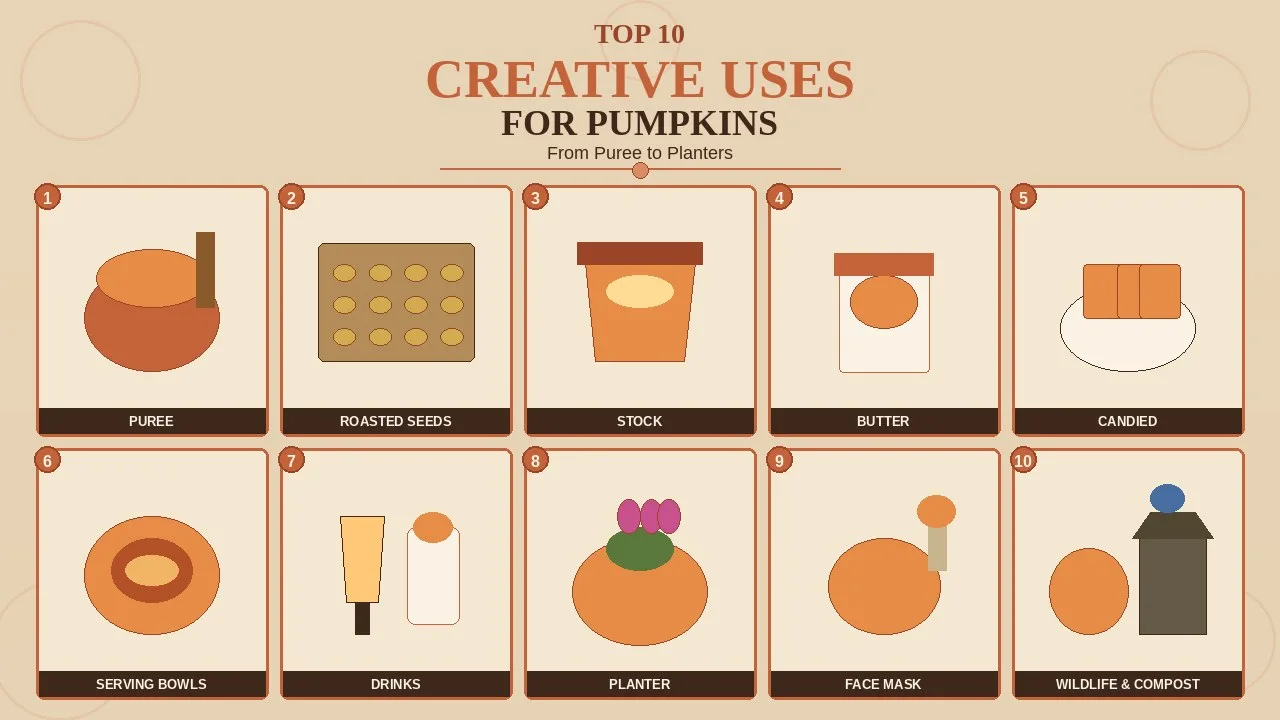
Creative uses for pumpkins stretch from puree and roasted seeds to stock, butter, candy, planters and bowls, with clear carved-flesh safety rules.
A whole pumpkin is far more than a seasonal porch decoration. The flesh, seeds, fibrous strands and even the hollow shell can become food, drink, tableware, a short-lived planter or a compost contribution. This Finepedia guide gathers ten practical creative uses for pumpkins that home cooks and gardeners actually use after harvest or Halloween, with safety notes that many viral lists skip.
Two rules sit behind every edible idea on this page. Prefer small sugar or pie pumpkins for cooking; large carving pumpkins are edible in principle but tend to be watery and mild. Never eat flesh from a carved jack-o-lantern that has sat outdoors or on a counter for hours: once cut open, the moist interior is an easy place for bacteria to grow. Use fresh, sound fruit for any recipe, and treat decorated shells as craft material rather than leftovers for the soup pot.
How We Chose These Creative Uses for Pumpkins
The list mixes kitchen projects, table styling and garden reuse. Each entry earns a place because it uses a part of the pumpkin that people often discard, because the method is straightforward with ordinary kitchen tools, or because it extends the fruit past a single night of display.
Selection criteria:
- Uses the flesh, seeds, strands, shell or whole fruit in a clear, repeatable way
- Relies on pantry spices and tools most households already have
- Includes a safety or quality caveat where food, skin care or wildlife feeding is involved
- Favours sugar pumpkins for recipes and notes when a carved shell is suitable only as a craft
The order runs from the highest everyday kitchen value (puree and seeds) through preserves and presentation, then into planter craft, cautious DIY skin care and wildlife or compost options. A comparison table after the list shows which ideas work with carved shells and which need intact fruit.
Creative Uses for Pumpkins at a Glance
| No. | Use | Main part used | Best pumpkin type | Key caution |
|---|---|---|---|---|
| 1 | Homemade pumpkin puree | Flesh | Sugar / pie | Freeze in portions; skip carved pulp |
| 2 | Roasted pumpkin seeds | Seeds | Any sound fruit | Rinse well; roast until dry and crisp |
| 3 | Stock from pumpkin guts | Fibrous strands | Fresh uncarved | Simmer briefly; strain; compost solids |
| 4 | Spiced pumpkin butter | Cooked puree | Sugar / pie | Refrigerate; not a substitute for canning advice |
| 5 | Candied pumpkin treats | Peeled flesh chunks | Firm sugar pumpkin | High sugar; cool fully before storing |
| 6 | Baked pumpkin serving bowls | Hollowed shell | Medium intact fruit | Food-contact only if freshly cleaned and baked |
| 7 | Cocktail or milkshake | Puree | Cooked puree | Adults only for alcohol; kids get the milkshake |
| 8 | Seasonal pumpkin planter | Whole shell | Carved or uncarved | Short display life; plant out or compost later |
| 9 | DIY pumpkin face mask | Puree | Fresh puree | Patch test; avoid eyes; not medical advice |
| 10 | Wildlife snacks and compost | Shell, flesh, seeds | Undecorated leftovers | Check local wildlife rules; no candle wax or paint |
1. Homemade Pumpkin Puree
| Attribute | Details |
|---|---|
| Main ingredient | Cooked sugar-pumpkin flesh |
| Yield idea | One small pie pumpkin often gives several cups of puree |
| Best uses | Pies, soups, pancakes, breads, smoothies, butter base |
| Storage | Fridge a few days; freeze in 1-cup packs for months |
| Skip if | The pumpkin was carved, painted, or left at room temperature after cutting |
Origins and History
Canned pumpkin made autumn baking easy in the twentieth century, but home cooks still roast whole fruit when they want fuller flavour and control over texture. Extension services and dietitians usually steer people toward compact sugar or pie types rather than tall carving cultivars. Those smaller fruits have denser, sweeter flesh that purees smoothly after roasting or steaming.
Key Features
- Dense orange flesh that blends into a smooth paste without watery separation
- Natural sweetness that reduces the need for heavy added sugar in many recipes
- Freezes cleanly, so one weekend of prep can cover weeks of baking
- Works as the base for several later ideas on this list (butter, drinks, masks)
- Leaves seeds and strands available for roasting and stock
How to Do It Well
Halve a washed sugar pumpkin, scoop out seeds and strands, and roast cut-side down on a lightly oiled tray until a knife slides through the flesh. Cool, scoop, and process until smooth. If the puree seems thin, simmer it briefly to drive off moisture before freezing. Label portions with the date. Do not salvage pulp from a porch lantern: outdoor exposure and candle heat make that flesh unsuitable for the freezer or the pie plate.
Significance
Puree is the hub of most creative kitchen uses for pumpkins. Once you have a batch, butter, cocktails, milkshakes and baking projects become much faster. It also teaches the variety lesson: pie pumpkins taste better than giant carving fruit for almost every recipe.
Interesting Facts
- USDA data for raw pumpkin show roughly 30 calories per cup of cubed flesh, with meaningful vitamin A activity from carotenoids.
- Alpha- and beta-carotene give pumpkin its colour; the body can convert them toward vitamin A needs.
- Commercial canned "pumpkin" is often a blend of related winter squashes chosen for colour and texture.
- Freezing puree in flat bags saves space and thaws quickly in a bowl of cold water.
- A grainy puree usually means undercooked flesh or a watery carving cultivar.
2. Roasted Pumpkin Seeds
| Attribute | Details |
|---|---|
| Main ingredient | Cleaned seeds (hulled pepitas or in-shell) |
| Flavour paths | Salt; cinnamon sugar; chilli-lime; garlic herb |
| Oven range | Common home methods cluster around 120–150 C with stirring |
| Best uses | Snacking, salad crunch, granola, baking garnish |
| Skip if | Seeds smell musty, or the pumpkin was mouldy |
Origins and History
Roasted seeds are one of the oldest snack uses of Cucurbita fruit. In many kitchens they are the only part of a Halloween pumpkin that people reliably save. Hull-less "naked" seed varieties exist for growers who want green pepitas without cracking shells, but ordinary carving and pie pumpkins still yield plenty of roastable seed.
Key Features
- Concentrated minerals compared with the watery flesh
- Crunchy texture that survives on salads and soups
- Easy seasoning once seeds are dry and lightly oiled
- Scalable: a single large fruit can fill a tray
- Stores in an airtight jar for days to a couple of weeks if fully dry
How to Do It Well
Separate seeds from the fibrous strands under running water. Pat dry. Toss with a little oil and salt, or boil briefly in salted water, dry, then roast while stirring until golden. Sweet versions get cinnamon and sugar near the end so the coating does not burn. Extension guides note that seeds are rich in magnesium, zinc and healthy fats relative to their size, which is why a small handful feels satisfying.
Significance
Seeds turn waste into a high-value snack and are often safer to keep from a display pumpkin than the carved flesh, provided the fruit itself was sound and the seeds are washed. They also travel well as a hike or desk snack when fully dried.
Interesting Facts
- Green pepitas sold in shops are usually hull-removed seeds, not a different plant family.
- Boiling seeds in salted water before roasting seasons them more evenly than dry salt alone.
- Under-roasted seeds stay chewy; over-roasted ones taste bitter.
- A typical pumpkin holds hundreds of seeds, though counts vary widely by cultivar.
- Store cooled seeds away from humidity or they soften again.
3. Stock from Pumpkin Guts
| Attribute | Details |
|---|---|
| Main ingredient | Stringy pulp around the seeds, plus optional vegetable trimmings |
| Method | Gentle simmer, then strain |
| Best uses | Soup base, risotto liquid, gravy stretch, cooking grains |
| Storage | Fridge a few days; freeze in jars or cubes |
| Skip if | Pulp sat exposed after carving, or shows mould |
Origins and History
The web of strands inside a pumpkin is usually scraped straight into the bin. Stock-making flips that habit: those strands still carry pumpkin aroma and a little body when simmered with water and aromatic scraps. The idea mirrors classic scrap-stock cooking rather than a formal restaurant recipe.
Key Features
- Uses the part cooks dislike handling most
- Mild, slightly sweet broth that pairs with autumn soups
- Easy compost follow-up: strained solids return to the pile
- Freezes in ice-cube trays for small flavour boosts
- Costs almost nothing beyond energy for the simmer
How to Do It Well
Pull seeds out for roasting first. Simmer the strands with water, onion ends, carrot tops or celery leaves for about half an hour until the liquid smells pleasantly of pumpkin. Strain through a fine mesh. Cool quickly and refrigerate or freeze. Keep the simmer moderate; a hard boil can make the stock cloudy and bitter. Only use pulp from a pumpkin you opened for cooking the same day.
Significance
Stock proves that "guts" are an ingredient, not garbage. It also pairs neatly with puree-based soups: roast the flesh for body, simmer the strands for the liquid, and roast the seeds for garnish.
Interesting Facts
- The strands are placental tissue that held the seeds, not spoiled flesh.
- A pale golden colour is normal; deep orange usually means you also cooked some flesh pieces.
- Salt at the end, not the beginning, so reductions stay controllable.
- Compost strained solids rather than pouring them down a sink disposal if your system clogs easily.
- Label frozen stock so it is not mistaken for chicken broth.
4. Spiced Pumpkin Butter
| Attribute | Details |
|---|---|
| Main ingredient | Pumpkin puree plus sugar and warm spices |
| Texture goal | Thick, spreadable conserve |
| Best uses | Toast, oatmeal, yoghurt, pancakes, sandwich swirls |
| Storage | Refrigerator in clean jars; follow tested canning guidance if shelf-stable jars are the goal |
| Skip if | Puree was made from questionable carved pulp |
Origins and History
Fruit butters are cooked purees reduced with sugar until they mound on a spoon. Apple butter is the famous cousin; pumpkin butter follows the same logic with cinnamon, ginger, nutmeg and clove. It is a natural second step after you make a large batch of puree.
Key Features
- Concentrated pumpkin flavour without pastry work
- Flexible sweetness: brown sugar or a mix with cider
- Gift-friendly when packed in small refrigerated jars
- Uses puree that might otherwise sit unused in the fridge
- Familiar spice profile that tastes like autumn baking
How to Do It Well
Combine puree with sugar and a splash of apple cider or water. Add cinnamon, ginger, nutmeg, clove and a pinch of salt. Simmer gently, stirring often, until thick enough to leave a trail on the pan. Cool and jar. For pantry storage, use a tested preserving recipe from a university extension or reputable canning guide rather than improvising; low-acid vegetable purees need careful acidification and process times. For short-term home use, refrigeration is the simple path.
Significance
Pumpkin butter stretches one roasted fruit across breakfasts for days and feels more special than plain puree. It also showcases why sugar pumpkins matter: watery flesh never reduces into a glossy spread.
Interesting Facts
- "Butter" here means texture, not dairy.
- A spoon of pumpkin butter whisked into yoghurt makes a fast breakfast bowl.
- Too much clove can dominate; start small and adjust after cooling.
- Darkening as it cooks is normal Maillard and caramelisation, not burning, if the heat stays low.
- Label jars with the spice blend so you remember what you liked.
5. Candied Pumpkin Treats
| Attribute | Details |
|---|---|
| Main ingredient | Peeled pumpkin chunks simmered in spiced syrup |
| Cultural note | Related to Mexican calabaza en tacha and other candied-squash traditions |
| Best uses | Dessert plates, ice-cream topping, gift tins after drying |
| Storage | Refrigerate syrupy pieces; dry trays longer for firmer candy |
| Skip if | Flesh is soft, stringy, or from a long-displayed lantern |
Origins and History
Candying winter squash in piloncillo or brown-sugar syrup is a deep tradition in parts of Mexico around the Day of the Dead and autumn festivals. Home versions elsewhere use brown sugar, cinnamon and clove. The method turns firm pumpkin into translucent, sweet pieces that taste closer to confection than vegetable.
Key Features
- Transforms plain flesh into a dessert without baking a pie
- Syrup can be reused to sweeten drinks or porridge
- Looks striking on a platter with a little zest or toasted seed
- Teaches knife skills: even chunks cook evenly
- Works best with dry, dense sugar pumpkins
How to Do It Well
Peel and cube firm pumpkin. Simmer in water until just tender, then add brown sugar and spices and cook until the syrup thickens. Some cooks soak the pieces overnight in the syrup for deeper flavour, then dry them on a rack. Keep heat moderate so sugar does not scorch. Because the result is high in sugar, treat it as an occasional sweet rather than a health food, even though it started as a vegetable.
Significance
Candied pumpkin is one of the most creative uses for pumpkins when you want a treat that still reads as seasonal produce. It also uses peeled flesh that never appears in a jack-o-lantern project.
Interesting Facts
- Piloncillo or panela gives a molasses depth that white sugar lacks.
- Uneven cubes mean some pieces turn mushy while others stay hard.
- A pinch of salt in the syrup brightens the spice.
- Leftover syrup is excellent over pancakes the next morning.
- Very wet carving pumpkins rarely candy well; they collapse in the pot.
6. Baked Pumpkin Serving Bowls
| Attribute | Details |
|---|---|
| Main ingredient | Hollowed medium pumpkin shell |
| Oven idea | Light oil, season, bake until just tender |
| Best uses | Soup, dip, grain salads, bread rolls at the table |
| Service window | Best the day they are baked |
| Skip if | Shell is soft, mouldy, or still holds candle wax |
Origins and History
Hollow squash bowls show up in harvest dinners and magazine tablescapes because they look festive and reduce dishwashing for one course. Baking the shell briefly firms the interior, adds aroma and makes the vessel feel intentional rather than raw.
Key Features
- Edible-adjacent presentation: guests can scrape soft flesh from the sides
- Uses the shell that puree recipes leave behind
- Scales from personal soup bowls to a large stew tureen
- Pairs with the puree and seed recipes already on this list
- Photogenic for autumn gatherings without plastic decor
How to Do It Well
Choose a pumpkin that sits flat. Cut a lid, clean the interior thoroughly, and scrub away stringy residue. Brush inside and out with a little oil, season lightly, and bake on foil until the wall softens but still holds shape. Fill with hot soup or dip just before serving. If the pumpkin was ever used as a candle lantern, do not press it into food service: wax and soot are not ingredients.
Significance
Serving bowls sit at the border of food and design. They show guests that the whole fruit was planned for, not only the puree in the pot.
Interesting Facts
- A too-small pumpkin tips when filled; test stability with water first.
- Very large shells make better centrepiece tureens than individual bowls.
- A light bake also kills surface moisture that would dilute a dip.
- Matching mini pumpkins can hold nuts or roasted seeds beside the main bowl.
- Compost the shell after the meal once leftovers are scraped out.
7. Pumpkin Cocktail or Milkshake
| Attribute | Details |
|---|---|
| Main ingredient | Smooth pumpkin puree |
| Adult path | Spirits plus spice, citrus and sweetener |
| Family path | Milk, puree, cinnamon, ice cream |
| Best uses | Autumn parties, dessert drinks |
| Skip if | Guests include anyone who should avoid alcohol; never serve cocktails to minors |
Origins and History
Pumpkin spice flavours moved from bakery cases into cafes and bars over the last two decades. Home versions are simple: a spoon of puree in a shaker or blender carries colour and body that syrups alone cannot match.
Key Features
- Uses small amounts of leftover puree
- Easy to scale for a crowd
- Milkshake path keeps children and non-drinkers included
- Spice level is adjustable per glass
- Looks seasonal with a cinnamon dusting or seed garnish
How to Do It Well
For a cocktail, shake puree with ice, a flavoured or plain spirit, a touch of honey or syrup, and a squeeze of citrus, then strain over fresh ice. For a milkshake, blend cold milk, puree, cinnamon and ice cream until thick. Use cooked, cooled puree only. Keep alcohol clearly separate at mixed gatherings so nobody confuses the two pitchers.
Significance
Drinks turn pumpkin from a baking ingredient into a hospitality trick. They also use puree that might be too little for a full pie but perfect for four glasses.
Interesting Facts
- A tablespoon of puree per cocktail is usually enough; more makes the drink muddy.
- Vanilla, ginger and cinnamon spirits echo pie spice without a long ingredient list.
- Blending puree with a little hot water before shaking helps it disperse in cold drinks.
- Whipped cream on a milkshake hides a sprinkle of roasted seeds for crunch.
- Label allergens if you use dairy alternatives inconsistently across batches.
8. Seasonal Pumpkin Planter
| Attribute | Details |
|---|---|
| Main ingredient | Hollow pumpkin shell as a temporary pot |
| Plants that work | Cool-season annuals, small ornamental kale, pansies |
| Lifespan | Days to a couple of weeks before the shell softens |
| End of life | Bury the shell in a garden bed or add to compost |
| Skip if | You need a long-term container; use terracotta instead |
Origins and History
Using a hollowed pumpkin as a planter is a popular autumn craft because the colour matches seasonal flowers and the shell eventually returns to the soil. Both carved and uncarved fruits can work; carved ones simply need soil packed carefully around existing openings.
Key Features
- Festive porch display that is more alive than a candle alone
- Natural composting finish when the season ends
- Flexible: nursery annuals or kitchen herbs for a short spell
- Kid-friendly project with adult knife help
- No permanent plastic pot required for a two-week display
How to Do It Well
Cut a wide opening if the pumpkin is intact, remove seeds and flesh you want to cook, and fill with potting mix. Nestle plants so roots are covered, water lightly, and keep the display out of pouring rain if you can. When the shell collapses, dig it into a bed or compost heap. Avoid chemical paints and glitter if you plan to compost; plain pumpkins break down cleanly.
Significance
The planter is the best creative use for pumpkins that were always meant as decor. It extends the fruit past Halloween night and feeds soil life instead of a landfill bag.
Interesting Facts
- A saucer under the pumpkin protects porch wood from moisture stains.
- Small sugar pumpkins make charming table centrepieces with one mini plant each.
- Carved faces can still hold plants if you pack soil above the mouth opening.
- Soft spots mean time is up; move plants to a real pot before roots rot.
- Local compost rules may ask you to remove candles, wire and plastic first.
9. DIY Pumpkin Face Mask
| Attribute | Details |
|---|---|
| Main ingredient | Plain pumpkin puree plus gentle pantry mix-ins |
| Common add-ins | A little milk or yoghurt; fine sugar for light polish |
| Time on skin | Short; rinse thoroughly |
| Best mindset | Kitchen cosmetic experiment, not a clinic treatment |
| Skip if | Broken skin, known allergies, or no patch test |
Origins and History
Pumpkin flesh contains carotenoids and a little natural sugar, which has inspired countless DIY mask recipes online. Food is not the same as a formulated cosmetic, so this entry stays cautious: pleasant smell and a mild polish effect are realistic; dramatic "anti-ageing" claims are not.
Key Features
- Uses a spoonful of leftover puree
- Short ingredient list you can control
- Easy to rinse in the shower
- Cheap way to use puree that will not become pie
- Encourages a patch test habit before face application
How to Do It Well
Mix a few spoons of smooth puree with a splash of milk or plain yoghurt. Optional fine sugar adds gentle grit; skip sugar on sensitive skin. Apply to clean skin, avoid the eye area, leave on briefly, then rinse. Patch-test on the inner arm first. Stop at once if stinging or redness appears. People with squash allergies, dairy allergies or active dermatitis should not experiment. This is not medical or dermatological advice.
Significance
Including a mask on a creative-uses list is honest about how people actually play with puree, while the caveats push back against unsafe hype. Food-grade ingredients can still irritate skin.
Interesting Facts
- Orange staining on skin is usually carotenoid pigment and washes away.
- Enzyme activity in raw squash is mild compared with papaya or pineapple, but sensitive skin can still react.
- Store-bought masks list preservatives for a reason; homemade mixes belong in the fridge and the bin after a day.
- Never put pumpkin mixture on eyelids or lips if it burns on the arm test.
- Cooking the puree first may reduce some irritation for people who react to raw squash, though it is not a guarantee.
10. Wildlife Snacks and Compost
| Attribute | Details |
|---|---|
| Main ingredient | Undecorated leftover pumpkin and clean seeds |
| Possible visitors | Birds, squirrels, deer where local rules allow |
| Compost path | Chopped shell and flesh in a hot pile |
| Best practice | Plain pumpkin only; no paint, glitter, wax or chocolate |
| Skip if | Local ordinances ban wildlife feeding, or predators are a concern near homes |
Origins and History
After holidays, unbroken pumpkins often go to farms, wildlife areas or compost sites that accept them. Home gardeners can do a smaller version: move plain cut fruit away from the front door, offer clean seeds in a feeder, or chop everything into the compost. The key word is plain. Painted, glittered or wax-filled lanterns are craft waste first, not animal food.
Key Features
- Diverts bulky organic waste from landfill
- Seeds are a popular high-fat forage for many birds
- Compost returns nutrients to next year's soil
- Teaches children a close-the-loop habit after decorations come down
- Flexible: feeding, composting, or both in stages
How to Do It Well
Check municipal and wildlife guidance before dumping fruit where deer or rodents gather; in some towns feeding wildlife is discouraged or restricted. Place pieces away from roads and house foundations. Offer only undecorated pumpkin. Candle wax, artificial paint and mouldy flesh do not belong in a feeder. For compost, chop the shell so it breaks down faster and bury it under browns to limit smells and pests.
Significance
Wildlife and compost options are the responsible last creative uses for pumpkins that never made it into recipes. They finish the fruit's life cycle without pretending every lantern is still food-safe.
Interesting Facts
- Whole pumpkins rot slowly; cutting them speeds both wildlife access and composting.
- Seeds scattered on bare soil may sprout volunteer vines next season.
- Mouldy pumpkins are better buried deep in compost than left as a lawn ornament.
- Farms that host "pumpkin smashes" for livestock still reject painted fruit.
- If raccoons or rats become a nuisance, switch entirely to enclosed composting.
Carved Versus Uncarved: What Works
| Idea | Intact sugar pumpkin | Freshly hollowed for cooking | Old carved lantern |
|---|---|---|---|
| Puree, butter, candy, drinks | Yes | Yes, same day | No |
| Roasted seeds | Yes | Yes, if fruit was sound | Only if seeds stayed clean and dry |
| Stock from strands | Yes | Yes, same day | No |
| Serving bowls | Yes | Yes | No (wax and exposure) |
| Planter | Yes | Yes | Yes, as short-term decor |
| Wildlife / compost | Yes | Yes | Compost only if stripped of wax, paint and candles |
Nutrition Snapshot for Creative Pumpkin Cooking
Pumpkin earns its kitchen reputation on micronutrients more than on calories. A cup of raw cubed flesh is only about 30 calories in USDA-based tables, with very little fat and a useful amount of potassium. The orange colour signals carotenoids: beta-carotene and alpha-carotene that the body can convert toward vitamin A. Cooked puree concentrates those pigments and fits easily into soups, sauces and baking swaps where oil or cream might otherwise dominate.
Seeds tell a different nutrition story. They are energy-dense, with plant protein, fibre and minerals such as magnesium, iron and zinc. That is why a small roasted handful satisfies as a snack while the flesh behaves more like a vegetable side. Neither part is a miracle food, but together they explain why creative uses for pumpkins show up in both dessert and savoury cooking.
Practical takeaway for this list:
- Lean on puree when you want colour, moisture and vitamin A–linked carotenoids in meals
- Lean on seeds when you want crunch and mineral density
- Treat sugar and syrup projects (candy, butter, drinks) as occasional sweets built on a vegetable base
- Keep food-safety rules ahead of nutrition goals; a nutrient-rich puree is worthless if the fruit was left open on a porch
Honourable Mentions
A few more ideas sit just outside the top ten because they are niche, seasonal or equipment-heavy:
- Pumpkin seed oil: prized in parts of Central Europe, but it needs a press most home kitchens lack
- Pickled pumpkin cubes: excellent with vinegar and spice, yet more of a preserving project than a quick reuse
- Stuffed whole sugar pumpkins: beautiful dinner centrepieces that overlap heavily with the serving-bowl idea
- Dried pumpkin leather: a dehydrator project for snack bags, better as its own guide
- Dye experiments with pumpkin skins: craft-only, and results vary too much for a ranked how-to
Those projects are worth exploring once puree, seeds and stock already have a place in your routine.
Frequently Asked Questions
Can you eat a pumpkin after it has been carved?
Treat carved display pumpkins as non-food. Once the interior is open to air, hands, candles and outdoor surfaces, the flesh is no longer a safe cooking ingredient. Save recipes for a second, intact sugar pumpkin, or cook the fruit the same day you hollow it for the kitchen.
Are carving pumpkins and pie pumpkins the same?
Both are edible Cucurbita fruit, but pie or sugar types are smaller, denser and sweeter. Carving types are bred for size and thin walls, so they taste milder and turn watery when cooked. Use sugar pumpkins for puree and desserts whenever you can.
How long does homemade pumpkin puree last?
In the refrigerator, use it within a few days. In the freezer, well-packed portions keep for months at a steady freeze. Thaw in the fridge and stir before measuring into a recipe.
Is it safe to put pumpkin on your face?
Only as a cautious DIY experiment: patch-test first, avoid eyes, and rinse off soon. Skip it if you have allergies, eczema flare-ups or broken skin. Kitchen recipes are not a substitute for products tested as cosmetics.
Can I feed leftover Halloween pumpkins to animals?
Plain, undecorated pumpkin and clean seeds are sometimes offered to wildlife or livestock, but local rules differ and painted or wax-filled lanterns should not be fed to animals. When in doubt, compost or use a municipal organics programme.
Do roasted pumpkin seeds need to be hulled?
No. In-shell seeds are commonly roasted and eaten whole. Green pepitas are hulled seeds sold for convenience. Both are fine; hulls add crunch and fibre but can feel tough to some people.
Why does my pumpkin puree taste bland?
The fruit may be a watery carving type, under-roasted, or under-seasoned. Roast until truly soft, drain excess liquid, and add salt and spice. A spoon of maple or brown sugar helps in sweet recipes; curry spice or chilli helps in savoury soups.
Conclusion
Creative uses for pumpkins reward a little planning. Cook sugar pumpkins into puree, seeds, stock, butter and candy while the fruit is fresh. Turn clean shells into serving bowls or short-lived planters. Keep DIY masks modest and patch-tested. Send undecorated leftovers to wildlife only where rules allow, or chop them into compost. With those habits, the same autumn fruit that lights the porch can also stock the freezer, flavour breakfast and feed the garden soil.
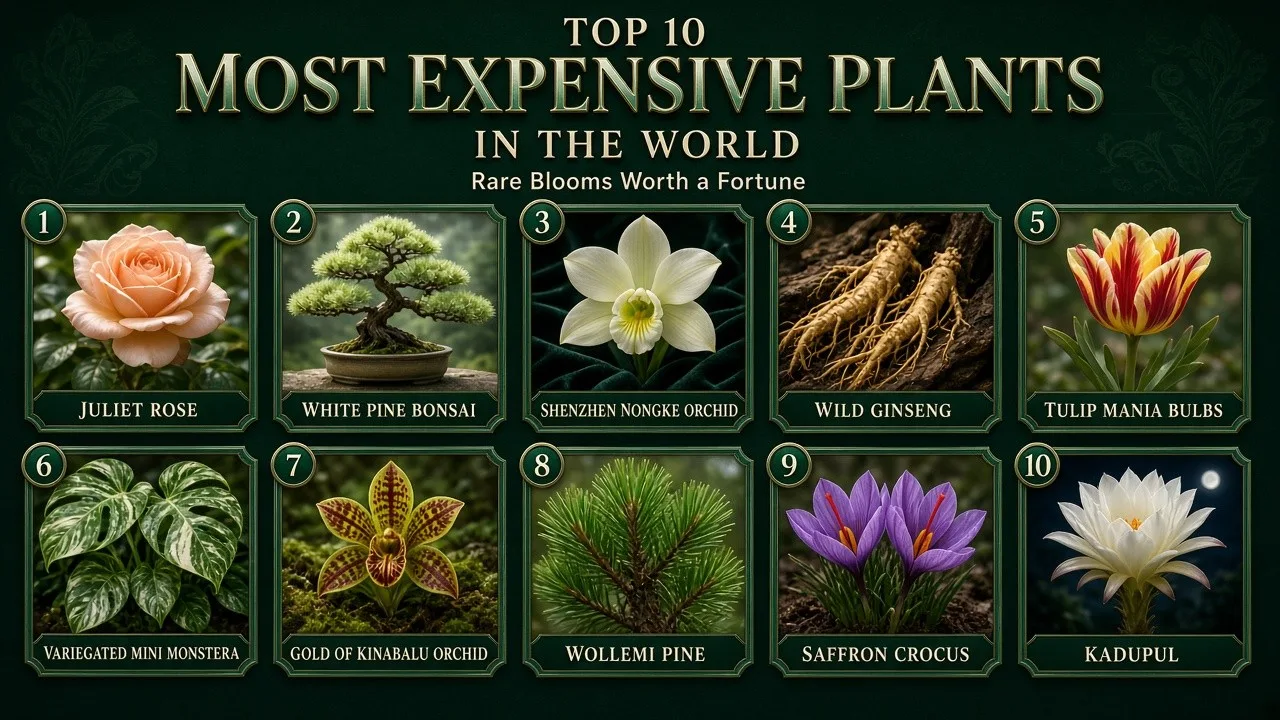
Readers who enjoy food and plant listicles on Finepedia can continue with the Top 10 Facts category, the Food and Nutrition category, the plants category, our ranking of the most expensive plants in the world, a practical guide to the best snacks to bring on a plane, and a look at the most expensive restaurants in the world.
- Topic reference only (structure inspiration; nothing copied): 10mosttoday.com autumn pumpkin uses list, November 2020
- USDA-derived nutrition summary for raw pumpkin: https://tools.myfooddata.com/nutrition-facts/168448/wt1
- Purdue Extension FoodLink pumpkin page: https://extension.purdue.edu/foodlink/food.php?food=pumpkin
- University of Alaska Fairbanks Cooperative Extension on pumpkin seeds: https://www.uaf.edu/ces/publications/database/food/pumpkin-seeds.php
- Kansas State University notes on cooking pumpkins: https://www.k-state.edu/news/wild-west-district/articles/2024/10/pumpkins-are-not-just-for-carving.html
- Today's Dietitian overview of pie versus carving pumpkins: https://www.todaysdietitian.com/pumpkin-for-the-holidays/






















Log in with