




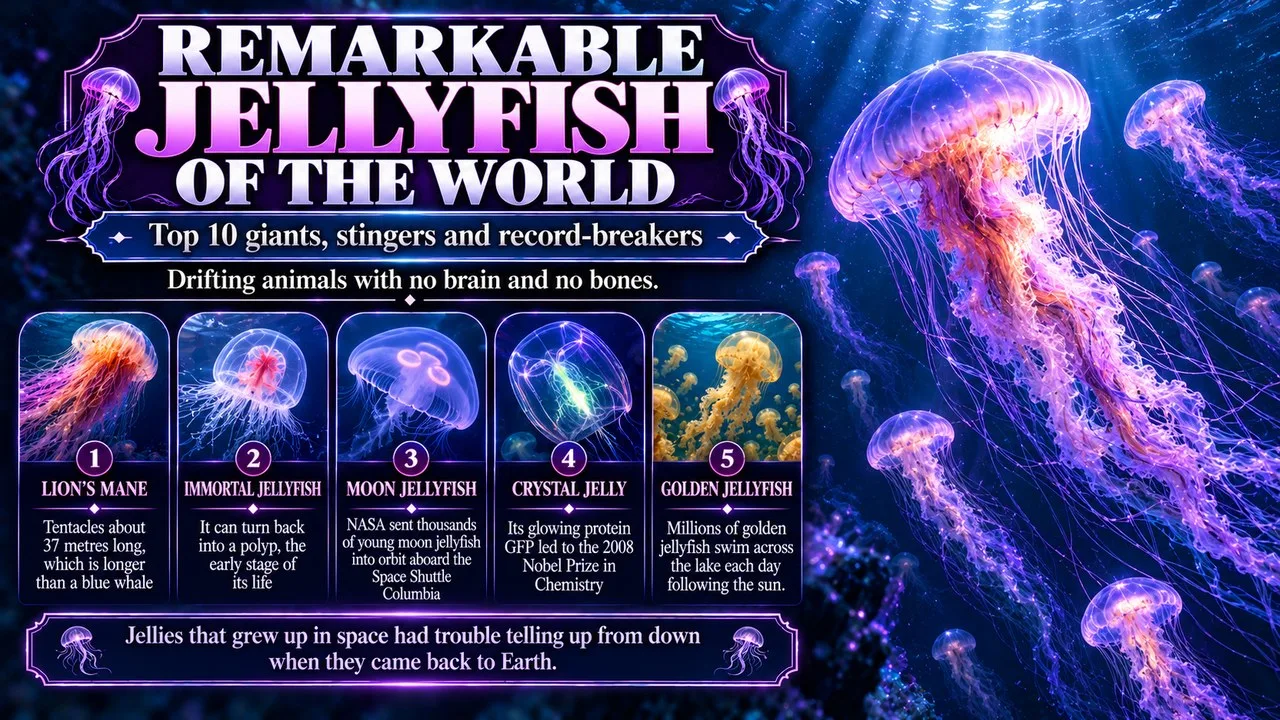
Remarkable jellyfish of the world range from the lion's mane, with tentacles longer than a blue whale, to a tiny species that can reverse its life cycle.
This Finepedia guide, written in October 2026, meets ten jellyfish that stand out for their size, their sting, their strange life cycles or what they have taught science. Each entry gives the scientific name, where the animal lives and one fact that makes it special. For more ocean life, see the Finepedia guides Top 10 Strangest Deep-Sea Creatures and Top 10 Most Dangerous Sea Creatures.
Jellyfish have no brain, heart, blood or bones, and their bodies are about 95 per cent water [1]. They sense the world through a simple net of nerves and catch food with stinging cells called nematocysts. Their ancestors were drifting in the oceans more than 500 million years ago, long before the first fish, which makes them among the oldest animals on Earth with many organs.
How We Chose These
We picked species that are record holders, medically important or scientifically famous, using research bodies, aquariums and encyclopaedias. The list starts with the giants, moves on to the most dangerous stingers and ends with jellies that have changed science or live in unusual ways. Sizes are maximum or typical figures and vary between individuals. Not every animal called a jellyfish is one, and the FAQ explains the famous exception.
The 10 Remarkable Jellyfish at a Glance
| No. | Jellyfish | Scientific name | Where it lives | Known for |
|---|---|---|---|---|
| 1 | Lion's mane jellyfish | Cyanea capillata | cold northern seas | Largest known jellyfish |
| 2 | Nomura's jellyfish | Nemopilema nomurai | seas around China, Korea and Japan | Up to about 200 kg |
| 3 | Australian box jellyfish | Chironex fleckeri | northern Australia and the Indo-Pacific | Deadly venom |
| 4 | Irukandji jellyfish | Carukia barnesi | northern Australia | Tiny but dangerous |
| 5 | Immortal jellyfish | Turritopsis dohrnii | Mediterranean and warm seas | Can reverse its life cycle |
| 6 | Moon jellyfish | Aurelia aurita | coasts worldwide | Flew into space |
| 7 | Crystal jelly | Aequorea victoria | Pacific coast of North America | Gave science a glowing protein |
| 8 | Upside-down jellyfish | Cassiopea species | warm shallow lagoons | Lives bell-down on the seabed |
| 9 | Atolla jellyfish | Atolla wyvillei | deep oceans worldwide | Flashing light alarm |
| 10 | Golden jellyfish | Mastigias papua etpisoni | Jellyfish Lake, Palau | Follows the sun |
1. The Lion's Mane Is the Largest Jellyfish Known
The lion's mane jellyfish lives in the cold waters of the Arctic, the North Atlantic and the North Pacific [2]. Its bell is usually under 50 centimetres wide, but giants can reach about 2 metres. One specimen washed up in Massachusetts Bay in 1870 had a bell about 2.3 metres across and tentacles about 37 metres long, which is longer than a blue whale.
Key Facts
- Scientific name: Cyanea capillata
- Bell: up to about 2 metres across
- Tentacles: hundreds, in eight clusters
- Diet: plankton, small fish and other jellyfish
Did You Know?
The name comes from its mass of long, flowing tentacles, which can look like a lion's mane. Its sting is painful but rarely dangerous to people. In the Sherlock Holmes story The Adventure of the Lion's Mane, the jellyfish turns out to be the culprit.
2. Nomura's Jellyfish Can Weigh as Much as a Bear
Nomura's jellyfish lives in the Yellow Sea and the East China Sea and drifts into the Sea of Japan in some years [3]. It can grow to about 2 metres across and weigh about 200 kilograms. In bloom years, huge numbers clog and burst fishing nets, and in 2009 a Japanese trawler capsized while hauling in a net full of them.
Key Facts
- Scientific name: Nemopilema nomurai
- Size: up to about 2 metres across
- Weight: up to about 200 kilograms
- Impact: damage to fisheries in East Asia
Why It Matters
Blooms of Nomura's jellyfish have become more frequent since the early 2000s. Scientists link them to warmer seas, overfishing of species that compete with jellyfish for food and coastal building that gives their young more places to settle.
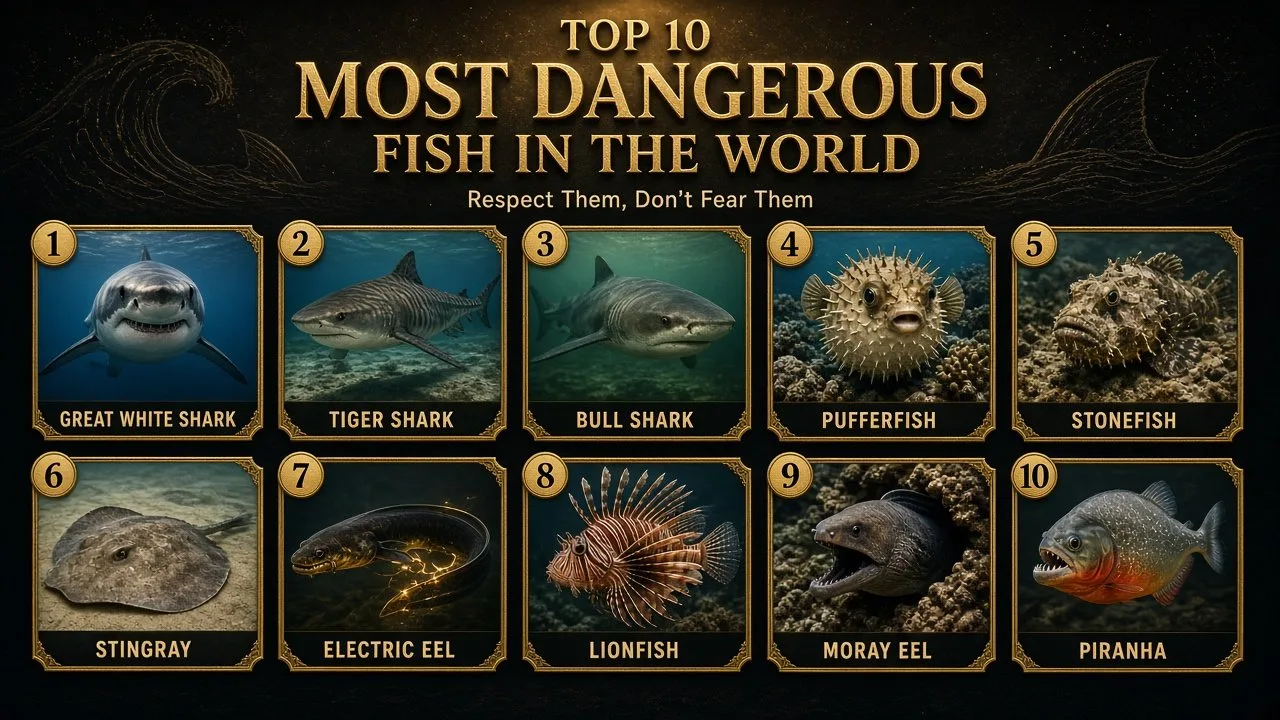
Related: Top 10 Most Dangerous Sea Creatures
3. The Australian Box Jellyfish Has a Deadly Sting
The Australian box jellyfish lives in the coastal waters of northern Australia and nearby parts of the Indo-Pacific [4]. Its cube-shaped bell is up to about 30 centimetres across, and up to 15 tentacles, each up to about 3 metres long, trail from each of its four corners. Its venom attacks the heart and nerves and can kill an adult within minutes.
Key Facts
- Scientific name: Chironex fleckeri
- Bell: up to about 30 centimetres across
- Tentacles: up to 60, each up to about 3 metres
- Eyes: 24, in four clusters
Why It Matters
It is often called the most venomous marine animal. Beaches in northern Australia use stinger nets and warning signs during the main season, and lifeguards keep vinegar ready, because it stops unfired stinging cells from firing. Unlike most jellyfish, box jellies swim actively and can see with their complex eyes.
4. The Irukandji Jellyfish Is Tiny but Dangerous
Carukia barnesi, one of several species known as Irukandji jellyfish, has a bell only about 1 centimetre across, yet its sting can cause severe illness [5]. The sting itself may hardly be felt, but 20 to 30 minutes later victims can suffer intense back pain, sweating, vomiting and a dangerous rise in blood pressure, known as Irukandji syndrome.
Key Facts
- Scientific name: Carukia barnesi
- Bell: about 1 centimetre across
- Range: northern Australia, with related species elsewhere
- Named after: the Irukandji people of north Queensland
Did You Know?
In 1964 the Australian doctor Jack Barnes proved that this jellyfish caused the syndrome by letting it sting himself, his son and a lifeguard. All three became ill and recovered. The species was later named Carukia barnesi in his honour.
5. The Immortal Jellyfish Can Turn Back Its Life Cycle
Turritopsis dohrnii, a jellyfish only about 4.5 millimetres across, is famous for a trick no other known animal of its kind can match [6]. When it is injured, starving or old, it can turn back into a polyp, the early stage of its life, and start growing again. In theory, this cycle could repeat without end.
Key Facts
- Scientific name: Turritopsis dohrnii
- Size: about 4.5 millimetres across
- First found: in the Mediterranean Sea
- Trick: changes back from adult to polyp
Why It Matters
In the wild, most immortal jellyfish are eaten or die of disease, so they do not actually live for ever. Scientists study how their cells change type, because it may shed light on ageing and repair in other animals, including people.
Related: Top 10 Most Dangerous Fish in the World
6. The Moon Jellyfish Went to Space
The moon jellyfish is one of the most common jellyfish on Earth and lives along coasts around the world [7]. Its clear bell, up to about 40 centimetres wide, shows four pale horseshoe-shaped rings, which are its reproductive organs. Its mild sting makes it a favourite in public aquariums.
Key Facts
- Scientific name: Aurelia aurita
- Bell: up to about 40 centimetres across
- Sting: mild, usually harmless to people
- Diet: plankton caught in mucus on the bell
Did You Know?
In 1991 NASA sent thousands of young moon jellyfish into orbit aboard the Space Shuttle Columbia to study how weightlessness affects growth [8]. Jellies that grew up in space had trouble telling up from down when they came back to Earth.
7. The Crystal Jelly Gave Science a Glowing Protein
The crystal jelly lives off the Pacific coast of North America and glows green around the rim of its bell [9]. In the 1960s the Japanese scientist Osamu Shimomura found the protein behind the glow, now called green fluorescent protein or GFP. Today GFP is used in labs around the world to light up cells, genes and diseases.
Key Facts
- Scientific name: Aequorea victoria
- Bell: up to about 10 centimetres across
- Glow: green, around the rim of the bell
- Prize: 2008 Nobel Prize in Chemistry
Why It Matters
Shimomura, Martin Chalfie and Roger Tsien shared the 2008 Nobel Prize in Chemistry for the discovery and development of GFP [10]. Researchers can attach it to a protein and watch where it goes inside a living cell, which has changed medicine and biology.
8. The Upside-Down Jellyfish Lives Bell-Down
Upside-down jellyfish of the genus Cassiopea live in warm, shallow lagoons and mangroves [11]. Instead of swimming, they rest bell-down on the seabed with their frilly arms facing up to the light. Tiny algae living inside their tissue make food from sunlight and share it with their host, much like the algae inside corals.
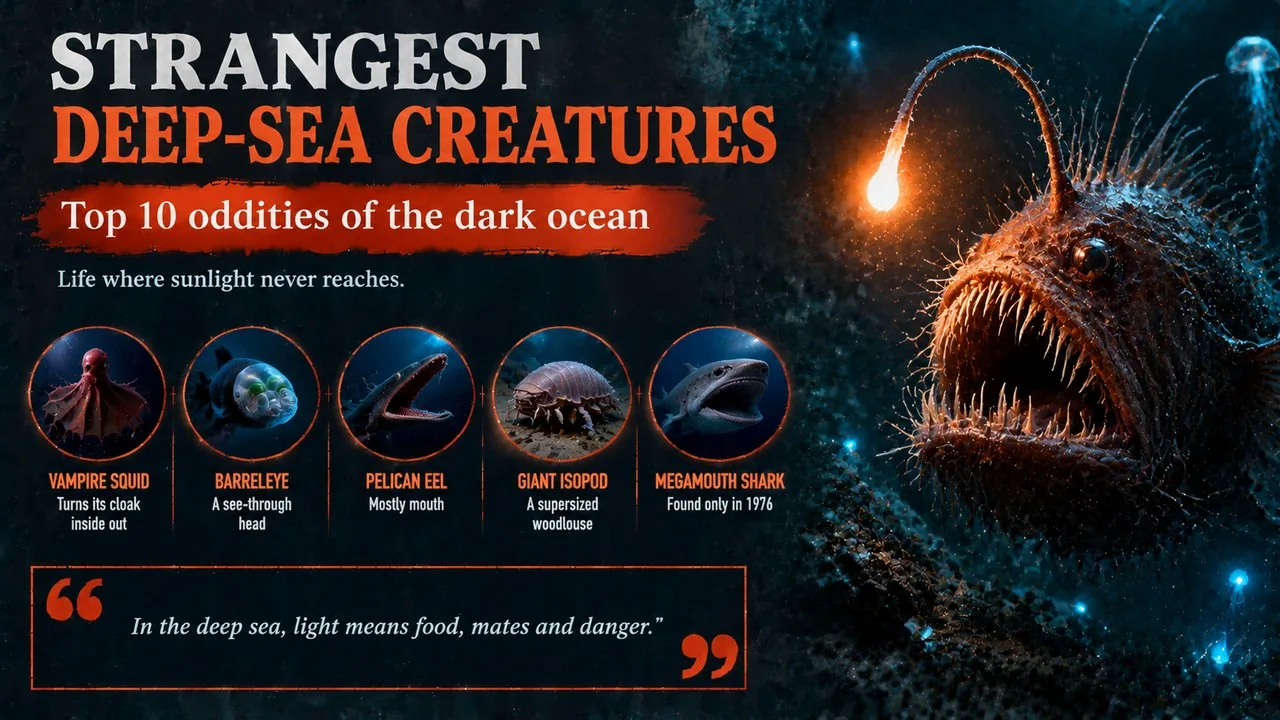
Related: Top 10 Strangest Deep-Sea Creatures
Key Facts
- Scientific name: Cassiopea species
- Habitat: warm shallow lagoons and mangroves
- Partners: algae that make food from sunlight
- Size: usually up to about 30 centimetres across
Did You Know?
Swimmers near these jellies can feel stings without touching them. In 2020 researchers showed why: the jellies release mucus packed with tiny stinging balls, which they named cassiosomes, into the water around them.
9. The Atolla Jellyfish Flashes a Burglar Alarm
Atolla wyvillei lives in the dark deep ocean, often below 1,000 metres, and is deep red, a colour that is almost invisible in the deep sea [12]. When attacked it sends a spinning ring of blue light around its bell. Scientists think this alarm draws in bigger predators that may attack whatever is attacking the jellyfish.
Key Facts
- Scientific name: Atolla wyvillei
- Depth: often between about 500 and 4,000 metres
- Colour: deep red
- Light: rings of blue flashes when threatened
Why It Matters
The deep-sea explorer Edith Widder built a light lure called the e-jelly that copies the Atolla's flashing pattern. Attached to an underwater camera, it helped film a live giant squid in its natural home for the first time in 2012.
10. The Golden Jellyfish of Palau Follows the Sun
In Jellyfish Lake, on Eil Malk island in Palau, millions of golden jellyfish swim across the lake each day following the sun [13]. Like upside-down jellies, they carry algae that need light to make food. The lake is linked to the sea through cracks in the limestone, but its jellies have evolved apart from their ocean relatives for thousands of years.
Key Facts
- Scientific name: Mastigias papua etpisoni
- Location: Jellyfish Lake, Eil Malk, Palau
- Habit: daily migration with the sun
- Sting: very weak, so snorkelling is allowed
Did You Know?
The population fell sharply in 2016 during a drought linked to El Niño, and the lake was closed to visitors. The jellies recovered, and the lake reopened to snorkellers. Sunscreen and diving are banned to protect the animals.
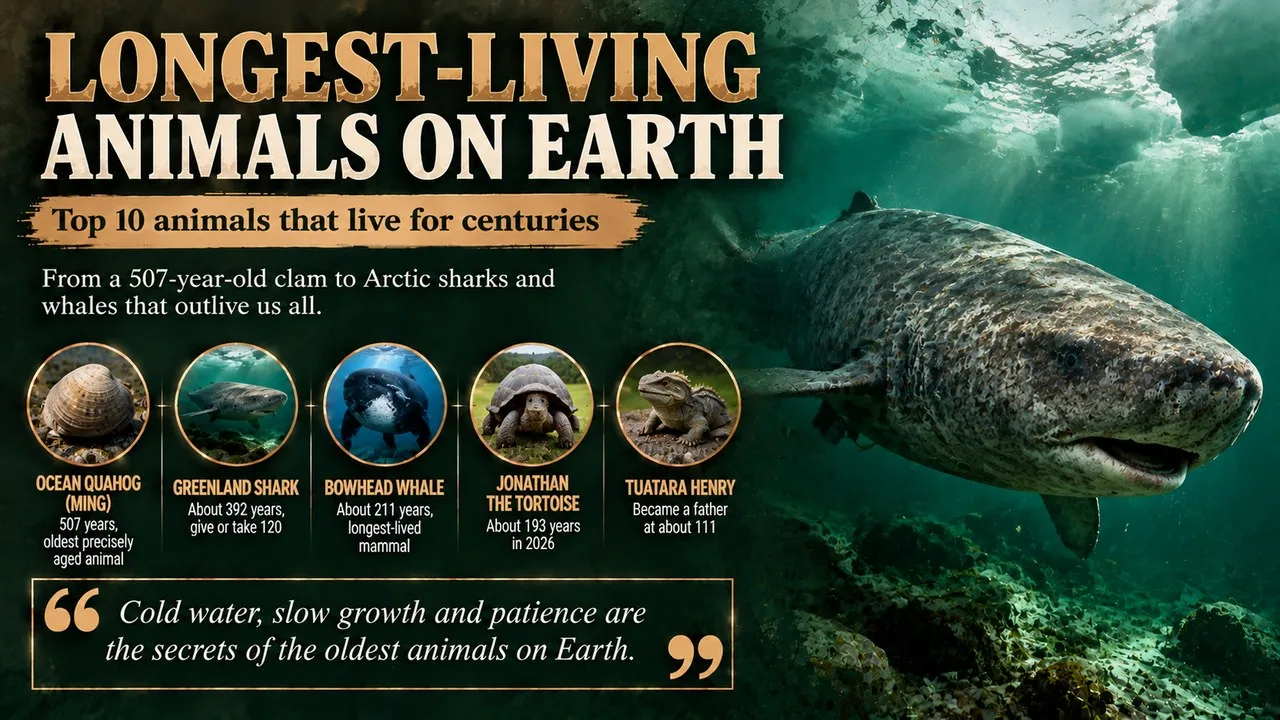
Related: Top 10 Longest-Living Animals on Earth
Frequently Asked Questions
Is the Portuguese man o' war a jellyfish?
No. The Portuguese man o' war looks like a jellyfish but is a siphonophore, a colony of many small animals working together as one. It has a gas-filled float and a powerful sting, and its tentacles can trail for many metres behind it.
What is the most dangerous jellyfish?
The Australian box jellyfish, Chironex fleckeri, is usually ranked the most dangerous, because its venom can kill an adult within minutes [4]. Tiny Irukandji jellyfish can also cause life-threatening illness [5].
What should you do if a jellyfish stings you?
Leave the water, avoid rubbing the sting and get medical help if the sting is severe or you are in box jellyfish waters. Vinegar is the first-aid advice for box jellyfish in Australia, but it is not right for every species, so follow local guidance.
Why are there more jellyfish blooms?
Warmer seas, overfishing of their competitors and predators, extra nutrients from farm run-off and new coastal structures can all help jellyfish thrive. Scientists are still studying how much each cause matters in different seas [3].
Conclusion
Remarkable jellyfish of the world include giants such as the lion's mane, killers such as the box jellyfish and a tiny species that can restart its own life. Others have flown to space, lit up modern biology and filled a Palau lake with gold. For more ocean wonders, read the Finepedia guides Top 10 Strangest Deep-Sea Creatures and Top 10 Most Dangerous Sea Creatures.
- ^ [1] "Jellyfish". Encyclopaedia Britannica. Jellyfish on Britannica.
- ^ [2] "Lion's mane jellyfish". Wikipedia. Lion's mane jellyfish on Wikipedia.
- ^ [3] "Nomura's jellyfish". Wikipedia. Nomura's jellyfish on Wikipedia.
- ^ [4] "Chironex fleckeri". Wikipedia. Australian box jellyfish on Wikipedia.
- ^ [5] "Carukia barnesi". Wikipedia. Irukandji jellyfish on Wikipedia.
- ^ [6] "Turritopsis dohrnii". Wikipedia. Immortal jellyfish on Wikipedia.
- ^ [7] "Aurelia aurita". Wikipedia. Moon jellyfish on Wikipedia.
- ^ [8] "STS-40". Wikipedia. Space Shuttle mission STS-40 on Wikipedia.
- ^ [9] "Aequorea victoria". Wikipedia. Crystal jelly on Wikipedia.
- ^ [10] "The Nobel Prize in Chemistry 2008". NobelPrize.org. Nobel Prize in Chemistry 2008.
- ^ [11] "Cassiopea". Wikipedia. Upside-down jellyfish on Wikipedia.
- ^ [12] "Atolla jellyfish". Wikipedia. Atolla jellyfish on Wikipedia.
- ^ [13] "Jellyfish Lake". Wikipedia. Jellyfish Lake on Wikipedia.
- [14] "10 Most Beautiful Jellyfish in the World". 10 Most Today. Topic reference on 10mosttoday.com.


















Discussion
Log in with