




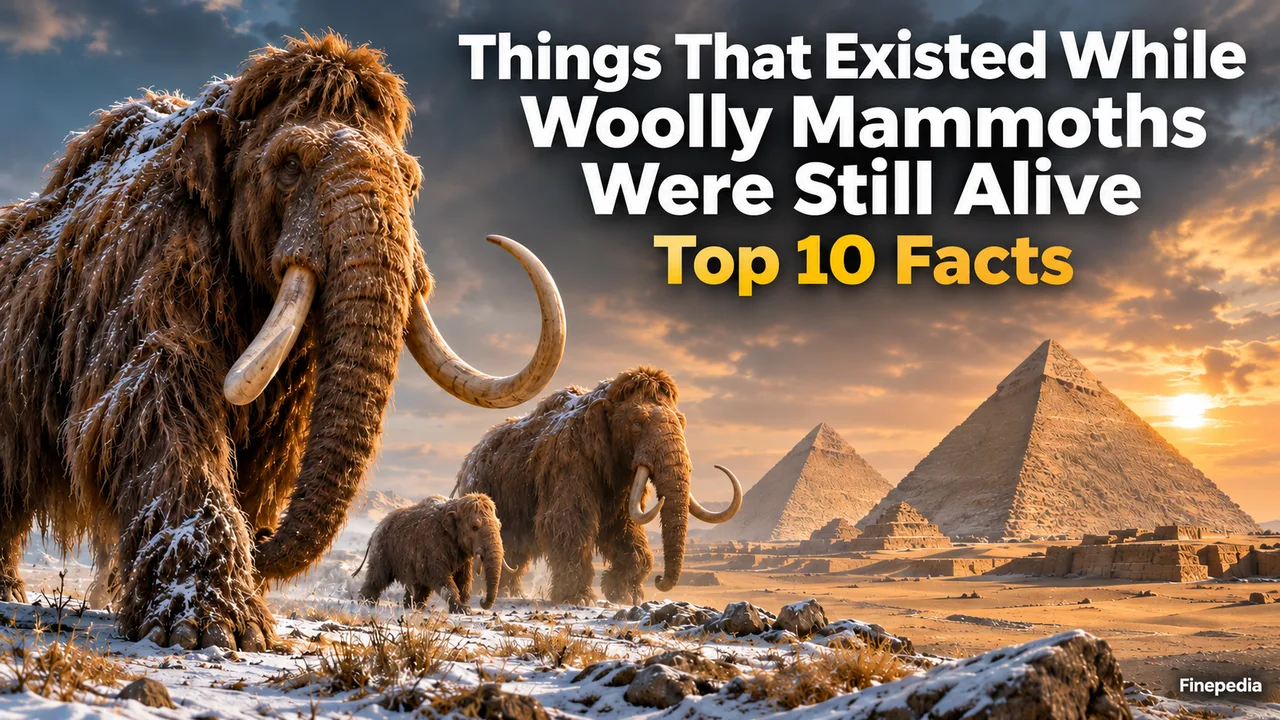
Woolly mammoths are usually pictured in a world of ice sheets and Stone Age hunters, far removed from cities, writing and monuments. Yet the last mammoths lived much later than most people realise. While most populations disappeared at the end of the last Ice Age, an isolated group survived on Wrangel Island in the Arctic Ocean until around 4,000 years ago.[1] Another island population, on St. Paul Island in Alaska, survived until about 5,600 years ago.[12]
That means the final mammoths were still alive when people elsewhere were building pyramids, writing laws and playing board games. This Finepedia list looks at the top 10 things that already existed while woolly mammoths were still alive.
The comparison is about overlapping timelines, not contact. No Egyptian or Sumerian ever saw a Wrangel Island mammoth. But placing these achievements side by side shows how long human civilisation had been developing before the last mammoths died out.
Key Facts
The table below lists the 10 things on this list with their approximate dates, all earlier than or close to the last mammoths of around 2000 BC.
The 10 Things That Existed With the Last Mammoths at a Glance
| No. | Achievement | Approximate date | Place |
|---|---|---|---|
| 1 | The Great Pyramid of Giza | c. 2600 BC | Egypt |
| 2 | Stonehenge | c. 3000 to 2200 BC | England |
| 3 | Newgrange passage tomb | c. 3100 BC | Ireland |
| 4 | Cuneiform writing | c. 3300 BC | Mesopotamia |
| 5 | Mohenjo-daro | c. 2500 BC | Indus Valley, Pakistan |
| 6 | The Royal Game of Ur | c. 2600 to 2400 BC | Mesopotamia |
| 7 | The Code of Ur-Nammu | c. 2100 BC | Mesopotamia |
| 8 | Cheesemaking | c. 5500 BC | Poland |
| 9 | The Areni-1 winery | c. 4100 BC | Armenia |
| 10 | Horse-drawn chariots | c. 1950 BC | Russian steppe |
1. The Great Pyramid of Giza
The Great Pyramid of Giza was built as the tomb of the pharaoh Khufu around 2600 BC, over a period of about 26 years.[2] By the time the last mammoths died out on Wrangel Island, it was already around 600 years old.
The pyramid originally stood 146.6 metres high, and it remained the tallest human-made structure in the world for more than 3,700 years.[2] It is the oldest of the Seven Wonders of the Ancient World and the only one that has survived largely intact.
Building it required careful planning, a large organised workforce and advanced knowledge of surveying and stone working.[2] Over time, most of its smooth white limestone casing was removed, leaving the rougher core blocks exposed.[2] Its construction shows that Egypt was a centralised state with enormous resources long before the last mammoths disappeared.
2. Stonehenge
Stonehenge, in Wiltshire, England, consists of an outer ring of standing sarsen stones, each around 4 metres high and weighing around 25 tons, topped by horizontal lintels.[3]
The site has a long history of construction. The stones were placed in their current positions between 2400 and 2200 BC, although some may have been at the site as early as 3000 BC.[3] Its main structure was therefore complete during the centuries when mammoths still lived on Wrangel Island.
Inside the sarsen circle is a ring of smaller bluestones, and inside these stand free-standing trilithons, each made of two large upright sarsens joined by a single lintel.[3] Moving and raising such large stones required careful planning and many people working together. Stonehenge is regarded as a British cultural icon and remains one of the most famous prehistoric monuments in the world.[3]
3. Newgrange
Newgrange, in County Meath, Ireland, is an exceptionally grand passage tomb built during the Neolithic period, around 3100 BC. That makes it older than both Stonehenge and the Egyptian pyramids.[4]
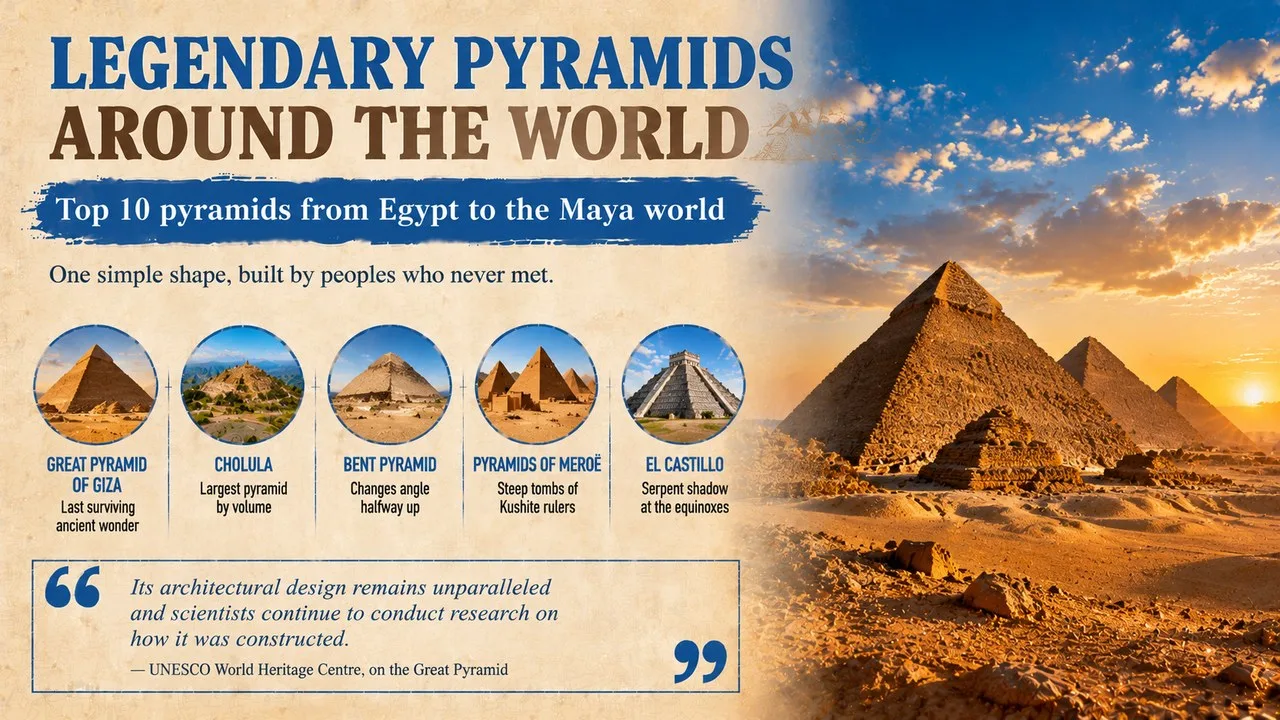
Related: Top 10 Legendary Pyramids Around the World
The monument is aligned so that the rising sun on the winter solstice shines through a "roofbox" above the entrance and floods the inner chamber with light.[4] This alignment shows that its builders had a detailed understanding of the sun's yearly movements.
Several other passage tombs in Ireland are also aligned with solstices and equinoxes.[4] Newgrange was already more than a thousand years old when the last mammoths died out, a reminder of how ancient Neolithic Europe was. Its builders were Neolithic farming communities working long before the Bronze Age reached Ireland, yet they created a monument that still works as a solar calendar more than five thousand years later.
4. Cuneiform Writing
Cuneiform, one of the earliest writing systems, developed in Mesopotamia from pictographic proto-writing in the late 4th millennium BC, around 3300 BC.[5] It was written by pressing a reed stylus into clay tablets, producing wedge-shaped marks.
Early cuneiform was used largely to record administrative and economic information, such as goods, rations and labour. Over time it expanded to record laws, letters, literature and scientific observations.[5]
Cuneiform remained in use for more than 3,000 years. The latest known tablet, an astronomical almanac from Uruk, dates to AD 79 or 80.[5] By the time the last mammoths died, writing had already been in use for more than a thousand years. After the script fell out of use, it was forgotten for centuries, and it was rediscovered in modern times only in the early 17th century, when travellers began publishing copies of inscriptions.[5]
5. Mohenjo-daro
Mohenjo-daro, in Sindh, Pakistan, was built around 2500 BC. It was one of the largest settlements of the Indus Valley Civilisation and one of the world's earliest major cities.[6]
The city was carefully planned. Individual households or groups of houses obtained water from wells, and waste water flowed into covered drains along the main streets.[6] This level of urban planning was remarkable for the time.
Related: History of Human Civilization: From Ancient Times to the Modern Age
Mohenjo-daro also included a large public bath, often called the Great Bath. Steps led down into a brick pool waterproofed with a lining of bitumen.[6] The city's ruins remained undocumented for around 3,700 years until R. D. Banerji of the Archaeological Survey of India visited the site in 1919 and 1920.[6] Its sophistication shows how advanced urban life had become during the final centuries of the mammoths.
6. The Royal Game of Ur
The Royal Game of Ur is one of the oldest known board games. A board held by the British Museum is dated to around 2600 to 2400 BC, making it one of the oldest game boards in the world.[7]
The game takes its name from the Royal Cemetery at Ur in modern Iraq, where it was rediscovered by the archaeologist Sir Leonard Woolley during excavations between 1922 and 1934. Copies have since been found across a wide area, from Crete to Sri Lanka.[7]
Using a later cuneiform tablet that describes the rules, British Museum curator Irving Finkel reconstructed how the game might have been played. The object is to move all one's pieces along the board and bear them off before the opponent.[7] Like modern backgammon, the game combines strategy and luck, and one theory holds that it eventually evolved into backgammon.[7] People were playing it while mammoths still roamed Wrangel Island.
7. The Code of Ur-Nammu
The Code of Ur-Nammu is the oldest known surviving law code. Written in Sumerian on clay tablets, it is credited in its preface to King Ur-Nammu of Ur, who reigned from about 2112 to 2095 BC.[8]
The laws are arranged in the form "if a crime is committed, then a punishment follows", a pattern used in nearly all later codes. Many offences were punished with fines rather than physical retribution.[8]
Ur-Nammu's code has been seen as one of the earliest documented examples of concern for widows, orphans and the poor.[8] It is around three centuries older than the more famous Code of Hammurabi and dates from the last centuries of the mammoths. Some scholars attribute the written version to Ur-Nammu's son Shulgi, and earlier law codes such as that of Urukagina are known to have existed, but Ur-Nammu's is the oldest that survives.[8]
8. Cheesemaking
The earliest evidence of cheesemaking dates to around 5500 BC in what is now Kuyavia, Poland. Archaeologists found pottery strainers coated with milk-fat molecules.[9]
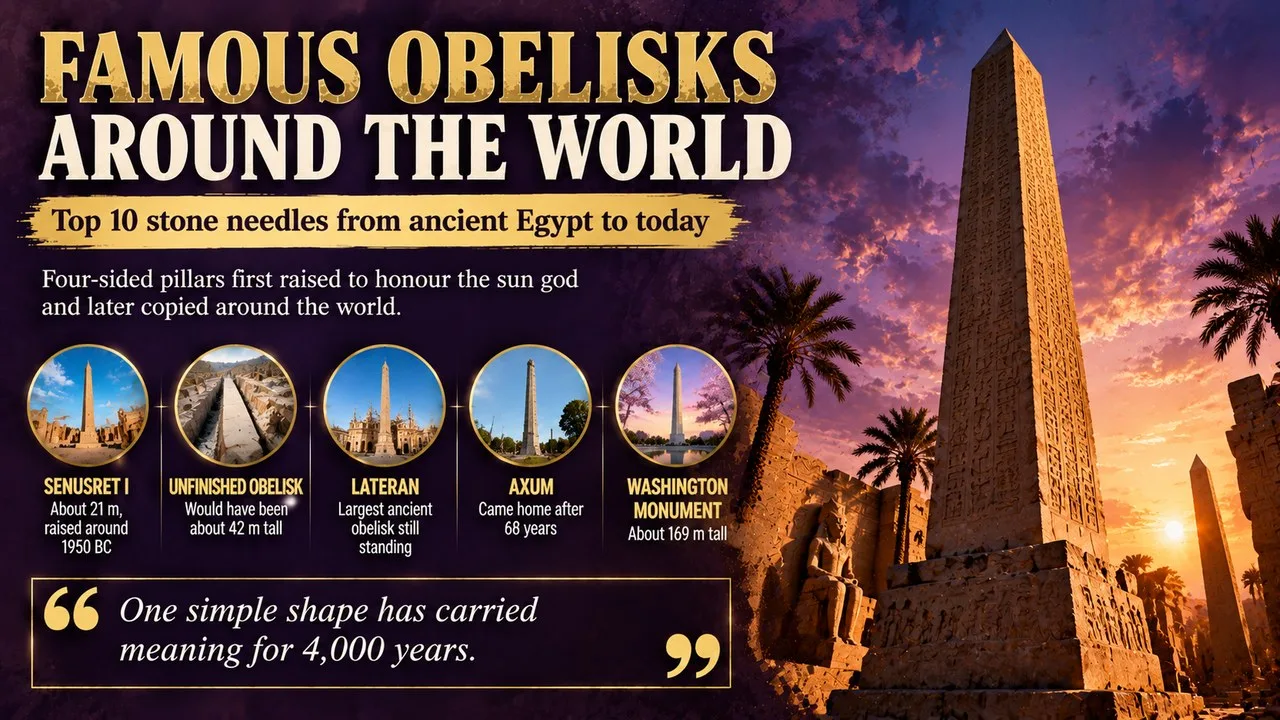
Related: Top 10 Famous Obelisks Around the World
Evidence of cheesemaking in the Mediterranean dates to around 5200 BC on the Dalmatian coast of Croatia.[9] Cheese allowed people to store milk and preserve its nutrients for longer periods.
Cheese is one of the oldest processed foods, and its development shows how farming communities found ways to make dairy products last.[9] Cheesemaking may also have begun independently in more than one place, through the pressing and salting of curdled milk.[9] It had been made for more than three thousand years before the last mammoths died out.
9. The Areni-1 Winery
The Areni-1 cave in Armenia contains one of the oldest known wineries. It dates to around 4100 to 4000 BC, during the Late Chalcolithic period, making it at least 1,000 years older than other known wineries.[10]
Archaeologists found a fermentation vat about 60 centimetres deep, a clay wine press about a metre long coated with a red wine pigment, large storage jars, and remains such as grape seeds and pressed grape skins.[10]
The discovery shows that wine production was already an organised activity more than two thousand years before the last mammoths disappeared.[10] It also suggests that grapes had been cultivated in the region for some time.
10. Horse-Drawn Chariots
The oldest known chariots have been found in burials of the Sintashta culture in modern Chelyabinsk Oblast, Russia, dated to around 1950 to 1880 BC.[11] They appeared close to the final centuries of the Wrangel Island mammoths.
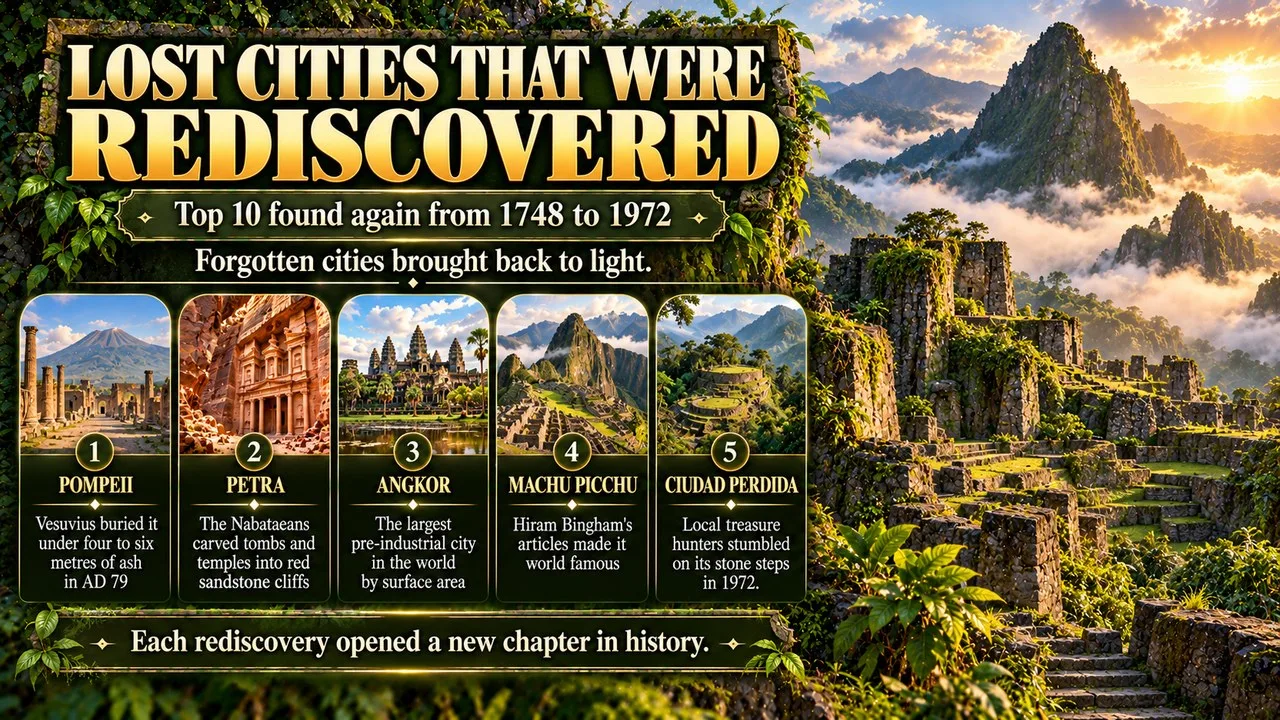
Related: Top 10 Lost Cities That Were Rediscovered
The critical invention that allowed light, horse-drawn chariots to be built was the spoked wheel.[11] A chariot was a fast, light, open, two-wheeled vehicle drawn by two or more horses hitched side by side.
Chariots later spread widely across Eurasia and transformed warfare, carried in part by Indo-Iranian peoples, who also spread rituals connected with horses and chariots.[11] Their appearance marks a technological shift that came just as the last mammoths were dying out.
Conclusion
The top 10 things that existed while woolly mammoths were still alive show how much human history overlaps with what is often thought of as prehistory. Monuments, writing, laws, cities, games, cheese, wine and chariots were already part of human life before the last mammoths vanished.
The last mammoths of Wrangel Island were not dwarfs, though they were somewhat smaller than mainland mammoths. An adult male from that population was estimated to stand about 2.8 metres tall and weigh about 4.5 tonnes.[12] Research published in 2017 suggested that the isolated population was suffering a "genetic meltdown" in its final centuries, though later analysis has contested that conclusion.[1][12]
Their survival into the age of pyramids and written law is a reminder that history and prehistory are not neatly separated. Different parts of the world were living in very different ages at the same time.
Even after the mammoths disappeared, people kept using their ivory as a raw material, a tradition that continues today.[12] The animals may be gone, but their remains still connect the Ice Age to the modern world.
- ^ [1] "Wrangel Island". Wikipedia. Wikipedia
- ^ [2] "Great Pyramid of Giza". Wikipedia. Wikipedia
- ^ [3] "Stonehenge". Wikipedia. Wikipedia
- ^ [4] "Newgrange". Wikipedia. Wikipedia
- ^ [5] "Cuneiform". Wikipedia. Wikipedia
- ^ [6] "Mohenjo-daro". Wikipedia. Wikipedia
- ^ [7] "Royal Game of Ur". Wikipedia. Wikipedia
- ^ [8] "Code of Ur-Nammu". Wikipedia. Wikipedia
- ^ [9] "Cheese". Wikipedia. Wikipedia
- ^ [10] "Areni-1 winery". Wikipedia. Wikipedia
- ^ [11] "Chariot". Wikipedia. Wikipedia
- ^ [12] "Woolly mammoth". Wikipedia. Wikipedia




















Discussion
Log in with