




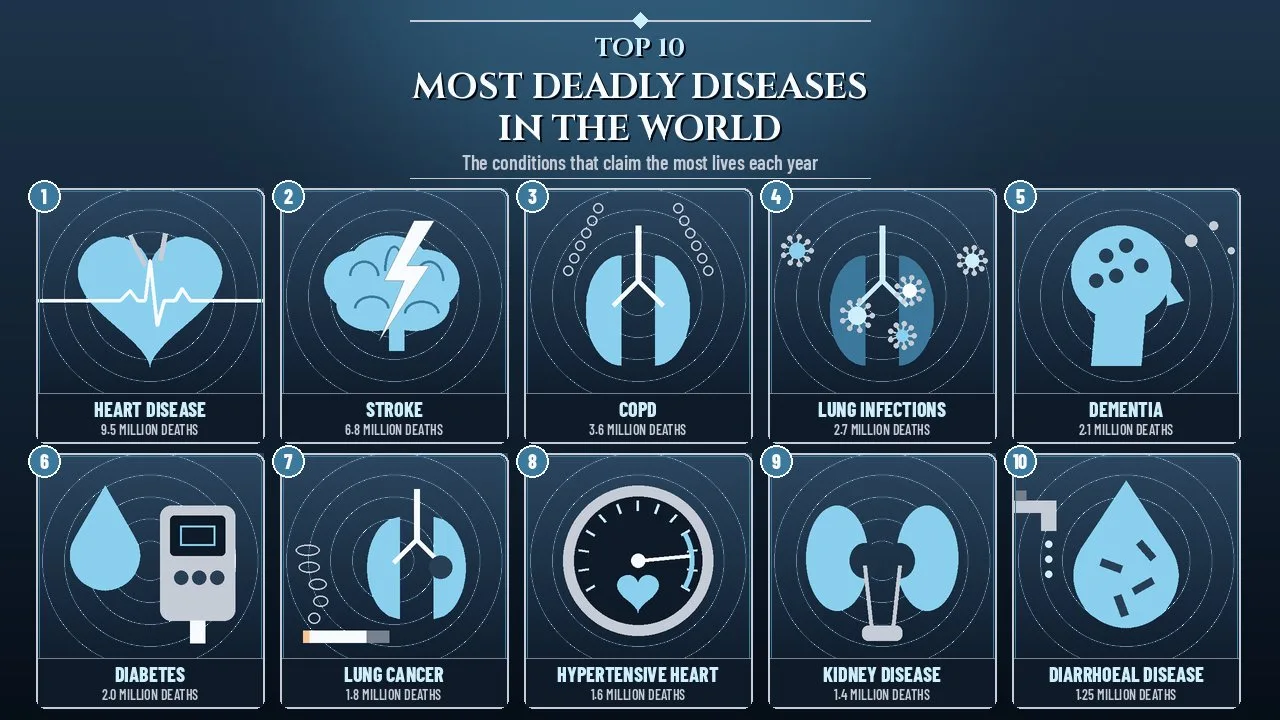
The most deadly diseases in the world, led by heart disease, stroke and COPD, killed about 33 million people in 2023, according to the latest WHO data. That is more than half of the roughly 61 million deaths recorded worldwide that year, and most of those lives were lost to long-term conditions that build up quietly over decades rather than to sudden outbreaks.
This list ranks the ten diseases that take the most lives each year, using the World Health Organization Global Health Estimates released in 2026, which cover every year from 2000 to 2023. Eight of the ten are noncommunicable conditions such as heart disease, dementia and diabetes. Only two, lower respiratory infections and diarrhoeal diseases, are infections that spread from person to person or through contaminated food and water.
The ranking looks at total deaths rather than how likely a single infection is to kill. A disease like rabies is almost always fatal once symptoms appear, yet it kills far fewer people than heart disease, so a separate section below covers the diseases that are deadliest per case. The information here is for general knowledge as of October 2026 and is not a substitute for advice from a doctor.
How This List Was Ranked
The order follows the number of deaths each condition caused worldwide in 2023, the most recent year in the WHO Global Health Estimates. Where possible, each figure was cross-checked against the Global Burden of Disease (GBD) 2023 study led by the Institute for Health Metrics and Evaluation, and against the relevant WHO fact sheet. The two systems use slightly different methods, so their totals can differ by a few hundred thousand deaths; the ranking uses the WHO figures throughout.
| Criterion | What it measures | How it was used |
|---|---|---|
| Annual deaths | Estimated deaths from the condition in 2023 | Main ranking factor |
| Share of global deaths | Deaths as a percentage of about 61 million total deaths | Shown in the At a Glance table |
| Trend since 2000 | Whether deaths have risen or fallen over two decades | Explained in each entry |
| Key risk factors | The main causes and behaviours that drive the disease | Used for the prevention advice |
| Second source check | GBD 2023, WHO fact sheets and specialist bodies | Used to confirm the order and figures |
Figures for the top seven come directly from the WHO text. Figures for hypertensive heart disease, kidney diseases and diarrhoeal diseases are approximate values read from the chart WHO published alongside its ranking, and they are rounded accordingly.
The Most Deadly Diseases at a Glance
| Rank | Disease | Approx. deaths in 2023 | Share of global deaths | Key risk |
|---|---|---|---|---|
| 1 | Ischaemic heart disease | 9.5 million | About 16% | High blood pressure, tobacco, unhealthy diet |
| 2 | Stroke | 6.8 million | About 11% | High blood pressure, tobacco, air pollution |
| 3 | Chronic obstructive pulmonary disease (COPD) | 3.6 million | About 6% | Tobacco smoke and household air pollution |
| 4 | Lower respiratory infections | 2.7 million | About 4.4% | Pneumonia germs, weak immunity, smoke exposure |
| 5 | Alzheimer's disease and other dementias | 2.1 million | About 3.5% | Older age, high blood pressure, diabetes |
| 6 | Diabetes | 2.0 million | About 3.3% | Excess weight, inactivity, genetics |
| 7 | Lung cancer (trachea, bronchus and lung) | 1.8 million | About 3% | Tobacco smoking, air pollution, radon |
| 8 | Hypertensive heart disease | About 1.6 million | About 2.6% | Untreated high blood pressure |
| 9 | Kidney diseases | About 1.4 million | About 2.3% | Diabetes, high blood pressure, obesity |
| 10 | Diarrhoeal diseases | About 1.25 million | About 2% | Unsafe water, poor sanitation, malnutrition |
1. Ischaemic Heart Disease
Ischaemic heart disease, also called coronary artery disease, is the single biggest killer on the planet. It develops when the arteries that feed the heart muscle narrow because fatty deposits build up on their inner walls. When one of those arteries becomes blocked, part of the heart is starved of oxygen, which is what happens during a heart attack.
| Attribute | Details |
|---|---|
| Deaths in 2023 | About 9.5 million (WHO) |
| Share of global deaths | About 16% |
| Change since 2000 | Up by about 3 million deaths, the largest rise of any cause |
| Disease group | Cardiovascular (noncommunicable) |
| Main risk factors | High blood pressure, tobacco, unhealthy diet, inactivity, harmful alcohol use |
Overview
The heart needs a steady supply of oxygen-rich blood, which it receives through the coronary arteries. Over years, plaque made of fat, cholesterol and other material can narrow these vessels and make them stiff. A clot that forms on a damaged plaque can suddenly cut off the flow, and heart muscle begins to die within minutes unless the blockage is cleared.
Cardiovascular diseases as a group, which include heart disease and stroke, killed an estimated 19.8 million people in 2022, about a third of all deaths. Heart attacks and strokes together made up 85% of those deaths, and more than three quarters of all cardiovascular deaths occur in low- and middle-income countries.
Key Risk Factors
- Raised blood pressure, often without any symptoms
- Tobacco use, including exposure to second-hand smoke
- A diet high in salt, sugar and unhealthy fats and low in fruit and vegetables
- Physical inactivity, overweight and obesity
- Raised blood glucose and raised blood lipids such as LDL cholesterol
- Harmful use of alcohol and long-term exposure to air pollution
Why It Ranks First
No other condition comes close in total deaths. WHO says ischaemic heart disease is responsible for about 16% of all deaths in the world, and the number has climbed by roughly 3 million since 2000 as populations grow older and risk factors spread. In high-income countries, deaths from the disease have actually fallen by about 18% since 2000, which shows how much prevention and treatment can achieve when they are widely available.
Many heart attacks give no warning, because narrowing of the arteries often causes no symptoms until a crisis occurs. That is why WHO stresses early detection, regular blood pressure checks and medicines for people at high risk.
Interesting Facts
- Women having a heart attack are more likely than men to feel shortness of breath, nausea, vomiting, or pain in the back or jaw.
- Upper-middle-income countries saw the largest rise in heart disease deaths since 2000, an increase of nearly 1.8 million.
- Pain can spread from the chest to the arms, left shoulder, elbows, jaw or back.
- Quitting tobacco, eating less salt and staying active are among the measures WHO lists as proven to lower risk.
2. Stroke
A stroke happens when blood flow to part of the brain is interrupted, either by a clot that blocks a vessel or by a vessel that bursts and bleeds. Brain cells deprived of oxygen begin to die quickly, which is why a stroke is a medical emergency and why survivors are often left with lasting disability.
| Attribute | Details |
|---|---|
| Deaths in 2023 | About 6.8 million (WHO); over 7 million in GBD 2021 |
| Share of global deaths | About 11% |
| Main types | Ischaemic stroke (a clot) and haemorrhagic stroke (bleeding) |
| Disease group | Cardiovascular (noncommunicable) |
| Main risk factors | High blood pressure, tobacco, diabetes, high cholesterol, air pollution |
Overview
Most strokes are ischaemic, caused by a clot or fatty deposit that stops blood from reaching the brain. The rest are haemorrhagic, where a weakened blood vessel ruptures inside or around the brain. Both share many of the same risk factors as heart disease, which is why doctors usually treat the two together as cardiovascular disease.
The World Stroke Organization, using Global Burden of Disease data for 2021, reports that more than 7 million people die from stroke every year and that about 87% of those deaths occur in low- and lower-middle-income countries. Between 1990 and 2021 the number of new strokes rose by about 70%, largely because more people are living into old age.
Key Risk Factors
- High blood pressure, the most important single risk
- Smoking and second-hand smoke
- Diabetes and raised blood sugar
- High LDL cholesterol and unhealthy diets rich in salt
- Excess body weight and low physical activity
- Outdoor and household air pollution
Why It Ranks Second
Stroke has been the second biggest killer for most of the period since 2000, with deaths rising from about 5.5 million in 2000 to about 6.8 million in 2023 in the WHO series. It also causes enormous disability. The World Stroke Organization estimates that stroke costs the world more than US$890 billion a year, a figure projected to almost double by 2050.
In high-income countries, stroke deaths fell by about 26% between 2000 and 2023, helped by better blood pressure control, faster emergency care and clot-busting treatments. Elsewhere, the number is still rising.
Interesting Facts
- The most common warning sign is sudden weakness of the face, arm or leg, usually on one side of the body.
- Sudden confusion, trouble speaking, vision problems, dizziness or a severe headache can also signal a stroke.
- About a third of stroke deaths happen in people younger than 70.
- Slightly more men than women die from stroke worldwide, at about 52% and 48%.
3. Chronic Obstructive Pulmonary Disease (COPD)
Chronic obstructive pulmonary disease, usually shortened to COPD, is a long-term lung condition that narrows the airways and makes breathing harder over time. It includes conditions often described as emphysema, where the tiny air sacs in the lungs are destroyed, and chronic bronchitis, where inflamed airways produce persistent cough and phlegm.
| Attribute | Details |
|---|---|
| Deaths in 2023 | About 3.6 million (WHO ranking); WHO's COPD fact sheet gives 3.4 million |
| Share of global deaths | About 6% |
| Rank for poor health | Seventh leading cause of disability-adjusted life years |
| Disease group | Chronic respiratory (noncommunicable) |
| Main risk factors | Tobacco smoke, household air pollution, dust and fumes at work |
Overview
In COPD the lungs become damaged or clogged with mucus, so air struggles to flow in and out. Typical symptoms are breathlessness, a chronic cough and tiredness, and they usually appear from middle age onwards. Flare-ups, when symptoms suddenly get worse for several days, can be life-threatening and often need extra medicine or hospital care.
The disease cannot be cured, but its progress can be slowed. Stopping smoking, avoiding polluted air, getting vaccines against lung infections, using inhalers and joining pulmonary rehabilitation programmes all help people breathe more easily and stay active for longer.
Key Risk Factors
- Active smoking and passive exposure to tobacco smoke
- Smoke from burning wood, dung, crop waste or coal for cooking and heating indoors
- Workplace exposure to dusts, fumes and chemicals
- Poor lung growth in early life, prematurity and severe childhood chest infections
- Childhood asthma
- Alpha-1 antitrypsin deficiency, a rare inherited condition
Why It Ranks Third
COPD overtook lower respiratory infections to become the third leading cause of death, rising from about 2.3 million deaths in 2000 to about 3.6 million in 2023 in the WHO series. Nearly 90% of COPD deaths in people under 70 happen in low- and middle-income countries, where indoor smoke from cooking fires is a major cause and breathing tests that confirm the diagnosis are often unavailable.
Tobacco remains the driving force in wealthier nations, accounting for more than 70% of COPD cases in high-income countries. In poorer countries it accounts for 30 to 40% of cases, with household air pollution responsible for much of the rest.
Interesting Facts
- COPD is diagnosed with spirometry, a simple breathing test that measures how much air a person can blow out and how quickly.
- People with COPD have a higher risk of pneumonia, lung cancer, heart problems, weak bones and depression.
- Short-acting inhalers work within seconds and are often used during flare-ups.
- COPD did not rank in the top ten causes of death in low-income countries in 2023, although it did in every other income group.
4. Lower Respiratory Infections
Lower respiratory infections are infections of the airways and lungs below the voice box, mainly pneumonia and bronchitis. They are caused by bacteria, viruses and occasionally fungi, and they are once again the deadliest communicable disease group in the world after the COVID-19 pandemic pushed them down the rankings for a few years.
| Attribute | Details |
|---|---|
| Deaths in 2023 | About 2.7 million (WHO) |
| Share of global deaths | About 4.4% |
| Status | Deadliest communicable disease group; top killer in low-income countries since about 2010 |
| Disease group | Communicable (infectious) |
| Common causes | Streptococcus pneumoniae, Haemophilus influenzae type b, respiratory syncytial virus, influenza |
Overview
In pneumonia, the small air sacs of the lungs called alveoli fill with pus and fluid instead of air. Breathing becomes painful and the body takes in less oxygen. Babies, older adults, smokers and people whose immune systems are weakened by malnutrition, HIV or other illnesses face the greatest danger.
WHO notes that deaths from lower respiratory infections rose again after 2022, once COVID-19 was partly brought under control, and in 2023 returned to their level before the pandemic. In low-income countries they have killed more than 350,000 people every year since 2000, with no clear downward trend.
Key Risk Factors
- Very young or very old age
- Malnutrition, especially in children who were not breastfed
- Weak immunity from HIV, measles or chronic illness
- Indoor smoke from cooking and heating fuels
- Tobacco smoking and crowded living conditions
- Missing routine vaccinations
Why It Ranks Fourth
Lower respiratory infections killed about 2.7 million people in 2023, placing them fourth overall and first among infectious causes. They are also one of the main killers of young children: WHO reported that pneumonia killed 740,180 children under five in 2019, about 14% of all deaths in that age group.
Much of this toll is avoidable. Vaccines against pneumococcus, Hib, measles and whooping cough are the most effective protection for children, and most cases of bacterial pneumonia can be cured with low-cost antibiotics such as amoxicillin when they are given early.
Interesting Facts
- Streptococcus pneumoniae is the most common cause of bacterial pneumonia in children, and respiratory syncytial virus is the most common viral cause.
- Exclusive breastfeeding for the first six months helps protect babies from pneumonia and can shorten the illness.
- Clean cooking stoves reduce indoor smoke, one of the hidden drivers of childhood pneumonia.
- In 2021, COVID-19 briefly pushed lower respiratory infections to second place in low-income countries.
5. Alzheimer's Disease and Other Dementias
Dementia is a set of symptoms that affect memory, thinking, behaviour and the ability to carry out everyday tasks. Alzheimer's disease is its most common cause, responsible for an estimated 60 to 70% of cases. Dementia gets worse over time, and in its later stages people need help with eating, moving and personal care.
| Attribute | Details |
|---|---|
| Deaths in 2023 | About 2.1 million (WHO) |
| Share of global deaths | About 3.5% |
| People living with dementia | 57 million in 2021, with nearly 10 million new cases each year |
| Disease group | Neurological (noncommunicable) |
| Who is most affected | Older adults; women account for about 66% of dementia deaths |
Overview
Dementia is caused by diseases and injuries that damage the brain, including Alzheimer's disease, vascular dementia, dementia with Lewy bodies and frontotemporal dementia. Early signs include forgetting recent events, misplacing things, getting lost in familiar places and struggling to find words. Mood and personality changes can sometimes appear before memory problems.
Although it is far more common after the age of 65, WHO stresses that dementia is not a normal or inevitable part of ageing. Many of its risk factors are the same as those for heart disease and stroke, which means a healthy heart also helps protect the brain.
Key Risk Factors
- Older age, the strongest risk factor
- High blood pressure, diabetes and obesity
- Smoking, harmful alcohol use and physical inactivity
- Depression, social isolation and low education
- Hearing and vision loss and poor sleep
- Traumatic brain injury, stroke and air pollution
Why It Ranks Fifth
Dementia is one of the fastest-growing causes of death in the world. In the WHO series, deaths rose from about 0.64 million in 2000 to about 2.1 million in 2023, more than three times as many. In high-income countries, Alzheimer's and other dementias became the third leading cause of death in 2023, overtaking lung cancer.
The disease also places a heavy burden on families. WHO estimates that dementia cost the global economy US$1.3 trillion in 2019, and about half of that cost came from unpaid care by relatives and friends, who spend an average of five hours a day supporting a loved one.
Interesting Facts
- More than 60% of people living with dementia are in low- and middle-income countries.
- Women provide about 70% of the care hours for people living with dementia.
- WHO counts dementia among the major causes of disability and dependency in older people worldwide.
- In upper-middle-income countries, dementia deaths more than tripled between 2000 and 2023.
6. Diabetes
Diabetes is a chronic disease in which the body either cannot make enough insulin or cannot use it properly. Insulin is the hormone that moves sugar from the blood into cells for energy, so without it blood glucose rises and slowly damages blood vessels and nerves throughout the body.
| Attribute | Details |
|---|---|
| Deaths in 2023 | About 2.0 million (WHO), more than double the 2000 figure |
| Share of global deaths | About 3.3% |
| People living with diabetes | 830 million in 2022, up from 200 million in 1990 |
| Disease group | Metabolic (noncommunicable) |
| Main types | Type 1 (little or no insulin) and type 2 (insulin does not work well), with type 2 making up more than 95% of cases |
Overview
Type 1 diabetes usually begins in childhood or youth and requires daily insulin, and its cause is still unknown. Type 2 diabetes develops more gradually, often over years, and is strongly linked to excess body weight and lack of exercise. Its symptoms can be so mild that many people are diagnosed only after complications have already started.
Common warning signs include strong thirst, frequent urination, blurred vision, tiredness and unexplained weight loss. Over time, uncontrolled diabetes can cause blindness, kidney failure, heart attacks, strokes and foot ulcers that may lead to amputation.
Key Risk Factors
- Overweight and obesity
- Physical inactivity
- Unhealthy diets high in sugar and refined foods
- Family history and genetics
- Older age
- Tobacco use
Why It Ranks Sixth
Diabetes now claims about 2 million lives a year, more than twice as many as in 2000. The share of adults living with the condition doubled from 7% in 1990 to 14% in 2022, and the rise has been fastest in low- and middle-income countries. In lower-middle-income countries, deaths from diabetes more than tripled between 2000 and 2023.
The death count in this ranking only includes deaths caused directly by diabetes. WHO notes that high blood glucose also causes about 11% of cardiovascular deaths, and in 2021 a further 530,000 kidney disease deaths were due to diabetes, so its real impact is even larger.
Interesting Facts
- In 2022, 59% of adults aged 30 and over with diabetes were not taking any medication for it.
- Almost half of all diabetes deaths in 2021 happened before the age of 70.
- About 9 million people were living with type 1 diabetes in 2017, mostly in high-income countries.
- Type 2 diabetes, once seen almost only in adults, is now increasingly found in children.
7. Lung Cancer
Lung cancer, grouped by WHO with cancers of the trachea and bronchus, is the deadliest cancer in the world. It begins when abnormal cells in the lungs start to grow out of control, forming tumours that can spread to other parts of the body. It is often found late, when treatment options are limited.
| Attribute | Details |
|---|---|
| Deaths in 2023 | About 1.8 million (WHO) |
| Share of global deaths | About 3% |
| New cases | About 2.5 million in 2022 |
| Disease group | Cancer (noncommunicable) |
| Main types | Non-small cell lung cancer (about 85% of cases) and small cell lung cancer |
Overview
Lung cancer is the leading cause of cancer cases and cancer deaths worldwide. Early symptoms are easily mistaken for minor chest problems and include a cough that does not go away, chest pain, breathlessness, coughing up blood, tiredness and weight loss with no clear cause. By the time many people are diagnosed, the cancer has already spread.
Small cell lung cancer is less common but usually grows and spreads faster. Treatment depends on the type and stage and can include surgery, radiotherapy, chemotherapy and newer targeted medicines and immunotherapy.
Key Risk Factors
- Smoking cigarettes, cigars or pipes, which causes 60 to 70% of cases
- Second-hand tobacco smoke
- Outdoor and household air pollution
- Workplace exposure to asbestos, silica and diesel exhaust
- Radon gas in homes
- Some chronic lung diseases and inherited susceptibility
Why It Ranks Seventh
Deaths from trachea, bronchus and lung cancers rose from about 1.1 million in 2000 to 1.8 million in 2023. The biggest increase came in upper-middle-income countries, where lung cancer deaths more than doubled, adding about 520,000 deaths a year. That rise was more than three times the increase seen in all other income groups combined.
Because most cases are linked to tobacco, lung cancer is also one of the most preventable cancers. WHO estimates that more than 1.3 million cases in men and nearly 500,000 cases in women could be prevented, and in well-resourced health systems, screening current or former heavy smokers has been shown to reduce lung cancer deaths.
Interesting Facts
- Of the nearly 10 million cancer deaths worldwide in 2024, lung cancer caused about 1.86 million, more than any other type.
- Colorectal cancer, with about 918,000 deaths, was the second deadliest cancer in 2024.
- Tobacco kills more than 7 million people a year, including over 1.6 million non-smokers exposed to second-hand smoke.
- Radon, a natural radioactive gas that can collect in homes, is a known cause of lung cancer in people who have never smoked.
8. Hypertensive Heart Disease
Hypertensive heart disease is damage to the heart caused by years of high blood pressure. When the heart has to pump against constantly raised pressure, its muscle thickens and stiffens, and over time it can fail to pump enough blood to the rest of the body. It is one of the clearest examples of a silent condition turning deadly.
| Attribute | Details |
|---|---|
| Deaths in 2023 | About 1.6 million (WHO chart); 1.49 million in GBD 2023 |
| Share of global deaths | About 2.6% |
| Underlying condition | Hypertension, a blood pressure of 140/90 mmHg or higher |
| Disease group | Cardiovascular (noncommunicable) |
| Main risk factors | Untreated high blood pressure, high-salt diet, obesity, alcohol, older age |
Overview
High blood pressure rarely causes symptoms, so many people live with it for years without knowing. The extra strain gradually remodels the heart, leading to an enlarged heart muscle, heart failure and irregular heart rhythms. The same pressure also damages arteries in the brain and kidneys, which is why hypertension is linked to several other entries on this list.
WHO estimates that about 1.4 billion adults aged 30 to 79 had hypertension in 2024, a third of everyone in that age range. Around 600 million of them did not know they had it, and only about 320 million, or 23%, had their blood pressure under control.
Key Risk Factors
- Uncontrolled or undiagnosed high blood pressure
- Diets high in salt, saturated fat and trans fats, and low in fruit and vegetables
- Overweight and obesity
- Physical inactivity
- Drinking too much alcohol and using tobacco
- Older age, family history, diabetes and kidney disease
Why It Ranks Eighth
Deaths from hypertensive heart disease have more than doubled since 2000, from about 0.75 million to about 1.6 million in the WHO series. In high-income countries the disease climbed from fifteenth to eighth among causes of death over the same period, even as deaths from ischaemic heart disease and stroke fell there.
The tragedy is that hypertension is easy to detect and cheap to treat. A simple blood pressure check can identify it, and lifestyle changes plus low-cost medicines can bring it under control, preventing much of the damage to the heart.
Interesting Facts
- About two thirds of adults with hypertension live in low- and middle-income countries.
- Very high blood pressure, usually 180/120 or above, can cause severe headaches, chest pain, nosebleeds and confusion and needs urgent care.
- Hypertension is diagnosed only after raised readings are recorded on two different days.
- Air pollution is the most significant environmental risk factor for hypertension and related diseases, according to WHO.
9. Kidney Diseases
Kidney diseases, most of them forms of chronic kidney disease (CKD), gradually reduce the ability of the kidneys to filter waste and excess fluid from the blood. In the early stages there are often no symptoms, but advanced disease can lead to kidney failure, which requires dialysis or a transplant to survive.
| Attribute | Details |
|---|---|
| Deaths in 2023 | About 1.4 million (WHO chart); 1.48 million in GBD 2023 |
| Share of global deaths | About 2.3% |
| Adults with CKD | About 788 million in 2023, up from 378 million in 1990 (GBD) |
| Disease group | Noncommunicable |
| Main risk factors | High blood sugar, high blood pressure, high body-mass index |
Overview
The kidneys clean the blood, balance salts and fluids, and help control blood pressure. In chronic kidney disease, this filtering slowly declines over months or years. Most people with CKD are in the milder stages, one to three, and many do not know they have it until a blood or urine test reveals the problem.
The GBD 2023 study, published in The Lancet in November 2025, found that about 14% of adults worldwide have chronic kidney disease. The highest rates were in North Africa and the Middle East, at around 18%, and China and India had the largest numbers of people affected, at about 152 million and 138 million.
Key Risk Factors
- Diabetes and raised blood glucose
- High blood pressure
- Overweight and obesity
- Older age
- Heart disease and a family history of kidney problems
- Long-term use of some medicines that can harm the kidneys
Why It Ranks Ninth
Kidney disease is one of the fastest climbers in the global rankings. WHO reports that it rose from the seventeenth leading cause of death in 2000 to the ninth in 2023, with deaths increasing by 86%. Because it is so closely tied to diabetes and high blood pressure, its rise mirrors the growth of those two conditions.
Its true toll is also hidden in other causes. The GBD study found that impaired kidney function accounted for about 11.5% of cardiovascular deaths, meaning poor kidney health contributes to many heart attacks and strokes as well.
Interesting Facts
- Diabetes alone caused about 530,000 kidney disease deaths in 2021, according to WHO.
- Simple blood and urine tests can detect chronic kidney disease long before symptoms appear.
- More than a dozen countries, including the USA, Indonesia, Japan, Brazil and Nigeria, each have over 10 million adults with CKD.
- Controlling blood sugar and blood pressure are the two most effective ways to slow kidney damage.
10. Diarrhoeal Diseases
Diarrhoeal diseases are infections of the gut that cause frequent loose or watery stools, usually three or more a day. They are caused by many bacteria, viruses and parasites that spread mostly through water, food or hands contaminated with faeces. The greatest danger is dehydration, as the body loses water and salts it needs to survive.
| Attribute | Details |
|---|---|
| Deaths in 2023 | About 1.25 million (WHO chart) |
| Share of global deaths | About 2% |
| Child deaths | About 443,832 children under five each year, plus about 50,851 aged five to nine |
| Disease group | Communicable (infectious) |
| Main risk factors | Unsafe drinking water, poor sanitation and hygiene, malnutrition |
Overview
Doctors describe three clinical types: acute watery diarrhoea, which includes cholera; acute bloody diarrhoea, also known as dysentery; and persistent diarrhoea that lasts 14 days or longer. Among young children, rotavirus, norovirus, adenovirus and astrovirus are the most common viral causes.
Diarrhoeal diseases are both preventable and treatable. Oral rehydration solution, a mix of clean water, sugar and salt, replaces lost fluids, and a 10 to 14 day course of zinc tablets shortens the illness and improves recovery in children.
Key Risk Factors
- Drinking water contaminated with faeces
- Lack of toilets and safe sanitation
- Poor hand hygiene and unsafe food handling
- Malnutrition and weakened immunity, including HIV
- Missing rotavirus vaccination
- Not being exclusively breastfed in the first six months of life
Why It Ranks Tenth
Diarrhoeal diseases have fallen further than any other cause in the top ten. In the WHO series, deaths dropped from about 2.6 million in 2000 to about 1.25 million in 2023, a decline of more than half. In low-income countries they fell from the first leading cause of death in 2000 to the fifth in 2023.
They still rank tenth because the burden falls so heavily on children in poor communities. Diarrhoea is the third leading cause of death in children aged one month to five years, and it is a major cause of malnutrition, which in turn makes children more vulnerable to the next infection.
Interesting Facts
- There are nearly 1.7 billion cases of childhood diarrhoeal disease worldwide every year.
- In low-income countries, children under three have about three episodes of diarrhoea each year on average.
- Septic bacterial infections now account for a growing share of diarrhoea-related deaths, alongside dehydration.
How the Death Toll Has Changed Since 2000
The table compares approximate WHO estimates for 2000 and 2023. Most chronic diseases have risen as the world population has grown and aged, while the two infectious groups have fallen thanks to vaccines, clean water and better treatment.
| Disease | Deaths in 2000 | Deaths in 2023 | Change |
|---|---|---|---|
| Ischaemic heart disease | 6.4 million | 9.5 million | Up about 47% |
| Stroke | 5.5 million | 6.8 million | Up about 24% |
| COPD | 2.3 million | 3.6 million | Up about 55% |
| Lower respiratory infections | 2.9 million | 2.7 million | Down about 7% |
| Alzheimer's and other dementias | 0.64 million | 2.1 million | More than tripled |
| Diabetes | 0.88 million | 2.0 million | More than doubled |
| Lung cancer | 1.1 million | 1.8 million | Up about 62% |
| Hypertensive heart disease | 0.75 million | 1.6 million | More than doubled |
| Kidney diseases | 0.76 million | 1.4 million | Up about 86% |
| Diarrhoeal diseases | 2.6 million | 1.25 million | Down by more than half |
Honourable Mentions
Several other diseases kill more than half a million people a year but fall just outside the top ten, or are counted under different headings in the WHO ranking. Their figures come from the latest WHO fact sheets and can refer to slightly different years.
| Disease | Latest annual deaths | Year | Note |
|---|---|---|---|
| Tuberculosis | 1.23 million | 2024 | The leading cause of death from a single infectious agent |
| Hepatitis B | 1.1 million | 2024 | Mostly through cirrhosis and liver cancer |
| COVID-19 | 0.9 million | 2023 | Fell to fourteenth place after leading the ranking in 2021 |
| Colorectal cancer | About 918,000 | 2024 | The second deadliest cancer after lung cancer |
| Liver cancer | About 732,000 | 2024 | Often linked to chronic hepatitis infection and alcohol |
| Malaria | About 610,000 | 2024 | 95% of deaths occur in the WHO African Region |
| HIV and AIDS | About 570,000 | 2025 | Deaths fell by 62% between 2000 and 2023 |
Deadliest Per Case: A Different Kind of Ranking
Total deaths show which diseases cause the greatest loss of life, but they do not show how dangerous a single infection is. Some rare diseases kill a very high proportion of the people they infect, even though they cause far fewer deaths overall.
| Disease | How deadly an infection is | Why total deaths stay lower |
|---|---|---|
| Rabies | Fatal in 100% of cases once symptoms appear | Prompt wound washing and post-exposure vaccination prevent almost all deaths |
| Ebola disease | Average case fatality around 50%, ranging from 25 to 90% in past outbreaks | Outbreaks are rare and usually contained by tracing and isolation |
| Severe falciparum malaria | Untreated, can progress to severe illness and death within 24 hours | Fast testing and treatment cure most cases |
| Tuberculosis | Can be fatal without treatment | A course of antibiotics cures most patients |
| HIV | No cure for the infection | Antiretroviral therapy lets people live long, healthy lives |
How to Lower Your Risk
Most of the deaths on this list are linked to a handful of shared risk factors, which means a few habits protect against several diseases at once. The table matches each major risk with the diseases it drives and the steps that help, based on WHO guidance.
| Risk factor | Diseases it drives | What helps |
|---|---|---|
| Tobacco use | Heart disease, stroke, COPD, lung cancer | Quit smoking and avoid second-hand smoke |
| High blood pressure | Heart disease, stroke, hypertensive heart disease, kidney disease, dementia | Regular checks, less salt, medicines if prescribed |
| High blood sugar and obesity | Diabetes, kidney disease, heart disease | Healthy diet, regular activity, screening |
| Air pollution | COPD, lung cancer, lower respiratory infections, stroke | Clean cooking fuels and less exposure to smoke |
| Unsafe water and poor hygiene | Diarrhoeal diseases | Safe water, toilets, hand washing with soap |
| Missed vaccines | Pneumonia, diarrhoeal diseases | Routine childhood and adult vaccination |
- Get blood pressure, blood sugar and cholesterol checked regularly, even if you feel well.
- Stay physically active and limit salt, sugar and processed food.
- Seek emergency help at once for chest pain or sudden weakness on one side of the body.
Frequently Asked Questions
What is the deadliest disease in the world?
Ischaemic heart disease, also called coronary artery disease, is the deadliest disease in the world. WHO estimates it killed about 9.5 million people in 2023, around 16% of all deaths. It has been the leading cause of death for more than two decades, and its toll has grown by about 3 million since 2000.
Which infectious disease kills the most people?
As a group, lower respiratory infections such as pneumonia are the deadliest communicable diseases, with about 2.7 million deaths in 2023. Tuberculosis is the leading killer among diseases caused by a single infectious agent, with about 1.23 million deaths in 2024, even though it is preventable and curable.
Why is COVID-19 not on this list?
COVID-19 was the leading cause of death worldwide in 2021, with an estimated 9.4 million deaths. Vaccination, immunity and better treatment then cut its toll sharply. By 2023 deaths directly caused by COVID-19 had fallen to about 0.9 million, making it the fourteenth leading cause and dropping it out of the top ten.
Which disease has the highest fatality rate?
Rabies has the highest fatality rate of any known disease. Once the virus reaches the nervous system and symptoms appear, it is fatal in virtually every case. However, deaths are preventable with prompt wound washing and post-exposure vaccination, which is why anyone bitten by a possibly rabid animal should seek care immediately.
How many people die each year worldwide?
WHO estimates that about 61 million people died worldwide in 2023. The ten leading causes accounted for about 33 million of those deaths, or 54%. Eight of the ten leading causes were noncommunicable diseases such as heart disease, stroke, dementia and diabetes, which together made up nearly half of all deaths.
Can the most deadly diseases be prevented?
Many of them can be prevented or delayed. Avoiding tobacco, controlling blood pressure and blood sugar, eating a healthy diet, staying active and reducing exposure to polluted air lower the risk of most chronic diseases on this list. Clean water, sanitation and vaccines prevent much of the burden from pneumonia and diarrhoea.
Conclusion
The most deadly diseases in the world today are mostly slow, chronic conditions rather than dramatic epidemics. Heart disease and stroke alone took more than 16 million lives in 2023, and COPD, dementia, diabetes, lung cancer, hypertensive heart disease and kidney disease are all growing as populations age. Only two infectious groups, lower respiratory infections and diarrhoeal diseases, remain in the top ten, and both have become less deadly since 2000.
The encouraging message is that much of this burden is preventable. The same steps, such as not smoking, keeping blood pressure in check, eating well, staying active and ensuring safe water and vaccines, protect against several of these killers at once. To learn more, explore our guides to the most advanced hospitals in the world, rare medical conditions you have never heard of, the most unhealthy foods to limit and their better swaps and the most common reasons why people use drugs, or browse more lists in Top 10 Facts.
- World Health Organization, The top 10 causes of death, fact sheet (2 October 2026, Global Health Estimates 2000 to 2023): https://www.who.int/news-room/fact-sheets/detail/the-top-10-causes-of-death
- WHO fact sheets on cardiovascular diseases, chronic obstructive pulmonary disease, pneumonia, dementia, diabetes, lung cancer, cancer, hypertension, diarrhoeal disease and tobacco: https://www.who.int/news-room/fact-sheets
- WHO fact sheets on tuberculosis, hepatitis B, HIV and AIDS, malaria, rabies and Ebola disease: https://www.who.int/news-room/fact-sheets
- GBD 2023 Chronic Kidney Disease Collaborators, The Lancet (published 7 November 2025): https://www.thelancet.com/journals/lancet/article/PIIS0140-6736(25)01853-7/fulltext
- GBD 2023 Cardiovascular Collaborators, Journal of the American College of Cardiology (2025): https://www.jacc.org/doi/10.1016/j.jacc.2025.08.015
- World Stroke Organization, Global Stroke Fact Sheet 2025, International Journal of Stroke: https://pmc.ncbi.nlm.nih.gov/articles/PMC11786524/
- Reference topic only: 10mosttoday.com list of the most deadly diseases in the world (2020)


















Log in with