





 By
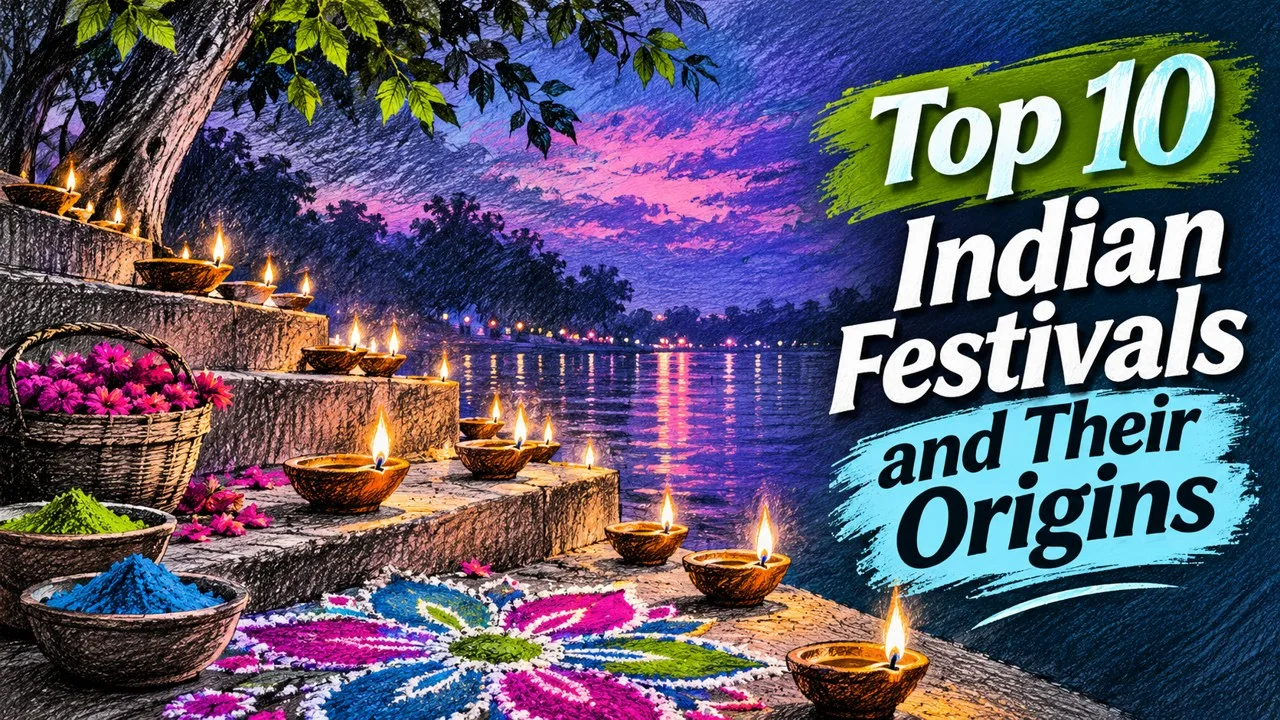
From Diwali's lamps to Onam's snake boat races, these ten Indian festivals and their origins reveal the myths, harvests and history behind each celebration. India celebrates hundreds of festivals each year, reflecting its many religions, languages and regional traditions. Many are tied to the lunar calendar and the farming year, so their dates shift from year to year. Others mark the stories of gods, heroes and saints.
This list explains the origins of ten of India's best-known festivals. They range from nationwide celebrations such as Diwali and Holi to regional festivals that define the identity of states such as Kerala, Assam and Punjab.
Key Facts
The ten festivals below come from different regions of India and from Hindu, Sikh and folk traditions.
Indian Festivals at a Glance
| # | Festival | Region | Season | Origin |
|---|---|---|---|---|
| 1 | Diwali | Across India | October or November | Rama's return and the victory of light |
| 2 | Holi | North India and beyond | March | Prahlad, Holika and Krishna's play |
| 3 | Durga Puja | West Bengal and eastern India | September or October | Durga's victory over Mahishasura |
| 4 | Ganesh Chaturthi | Maharashtra and across India | August or September | Birth of Ganesha |
| 5 | Onam | Kerala | August or September | Return of King Mahabali |
| 6 | Pongal | Tamil Nadu | Mid-January | Thanksgiving for the harvest |
| 7 | Vaisakhi | Punjab | 13 or 14 April | Harvest and the founding of the Khalsa |
| 8 | Raksha Bandhan | Across India | August | Bond of protection between siblings |
| 9 | Chhath Puja | Bihar and eastern India | October or November | Worship of the Sun god |
| 10 | Bihu | Assam | April, October and January | Assamese new year and farming cycle |
1. Diwali
Diwali, or Deepavali, is the festival of lights and one of the most important festivals in India. It is celebrated over about five days in the Hindu month of Kartika, usually in October or November. [1]
In much of northern India, Diwali marks the return of Lord Rama to Ayodhya after defeating the demon king Ravana, as told in the Ramayana. People are said to have lit lamps to welcome him home. The festival also honours Lakshmi, the goddess of wealth and prosperity. [1]
Diwali has meaning for other faiths too. Jains mark the nirvana of Mahavira, and Sikhs celebrate Bandi Chhor Divas, recalling the release of Guru Hargobind from imprisonment.
Families clean and decorate their homes, light clay lamps called diyas, draw rangoli patterns, exchange sweets and set off fireworks.
Diwali is also an important time for business, and many traders begin new account books.
Key Figures
- Meaning: row of lamps
- Month: Kartika
- Main legend: Rama's return to Ayodhya
- Goddess honoured: Lakshmi
Why It Made the List
Diwali is India's best-known festival worldwide. Its message of light over darkness is shared across several faiths.
2. Holi
Holi is the festival of colours, celebrated on the full moon of the month of Phalguna, usually in March. It welcomes spring and is famous for people throwing coloured powder and water at each other. [2]
The night before, people light bonfires in a ritual called Holika Dahan. It recalls the legend of Prahlad, a devotee of Vishnu, who survived when his aunt Holika tried to burn him in a fire. [2]
Holi is also linked to the playful love of Krishna and Radha. In the Braj region around Mathura and Vrindavan, celebrations last for days, and in Barsana women playfully beat men with sticks in Lathmar Holi.
During Holi, social rules relax, and people of different ages and backgrounds celebrate together.
Special foods such as gujiya sweets and the drink thandai are popular.
Key Figures
- Date: Phalguna full moon
- Eve ritual: Holika Dahan bonfire
- Key legends: Prahlad, and Krishna and Radha
- Famous region: Braj, around Mathura
Why It Made the List
Holi is one of the world's most joyful festivals. It celebrates spring, good over evil and the breaking down of barriers.
Related: The Republic of India: Geography, History, and Diversity
3. Durga Puja
Durga Puja celebrates the goddess Durga and her victory over the buffalo demon Mahishasura. It is the biggest festival in West Bengal and is also celebrated in Assam, Odisha, Bihar and Tripura. [3]
The festival takes place in the month of Ashvin, usually in September or October. Communities build elaborate temporary structures called pandals, which house beautifully crafted clay images of Durga and her children. [3]
Over five main days, people visit pandals, enjoy food and cultural events, and dress in new clothes. On the final day, Vijayadashami, the images are carried in procession and immersed in rivers or other water.
In 2021, Durga Puja in Kolkata was added to UNESCO's list of the Intangible Cultural Heritage of Humanity.
The festival supports many artists, especially the clay sculptors of Kumartuli in Kolkata.
Key Figures
- Goddess: Durga
- Legend: victory over Mahishasura
- Final day: Vijayadashami
- UNESCO listing: 2021
Why It Made the List
Durga Puja is one of the world's largest public celebrations of art and faith. It shows how a religious festival can become a cultural carnival.
4. Ganesh Chaturthi
Ganesh Chaturthi celebrates the birth of Ganesha, the elephant-headed god of wisdom and new beginnings. It falls in the month of Bhadrapada, usually in August or September, and can last up to ten days. [4]
People bring clay images of Ganesha into their homes or public pandals, offering prayers and sweets such as modak, said to be his favourite. [4]
The festival was celebrated privately for centuries. In 1893 the freedom fighter Bal Gangadhar Tilak promoted it as a large public festival in Pune, using it to bring people together against British rule.
The festival ends with visarjan, when images are carried through the streets and immersed in water.
Mumbai's celebrations are among the largest, with famous public images drawing huge crowds.
Key Figures
- God: Ganesha
- Month: Bhadrapada
- Public festival promoted: 1893, by Tilak
- Favourite sweet: modak
Why It Made the List
Ganesh Chaturthi blends faith with community spirit. Its public form also played a role in India's freedom movement.
Related: Top 10 Great Personalities of India
5. Onam
Onam is the harvest festival of Kerala and the state's biggest celebration. It falls in the Malayalam month of Chingam, usually in August or September, and lasts about ten days. [5]
Onam honours the legendary King Mahabali, whose rule was said to be a golden age of equality and plenty. According to legend, Vishnu, as the dwarf Vamana, sent Mahabali to the underworld but allowed him to visit his people once a year. [5]
Families create pookalam, intricate carpets of flowers, outside their homes. The main day, Thiruvonam, features the Onasadya, a grand vegetarian feast served on a banana leaf.
Snake boat races called Vallam Kali are held on Kerala's rivers and backwaters, with long boats rowed by dozens of oarsmen.
Onam is celebrated by people of all faiths in Kerala.
Key Figures
- Region: Kerala
- Month: Chingam
- Legend: King Mahabali's yearly visit
- Highlights: pookalam, Onasadya, snake boat races
Why It Made the List
Onam is a celebration of harvest, memory and unity. It is the defining festival of Kerala.
6. Pongal
Pongal is the harvest festival of Tamil Nadu, celebrated in mid-January at the start of the Tamil month of Thai. It thanks the Sun, nature and farm animals for a good harvest. [6]
The festival lasts four days: Bhogi, when old things are discarded, Thai Pongal, the main day, Mattu Pongal, which honours cattle, and Kaanum Pongal, a day for visiting family. [6]
The word pongal means to boil over. On the main day, families cook a dish of new rice, milk and jaggery until it overflows the pot, a sign of abundance.
During Mattu Pongal, cattle are washed, decorated and fed. In some areas, the bull-taming sport Jallikattu is held.
The festival coincides with Makar Sankranti and other harvest festivals celebrated across India.
Key Figures
- Region: Tamil Nadu
- Month: start of Thai, mid-January
- Length: four days
- Meaning of pongal: to boil over
Why It Made the List
Pongal is a festival of gratitude rooted in farming life. It shows how India's harvest festivals honour the land and animals.
Related: Top 10 Most Bizarre Phobias: Strange Fears That Exist
7. Vaisakhi
Vaisakhi, also spelled Baisakhi, is a spring harvest festival celebrated on 13 or 14 April, especially in Punjab. Farmers celebrate the ripening of the wheat crop with music, dance and fairs. [7]
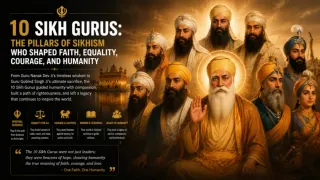
For Sikhs, Vaisakhi has special religious importance. On Vaisakhi in 1699, Guru Gobind Singh founded the Khalsa, the community of initiated Sikhs, at Anandpur Sahib. [7]
Sikhs visit gurdwaras, hold processions called nagar kirtans and enjoy community meals. Energetic bhangra and gidda dances are performed in villages.
Vaisakhi also marks the solar new year in several parts of India.
In 1919, the Jallianwala Bagh massacre took place in Amritsar on Vaisakhi day.
Large gatherings take place at the Golden Temple in Amritsar, where pilgrims bathe in the sacred pool.
Key Figures
- Date: 13 or 14 April
- Crop: wheat harvest
- Founding of the Khalsa: 1699
- Founded at: Anandpur Sahib
Why It Made the List
Vaisakhi combines farming joy with deep religious history. It is one of the most important days in the Sikh calendar.
8. Raksha Bandhan
Raksha Bandhan celebrates the bond between brothers and sisters. It falls on the full moon of the month of Shravana, usually in August. [8]
Sisters tie a sacred thread called a rakhi around their brothers' wrists and pray for their well-being. Brothers give gifts and promise to protect their sisters. [8]
Several stories are linked to the festival. One tells how Draupadi tore her sari to bandage Krishna's finger, and Krishna later protected her.
In 1905, Rabindranath Tagore used rakhi ceremonies to promote unity between Hindus and Muslims during protests against the partition of Bengal.
Today, rakhis are also tied between cousins and close friends, and the festival is celebrated by many communities.
The festival is preceded by busy markets selling rakhis and sweets.
Key Figures
- Date: Shravana full moon
- Ritual: tying a rakhi thread
- Legend: Krishna and Draupadi
- Tagore's unity rakhi: 1905
Why It Made the List
Raksha Bandhan is one of India's most loved family festivals. It celebrates loyalty, protection and love.
Related: Top 10 Oldest Buildings in the World
9. Chhath Puja
Chhath Puja is an ancient festival dedicated to Surya, the Sun god, and Chhathi Maiya. It is celebrated mainly in Bihar, Jharkhand, eastern Uttar Pradesh and Nepal, about six days after Diwali. [9]
The four-day festival includes ritual bathing, fasting and offerings. Devotees, many of them women, keep a strict fast, often without water, for about 36 hours. [9]
The main rituals take place on riverbanks and ponds. Devotees stand in the water and offer prayers to the setting Sun and then to the rising Sun the next morning.
Offerings include thekua, a sweet baked from wheat flour, along with fruits carried in bamboo baskets.
Migrants from Bihar now celebrate Chhath in cities across India and abroad.
Key Figures
- Deity: Surya and Chhathi Maiya
- Main region: Bihar
- Length: four days
- Offering: thekua and fruits
Why It Made the List
Chhath is one of India's most demanding religious festivals. Its riverside rituals create some of the most striking scenes in Indian culture.
10. Bihu
Bihu is the main festival of Assam and is celebrated three times a year, each linked to the farming cycle. Rongali or Bohag Bihu in April marks the Assamese new year and the start of spring. [10]
Kongali or Kati Bihu in October is a quieter festival, when lamps are lit in the paddy fields. Bhogali or Magh Bihu in January celebrates the harvest with feasting and bonfires called meji. [10]
Rongali Bihu is the most famous, with the lively Bihu dance performed by young men and women in traditional dress. It is accompanied by drums called dhol and the pepa, a pipe made from buffalo horn.
Bihu songs often celebrate love, nature and the new season.
The festival is celebrated by Assamese people of all communities.
Key Figures
- Region: Assam
- Number of Bihus: three
- Biggest: Rongali Bihu in April
- Instruments: dhol and pepa
Why It Made the List
Bihu captures the identity of Assam. Its music and dance are among India's most vibrant folk traditions.
Conclusion
India's festivals are rooted in myths, harvests and historical events, and many carry several meanings at once. Together they show the country's remarkable diversity.
Whether lighting lamps for Diwali, racing snake boats for Onam or dancing for Bihu, these festivals bring families and communities together and keep ancient traditions alive.
- ^ [1] "Diwali". Wikipedia. Wikipedia: Diwali Wikipedia: Bandi Chhor Divas
- ^ [2] "Holi". Wikipedia. Wikipedia: Holi Wikipedia: Holika Dahan
- ^ [3] "Durga Puja". Wikipedia. Wikipedia: Durga Puja Wikipedia: Kumartuli
- ^ [4] "Ganesh Chaturthi". Wikipedia. Wikipedia: Ganesh Chaturthi Wikipedia: Bal Gangadhar Tilak
- ^ [5] "Onam". Wikipedia. Wikipedia: Onam Wikipedia: Mahabali
- ^ [6] "Pongal". Wikipedia. Wikipedia: Pongal (festival) Wikipedia: Jallikattu
- ^ [7] "Vaisakhi". Wikipedia. Wikipedia: Vaisakhi Wikipedia: Khalsa
- ^ [8] "Raksha Bandhan". Wikipedia. Wikipedia: Raksha Bandhan Wikipedia: Partition of Bengal (1905)
- ^ [9] "Chhath Puja". Wikipedia. Wikipedia: Chhath Wikipedia: Surya
- ^ [10] "Bihu". Wikipedia. Wikipedia: Bihu Wikipedia: Rongali Bihu




















Discussion
Log in with