






 By

Africa is a continent of many countries, climates, languages, and histories, and several popular pictures of it still pretend otherwise.
The ten corrections below concern wildlife in cities, approaching wild animals, technology, climate, conspiracy talk, language, conflict, women's rights, earlier states and cities, and disease stereotypes. This article is a check on continent-wide slogans. It is not a tour of distress, and it will not treat more than a billion people as a single type.
Key Facts
| Slogan | What a careful map shows | A limit on the correction |
|---|---|---|
| 1 | "Animals roam every suburban street" | Africa is not one jungle; a few cities have specific urban wildlife, which is not a lion on every commute |
| 2 | Wild animals are safe to approach | They are not, and this page is not a viewing guide |
| 3 | "Africa has no technology" | The continent includes major cities, universities, and systems such as Kenya's M-Pesa; it is not a single tech story either |
| 4 | "The whole continent is a hot desert" | The Sahara is vast; it is not the climate of Lagos, Nairobi, the Atlas, or Lesotho |
| 5 | A secret "new world order" directs the continent as one piece | Fifty-plus countries have ordinary, visible politics, not a hidden single joystick |
| 6 | People "speak African" | There is no such single language; counts of living languages run into the thousands |
| 7 | "There is war everywhere" | Some countries have had or now have wars; most people on the continent are not living on a battlefield |
| 8 | "Women are without rights" | Law and daily life vary widely by country; no single protocol, and no single stereotype, settles the file |
| 9 | "There were no advanced states" | Egypt is African, and it is one of many earlier African states and cities |
| 10 | "The whole continent is disease-riddled" | Health conditions vary; a medical slur aimed at a continent is a stereotype, not a map |
1. Cities, Farms, and a Cartoon of the Street
A familiar picture treats "Africa" as a single wildlife park in which lions and elephants wander through everyday streets [1]. The continent has extraordinary wildlife, mostly in specific habitats and in managed parks and community lands, and it also has dense cities, farms, highways, and suburbs that look like urban life, not like a film set. A few places have well-known urban animal conflicts, such as baboons on the Cape Peninsula. That is a local management issue. It is not a continent-wide commute [1].
The unexpected fact is how much of the cartoon depends on refusing to picture an ordinary African city at all [1]. This article will not pretend that wildlife is unimportant. The careful fact is a documented range of landscapes and city regions, a documented set of local human-wildlife edges, and a popular image that still prefers a stock photograph of a savanna. Most people in Cairo, Lagos, or Johannesburg are not dodging megafauna on the way to work.
A continent can hold both a national park and a financial district. The slogan that erases the second is the one that needs to go.
2. Distance Is the Ordinary Rule
Where wild animals are present, the safe and the legal rule is almost always to keep far back [2]. Popular pictures of close encounters, and a tourist wish to get "one better shot," have repeatedly caused injuries and stress to animals. This article will not offer a method for approaching wildlife, and it will not treat a zoom lens as a dare in another form. The animals are not props [2].
The unexpected fact, after a century of safari photography, is how often the warning still has to be issued as if it were news [2]. This article will not turn a safety rule into a horror story. The careful fact is a documented record of dangerous close approaches and a documented conservation reason to leave animals unbothered. Curiosity is not a right of access to a rhino's space.
A photograph can be taken from a lawful distance. That is the whole of the advice this list will give.
3. Phones, Cities, and a Tired Insult
The claim that "Africa has no technology" is a period insult dressed up as geography [3]. The continent has large cities, universities, media industries, and, in several countries, widely used mobile-money systems. M-Pesa, launched in Kenya in 2007, brought everyday money transfer to phone users on a scale that caught many richer countries looking. That example is real, and it should not be flipped into a new single story in which "Africa" is now defined only as a mobile-money miracle [3].
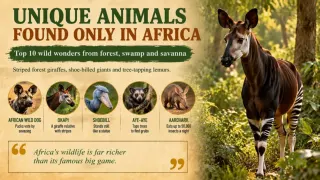
Related: Top 10 Unique Animals Found Only in Africa
The unexpected fact is how old the "no technology" line still sounds in a decade when African cities are ordinary nodes of the same networks everyone else uses [3]. This article will not flatten fifty-plus countries into one startup press release. The careful fact is documented urban and technical life, documented innovation in particular markets, and a stereotype that depends on not looking at a street in Nairobi, Lagos, Kigali, or Cape Town. Drum-and-smoke-signal cartoons are not analysis.
A continent can have uneven infrastructure and still not be prehistoric. Unevenness is a policy fact. Prehistory is a slur.
4. The Sahara Is Not the Whole Map
The Sahara is one of the world's great deserts, and it still does not set the weather for the whole continent [4]. Africa includes Mediterranean coasts, tropical forests, high plateaus, the savannas that dominate so many foreign photographs, and mountains that carry snow. Lesotho and the Drakensberg can be cold; the Atlas ranges have winter weather; Nairobi's altitude surprises visitors who packed only for a beach. "Africa is hot" is a climate slogan, not a climate [4].
The unexpected fact is how rarely a foreign weather chat bothers to name a country, let alone an elevation [4]. This article will not replace one cartoon with a claim that the continent is secretly temperate. The careful fact is a documented range of climates across a very large landmass, a desert that is vast and still not everything, and a need to speak of places, not of a single forecast. Heat is real in many regions. It is not a continental uniform.
A desert can be famous and still leave most of the map to other weathers. The map is the correction.
5. Ordinary States, Not a Hidden Joystick
Some conspiracy talk treats the entire continent as a piece on a secret board, moved by a hidden "new world order" or a similar cabal [5]. The duller truth is the one in the newspapers: more than fifty countries, with governments, elections, juntas, courts, debts, regional organizations, and ordinary, often harsh, foreign-policy bargains. Those bargains can be criticized in public. They do not require a secret fraternity to explain them [5].
The unexpected fact is how little a conspiracy has to know about actual African politics in order to sound comprehensive [5]. This article will not advertise a cabal by describing it in loving detail. The careful fact is a documented state system, documented international relationships, and a style of explanation that prefers a hidden hand to a named ministry. Mystery is not a substitute for a country name.
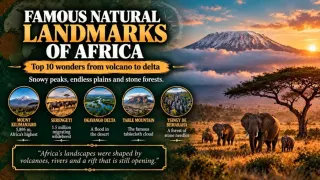
Related: Top 10 Famous Natural Landmarks of Africa
A continent is not a single client of a single plot. It is a crowded diplomatic list, which is already dramatic enough.
6. No One Speaks "African"
There is no language called "African," just as there is no single language called "European" or "Asian" [6]. The continent's linguistic life includes well over a thousand living languages, and higher counts if finer distinctions are used, along with official and trading languages such as Arabic, French, English, Portuguese, Swahili, Amharic, and many others. Ethnicity and language are not a single column in a table. "Everyone speaks African" is a refusal to hear [6].
The unexpected fact is how confidently the fake language-name is still offered by people who would never say they had just been to "Asia" and spoken "Asian" [6]. This article will not pretend that one lingua franca now covers the map. The careful fact is a documented linguistic diversity, a set of widely used official languages that differ by country, and a popular shorthand that erases all of it. Swahili is not a continent. Neither is English.
A conversation has to begin with a language that exists. "African" is not one of them.
7. Wars Happen in Places, Not Everywhere
Conflict is a real part of recent and present history in a number of African countries, and it should not be denied or softened into public relations [7]. The stereotype that the continent is uniformly a war, a desert of refugees, and a synonym for collapse is still a stereotype. Most people on the continent are not living in a war zone on a given day. Stability, elections, and ordinary civic life exist in many states, sometimes next door to a crisis [7].
The unexpected fact is how rarely the stereotype allows two neighboring countries to have different news [7]. This article will not answer a cruel cartoon with a cheerful one. The careful fact is a documented variety of political conditions, documented wars that have exact names and borders, and a popular view that treats a continent as a single emergency. Suffering in one state does not license a caption over all the others.
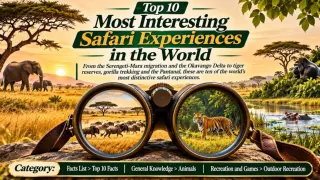
Related: Top 10 Most Interesting Safari Experiences in the World
A war is a place and a date. "Everywhere" is not a place.
8. Law and Life Vary, and So Do the Facts
A continent-wide claim that "women are without rights" is false as a single sentence, and so is a victory sentence that treats one legal text as the end of the story [8]. The African Union's Maputo Protocol of 2003 is a real regional instrument on women's rights. Ratification, enforcement, family law, political representation, and daily safety differ widely by country. Some states have had women as heads of state or government, and some legislatures have high female representation. None of that erases discrimination where it exists [8].
The unexpected fact is how often a stereotype and a celebratory press release can be equally blunt [8]. This article will not patronize, and it will not use a protocol as a finishing bow. The careful fact is a documented legal instrument, documented variation among countries, and a refusal to speak of "African women" as if they were one legal person. Rights are made and fought for in particular courts and streets.
A protocol can matter and still not be a continent's completed biography. The biography has to be written country by country.
9. Egypt Is African, and It Is Not Alone
The idea that the continent has no history of cities, states, or scholarship is a leftover of colonial storytelling [9]. Egypt is an African civilization, not an honorary exception parked in another continent for convenience. The list of earlier African states and cities is long, and it includes, among many others, Kush, Aksum, the Swahili coastal cities, Mali, Songhai, Benin, and Great Zimbabwe. Mansa Musa's wealth has become a popular superlative; the exact modern conversion is less certain than the fact of a powerful medieval West African empire [9].
The unexpected fact is how much work it still takes to say a simple geographical sentence: Egypt is in Africa [9]. This article will not reduce a continent to a highlight reel of famous names, and it will not treat those names as a surprise. The careful fact is a documented deep urban and political history in many regions, a popular habit of relocating Egypt, and a set of ruins and archives that were never as silent as the slogan claimed. "Void" was the fiction.
A history can be recovered without being inflated. The recovery is already enough to retire the void.
Related: Top 10 Most Bizarre Phobias: Strange Fears That Exist
10. Health Varies, and a Slur Is Not a Map
Disease and weak health systems are real problems in some countries and regions, as they are in other parts of the world, and they should be discussed with data, not with a sneer [10]. The claim that "the entire continent is disease-riddled" is a stereotype, and at its worst it is a racist one. A 2013 viral remark by a public-relations official became a brief global lesson in how quickly that sneer can be published. This article will not repeat the joke, and it will not treat more than a billion people as a medical caption [10].
The unexpected fact is how little the stereotype needs to know about any one country's actual health profile in order to sound final [10]. This article will not offer a disease inventory, and it will not answer slander with a claim that no serious health crises exist. The careful fact is documented variation in life expectancy, disease burden, and health infrastructure, and a popular picture that prefers a single stain to a set of national statistics. Medicine is local. The slur is continental.
A public-health conversation can be serious without being contemptuous. Contempt was the thing that needed to be unlearned.
Conclusion
The ten corrections above concern streets that are not game parks, animals that are not props, technologies that already exist, climates that are not one desert, politics that are not a secret joystick, languages that have names, wars that have borders, women's rights that vary, histories that include many states, and a medical stereotype that should be retired. Africa is a continent. The word is already a plural.
A careful sentence about this map starts with a country, a language, or a climate zone. It does not start with a cartoon.
- ^ [1] Geographical and urban accounts of African cities and of local human-wildlife edges, contrasted with the popular image of a continent as a single game park. Britannica: Africa UN-Habitat
- ^ [2] Wildlife-management and visitor-safety guidance on keeping distance from wild animals, treated as a rule and not as a viewing method. IUCN Britannica: wildlife conservation
- ^ [3] Economic and technical accounts of mobile money, including M-Pesa in Kenya, and of urban technological life in several African countries, without a new single miracle story. Britannica: Kenya World Bank research on mobile money
- ^ [4] Climatological overviews of Africa's range of climates, including deserts, tropical forests, highlands, and winter conditions in mountain regions. Britannica: Sahara Britannica: Africa
- ^ [5] Ordinary political and diplomatic accounts of African states and regional organizations, contrasted with conspiracy explanations that treat the continent as one hidden piece. Britannica: African Union United Nations
- ^ [6] Linguistic surveys of Africa's many languages and of widely used official and trading languages, rejecting the fictional single tongue called "African." Britannica: African languages Ethnologue
- ^ [7] Political and humanitarian overviews that distinguish particular conflicts from a stereotype of continent-wide war, without denying named wars. Britannica: Africa International Crisis Group
- ^ [8] Legal and political accounts of the 2003 Maputo Protocol and of variation in women's rights and representation among African countries, without a completed-progress claim. African Union Britannica or official text collections on the Maputo Protocol
- ^ [9] Historical accounts of earlier African states and cities, including Egypt as an African civilization, Mali, Great Zimbabwe, and others, with popular wealth superlatives treated as estimates. Britannica: Great Zimbabwe Britannica: Musa I of Mali
- ^ [10] Public-health and demographic accounts of variation in health conditions among African countries, rejecting a continent-wide disease slur without offering a medical inventory. World Health Organization Britannica: Africa


















Discussion
Log in with