






 By
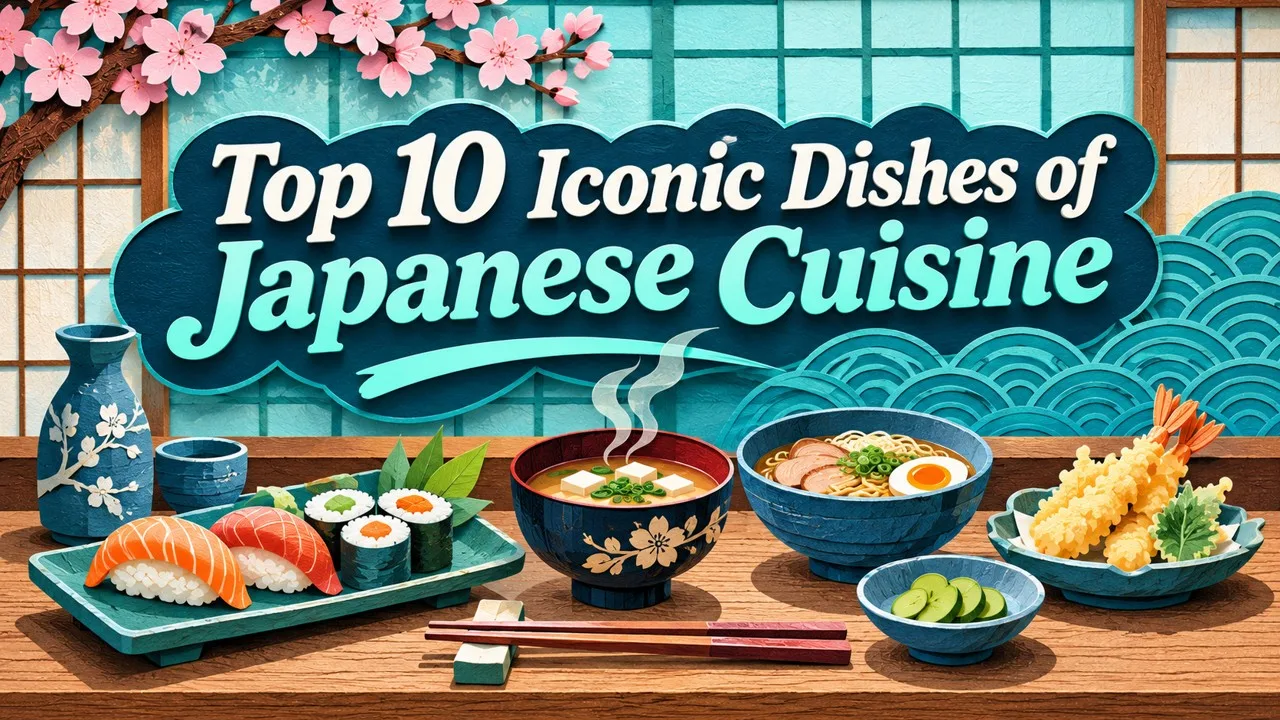
Sushi, ramen and tempura are only the start. These ten iconic dishes of Japanese cuisine show how history, season and simple ingredients shaped Japan's food. Japanese cuisine is known for fresh ingredients, careful seasoning and attention to the seasons. In 2013, traditional Japanese food culture, known as washoku, was added to UNESCO's list of the Intangible Cultural Heritage of Humanity.
This list covers ten dishes that are eaten widely across Japan and recognised abroad. It includes refined classics and everyday street food, and explains where each dish came from and how it is usually served.
Key Facts
The ten dishes below range from centuries-old staples to twentieth-century inventions.
Iconic Japanese Dishes at a Glance
| # | Dish | Main ingredients | Where or when it developed | How it is eaten |
|---|---|---|---|---|
| 1 | Sushi | Vinegared rice with fish or vegetables | Edo, early 19th century, for nigiri | By hand or chopsticks, with soy sauce |
| 2 | Ramen | Wheat noodles in broth | Japan, early 20th century | In a bowl, often slurped |
| 3 | Tempura | Seafood and vegetables in light batter | Nagasaki, 16th century influence | Dipped in sauce or sprinkled with salt |
| 4 | Miso Soup | Dashi stock and miso paste | Ancient Japan | Sipped from the bowl |
| 5 | Udon | Thick wheat noodles | Ancient Japan, popular from the Edo era | Hot in broth or chilled |
| 6 | Soba | Buckwheat noodles | Popular from the Edo period | Cold with dipping sauce or hot in broth |
| 7 | Okonomiyaki | Batter, cabbage and toppings | Osaka and Hiroshima, 20th century | Cut at the table and shared |
| 8 | Takoyaki | Batter balls filled with octopus | Osaka, 1935 | From a tray with toothpicks |
| 9 | Yakitori | Grilled skewered chicken | Popular from the late 19th and 20th centuries | On skewers with salt or sauce |
| 10 | Onigiri | Rice ball with filling | Ancient Japan | By hand, often wrapped in seaweed |
1. Sushi
Sushi began as narezushi, a method of preserving fish by packing it in fermenting rice, which was later thrown away. Over time people started eating the rice too, and vinegar was added to speed up the sour flavour. [1]
The hand-pressed nigiri sushi familiar today developed in Edo, now Tokyo, in the early nineteenth century as a fast food sold from stalls. The cook Hanaya Yohei is often credited with popularising it. Raw fish from Tokyo Bay was pressed onto small mounds of seasoned rice. [1]
Modern sushi includes rolled maki, hand-rolled temaki and scattered chirashi. Conveyor-belt sushi restaurants, first opened in Osaka in 1958, made sushi cheap and popular across Japan before it spread around the world.
Key Figures
- Original form: narezushi, fermented fish and rice
- Nigiri origin: Edo in the early 19th century
- First conveyor-belt restaurant: Osaka, 1958
Why It Made the List
Sushi is the best-known Japanese food worldwide. Its long journey from preserved fish to fresh fast food shows how Japanese cooking has adapted over centuries.
2. Ramen
Ramen is a noodle soup made with wheat noodles in a rich broth, usually topped with sliced pork, egg, spring onion and seaweed. It came to Japan from China, and the Tokyo shop Rairaiken, opened in 1910, is often cited as one of the first to sell it to Japanese customers. [2]
After the Second World War, ramen became a cheap and filling meal for workers. In 1958 Momofuku Ando launched Chicken Ramen, the first instant noodles, and in 1971 his company introduced Cup Noodles, which spread the idea worldwide. [2]
Each region has its own style. Sapporo is known for miso ramen, Fukuoka's Hakata district for creamy pork-bone tonkotsu and Tokyo for soy-sauce shoyu ramen. Slurping is considered normal and shows enjoyment.
Key Figures
- Early ramen shop: Rairaiken, Tokyo, 1910
- First instant noodles: 1958
- Main styles: shoyu, miso, shio and tonkotsu
Why It Made the List
Ramen is a modern Japanese icon that grew from a Chinese import. Its instant form changed eating habits across the globe.
Related: Top 10 Most Bizarre Phobias: Strange Fears That Exist
3. Tempura
Tempura is seafood or vegetables coated in a thin, airy batter and deep-fried. The technique is widely linked to Portuguese traders and missionaries who arrived in Nagasaki in the sixteenth century and fried food during periods of fasting. [3]
By the Edo period, tempura was sold from street stalls in Edo, where it was eaten on skewers as a quick snack. The use of sesame or vegetable oil and a batter made with cold water helped give it a light, crisp texture. [3]
Today tempura ranges from cheap set meals to expensive specialist restaurants where each piece is served straight from the fryer. It is often eaten with a dipping sauce called tentsuyu and grated daikon radish.
Key Figures
- Main ingredients: prawns, fish, vegetables
- Batter: flour, egg and ice-cold water
- Classic dip: tentsuyu with grated daikon
- Typical oil: sesame or vegetable oil
Why It Made the List
Tempura shows how a foreign technique became completely Japanese. Its light, crisp style is now copied by cooks around the world.
4. Miso Soup
Miso soup is made by dissolving miso, a fermented soybean paste, into dashi stock, then adding ingredients such as tofu, seaweed and spring onions. It is served with many traditional Japanese meals, including breakfast. [4]
Miso is made by fermenting soybeans with salt and koji, a mould called Aspergillus oryzae. Different kinds range from mild white miso to strong red and dark varieties, and the choice changes the taste of the soup. [4]
Dashi is usually made from kombu seaweed and dried bonito flakes. In 1908 the chemist Kikunae Ikeda identified glutamate in kombu as the source of a savoury taste he named umami, now recognised as a basic taste.
Key Figures
- Main seasoning: miso, fermented soybean paste
- Fermentation agent: koji mould, Aspergillus oryzae
- Umami identified: 1908, by Kikunae Ikeda
- Common additions: tofu, wakame seaweed and spring onion
Why It Made the List
Miso soup is the everyday heart of the Japanese meal. Its stock also led to the scientific discovery of umami.
5. Udon
Udon are thick, chewy wheat noodles served in a mild broth or cold with a dipping sauce. They are popular across Japan, but Kagawa Prefecture on the island of Shikoku is especially famous for its firm Sanuki udon. [5]
Popular stories credit Buddhist monks with bringing noodle-making from China, but the exact origins are uncertain. Udon became a common food in the Edo period, when noodle shops spread through cities. [5]
Related: Top 10 Oldest Buildings in the World
Toppings vary widely. Kitsune udon is topped with sweet fried tofu, tempura udon with fried prawns and curry udon with a thick curry sauce. Kagawa is sometimes nicknamed the udon prefecture because of how much of it local people eat.
Key Figures
- Best-known regional style: Sanuki udon, Kagawa
- Texture: thick and chewy
- Popular topping: sweet fried tofu in kitsune udon
- Typical serving: hot broth in winter, chilled with dipping sauce in summer
Why It Made the List
Udon is comfort food for many Japanese people. Its many regional styles show how a simple noodle can carry local identity.
6. Soba
Soba are thin noodles made from buckwheat flour, often mixed with some wheat flour. They have a nutty flavour and are served cold on a bamboo tray with a dipping sauce, called zaru soba, or hot in a broth. [6]
Soba became hugely popular in Edo during the seventeenth and eighteenth centuries, when soba shops were found throughout the city. Buckwheat grows well in cool, poor soils, which made it valuable in mountain regions. [6]
Many Japanese families eat toshikoshi soba on New Year's Eve, a custom said to symbolise cutting away the hardships of the old year. After eating cold soba, diners often drink the cooking water, called sobayu, mixed with the leftover sauce.
Key Figures
- Main ingredient: buckwheat flour
- Classic cold dish: zaru soba
- New Year custom: toshikoshi soba
- Leftover cooking water: sobayu, drunk with the sauce
Why It Made the List
Soba links everyday eating with seasonal tradition. Its role on New Year's Eve makes it one of Japan's most meaningful dishes.
7. Okonomiyaki
Okonomiyaki is a savoury pancake made with a batter of flour and eggs mixed with shredded cabbage and toppings such as pork, seafood or cheese. The name combines okonomi, meaning what you like, with yaki, meaning grilled. [7]
It took its modern form in the twentieth century, especially during and after the Second World War, when it was a filling food made from cheap ingredients. It is topped with a sweet brown sauce, mayonnaise, seaweed flakes and bonito flakes. [7]
Related: 10 Sikh Gurus: The Pillars of Sikhism Who Shaped Faith, Equality, Courage, and Humanity
The two main styles come from Osaka and Hiroshima. In Osaka the ingredients are mixed together, while in Hiroshima they are layered and often include a layer of noodles. Many restaurants let diners cook it themselves on a hot plate at the table.
Key Figures
- Meaning of the name: grilled as you like it
- Main styles: Osaka mixed and Hiroshima layered
- Classic toppings: sauce, mayonnaise, bonito flakes
Why It Made the List
Okonomiyaki is a fun, social meal that reflects regional pride. The friendly rivalry between Osaka and Hiroshima keeps it famous.
8. Takoyaki
Takoyaki are small round balls of batter filled with pieces of octopus, cooked in a special pan with half-sphere moulds. Cooks turn them quickly with picks so that they form neat spheres with a crisp outside and soft centre. [8]
The snack is credited to Tomekichi Endo, a street vendor in Osaka, who began selling it in 1935. It built on an earlier snack called radio-yaki. Osaka remains the home of takoyaki and is famous for its many street stalls. [8]
Takoyaki are usually topped with a sweet sauce, mayonnaise, dried seaweed and bonito flakes, which seem to dance in the heat. They are sold at festivals, in shops and in train stations, and many families own a takoyaki pan for home parties.
Key Figures
- Filling: pieces of octopus
- Inventor credited: Tomekichi Endo, Osaka
- Year introduced: 1935
Why It Made the List
Takoyaki is the classic Japanese street snack. It also shows Osaka's reputation as the country's capital of casual food.
9. Yakitori
Yakitori are small pieces of chicken threaded on bamboo skewers and grilled over charcoal. They are seasoned either with salt, called shio, or with a sweet soy-based sauce, called tare. [9]
Specialist shops grill many parts of the bird, including thigh, skin, heart, liver and chicken meatballs called tsukune. One of the most popular is negima, chicken thigh pieces alternated with spring onion. [9]
Yakitori is closely linked to small after-work bars called izakaya and to stalls near train stations. The best cooks use binchotan, a hard white charcoal that burns hot and evenly with little smoke.
Related: General Knowledge Facts About the Banyan Tree: Botany, Records and Culture
Yakitori grew more common in the twentieth century as chicken became cheaper and more widely available. Restaurants that specialise in it often display skewers in glass cases so customers can choose their favourite cuts.
Key Figures
- Seasoning: shio salt or tare sauce
- Popular skewer: negima, chicken with spring onion
- Traditional fuel: binchotan charcoal
Why It Made the List
Yakitori is a favourite of everyday Japanese social life. Its use of the whole bird reflects the cuisine's respect for ingredients.
10. Onigiri
Onigiri are rice balls shaped into triangles, balls or cylinders, often wrapped in a strip of nori seaweed. Common fillings include pickled plum called umeboshi, salted salmon, tuna with mayonnaise and kelp. [10]
Rice balls have been eaten in Japan for a very long time, and archaeologists have found carbonised rice balls from prehistoric sites. Later, samurai and travellers carried them as portable food because they were easy to pack and keep. [10]
Today onigiri are one of the best-selling foods in Japanese convenience stores, where clever packaging keeps the seaweed crisp until it is unwrapped. They are also a classic item in school and office lunch boxes called bento.
Key Figures
- Common shape: triangle
- Classic filling: umeboshi, pickled plum
- Modern seller: convenience stores across Japan
- Common wrapping: a strip of nori seaweed
Why It Made the List
Onigiri is Japan's ultimate everyday food. It shows how simple rice can become a practical meal for any time of day.
Conclusion
These ten dishes show the range of Japanese cooking, from carefully made sushi and tempura to quick street snacks such as takoyaki. Many of them were shaped by foreign influences and then refined into distinctly Japanese forms.
Seasonality, regional pride and attention to detail connect them all. Together they explain why Japanese food is among the most respected cuisines in the world.
- ^ [1] "Sushi". Wikipedia. Wikipedia: Sushi Wikipedia: Narezushi
- ^ [2] "Ramen". Wikipedia. Wikipedia: Ramen Wikipedia: Momofuku Ando
- ^ [3] "Tempura". Wikipedia. Wikipedia: Tempura
- ^ [4] "Miso Soup". Wikipedia. Wikipedia: Miso soup Wikipedia: Umami
- ^ [5] "Udon". Wikipedia. Wikipedia: Udon Wikipedia: Sanuki udon
- ^ [6] "Soba". Wikipedia. Wikipedia: Soba
- ^ [7] "Okonomiyaki". Wikipedia. Wikipedia: Okonomiyaki
- ^ [8] "Takoyaki". Wikipedia. Wikipedia: Takoyaki
- ^ [9] "Yakitori". Wikipedia. Wikipedia: Yakitori Wikipedia: Binchōtan
- ^ [10] "Onigiri". Wikipedia. Wikipedia: Onigiri Wikipedia: Umeboshi




















Discussion
Log in with