






 By

Places that seem to ignore gravity are almost always a misread slope, a tilted cabin, or wind, not a hole in the laws of physics.
A ball that appears to roll uphill is a reliable tourist trick, and it has a reliable explanation. When the horizon is hidden or tilted, a downhill grade can look like an uphill one, and a vehicle in neutral will roll the way the road actually goes. Surveyors have measured this class of site, sometimes called a gravity hill, many times. A related class is the tilted cabin, where a house built off the true vertical makes people and brooms look wrong. This list stays with those ordinary accounts. It does not treat a forest legend, a magnetic nickname, or a color-changing crater lake as a repeal of gravity.
Key Facts
| Item | What visitors notice | The ordinary account |
|---|---|---|
| 1 | Mystery Spot, Santa Cruz, California, opened 1940 | A tilted cabin and forced perspective, not a gravity well |
| 2 | Magnetic Hill, Ladakh, on the Leh–Kargil road | A gravity-hill illusion; the name oversells magnetism |
| 3 | Spook Hill, Lake Wales, Florida | The same misread slope, with later folklore attached |
| 4 | Oregon Vortex, Gold Hill, Oregon, a mid-1930s attraction | Another tilted-cabin show, not a measured vortex in the earth |
| 5 | Electric Brae, on the A719 in South Ayrshire, Scotland | A classic surveyed gravity hill; "electric" is a folk label |
| 6 | The so-called reverse waterfall near Naneghat, Maharashtra | Monsoon wind can drive spray and water up a scarp; that is air, not anti-gravity |
| 7 | A gravity hill on the slopes of Mount Aragats, Armenia, near Lake Kari | The same optical class as other gravity hills |
| 8 | A road in Hoia Forest, near Cluj-Napoca, Romania | Treat the roll as a slope illusion; leave ghost and triangle stories aside |
| 9 | Mount Kelimutu, Flores, and claims of floating stones | Color-changing crater lakes are chemistry; floating stuff is buoyancy or scum, not a gravity hole |
| 10 | Tulsishyam, in Gujarat, near Gir | Another gravity hill, where a downhill grade is misread as an upward one |
1. A Cabin Built Off the Plumb Line
The Mystery Spot, in the redwood hills of Santa Cruz, California, has been a paid attraction since 1940 [1]. Visitors are shown a small area where balls seem to roll the wrong way, people appear to lean, and heights look inconsistent. The demonstrations are memorable, and they are not a field measurement of a new force. The usual scientific account is a cabin and a walkway built at a tilt, plus a landscape that hides a true horizon, so that the inner ear and the eye disagree [1].
The unexpected fact is how little physics has to be revised once the floor is allowed to be crooked. A broom can stand in a corner if the corner is not square to the world. A person can look taller or shorter if the reference posts are not plumb [1]. This article will not reproduce a ticket-office claim, and it will not treat a circular "spot" as a gravitational anomaly. The careful fact is a well-known tilted-house show, in a family that includes other roadside attractions, and a century of popular writing that has already explained the trick.
A mystery is a good name for a hillside ticket booth. It is a poor name for a law of nature.
2. A Road Named for a Magnet It Does Not Need
On a stretch of the Leh–Kargil road in Ladakh, a signed "Magnetic Hill" invites drivers to stop in neutral and watch a vehicle appear to roll uphill [2]. The effect is easy to photograph, and it is the same class of illusion found on gravity hills elsewhere. Independent discussions of the site treat the slope as a misread grade, not as a lodestone under the tarmac [2]. Magnetic rocks exist in the Himalaya, but they are not required, and they are not a good explanation for a car that rolls the way a downhill road actually tilts.
The unexpected fact is the power of the name. Once a hill is called magnetic, a visitor is primed to feel a pull, and a hidden or sloping horizon does the rest [2]. This article will not give a driving instruction beyond the already public roadside demonstration, and it will not invent a field-strength number. The careful fact is a documented tourist gravity hill at high altitude, with a nickname that oversells the mechanism. A surveyor's level is a better instrument here than a compass.
A magnetic story is optional. A false uphill, on a real downhill, is enough.
3. A Florida Grade With a Ghost Story Attached
Spook Hill, in Lake Wales, Florida, is a signed gravity hill where a vehicle in neutral appears to roll uphill [3]. Local folklore has at various times attached a ghost, a pirate, or a giant animal to the slope. Those stories are later decorations. Measurements and the standard optical account place the site in the same family as Electric Brae or Magnetic Hill: a road whose true grade is misread against a misleading horizon [3].
Related: Top 10 Most Visited Countries in the World
The unexpected fact is how little the folklore has to do with the demonstration. A hill can be "spooky" in a town's marketing and still be a perfectly ordinary piece of suburban geometry [3]. This article will not retell the ghost stories as evidence, and it will not treat a civic nickname as a geophysical finding. The careful fact is a well-known American gravity hill, a misperceived slope, and a set of legends that arrived after the roll was already interesting.
A spook is optional. Gravity, in Lake Wales as elsewhere, is still pointing down.
4. A Vortex That Is a Tilted House
The Oregon Vortex, near Gold Hill, Oregon, has been shown to visitors since the mid-1930s [4]. The tour includes a crooked cabin, people who appear to change height, brooms that seem to stand on their own, and balls that roll in surprising directions. The popular story has sometimes invoked a mysterious "vortex" or a magnetic disturbance. The ordinary account, as with the Mystery Spot, is a building and a yard set off true vertical, with visual cues arranged so that the tilt is hard to see [4].
The unexpected fact is the durability of the vortex language long after the architecture has been explained. A person standing on a slanted floor, against a slanted wall, will look wrong relative to a post that is also wrong, and that is already a complete trick [4]. This article will not grant a new force to a roadside cabin, and it will not use an attraction logo. The careful fact is a historic tilted-house show in southern Oregon, in a well-known class of optical exhibits, not a measured whirlpool in the crust.
A vortex is a strong word for a floor. The floor is the exhibit.
5. A Scottish Brae That Was Surveyed
Electric Brae, on the A719 coastal road in South Ayrshire, is one of the best-known gravity hills in Europe [5]. A car in neutral appears to roll uphill along a particular stretch, and the "electric" part of the name comes from an early popular idea that some hidden charge or magnetism was to blame. Surveys have shown that the road falls in the direction of the apparent climb. The horizon, and the way the land lies toward the sea, make a downhill look like an uphill [5].
The unexpected fact is how thoroughly this site has already been demystified, and how little that has reduced its charm as a roadside curiosity [5]. A law of gravity is not at issue. A law of visual judgment is. This article will not treat the brae as an unsolved physical anomaly, and it will not add a new electromagnetic story. The careful fact is a surveyed Scottish gravity hill, a folk name that stuck, and a demonstration that works because the eye is bad at reading a grade without a reliable level.
A brae can be electric in a name and still be ordinary in a notebook of elevations.
Related: Top 10 Most Relaxing Destinations to Visit
6. Wind Up a Scarp, Not Water Up a Law
Near the historic Naneghat pass in the Western Ghats of Maharashtra, monsoon visitors sometimes see water or spray moving up a cliff, a sight often billed as a reverse waterfall [6]. The ordinary account is not a failure of gravity. In a strong monsoon wind, water that has already fallen, or is falling, can be driven back up a scarp as spray, sheets, or a broken stream. The drop still happens; the wind then redistributes it [6].
The unexpected fact is how often a seasonal, weather-dependent effect is billed as a permanent defiance. A still day will not give the same photograph [6]. This article will not invent a hidden uphill river, and it will not treat a pass as a gravity well. The careful fact is a monsoon orographic wind against a scarp, a tourist name that runs ahead of the physics, and a reminder that air can lift droplets without repealing the fall.
A waterfall that seems to climb is usually a wind event. The water still has weight; the air, for a time, has more to say about where the droplets go.
7. A Slope on Aragats, Same Illusion
On the high slopes of Mount Aragats in Armenia, near Lake Kari, a stretch of road has been promoted as a gravity hill: vehicles in neutral appear to roll uphill, and water poured on the surface can look as if it is running the wrong way [7]. The setting is dramatic, a volcano, a mountain lake, a high road, and the promotion sometimes invites a physicist to be baffled. The mechanism, if the site is in the usual class, does not require a baffled physicist. It requires a misread grade [7].
The unexpected fact is that a famous mountain does not change the optics. A misleading horizon works as well at 3,000 meters as it does in Florida [7]. This article will not claim a unique Armenian force, and it will not treat a travel-blog demonstration as a paper in geophysics. The careful fact is a reported gravity hill on a well-known volcano, best understood as the same illusion documented on many other roads. If a future survey were ever to find something else, that survey, not a tourism sentence, would be the place to say so. Nothing in the public description so far demands that exception.
A volcano can be geologically special and still have an ordinary roadside grade.
Related: Top 10 Most Beautiful Walled Cities in the World
8. A Forest Legend, and a Road That Is Probably a Slope
Hoia Forest, or Hoia Baciu, near Cluj-Napoca in Romania, has collected a thick file of popular stories: strange lights, missing people, a "Romanian Bermuda Triangle," and other claims that this article will not amplify [8]. Among the quieter items is a road where a vehicle in neutral is said to roll uphill. That last claim, taken alone, is a gravity-hill report, and gravity hills have a standard explanation. The forest's reputation is a separate, and much noisier, cultural fact [8].
The unexpected fact is how easily a misread slope can be recruited into a paranormal dossier. A roll that would be a postcard curiosity in Ayrshire becomes, in a forest already famous for legends, another piece of supposed evidence [8]. This article will not treat ghost stories as geography, and it will not grant the forest a special physics. The careful fact is a reported gravity road near Cluj, best read as an optical illusion unless a survey shows otherwise, and a reminder to keep the road and the folklore in different sentences.
A forest can be atmospheric at dusk. Atmosphere is not a force that sends a car up a true hill.
9. Color-Changing Lakes, and Stones That Do Not Repeal Buoyancy
Mount Kelimutu, on Flores in Indonesia, is famous for three crater lakes whose colors can shift among greens, turquoises, and darker reds or blacks [9]. The usual scientific account is a hydrothermal, mineral, and redox chemistry that changes with seepage, gases, and the state of the water, not a supernatural palette. Popular writing sometimes adds a lesser claim about "floating stones" as if rocks were defying gravity on the lakes [9].
The unexpected fact is that a floating stone, if one is seen, is a density story, not a gravity story. Pumice floats because it is full of sealed voids. Sulfur scum, mineral froth, and gas-lifted debris can also sit on, or drift across, an acidic crater lake [9]. This article will not treat Kelimutu as an anti-gravity site, and it will not reconstruct a famous postcard as a miracle. The careful fact is a well-studied set of volcanic lakes with changeable chemistry, and a tourist extra that, when it is anything, is buoyancy or surface scum. A lake can be extraordinary in color without being extraordinary in gravitation.
A stone that floats is lighter than it looks, or is being held up by gas or foam. It is not a repeal of down.
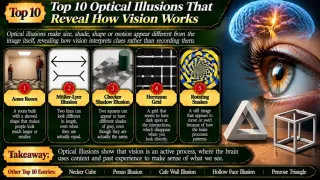
Related: Top 10 Optical Illusions That Reveal How Vision Works
10. A Gujarat Hill That Looks Up and Runs Down
At Tulsishyam, in Gujarat, in the wider landscape of Gir, a gravity hill has drawn visitors for years: a vehicle appears to roll uphill on a stretch of road [10]. The popular presentation is the same as at Magnetic Hill or Electric Brae. The ordinary account is also the same. The slope that looks upward is, relative to the true level, a downward grade, and a free-rolling car follows the true grade [10]. Even some tourist descriptions of this site already concede that the eye is being tricked by the surrounding land.
The unexpected fact is how little there is to add once that concession is made. A temple town, a forest, and a good story can dress a hill; they cannot turn a downhill into an uphill [10]. This article will not treat the site as a unique Indian exception to gravity, and it will not invent a magnetic bedrock. The careful fact is another documented gravity hill, one of several in India, and a demonstration that works for the same optical reasons it works in Scotland or Florida.
A second look at the horizon is usually enough. The law does not need a local exemption in Gir.
Conclusion
The ten places above are a tilted cabin in Santa Cruz, a misnamed magnetic road in Ladakh, a folkloric slope in Lake Wales, another crooked house in Oregon, a surveyed brae in Ayrshire, a monsoon "reverse" fall in the Western Ghats, a gravity hill on Aragats, a forest road near Cluj that should not inherit a triangle legend, the chemistry of Kelimutu's lakes, and a gravity hill at Tulsishyam. None of them requires a new physics.
A hillside can fool the eye. The decent way to list that trick is to name the place, name the illusion or the wind or the buoyancy, and leave vortices, ghosts, and repealed laws off the page.
- ^ [1] Accounts of the Mystery Spot in Santa Cruz as a tilted-cabin and forced-perspective attraction, not as a gravitational anomaly. Wikipedia: Mystery Spot Britannica: optical illusion
- ^ [2] Geographical and popular-science discussions of Magnetic Hill in Ladakh as a gravity-hill optical illusion rather than a magnetic effect. Wikipedia: gravity hill Britannica: Ladakh
- ^ [3] Local and general accounts of Spook Hill in Lake Wales, Florida, as a gravity hill, with ghost and animal stories treated as folklore. Wikipedia: Spook Hill Britannica: optical illusion
- ^ [4] Historical descriptions of the Oregon Vortex near Gold Hill as a tilted-house roadside attraction, not as a measured geophysical vortex. Wikipedia: Oregon Vortex Britannica: optical illusion
- ^ [5] Geographical accounts of Electric Brae on the A719 in South Ayrshire as a surveyed gravity hill whose "electric" name is folk physics. Wikipedia: Electric Brae Britannica: Ayrshire
- ^ [6] Meteorological and travel-science discussions of apparent reverse waterfalls in the Western Ghats, including the Naneghat area, as monsoon-wind effects. Britannica: Western Ghats Britannica: orographic effects
- ^ [7] Travel and general accounts of a gravity hill on the slopes of Mount Aragats near Lake Kari, treated as the standard slope-illusion class. Britannica: Mount Aragats Wikipedia: gravity hill
- ^ [8] Geographical notes on Hoia Forest near Cluj-Napoca, with paranormal folklore set aside and a reported uphill roll treated as a gravity-hill claim. Britannica: Cluj-Napoca Wikipedia: Hoia Forest
- ^ [9] Volcanological accounts of Kelimutu's crater lakes, their changing colors, and ordinary buoyancy or hydrothermal scum as explanations for floating material. Smithsonian Global Volcanism Program: Kelimutu Britannica: pumice
- ^ [10] Accounts of the Tulsishyam gravity hill in Gujarat as a misperceived downhill grade, in the same class as other gravity hills. Wikipedia: gravity hill Britannica: Gir National Park






















Discussion
Log in with