




Top 10 Unexpected Jobs U.S. Presidents Held Before Politics
 By Dhiraj Sharma · Published
Share Post
Loading…
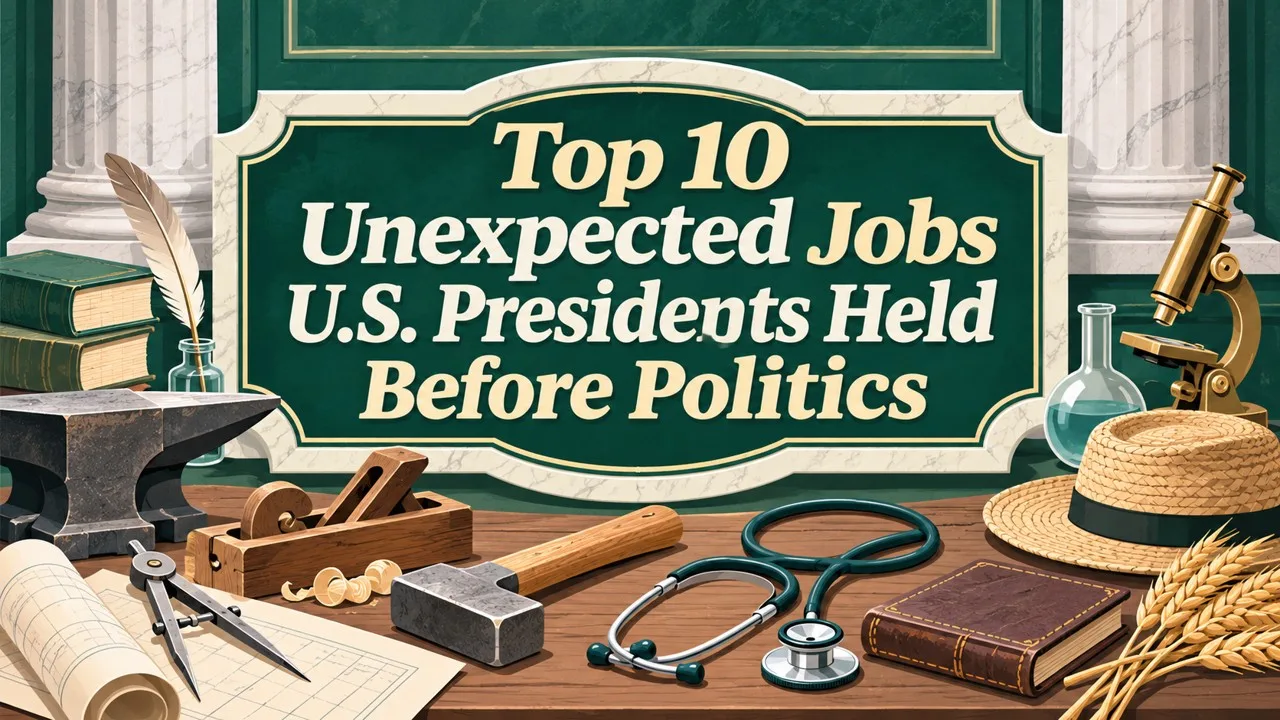
Before reaching the White House, American presidents worked as surveyors, tailors, sheriffs, mining engineers, park rangers, lifeguards and shop owners. Many American presidents followed a familiar path to power, through law, the military and state politics. But a surprising number also held ordinary or unusual jobs before entering public life. Those jobs shaped their skills, their outlook and sometimes the stories they told voters about themselves.
Some of the work was humble and practical, such as tailoring or running a small shop. Some was adventurous, such as engineering in remote mines or guiding boats down great rivers. In several cases, presidents spoke fondly of these early jobs for the rest of their lives and used them to connect with ordinary Americans.
The ten presidents below are George Washington, Abraham Lincoln, Andrew Johnson, Grover Cleveland, Herbert Hoover, Harry S. Truman, Lyndon B. Johnson, Gerald Ford, Jimmy Carter and Ronald Reagan. Each held at least one job that might surprise people who know them only as politicians.
Historians often point out that early careers can reveal character. A job that requires patience, physical courage or close contact with ordinary people can leave lasting habits. Presidential biographers have therefore paid close attention to the years before politics, when these men were still unknown and had to earn a living like everyone else.
Key Facts
| # | President | Earlier job | What it involved |
|---|---|---|---|
| 1 | George Washington | Surveyor | Mapped land on the Virginia frontier |
| 2 | Abraham Lincoln | Flatboatman, postmaster and more | Took cargo down the Mississippi and handled a village's mail |
| 3 | Andrew Johnson | Tailor | Ran a tailoring shop in Greeneville |
| 4 | Grover Cleveland | County sheriff | Served as sheriff of Erie County, New York |
| 5 | Herbert Hoover | Mining engineer | Worked in Australia and China |
| 6 | Harry S. Truman | Haberdasher | Co-owned a store in Kansas City |
| 7 | Lyndon B. Johnson | Schoolteacher | Taught Mexican-American children in Cotulla |
| 8 | Gerald Ford | Park ranger and model | Worked at Yellowstone and appeared in magazines |
| 9 | Jimmy Carter | Navy nuclear officer and farmer | Worked on nuclear submarines and ran a peanut business |
| 10 | Ronald Reagan | Lifeguard and radio announcer | Saved swimmers and broadcast baseball games |
1. A Teenage Surveyor
George Washington had little formal education, but he learned mathematics and surveying as a young man. In 1749, at the age of seventeen, he was appointed surveyor of Culpeper County in Virginia, one of the youngest people to hold such a position [1].
As a surveyor, Washington traveled through the wilderness of the Shenandoah Valley and beyond, measuring and mapping land. The work taught him about the frontier, the landscape and the value of land, which became an important part of his wealth [1].
His surveying experience also helped prepare him for military service, since it required navigating difficult terrain and understanding geography. Washington continued to buy land throughout his life and remained interested in western lands and their development long after he left surveying.
2. A Flatboatman and Postmaster
Abraham Lincoln held many jobs as a young man on the frontier. In 1828 and again in 1831, he helped take flatboats loaded with goods down the Mississippi River to New Orleans, a journey of more than a thousand miles. The trips exposed him to the slave markets of the South [2].
Lincoln later settled in the village of New Salem, Illinois, where he worked as a store clerk, a surveyor and, from 1833, as the village postmaster. He reportedly read newspapers that passed through the post office, helping to educate himself [2].
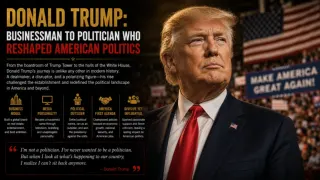
Related: Donald Trump: Businessman to Politician who Reshaped American Politics
Lincoln's practical experience with boats led to another unusual distinction. In 1849, he received a patent for a device to lift boats over shoals, making him the only president to hold a patent. His early jobs became part of his image as a self-made man of the people.
3. A Tailor in Tennessee
Andrew Johnson grew up in poverty in North Carolina and never attended school. As a boy, he was apprenticed to a tailor, and he later ran away from his apprenticeship. He eventually settled in Greeneville, Tennessee, where he opened his own tailoring shop [3].
Johnson's shop became a gathering place for local discussions about politics. He continued to improve his reading and writing as an adult, reportedly with help from his wife, Eliza, and from people who read aloud while he worked [3].
Johnson became a local politician, then a governor, senator and vice president, succeeding Lincoln after his assassination in 1865. He remained proud of his trade, and his tailor shop in Greeneville is preserved as part of a national historic site.
4. A Sheriff Who Carried Out Executions
Grover Cleveland trained as a lawyer in Buffalo, New York. From 1871 to 1873, he served as sheriff of Erie County, a role that included responsibility for carrying out death sentences [4].
Instead of delegating the task, Cleveland personally carried out two executions by hanging during his term. He reportedly felt that he should not ask a deputy to do a job he would not do himself. The episode was later used by his political opponents [4].
Cleveland went on to become mayor of Buffalo and governor of New York before winning the presidency in 1884. He is the only president to serve two non-consecutive terms, apart from Donald Trump. His time as sheriff is one of the most unusual early jobs of any president.
5. A Mining Engineer Around the World
Herbert Hoover studied geology at Stanford University and became a mining engineer. In 1897, he traveled to Western Australia to work in gold mines, where he helped identify a promising mine that became highly profitable [5].
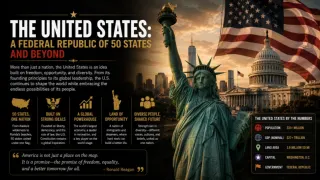
Related: The United States: A Federal Republic of 50 States and Beyond
In 1899, he moved to China to work for a mining company. In 1900, he and his wife, Lou Henry Hoover, were caught in the city of Tianjin during the Boxer Rebellion, where Hoover helped organize defenses. He later became a wealthy mining consultant with interests on several continents [5].
Hoover and his wife also translated a sixteenth-century Latin treatise on mining, De re metallica, into English. His engineering career gave him a reputation for efficiency and organization, which led to his work on humanitarian relief during the First World War and later to the presidency.
6. A Men's Clothing Shop
After serving as an artillery officer in the First World War, Harry S. Truman opened a men's clothing store in Kansas City, Missouri, with his army friend Eddie Jacobson in 1919. The store sold shirts, ties, hats and other accessories [6].
The business initially did well but failed during an economic downturn in 1921 and 1922. Truman spent years paying off the debts rather than declaring bankruptcy. The experience was a hard lesson in the risks of business [6].
Truman then entered local politics with the support of a Kansas City political organization. His friendship with Jacobson continued, and Jacobson later played a role in encouraging Truman to meet Zionist leaders before the United States recognized Israel in 1948.
7. A Teacher in a Small Texas Town
While studying to become a teacher, Lyndon B. Johnson took a job in 1928 at the Welhausen School in Cotulla, Texas, where most of the students were from poor Mexican-American families. He served as teacher and principal [7].
Johnson organized activities for the students, encouraged them to learn English and bought sports equipment with his own money. He later said he saw the effects of poverty and discrimination on his students and never forgot them [7].
Related: Top 10 Newest US States in Order of Statehood
As president, Johnson pushed for civil rights laws and education funding. When he signed the Elementary and Secondary Education Act in 1965, he referred to his experience teaching in Cotulla. His early teaching job became an important part of how he described his commitment to helping the poor.
8. A Park Ranger and Magazine Model
Gerald Ford was a star football player at the University of Michigan. In the summer of 1936, he worked as a seasonal ranger at Yellowstone National Park, where his duties included guarding a feeding area for bears and giving visitors information [8].
While studying law at Yale, Ford also did some modeling. He appeared in a 1940 photo feature in Look magazine and was photographed for a 1942 cover of Cosmopolitan magazine wearing a naval uniform [8].
Ford served in the Navy during the Second World War and then became a lawyer and congressman. He became president in 1974 after the resignation of Richard Nixon. He remained fond of the national parks and later spoke warmly of his time as a ranger.
9. A Nuclear Officer and Peanut Farmer
Jimmy Carter graduated from the United States Naval Academy and served in the Navy's submarine service. He was selected by Admiral Hyman Rickover for the nuclear submarine program [9].
In December 1952, Carter was among the personnel sent to help with the response to an accident at a nuclear reactor at Chalk River in Canada. He later described being lowered into the damaged reactor building for short periods to help with dismantling work [9].
After his father's death in 1953, Carter left the Navy and returned to Plains, Georgia, to run the family peanut farm and warehouse business. He became known as the peanut farmer president, an image that helped him appeal to voters as an outsider when he won the presidency in 1976.
Related: Top 10 Most Bizarre Phobias: Strange Fears That Exist
10. A Lifeguard and Sportscaster
As a teenager and college student, Ronald Reagan worked for seven summers as a lifeguard at Lowell Park on the Rock River near Dixon, Illinois. He was credited with saving 77 people from the river, and he kept a record of his rescues [10].
After college, Reagan became a radio sports announcer in Iowa. He sometimes recreated baseball games from telegraph reports, describing the action as though he were watching it. He once told a story about improvising a long sequence of foul balls when the telegraph line went silent [10].
Reagan later became a Hollywood actor and president of the Screen Actors Guild before entering politics. His skills as a broadcaster and performer contributed to his reputation as the Great Communicator when he served as president from 1981 to 1989.
Conclusion
The ten presidents above show how varied the road to the White House can be. Surveying, tailoring, mining, farming and lifeguarding gave these future leaders practical experience, and in several cases shaped their views on issues such as land, poverty, education and public service.
Their early jobs also became part of their political stories, helping voters see them as ordinary people. Behind the formal portraits of American presidents are men who once measured land, sewed clothes, ran shops, guarded swimmers and taught children.
Modern presidential candidates still talk about their first jobs, from summer work to small businesses, because voters value that kind of experience. The tradition goes back to the earliest days of the republic, as the stories of Washington and Lincoln show, and it is likely to continue as long as Americans elect their leaders.
- ^ [1] Accounts of Washington's surveying career. Wikipedia: early life of George Washington Wikipedia: Culpeper County
- ^ [2] Accounts of Lincoln's early jobs and patent. Wikipedia: early life of Abraham Lincoln Wikipedia: New Salem
- ^ [3] Accounts of Andrew Johnson's tailoring career. Wikipedia: Andrew Johnson Wikipedia: Andrew Johnson National Historic Site
- ^ [4] Accounts of Grover Cleveland's term as sheriff. Wikipedia: Grover Cleveland Wikipedia: Erie County
- ^ [5] Accounts of Hoover's mining career. Wikipedia: Herbert Hoover Wikipedia: De re metallica
- ^ [6] Accounts of Truman's haberdashery. Wikipedia: Harry S. Truman Wikipedia: Eddie Jacobson
- ^ [7] Accounts of Lyndon Johnson's teaching in Cotulla. Wikipedia: Lyndon B. Johnson Wikipedia: Elementary and Secondary Education Act
- ^ [8] Accounts of Gerald Ford's early life. Wikipedia: Gerald Ford Wikipedia: Yellowstone National Park
- ^ [9] Accounts of Carter's naval and farming career. Wikipedia: Jimmy Carter Wikipedia: Chalk River Laboratories
- ^ [10] Accounts of Reagan's lifeguarding and broadcasting. Wikipedia: Ronald Reagan Wikipedia: Dixon, Illinois




















Discussion
Log in with