






 By
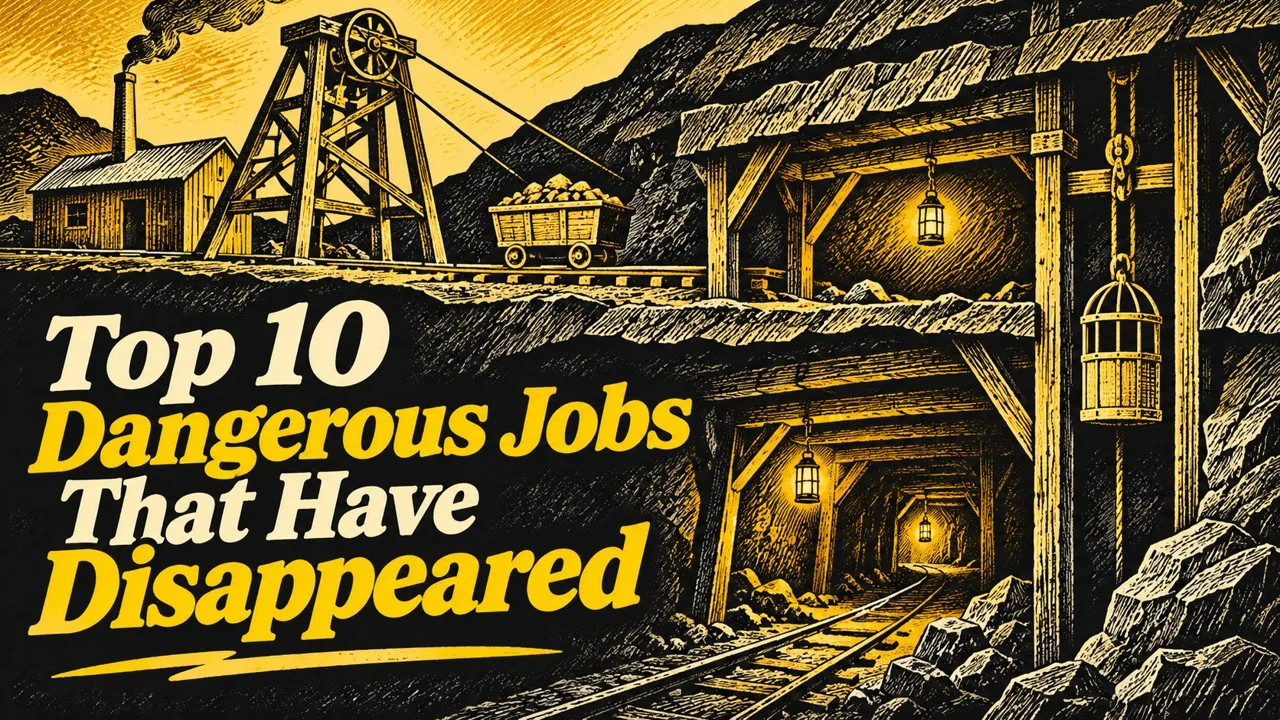
Many jobs once put workers in serious danger, from children climbing chimneys and boys carrying gunpowder to women painting watch dials with radium. Work today still carries risks, but many of the most dangerous jobs of the past have disappeared. Some were abolished by laws that protected children and workers. Others vanished because of new technology, or because the substances they relied on were found to be deadly and banned.
These jobs were often done by the poorest members of society, including children, immigrants and women who had few other options. Their stories are a reminder of how much modern workplace safety owes to reformers, unions, doctors and the workers who spoke out about their conditions.
The ten jobs below are climbing boys, powder monkeys, match factory workers, hat makers who used mercury, radium dial painters, open-boat whalers, leech collectors, sewer hunters, breaker boys and log drivers. Each one disappeared for a different reason, but all involved dangers that would not be accepted today.
Many of these jobs were not unusual in their time. They were ordinary ways for poor families to earn money, and the people who did them rarely left written records. Much of what we know comes from reformers, doctors, journalists and photographers who documented their lives, as well as from court cases and government inquiries. Those sources show both the hardship of the work and the resilience of the workers.
Key Facts
| # | Job | Era | The danger |
|---|---|---|---|
| 1 | Climbing boys | Britain, eighteenth and nineteenth centuries | Suffocation, burns, falls and cancer |
| 2 | Powder monkeys | Navies of the age of sail | Explosions and battle wounds |
| 3 | Match factory workers | Nineteenth century | White phosphorus caused phossy jaw |
| 4 | Hatters | Eighteenth to twentieth centuries | Mercury poisoning caused tremors and mood changes |
| 5 | Radium dial painters | 1910s to 1930s | Radiation poisoning from licking brushes |
| 6 | Open-boat whalers | Eighteenth and nineteenth centuries | Capsizing, injury and long voyages |
| 7 | Leech collectors | Nineteenth century | Blood loss and infection |
| 8 | Toshers | Victorian London | Floods, gas and disease |
| 9 | Breaker boys | American coal mines, nineteenth and early twentieth centuries | Injury, dust and long hours |
| 10 | Log drivers | North America and Europe, until the twentieth century | Drowning and crushing in log jams |
1. Children Inside Chimneys
In Britain, chimney sweeps often used small boys, sometimes as young as five or six, to climb inside narrow chimneys and brush away soot. The children were known as climbing boys and were frequently orphans or children sold into apprenticeships [1].
The work was extremely dangerous. Children could become stuck and suffocate, fall or suffer burns. Long exposure to soot also caused a cancer of the scrotum, identified in 1775 by the surgeon Percivall Pott as one of the first known occupational cancers [1].
Reformers campaigned for decades against the practice. Laws were passed in the nineteenth century, but enforcement was weak. The Chimney Sweepers Act of 1875, passed after the death of a twelve-year-old boy named George Brewster, finally required sweeps to be licensed, effectively ending the use of climbing boys.
2. Boys Carrying Gunpowder
On sailing warships, boys known as powder monkeys carried gunpowder from the ship's magazine to the guns during battle. Many were young teenagers or even younger, chosen because they were small and quick [2].
The job was hazardous. The boys moved through crowded decks under fire, carrying explosive powder, and a spark could cause a deadly explosion. They also faced the general dangers of naval battle, including cannon shot and flying splinters [2].
Related: Top 10 Most Dangerous Jobs in the World
As naval technology changed in the nineteenth century, with steam-powered ships and new ways of supplying ammunition, the role disappeared. The term powder monkey is still sometimes used for people who handle explosives in mining or demolition.
3. Making Matches With Poison
In the nineteenth century, matches were made using white phosphorus, which ignites easily. Many workers in match factories were women and girls, who dipped matchsticks in the chemical and packed them [3].
Exposure to white phosphorus caused a terrible disease known as phossy jaw, in which the jawbone decayed. It caused great pain and disfigurement and could be fatal. Workers were also poorly paid and subject to fines [3].
In 1888, workers at the Bryant and May match factory in London went on strike, a landmark in labor history. An international convention signed in Bern in 1906 banned white phosphorus in matches, and Britain banned it in 1910. Safer matches using red phosphorus replaced the old type.
4. Mercury in Hat Making
Felt hats were made from animal fur, often rabbit or beaver. To help the fibers mat together, hatmakers treated the fur with a solution containing mercury, in a process sometimes called carroting because it turned the fur orange [4].
Workers who breathed mercury vapor developed a condition called erethism, with symptoms including tremors, irritability and shyness. The illness was so common among hatters that it became known as mad hatter disease. The town of Danbury, Connecticut, a center of hat making, was known for the condition [4].
The use of mercury in hat making was banned in the United States in 1941, partly because mercury was needed for the war effort. Changing fashions also reduced demand for felt hats. The phrase mad as a hatter is often linked to the condition, though its exact origin is debated.
5. Painting With Radium
In the early twentieth century, radium was used to make watch and instrument dials glow in the dark. Factories in the United States employed young women to paint the dials with radium paint. They were often told to point their brushes with their lips to make fine lines [5].
Related: Top 10 Jobs That No Longer Exist
The women swallowed small amounts of radium, which accumulated in their bones. Many developed severe health problems, including anemia, bone fractures and decay of the jaw, and some died. The workers became known as the Radium Girls [5].
Several of the women sued their employers in the 1920s and 1930s, and their cases helped establish the right of workers to sue for occupational illness. Their experiences also contributed to safety standards for radiation. Radium paint was gradually replaced by safer materials.
6. Hunting Whales From Small Boats
In the great age of whaling, crews set out from ships in small open boats to chase whales and strike them with hand-thrown harpoons. Whale oil was used for lighting and lubrication, and baleen was used in products such as corsets [6].
The work was very dangerous. Wounded whales could smash boats or drag them away, and sailors could drown or be injured. Voyages from ports such as Nantucket and New Bedford could last several years, with harsh conditions on board. The novel Moby-Dick by Herman Melville, published in 1851, drew on these experiences [6].
Open-boat whaling declined as petroleum replaced whale oil and as industrial whaling ships with harpoon cannons took over. Commercial whaling was later severely limited by an international moratorium agreed in 1982 and in effect from 1986, though a few countries continue some whaling.
7. Using Legs as Bait
In the nineteenth century, doctors used leeches for bloodletting, believing it could treat many illnesses. Demand was so high that wild leeches became scarce in parts of Europe [7].
Leech collectors, often poor women, waded into ponds and marshes with bare legs, letting the leeches attach themselves before removing them. The work caused blood loss and exposed the collectors to infection and disease from the water [7].
Related: Top 10 Historic Jobs Transformed by Technology
The job disappeared as leeches were farmed and as bloodletting fell out of favor. Today, medicinal leeches are used in limited ways in modern surgery, for example to help restore circulation after reattaching body parts, but they are raised in controlled conditions.
8. Searching the Sewers
In Victorian London, people known as toshers made a living by searching sewers for items of value, such as coins, metal and bones. The writer Henry Mayhew described them in his studies of the London poor in the mid-nineteenth century [8].
The work was illegal in some periods and dangerous at all times. Toshers faced sudden floods, toxic gases, collapsing tunnels and disease. They often worked in groups for safety and carried lanterns and long poles [8].
Despite the dangers, Mayhew reported that some toshers earned relatively good incomes. The job disappeared as London's sewers were rebuilt in the second half of the nineteenth century and access was controlled. The toshers are remembered as part of the hidden economy of Victorian cities.
9. Children Sorting Coal
In American coal mining regions such as Pennsylvania, boys known as breaker boys sat above chutes and conveyor belts, picking stones and impurities out of coal as it passed beneath them. Many were between eight and twelve years old [9].
The work was dirty and dangerous. Boys breathed coal dust, cut their hands on sharp pieces of coal and could be injured or killed if they fell into the machinery. They worked long hours for low pay [9].
Photographs by Lewis Hine, taken for the National Child Labor Committee in the early twentieth century, helped expose the conditions. Child labor laws and mechanical cleaning methods gradually ended the practice. Breaker boys became a symbol of the campaign against child labor in the United States.
Related: Top 10 Most Bizarre Phobias: Strange Fears That Exist
10. Riding Logs Down the River
Before roads and trucks were widespread, timber was often moved by floating logs down rivers. Workers known as log drivers or river drivers guided the logs, breaking up jams and keeping them moving [10].
The job required balancing on moving logs and working in cold, fast water. Log jams were especially dangerous, since freeing them could release huge masses of timber without warning. Drivers could drown or be crushed [10].
Log driving declined as trucks and railways took over the transport of timber and as concerns grew about damage to rivers. In the United States, the last major log drive on the Kennebec River in Maine took place in 1976. Log rolling, once a skill of the drivers, survives as a competitive sport.
Conclusion
The ten jobs above disappeared because of laws, new technologies and changing knowledge. Child labor laws ended climbing boys and breaker boys. Bans on white phosphorus, mercury and radium protected workers from poisons. Changes in technology made powder monkeys, whalers in open boats and log drivers unnecessary.
These stories show the importance of the reformers and workers who exposed dangerous conditions. They also remind us that modern safety standards were hard won, and that new dangers in today's workplaces still need attention.
Several of these occupations also left traces in language and culture, from the phrase mad as a hatter to the sport of log rolling and the image of the chimney sweep in children's stories. Behind those familiar references are real working lives, often short and hard, that deserve to be remembered accurately.
- ^ [1] Accounts of climbing boys and chimney sweeping reforms. Wikipedia: chimney sweep Wikipedia: chimney sweeps' carcinoma
- ^ [2] Accounts of powder monkeys on sailing warships. Wikipedia: powder monkey Wikipedia: ship of the line
- ^ [3] Accounts of phossy jaw and the 1888 strike. Wikipedia: phossy jaw Wikipedia: London matchgirls strike of 1888
- ^ [4] Accounts of mercury poisoning among hatters. Wikipedia: mad hatter disease Wikipedia: hatmaking
- ^ [5] Accounts of the Radium Girls. Wikipedia: Radium Girls Wikipedia: radium
- ^ [6] Accounts of open-boat whaling. Wikipedia: history of whaling Wikipedia: Moby-Dick
- ^ [7] Accounts of leech collecting and medicinal leeches. Wikipedia: leech collector Wikipedia: Hirudo medicinalis
- ^ [8] Accounts of toshers in Victorian London. Wikipedia: tosher Wikipedia: Henry Mayhew
- ^ [9] Accounts of breaker boys and child labor reform. Wikipedia: breaker boy Wikipedia: Lewis Hine
- ^ [10] Accounts of log driving. Wikipedia: log driving Wikipedia: timber rafting





















Discussion
Log in with