





 By
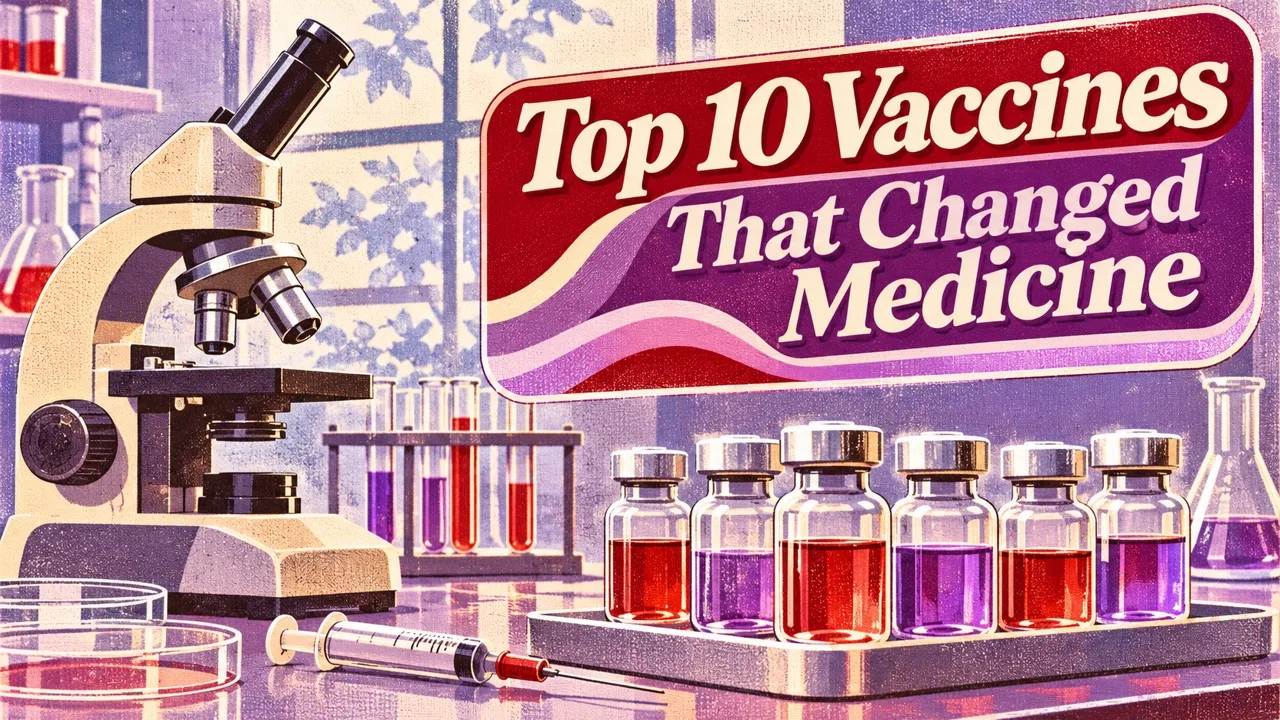
From Jenner's smallpox jab to mRNA shots, these ten vaccines that changed medicine saved millions of lives and tamed some of history's worst diseases. A vaccine trains the immune system to recognise a germ or its toxin, so the body can fight off a real infection more quickly. Vaccination is one of the most successful public health tools ever developed, and the World Health Organization estimates that immunisation prevents millions of deaths every year.
This list picks ten vaccines that marked turning points, either by introducing a new method or by bringing a major disease under control. The dates refer to the first successful use or licensing, and later improved versions are mentioned where relevant.
Key Facts
The ten vaccines below span more than two centuries of medical progress.
Landmark Vaccines at a Glance
| # | Vaccine | Year introduced | Key scientist or team | Major impact |
|---|---|---|---|---|
| 1 | Smallpox Vaccine | 1796 | Edward Jenner | Led to global eradication in 1980 |
| 2 | Rabies Vaccine | 1885 | Louis Pasteur | First vaccine used after exposure |
| 3 | BCG Vaccine | 1921 | Albert Calmette and Camille Guerin | Protection against tuberculosis |
| 4 | DTP Combined Vaccine | 1948 | Several research teams | Protection against diphtheria, tetanus and whooping cough |
| 5 | Yellow Fever Vaccine | 1937 | Max Theiler | Nobel Prize-winning protection |
| 6 | Polio Vaccines | 1955 and 1961 | Jonas Salk and Albert Sabin | Brought polio close to eradication |
| 7 | Measles Vaccine | 1963 | John Enders and colleagues | Cut deaths from a major childhood killer |
| 8 | Hepatitis B Vaccine | 1981 and 1986 | Baruch Blumberg, Maurice Hilleman and others | First vaccine to help prevent a cancer |
| 9 | HPV Vaccine | 2006 | Building on work by Ian Frazer and Jian Zhou | Prevention of cervical cancer |
| 10 | mRNA COVID-19 Vaccines | 2020 | Pfizer-BioNTech and Moderna | First approved mRNA vaccines |
1. Smallpox Vaccine
In 1796 the English doctor Edward Jenner tested an old country belief that milkmaids who caught cowpox were protected from smallpox. He took material from a cowpox sore and inoculated a boy named James Phipps, who later did not develop smallpox when exposed to it. [1]
Jenner's method, called vaccination from the Latin word vacca, meaning cow, spread quickly across Europe and beyond. Earlier, people in Asia and Africa had practised variolation, deliberately infecting people with mild smallpox, which was riskier. [1]
In 1967 the World Health Organization launched an intensified campaign to wipe out smallpox. The last natural case occurred in Somalia in 1977, and in 1980 the World Health Assembly declared smallpox eradicated.
It remains the only human disease ever eradicated, a result that showed what coordinated vaccination can achieve.
Key Figures
- First test: 14 May 1796
- First vaccinated boy: James Phipps
- Last natural case: Somalia, 1977
- Declared eradicated: 1980
Why It Made the List
The smallpox vaccine was the first vaccine and led to the first eradication of a human disease. It is the foundation of modern immunisation.
2. Rabies Vaccine
In 1885 the French scientist Louis Pasteur and his colleagues used an experimental rabies vaccine on Joseph Meister, a nine-year-old boy bitten by a rabid dog. The boy survived, and the treatment made Pasteur famous. [2]
Pasteur's vaccine was made from dried spinal cord tissue of infected rabbits, which weakened the virus. Because rabies takes time to reach the brain, the vaccine could be given after a bite and still work. [2]
Rabies is almost always fatal once symptoms appear, so this was a dramatic achievement. Modern rabies vaccines are much safer and are given both after exposure and in advance to people at high risk, such as vets.
Pasteur's success also led to the founding of the Pasteur Institute in Paris in 1887, which became a world centre for research on infectious diseases.
Key Figures
- First human use: July 1885
- First patient: Joseph Meister
- Original source of the vaccine: rabbit spinal cord
- Pasteur Institute founded: 1887
Why It Made the List
The rabies vaccine was the first laboratory-made vaccine against a human disease. It showed that science could deliberately weaken germs to protect people.
3. BCG Vaccine
The BCG vaccine, named after Bacillus Calmette-Guerin, was developed by the French scientists Albert Calmette and Camille Guerin at the Pasteur Institute. They weakened a strain of bovine tuberculosis bacteria by growing it repeatedly over about thirteen years. [3]
Related: Top 10 Most Deadly Diseases in the World
The vaccine was first given to a baby in 1921. It became one of the most widely used vaccines in the world, especially for newborns in countries where tuberculosis is common. [3]
BCG protects young children well against severe forms of tuberculosis, such as tuberculous meningitis, though its protection against lung disease in adults is more variable. It is still the only licensed vaccine against tuberculosis.
Researchers are also studying whether BCG can boost the immune system in other ways, and it is used as a treatment for some types of bladder cancer.
Key Figures
- First human use: 1921
- Developers: Albert Calmette and Camille Guerin
- Disease targeted: tuberculosis
- Other medical use: bladder cancer treatment
Why It Made the List
BCG has been given to billions of people. It remains a key tool against tuberculosis, one of the world's deadliest infectious diseases.
4. DTP Combined Vaccine
The DTP vaccine combines protection against three bacterial diseases: diphtheria, tetanus and pertussis, also called whooping cough. Separate vaccines were developed in the early twentieth century, and combined DTP vaccines became widely used from the late 1940s. [4]
Diphtheria and tetanus are caused by bacterial toxins, so their vaccines use inactivated toxins called toxoids. Whooping cough vaccines, first made in the 1910s and improved in the 1930s by Pearl Kendrick and Grace Eldering, helped make the combination possible. [4]
Combining three vaccines in one injection made childhood immunisation simpler and more practical. The number of three DTP doses given is still used by the World Health Organization as a key measure of how well countries reach children with vaccines.
Key Figures
- Diseases covered: diphtheria, tetanus and pertussis
- Wider use of combined form: from the late 1940s
- Pertussis vaccine pioneers: Pearl Kendrick and Grace Eldering
- Modern versions: acellular DTaP vaccines
Why It Made the List
DTP turned three dangerous childhood diseases into rare ones in many countries. It also became the backbone of national immunisation programmes.
5. Yellow Fever Vaccine
Yellow fever is a viral disease spread by mosquitoes that once caused deadly epidemics in Africa and the Americas. In the 1930s the South African-born virologist Max Theiler developed a weakened strain of the virus known as 17D. [5]
The 17D vaccine was first used in 1937 and proved highly effective. A single dose gives long-lasting protection for most people, and it is still the basis of yellow fever vaccines today. [5]
In 1951 Theiler received the Nobel Prize in Physiology or Medicine, the first Nobel Prize awarded for the development of a virus vaccine. Many countries in Africa and South America require proof of yellow fever vaccination for travellers.
Related: Top 10 Scariest Diseases That Affect Humans
Mass campaigns using the vaccine have helped prevent large outbreaks, though the disease still kills thousands of people in years with poor coverage.
Key Figures
- Vaccine strain: 17D
- First used: 1937
- Nobel Prize to Max Theiler: 1951
- Doses needed: usually one
Why It Made the List
The yellow fever vaccine was one of the first highly effective viral vaccines. It made travel and life safer across the tropics.
6. Polio Vaccines
Polio is a viral disease that can cause paralysis, and in the early twentieth century it caused frightening epidemics, especially among children. In 1955, after a huge field trial, Jonas Salk's injected inactivated polio vaccine was declared safe and effective. [6]
In the early 1960s Albert Sabin's oral polio vaccine, given as drops, was licensed. It was cheap and easy to give, making mass campaigns possible in poorer countries. [6]
The Global Polio Eradication Initiative was launched in 1988, when polio paralysed an estimated 350,000 children a year. Since then cases have fallen by more than 99 percent, and wild poliovirus remains in only a very small number of countries.
India, once among the hardest-hit countries, recorded its last case of wild polio in 2011 and was certified polio-free by the World Health Organization in 2014.
Key Figures
- Salk vaccine announced: 1955
- Sabin oral vaccine licensed: early 1960s
- Global eradication initiative launched: 1988
- India certified polio-free: 2014
Why It Made the List
Polio vaccines turned a feared disease into one that is close to disappearing. They show the power of global vaccination campaigns.
7. Measles Vaccine
Measles is one of the most contagious diseases known, and before vaccination nearly every child caught it. In 1963 a vaccine developed from work by John Enders and Thomas Peebles was licensed in the United States. [7]
Improved versions followed, including a strain developed by Maurice Hilleman, and in 1971 measles was combined with mumps and rubella vaccines to form MMR. Two doses give very strong protection. [7]
The World Health Organization estimates that measles vaccination prevented tens of millions of deaths worldwide in the first two decades of the twenty-first century. Outbreaks still occur when vaccination rates fall.
Related: Top 10 Most Advanced Hospitals in the World
Because measles spreads so easily, health experts aim for about 95 percent of people to be vaccinated to stop outbreaks, a level known as herd immunity.
Key Figures
- First licensed: 1963
- Key researchers: John Enders and Thomas Peebles
- MMR combination: 1971
- Coverage target: about 95 percent
Why It Made the List
The measles vaccine has saved more children's lives than almost any other medical tool. Its success depends on high, steady coverage.
8. Hepatitis B Vaccine
Hepatitis B is a viral infection of the liver that can become chronic and lead to cirrhosis and liver cancer. A vaccine made from purified virus proteins taken from blood plasma was approved in 1981. [8]
In 1986 a new version was licensed that was made using genetically modified yeast. It was the first vaccine produced by recombinant DNA technology, which made it safer and easier to manufacture in large amounts. [8]
Because chronic hepatitis B can cause liver cancer, the vaccine is often described as the first vaccine to prevent a type of cancer. Most countries now give it to babies soon after birth.
The discovery of the virus's surface antigen by Baruch Blumberg, who won a Nobel Prize in 1976, made the vaccine possible.
Key Figures
- Plasma-derived vaccine approved: 1981
- Recombinant vaccine licensed: 1986
- Disease prevented: hepatitis B and related liver cancer
- Nobel Prize to Baruch Blumberg: 1976
Why It Made the List
The hepatitis B vaccine opened the era of genetically engineered vaccines. It protects hundreds of millions of children from liver disease.
9. HPV Vaccine
Human papillomavirus, or HPV, causes almost all cases of cervical cancer and some other cancers. Scientists including Ian Frazer and Jian Zhou in Australia developed virus-like particles that could trigger immunity without containing any genetic material. [9]
The first HPV vaccine was approved in 2006. Vaccination is usually offered to girls and, in many countries, boys around the ages of nine to fourteen, before exposure to the virus. [9]
Studies in countries with high vaccination rates have found large drops in HPV infections and early cancer changes. In 2020 the World Health Organization launched a strategy to eliminate cervical cancer as a public health problem.
Related: Top 10 Deadliest Animals in the World
Single-dose schedules, recommended by the WHO from 2022, are making it easier and cheaper for countries to include the vaccine in their programmes.
Key Figures
- First approved: 2006
- Key technology: virus-like particles
- Main cancer prevented: cervical cancer
- WHO elimination strategy: 2020
Why It Made the List
The HPV vaccine is one of the clearest examples of a vaccine that prevents cancer. It could help make cervical cancer rare.
10. mRNA COVID-19 Vaccines
In December 2020 the first mRNA vaccines against COVID-19 were authorised, less than a year after the virus's genetic sequence was published. They were developed by Pfizer with BioNTech and by Moderna. [10]
mRNA vaccines give cells instructions to make a harmless piece of the virus's spike protein, which trains the immune system. The approach built on decades of research, including work by Katalin Kariko and Drew Weissman on modifying mRNA to avoid unwanted inflammation. [10]
Kariko and Weissman received the Nobel Prize in Physiology or Medicine in 2023. Hundreds of millions of people received mRNA vaccines during the pandemic, and researchers are now testing the technology against other diseases.
The speed of development was possible because of earlier research, large trials run in parallel and huge government investment.
Key Figures
- First authorised: December 2020
- Developers: Pfizer-BioNTech and Moderna
- Nobel Prize to Kariko and Weissman: 2023
- Target: the coronavirus spike protein
Why It Made the List
mRNA vaccines were the fastest new vaccines ever brought into wide use. They opened a new platform for future vaccine development.
Conclusion
These ten vaccines show how science has turned once-common killers into rare diseases. From Jenner's simple experiment to genetic technologies, each step built on earlier discoveries.
Vaccines only work when enough people receive them, so public trust and access matter as much as scientific breakthroughs. Their history is a reminder of how much suffering can be prevented.
- ^ [1] "Smallpox Vaccine". Wikipedia. Wikipedia: Smallpox vaccine Wikipedia: Edward Jenner
- ^ [2] "Rabies Vaccine". Wikipedia. Wikipedia: Rabies vaccine Wikipedia: Louis Pasteur
- ^ [3] "BCG Vaccine". Wikipedia. Wikipedia: BCG vaccine Wikipedia: Tuberculosis
- ^ [4] "DTP Combined Vaccine". Wikipedia. Wikipedia: DPT vaccine Wikipedia: Pearl Kendrick
- ^ [5] "Yellow Fever Vaccine". Wikipedia. Wikipedia: Yellow fever vaccine Wikipedia: Max Theiler
- ^ [6] "Polio Vaccines". Wikipedia. Wikipedia: Polio vaccine Wikipedia: Jonas Salk
- ^ [7] "Measles Vaccine". Wikipedia. Wikipedia: Measles vaccine Wikipedia: John Franklin Enders
- ^ [8] "Hepatitis B Vaccine". Wikipedia. Wikipedia: Hepatitis B vaccine Wikipedia: Baruch Samuel Blumberg
- ^ [9] "HPV Vaccine". Wikipedia. Wikipedia: HPV vaccine Wikipedia: Ian Frazer
- ^ [10] "mRNA COVID-19 Vaccines". Wikipedia. Wikipedia: mRNA vaccine Wikipedia: Katalin Karikó


















Discussion
Log in with