






 By

Some well-known artists changed methods in mid-career, but a sharp new style is often a long distillation, and a single cause is usually too neat.
The ten careers below are Odilon Redon, Gustav Klimt, Kazimir Malevich, Piet Mondrian, Wassily Kandinsky, Henri Matisse, Jackson Pollock, Mark Rothko, Pablo Picasso, and Salvador Dali. This is a history of documented shifts in method. It will not reproduce, imitate, or reconstruct particular paintings, and it will not use artist likenesses.
Key Facts
| Artist | The better-supported shift | A limit |
|---|---|---|
| 1 | Redon moved from predominantly black noirs to a later color practice in the 1890s | A son's birth is one of the explanations he himself offered, not a complete cause |
| 2 | Klimt left academic decorative commissions for a Secession-era language that official patrons sometimes refused | Family deaths in 1892 matter, and so does a wider Viennese change |
| 3 | Malevich went from early Impressionist work through Cubo-Futurism to Suprematism | A single meeting does not explain the last step |
| 4 | Mondrian distilled landscapes into an increasingly strict abstract grammar | The change was gradual, not an overnight flip |
| 5 | Kandinsky moved from representational scenes toward an abstract language of color and form | "First abstract painter" is a crowded, and contested, claim |
| 6 | Matisse went from dark, museum-trained pictures to Fauvism, then kept changing, including late cut paper | 1905 was a shock to viewers, not the end of his development |
| 7 | Pollock moved from Regionalist training and figurative work to poured, all-over painting in the late 1940s | The drip is a method, not a complete theory of his feelings |
| 8 | Rothko moved from urban figurative scenes and a mythic-surreal phase to late fields of color | The late canvases should be named as a practice, not copied as a recipe |
| 9 | Picasso passed through several named periods, then Cubism | African and Iberian sources must be described as a historical encounter, not as a simple label |
| 10 | Dali moved through early academic and modernist experiments into Surrealism in the late 1920s | A teenage taste for Impressionists was not a single switch later flipped off |
1. Redon, from Black to a Later Palette
Odilon Redon first became known for works in charcoal and lithography, a body of dark, suggestive pictures later grouped as noirs [1]. In the 1890s he turned, more and more, to pastel and oil in color, including portraits, mythological subjects, and flowers. He himself linked the new gaiety of color to a change in his life, including the birth of a son. Scholars also point to earlier experiments, a later public, and a career that was already moving when the palette opened. The shift is real. A single family date is not the whole of it [1].
The unexpected fact is how complete the later color can look after a decade of almost refusing it [1]. This article will not describe particular compositions, including the famous monochrome inventions, as if they were here on the page. The careful fact is a documented noir period, a documented 1890s turn to color, and a cause that should stay plural. Black had been a method. Color became a later one.
A career can change temperature without having been, in the first chapter, a rehearsal for the second.
2. Klimt, from Official Decoration to a Style Officials Refused
Gustav Klimt was trained in a precise, historicist decorative practice and, with his partners, took large public commissions, including work for the Burgtheater in Vienna [2]. In the 1890s, after the deaths of his father and his brother Ernst in 1892, and in the wider climate that produced the Vienna Secession, his work moved toward a more personal, symbol-laden, and later gold-rich language. The University of Vienna faculty pictures of the 1890s, far from the polished allegories patrons had expected, were rejected and became a public scandal. That refusal is part of how the shift was registered, not only of how it began [2].
The unexpected fact is that a painter of imperial ceilings could become, within a decade, a problem for official walls [2]. This article will not reconstruct those canvases or later gold portraits. The careful fact is a documented academic-decorative start, a documented Secession-era turn, and more than one cause. Grief is in the biography. So is a city changing its taste, and fighting about it.
A commission can teach a craft and still not predict the work that will, later, be turned away.
3. Malevich, from Lighted Scenes to a Claim for Pure Feeling
Kazimir Malevich, born in the Russian Empire and now often discussed as a Ukrainian painter, began with work in an Impressionist and then a more faceted, Cubo-Futurist manner [3]. By 1915 he was exhibiting a radical abstract practice he called Suprematism, in which geometric forms and a stripped palette were meant to stand for feeling rather than for objects. A monochrome geometry shown that year became the emblem of the turn. Meetings with other avant-garde artists matter to the story. They do not, by themselves, invent the last step, which was a theoretical as well as a painterly claim [3].
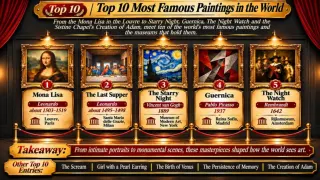
Related: Top 10 Most Famous Paintings in the World
The unexpected fact is how many earlier modern styles he passed through before arguing that they were still too tied to things [3]. This article will not reconstruct the emblematic canvases. The careful fact is a documented sequence, a documented 1915 declaration of a new manner, and a later Soviet climate that would not leave that manner in peace. Impressionism had been a love. Suprematism was a program.
A painter can change methods by subtraction, and still need a manifesto to say what was left.
4. Mondrian Distilled a Landscape Until the Land Almost Left
Piet Mondrian's later work, with its strict verticals and horizontals and a limited set of colors, is easy to treat as a sudden invention [4]. The career is clearer as a long distillation. Early paintings include Dutch landscapes and still lifes in a late-nineteenth-century manner, then a period of brighter, more broken color, then a Cubist-informed analysis of trees and facades, then the increasingly spare work associated with De Stijl. The later grammar did not appear overnight. It was pulled, over years, out of things he had actually seen [4].
The unexpected fact is that a style famous for refusing nature began as a way of looking at nature more strictly [4]. This article will not reconstruct the intermediate trees or piers, and it will not treat a birth year shared with a famous Impressionist canvas as destiny. The careful fact is a documented gradual path and a documented later abstract rule. Harmony was a spiritual language for him. It was also a set of limits on the brush.
A sharp change, in this file, is what a slow change looks like when only the last room is remembered.
5. Kandinsky, from Recognizable Scenes Toward Abstraction
Wassily Kandinsky began with representational work, including landscapes and pictures that drew on Russian folk and remembered interiors, and then, in the early twentieth century, pushed color and form toward a point where the subject could recede or disappear [5]. Theoretical writing about inner necessity and about color as a language accompanied the shift. He is often called one of the first painters of a fully abstract modern art. That honor is shared, and argued over, with contemporaries who were making their own departures at the same time. A single early picture of a rider is sometimes treated as a prophecy. It is better read as one step on a longer path [5].
The unexpected fact is that a pioneer of abstraction spent years explaining why representation was not enough [5]. This article will not reconstruct the rider, the mountain, or the later free forms. The careful fact is a documented move from scenes to an abstract practice, and a documented reluctance, among historians, to award a unique "first." Spiritual ambition was the stated aim. The pictures were the argument.
Related: Top 10 Most Popular Artists of All Time
A landscape can fade from a canvas and still have been, for a long time, the thing the painter had to leave.
6. Matisse, a Shock of Color That Was Not His Last Change
Henri Matisse's early exhibited work includes dark, carefully studied interiors and still lifes in a museum-trained manner [6]. In 1905, pictures associated with the group later called the Fauves used strong, non-natural color in a way that unsold some viewers and excited others; a famous collector's insult about a smear of paint is part of that first reception. Matisse did not stop there. He continued to simplify form, to work through a long Nice period, and, late in life, to make images from cut and pasted paper when illness made painting harder. The "sharp change" is therefore more than one change [6].
The unexpected fact is that the scandal of 1905 can hide the restlessness that came after it [6]. This article will not reconstruct the hat, the table, or the late cut-outs. The careful fact is a documented early dark manner, a documented Fauve shock, and a documented later set of methods. Color was the public surprise. Simplification was the longer project.
A leader of a short movement can still spend decades refusing to stay where the shock had placed him.
7. Pollock, from a Taught Figure to a Poured Field
Jackson Pollock studied under Thomas Hart Benton and, in the 1930s, worked in a figurative, mural-conscious American manner [7]. In the later 1940s he became known for laying the canvas on the floor and pouring, flinging, or dripping paint in an all-over field, a method that made him, for a time, the public face of Abstract Expressionism. The change in procedure is sharp. The meaning is easier to over-tell: popular accounts that treat every later canvas as a direct diagram of personal anxiety or of nuclear fear go past what the pictures, by themselves, can prove [7].
The unexpected fact is how much of the later scale was already implied in mural training, before the figure left [7]. This article will not reconstruct a poured surface or offer a method. The careful fact is a documented early figurative training, a documented late-1940s procedural turn, and a later fame that can drown the work in biography. Benton taught him scale and rhythm. The floor changed what those could do.
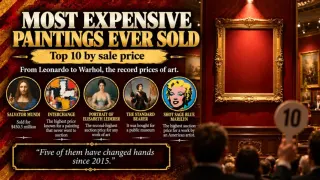
Related: Top 10 Most Expensive Paintings Ever Sold
A radical method can have an ordinary classroom behind it, and still look, to first viewers, like a break with painting.
8. Rothko, from City Scenes to a Late Language of Color
Mark Rothko, born Marcus Rothkowitz in what is now Latvia, began with figurative and urban subjects in the 1930s and then, in the 1940s, passed through a mythic and surreal phase before arriving at the late paintings built from broad, soft fields of color [8]. The late work is often placed in Color Field painting and was meant, in his own terms, to be encountered at close range as a serious, even spiritual, event. This article will name that practice and will not set out the usual arrangement of forms as if to restage a canvas. The earlier subway and street pictures already used color for mood. The later work dropped the street [8].
The unexpected fact is that a painter of isolation in crowds became a painter of almost no depicted world at all [8]. The careful fact is a documented figurative start, a documented mid-career mythic phase, and a documented late color practice. Immigration and a Depression-era urban subject are part of the biography. They do not, by themselves, invent the last rooms.
A city can leave a canvas slowly, first as a mood, and then as an absence.
9. Picasso's Named Periods, and Then a Break in How a Face Is Built
Pablo Picasso's career is almost too full of changes to fit the idea of one switch [9]. Academic and realist training in his youth was followed by the Blue Period, often linked to the suicide of a friend, then a warmer Rose Period, then a confrontation, in Paris, with Iberian sculpture and with African and Oceanic works seen in a colonial-era market and museum world. That encounter, which older writing too easily boxed as "primitivism," helped open the faceted, multi-view construction later called Cubism, developed with Georges Braque. The Blue-to-Rose change is real. The later constructive break is the one that changed other people's painting [9].
The unexpected fact is that the most famous "sharp change" is not the first sad palette, but a new way of building a form [9]. This article will not reconstruct the late-1900s figures or treat a catchy quotation about a senseless world as a certified motto. The careful fact is a documented sequence of periods and a documented shared invention of Cubism. A period can be a mood. Cubism was a method.
A painter can change color and still, later, change the very idea of what a pictured object is.
Related: Top 10 Famous Artworks Damaged in Public Attacks
10. Dali's Early Manners, Then a Surrealist Public Career
Salvador Dali's teenage letters record admiration for French Impressionists, and his early work includes academic exercises, landscape study, and modernist experiments [10]. In the later 1920s, after Madrid, after looking at metaphysical painting and at contemporaries already associated with Surrealism, and after reading Freud as a quarry for images, he entered the Surrealist circle and made that affiliation the public fact of his career. The change is real. It is not a single 1927 flip from Monet to a trademark manner, and this article will not reconstruct the later famous dream objects [10].
The unexpected fact is how many student manners he wore before the manner everyone knows [10]. The careful fact is a documented early eclecticism, a documented late-1920s Surrealist turn, and a later celebrity that can hide the apprenticeship. Theory and group politics mattered. So did a talent for becoming unmistakably himself.
A sharp style can be a destination that was reached, as usual, by trying on other people's methods first.
Conclusion
The ten careers above include a turn from black to color, a decorative painter who became a Secession problem, a path to Suprematism, a slow Mondrian distillation, a Kandinsky argument for abstraction, a Matisse shock that was not a last stop, a Pollock change of procedure, a Rothko departure from the street, a Picasso sequence that ends in method, and a Dali apprenticeship before Surrealism. Mid-career change is common in modern painting. A single cause is still, usually, too neat.
A style can look like a conversion from far away. Up close, it is more often a series of rooms.
- ^ [1] Catalogue and biographical accounts of Odilon Redon's noir period and of his 1890s turn to color, including his own remarks about a change in life, without reconstruction of particular works. Britannica: Odilon Redon Musée d'Orsay
- ^ [2] Accounts of Gustav Klimt's academic-decorative commissions, of the 1890s Secession-era shift, and of the rejected University of Vienna faculty pictures, without reconstruction. Britannica: Gustav Klimt Belvedere, Vienna
- ^ [3] Accounts of Kazimir Malevich's early Impressionist and Cubo-Futurist work and of the 1915 emergence of Suprematism, without reconstruction of emblematic canvases. Britannica: Kazimir Malevich Britannica: Suprematism
- ^ [4] Accounts of Piet Mondrian's path from Dutch landscape through Cubist-informed studies to the later De Stijl abstract grammar, treated as a distillation rather than as an overnight flip. Britannica: Piet Mondrian Britannica: De Stijl
- ^ [5] Accounts of Wassily Kandinsky's move from representational subjects toward abstraction, and of the contested claim that he was the unique first abstract painter, without reconstruction of particular pictures. Britannica: Wassily Kandinsky Guggenheim Museum
- ^ [6] Accounts of Henri Matisse's early dark manner, of the 1905 Fauve reception, and of later developments including the cut-outs, without reconstruction. Britannica: Henri Matisse Museum of Modern Art
- ^ [7] Accounts of Jackson Pollock's Regionalist and figurative training and of the late-1940s poured-paint method, without a process guide or a reconstruction. Britannica: Jackson Pollock National Gallery of Art
- ^ [8] Accounts of Mark Rothko's early figurative and mid-career mythic phases and of the later color-field practice, named as a practice and not restaged as a composition. Britannica: Mark Rothko National Gallery of Art
- ^ [9] Accounts of Picasso's early periods and of the development of Cubism with Georges Braque, including a careful description of Iberian and African sources as a historical encounter. Britannica: Pablo Picasso Britannica: Cubism
- ^ [10] Accounts of Salvador Dali's early academic and modernist work and of his late-1920s turn to Surrealism, without reconstruction of later famous images. Britannica: Salvador Dali Britannica: Surrealism

















Discussion
Log in with