






Top 10 Historical Status Symbols That Now Look Strange
 By Dhiraj Sharma · Published
Share Post
Loading…
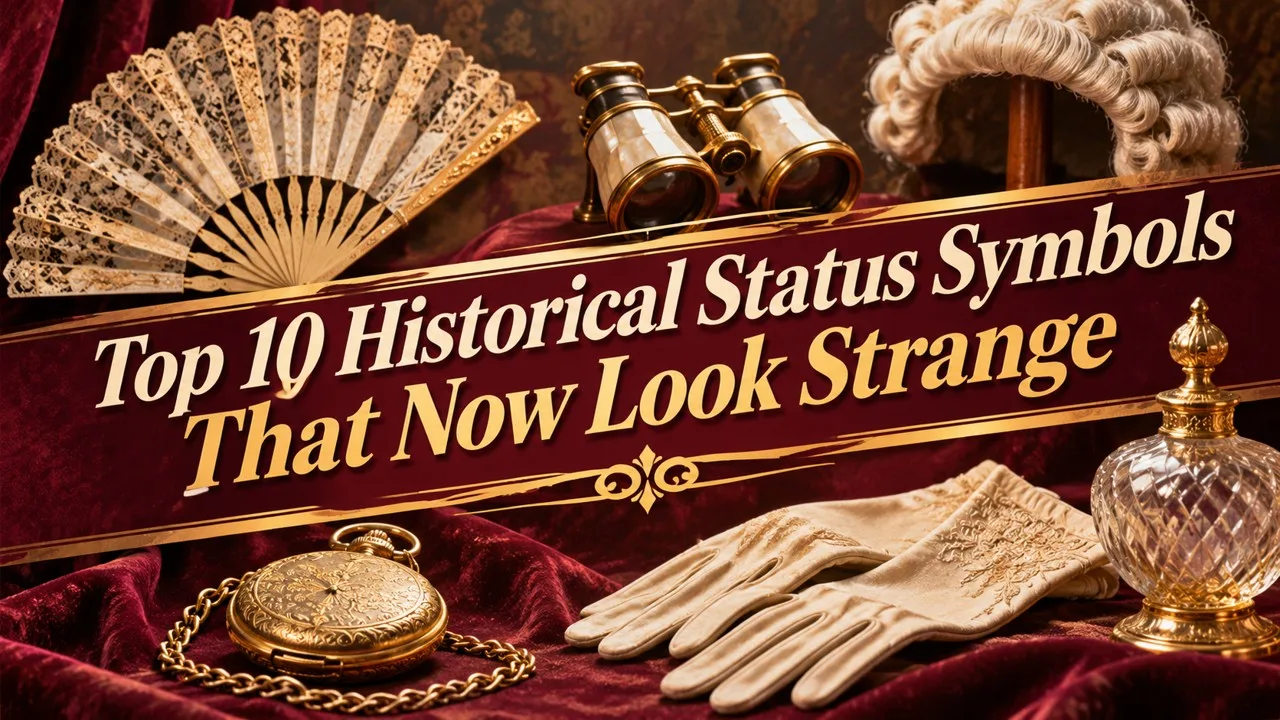
Historical status symbols can look strange now; they were facts about power and fashion, and some of them caused real harm.
A tulip, a long shoe, a rented pineapple, or a blackened tooth can mark rank in one century and look ornamental, or worse, in another. The ten cases below are treated as material culture: Ottoman and later Dutch tulips, board games given as gifts, medieval poulaines, early modern pineapples, a brief X-ray fad, intentional cranial shaping, foot binding, the European collecting of Egyptian mummies, teeth-blackening traditions in Japan and Vietnam, and the eighteenth-century idea of an ornamental hermit. This article does not mock people who could not afford the display, and it does not treat a harmful practice as a quaint joke.
Key Facts
| Symbol or practice | What it marked | Caution |
|---|---|---|
| 1 | Tulips at the Ottoman court, and later a Dutch market craze | A court flower and a 1630s speculation story are not the same fact |
| 2 | Board games as diplomatic or elite gifts in early societies | Play and rank could share a board; not every game was a crown jewel |
| 3 | Long-toed poulaines in later medieval Europe | Fashion and, at times, regulation; not a cartoon of vanity alone |
| 4 | Pineapples in early modern Europe, sometimes rented for a table | A scarce imported fruit, not a joke about hunger |
| 5 | Popular X-ray demonstrations after 1895 | A brief social fad around a new medical tool, later understood as a radiation risk; no medical advice |
| 6 | Intentional cranial shaping in infancy, in several cultures | A widespread practice with local meanings, not a sideshow, and not a method |
| 7 | Foot binding in China, for centuries among some classes | A harmful practice that restricted lives; no graphic description, and no "commitment" gloss |
| 8 | The nineteenth-century European trade in Egyptian mummies and unwrapping events | A market in human remains, not a quirky party tip |
| 9 | Teeth blackening, including ohaguro in Japan and related practice in Vietnam | A historical aesthetic and social mark, not a smear of "ugly teeth" |
| 10 | Ornamental hermits and hermitages in Georgian landscape gardens | A class performance, often more advertised than firmly counted; not a mockery of real religious withdrawal |
1. A Court Flower, and a Later Market
Tulips were cultivated in the Ottoman world for centuries and became a court and elite flower, including in the later "Tulip Period," before they were ever a Dutch cliché [1]. In the Netherlands, in the 1630s, rare bulbs were the object of a famous speculative craze, tulip mania, which popular history has sometimes inflated into a national collapse. Specialists now usually describe a sharp, socially limited bubble and a messy aftermath, not a simple fairy tale of a whole economy ruined by a petal [1].
The unexpected fact is that the same plant could be a sultan's emblem in one place and a futures problem in another [1]. This article will not treat the Dutch episode as the whole of the tulip's status history, and it will not use a luxury logo. The careful fact is an Ottoman garden culture, a later Low Countries market, and a reminder that a status flower can travel faster than the story about it. The bloom is ordinary now in a shop. It was not ordinary in a seventeenth-century contract.
A tulip can be a rank and then a commodity. The two chapters should not be mashed into one joke about foolish buyers.
2. Games That Traveled as Gifts
Some of the earliest board games, from Egypt and the wider Near East, appear in contexts that are not only pastime: they are found in rich burials, in palaces, and, in later periods, in the traffic of diplomatic gifts [2]. Senet, the Royal Game of Ur, and later courtly sets could signal that the giver and the receiver shared a high table. Play was real. So, at times, was the message that the board itself was a precious object [2].
The unexpected fact is how comfortably rank and leisure sit on the same grid [2]. This article will not claim that every early game was a royal present, and it will not treat a modern boxed set as a descendant with a crest. The careful fact is a long archaeological record of games in elite settings, a documented use of boards as high gifts in some periods, and a material culture of inlay, of counting, and of sitting still in public. A game can be a serious object without ceasing to be a game.
A board can mark a friendship between courts. It can also just be a board. The status is in the setting, not only in the rules.
3. Shoes That Advertised a Point
In later medieval Europe, long-toed shoes, often called poulaines or crakows, made a man's, and sometimes a woman's, foot into a visible line [3]. The style is associated especially with the fourteenth and fifteenth centuries, and with a fashion that could be read, by admirers and by critics, as a sign of wealth: the wearer did not need a practical toe for work. Sumptuary rules, in some cities, tried to limit the length. The archaeological shoes, when they survive, are less cartoonish than later drawings, but the point is real [3].
Related: Top 10 Biggest Historical Mysteries
The unexpected fact is how old the idea is that a useless extension can be the point of a garment [3]. This article will not mock a century's feet, and it will not treat a cobbler's last as a moral. The careful fact is a documented fashion, a possible link to court and city display, and a later disappearance when taste moved on. Status, here, is a length that gets in the way, on purpose, and then does not.
A long toe is a poor work shoe and a good billboard. That combination is the whole of the medieval joke, and it was not a joke to the people who paid for the billboard.
4. A Pineapple on the Table, Sometimes Only for the Evening
After the sixteenth century, pineapples reached European tables as rare imported fruit, expensive to grow in hothouses or to bring in by sea [4]. Elites displayed them, carved them in architecture, and, in some well-known anecdotes, rented a fruit for a party so that it could appear and then go back to the dealer. The rental story should be handled as a reported practice, not as a law of every banquet [4].
The unexpected fact is that a fruit could be more valuable as a sight than as a food [4]. This article will not joke about people who never tasted one, and it will not turn a hothouse into a luxury brand. The careful fact is a scarce early modern import, a place in elite display and in decorative arts, and a later collapse of that scarcity when transport and cultivation made pineapples ordinary. Status evaporated when the ship and the glasshouse were no longer rare. The pineapple ornaments on gateposts lasted longer than the shock of the fruit.
A rented centerpiece is a sharp little market. It is also a fact about who was invited to look, not about who was invited to eat.
5. A New Ray, Briefly Treated as a Marvel
Wilhelm Röntgen's discovery of X-rays in 1895 was a medical and scientific event, and it was also, for a short time, a public craze [5]. People sat for bone portraits, watched demonstrations, and, in later decades, even encountered fluoroscopes in everyday settings such as shoe shops. The biological cost of casual exposure was not understood at first. That is part of the history, not a reason to give advice now [5].
The unexpected fact is how quickly a laboratory tool became a parlor marvel [5]. This article will not treat radiation as a toy, and it will not offer a medical opinion. The careful fact is a late-1890s and early-1900s fashion for seeing one's bones, a later tightening of medical and safety norms, and a reminder that a status outing can be built around a machine that later years would fence with rules. The "Victorian" label is slightly loose: the discovery is 1895, at the end of that reign and into the next. The fad is still a documented one.
Related: Top 25 Interesting Facts About the Solar System
A party that wants an X-ray is a period fact. It is not a model for a living room, and this list will not treat it as one.
6. A Head Shape Learned in Infancy
Intentional cranial shaping, sometimes called artificial cranial deformation, has been practiced in many parts of the world, by binding or boards applied in infancy, when the skull is still soft [6]. In some societies it marked identity, rank, or belonging; in others the local meaning is still argued. The practice is archaeological, ethnographic, and, in a few places, historically recent. It is not a single fashion with a single slogan [6].
The unexpected fact is the geography: this is not a curiosity of one famous culture [6]. This article will not describe a method, and it will not treat infants as a spectacle. The careful fact is a widespread technique for shaping a visible social body, a range of meanings, and a reminder that "status symbol" can be written on bone, not only on clothes. A later viewer may find the result strange. The people who practiced it were not staging a joke for that later viewer.
A shaped skull is a lifetime sign. The decent account names the practice, leaves the infants undescribed, and does not sell a how-to.
7. A Status Practice That Caused Harm
Foot binding in China, practiced for centuries among some classes and regions, was a way of producing a small, highly marked foot that could signal refinement, marriageability, and household status [7]. It began in elite settings and later spread more widely, and it was a painful, disabling practice carried out on girls. Twentieth-century reforms and bans ended it as a living norm. A list of status symbols that calls this a form of "commitment" without naming the harm has already failed [7].
The unexpected fact, for a light "strange symbols" frame, is that the symbol was not an object you could put down [7]. This article will not describe the binding in physical detail, and it will not treat the history as erotica or as a joke. The careful fact is a long, documented social practice, a real cost in mobility and in pain, and a later political and cultural rejection. Status, here, is a forced aesthetic that families felt they could not easily abandon until the surrounding order changed. That is a harder sentence than a list of odd treasures usually wants.
Related: Top 25 Interesting Facts About the Universe
A symbol can be a injury system. This one was, and the list should say so without turning the injury into a scene.
8. Human Remains, Sold as a Collection
In ancient Egypt, elaborate mummification was expensive and was, in many periods, a privilege of those who could pay for it [8]. In the nineteenth century, that fact acquired a second, uglier life in Europe: mummies were imported, displayed, unwrapped at gatherings, and sold as furniture for a cultured house or a lecture hall. The unwrapping was entertainment for the living and a destruction of the dead [8].
The unexpected fact is that the modern status symbol is not the ancient rite. It is the collector's ability to own, and to open, someone else's buried body [8]. This article will not offer a party scene, and it will not treat a mummy as a prop. The careful fact is a documented antiquities trade in human remains, a Victorian and later fashion that museums and laws have had to unwind, and a reminder that "status" can be a word for a desecration that was, at the time, legally and socially tolerated in Europe. The Egyptian dead were not a decorative fruit.
A collection can be a crime against dignity even when a period called it science or taste. This chapter of collecting was both fashionable and wrong.
9. Blackened Teeth as an Aesthetic, Not a Stain Joke
Teeth blackening, including the Japanese practice known as ohaguro and related customs in Vietnam, was for long periods a mark of beauty, maturity, or married status, produced with iron-rich or other darkening preparations [9]. In Japan it is documented from early times and was familiar in court and later urban life, until modernizing taste and official pressure in the nineteenth century pushed it out of ordinary fashion. In Vietnam, blackening likewise had a social and aesthetic place, not a meaning of decay [9].
The unexpected fact, for a reader trained to praise white teeth, is that whiteness is the local fashion, not a universal law of beauty [9]. This article will not treat the practice as dirty or as grotesque, and it will not use a living face as a type. The careful fact is a documented aesthetic in more than one Asian history, a later decline under modern norms, and a reminder that "strange" is often only "not our dentist's poster." Status and attractiveness were, in these cases, a darkened smile, and they were read that way by the people who shared the custom.
Related: Top 10 Mythical Creatures in World Mythology - That Inspired Myths Across Civilizations (unchanged)
A later taste can retire a fashion. It should not be allowed to insult the people who wore it.
10. A Hired Solitude, or a Follied One
In eighteenth-century Britain, some landscape gardens included a hermitage, and a smaller number of landowners advertised for, or were said to employ, an "ornamental hermit" to inhabit it [10]. The job, in the anecdotes, was to look picturesque, to remain on the grounds, and to give visitors a living emblem of retreat. How often a real person was hired, and how often the building stood empty as a folly, is less clear than the later retellings. Advertisements and stories survive. A large, well-counted workforce of professional hermits does not [10].
The unexpected fact is the class structure of the joke. A rich man pays, or pretends to pay, for a staged poverty at the edge of his view [10]. This article will not mock either the laborer or the religious hermit, and it will not treat the craze as larger than the evidence. The careful fact is a Georgian garden fashion, a set of buildings and of tales, and a status display that used withdrawal as ornament. Real hermits withdrew for reasons of their own. The ornamental version withdrew on a lease.
A hermitage can be architecture. A hired hermit, when there was one, was a person in a costume of solitude, which is a stranger status symbol than a pineapple, and a colder one.
Conclusion
The ten marks above are tulips, gifted boards, pointed shoes, pineapples, a brief X-ray fad, cranial shaping, foot binding, the trade in mummies, teeth blackening, and the ornamental hermit. Some were luxuries. Some were harms. One was a market in the dead.
A status symbol is a social fact. The decent way to list the ones that now look strange is to keep the material history, refuse a laugh at the poor, and say so when the symbol was also an injury or a desecration.
- ^ [1] Historical accounts of tulips in Ottoman elite culture and of the 1630s Dutch tulip market, with the mania described as a limited bubble rather than as a national fable. Britannica: tulip Britannica: Tulip Mania
- ^ [2] Archaeological and historical discussions of early board games in elite and diplomatic contexts. Britannica: senet Britannica: Royal Game of Ur
- ^ [3] Accounts of late-medieval long-toed shoes, or poulaines, as a documented fashion sometimes limited by regulation. Britannica: dress, historical notes Wikipedia: poulaine
- ^ [4] Historical accounts of the pineapple as a scarce early modern European import and display object, including reported rental practice. Britannica: pineapple Britannica: horticulture
- ^ [5] Histories of the discovery of X-rays in 1895 and of early popular demonstrations, with later safety knowledge noted and no medical advice offered. Britannica: X-ray Britannica: Wilhelm Röntgen
- ^ [6] Anthropological and archaeological overviews of intentional cranial shaping in several cultures, described without method or spectacle. Britannica: cranial deformation Britannica: body modifications
- ^ [7] Historical accounts of foot binding in China as a social practice that caused harm, without graphic description, and of its twentieth-century decline. Britannica: footbinding Britannica: related social context
- ^ [8] Historical discussions of ancient Egyptian mummification and of the nineteenth-century European trade in, and unwrapping of, mummies, treated as a traffic in human remains. Britannica: mummy Britannica: Egyptology
- ^ [9] Cultural and historical accounts of teeth blackening, including ohaguro in Japan and related practice in Vietnam, treated as an aesthetic and social mark. Britannica or related cultural notes on ohaguro Wikipedia: ohaguro
- ^ [10] Garden-history accounts of eighteenth-century British hermitages and of the partly anecdotal fashion for ornamental hermits, distinguished from religious withdrawal. Britannica: English garden Wikipedia: ornamental hermit





















Discussion
Log in with