


 By
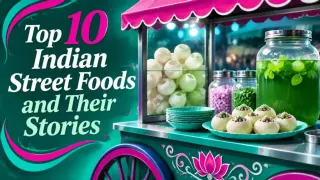
From pani puri and vada pav to kathi rolls, momos and litti chokha, discover ten beloved Indian street foods and the surprising stories behind them. Street food is at the heart of everyday eating in India. In every city, vendors with carts, stalls and tiny shops serve quick, cheap and delicious snacks to workers, students and families.
Many of these dishes have surprising histories. Some came from royal kitchens, some from traders and travellers, and others were invented by enterprising cooks for hungry mill workers or office-goers. Origin stories for street food are often based on local tradition, so dates can be approximate.
Key Facts
These ten snacks are loved across India and increasingly around the world.
Indian Street Foods at a Glance
| # | Street food | Home region | Main ingredients | Origin story |
|---|---|---|---|---|
| 1 | Pani Puri | Across India | Hollow puri, spiced water, potato and chickpeas | Ancient and much debated |
| 2 | Vada Pav | Mumbai | Spiced potato fritter in a bread roll | Born outside Dadar station, 1966 |
| 3 | Pav Bhaji | Mumbai | Mashed vegetable curry with buttered bread | A late supper for cotton traders |
| 4 | Samosa | Across India | Pastry filled with spiced potato and peas | A traveller from the Middle East |
| 5 | Kathi Roll | Kolkata | Kebab wrapped in paratha | Nizam's restaurant, Kolkata |
| 6 | Momos | Himalayas and northeast India | Steamed dumplings with spicy chutney | From Tibet and Nepal |
| 7 | Jalebi | Across India | Fried batter spirals soaked in syrup | A sweet with Persian and Arabic roots |
| 8 | Chole Bhature | Punjab and Delhi | Chickpea curry with fried bread | Spread by Partition |
| 9 | Dabeli | Kutch, Gujarat | Spiced potato in a bun with peanuts and pomegranate | Invented in Mandvi in the 1960s |
| 10 | Litti Chokha | Bihar and eastern Uttar Pradesh | Stuffed wheat balls with mashed vegetables | A rustic meal of the countryside |
1. Pani Puri
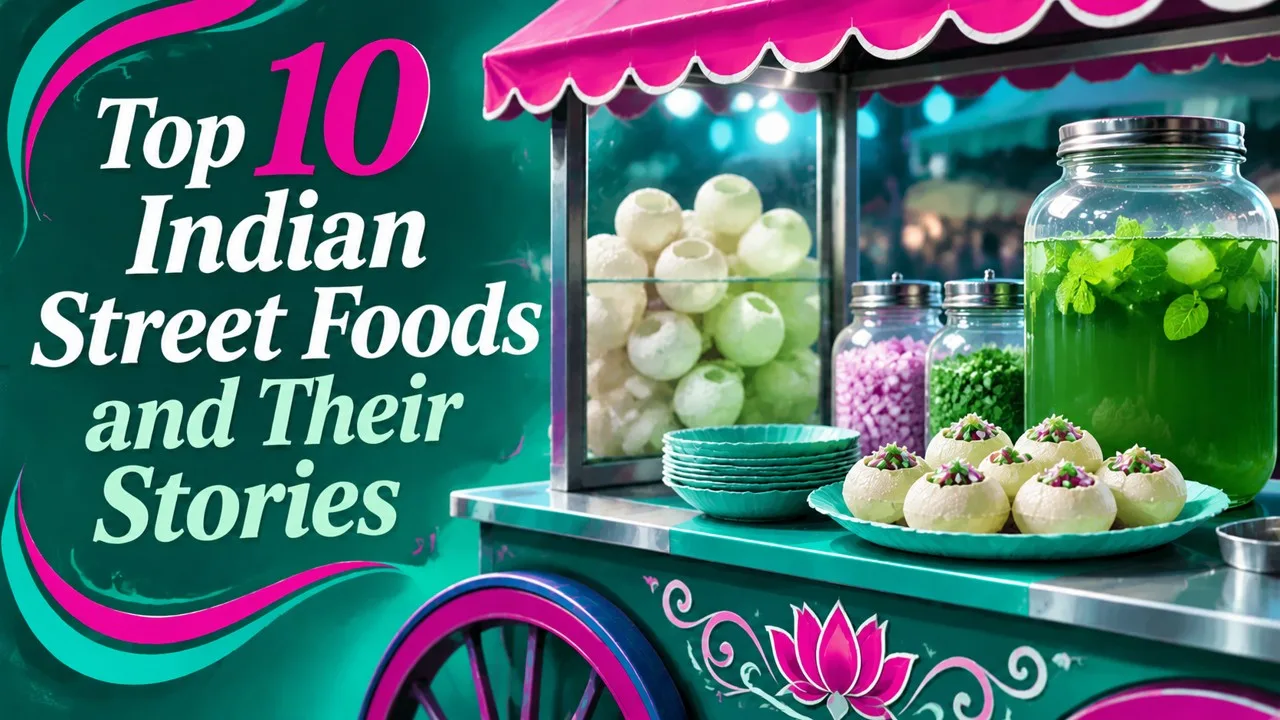
Pani puri is perhaps India's most popular street snack. A small, hollow, crisp puri is cracked open, filled with potato and chickpeas, and dipped in spicy, tangy flavoured water before being eaten in one bite. [1]
It has many regional names, including golgappa in the north, puchka in Bengal and gupchup in Odisha. [1]
Its exact origins are unknown, though many people tell a folk legend linking it to Draupadi in the Mahabharata.
Vendors usually make the flavoured water fresh with mint, coriander, tamarind and spices, and many offer several flavours.
The dish is part of the wider family of chaat, savoury snacks with sweet, sour and spicy flavours.
In July 2023 Google celebrated pani puri with an interactive Doodle, marking a record set in Indore in 2015 when a restaurant served 51 flavours of the dish.
Key Figures
- Other names: golgappa, puchka, gupchup
- Category: chaat
- Eaten: in one bite
- Google Doodle: 2023
Why It Made the List
Pani puri is India's favourite street snack. Its explosion of flavour is unforgettable.
2. Vada Pav
Vada pav is Mumbai's signature street food, often called the Bombay burger. [2]
It consists of a spiced potato fritter, the batata vada, placed inside a soft bread roll, or pav, with chutneys and a fried green chilli. [2]
Ashok Vaidya is often credited with starting the first vada pav stall outside Dadar railway station in 1966.
The cheap, filling snack was popular with workers in the city's textile mills.
In the 1960s and 1970s, the Shiv Sena encouraged Marathi people to set up food stalls, and vada pav spread across the city.
Today it is sold at thousands of stalls in Mumbai, and chains have taken it to other cities and abroad.
The fritter is made of mashed potato flavoured with garlic, green chilli, mustard seeds and curry leaves, coated in gram flour batter and deep-fried. A dry garlic chutney sprinkled inside gives it extra heat.
Key Figures
- City: Mumbai
- Nickname: Bombay burger
- First stall: Dadar, 1966
- Bread: pav
Why It Made the List
Vada pav is the taste of Mumbai. It feeds millions every day.
3. Pav Bhaji
Pav bhaji is a thick, spicy curry of mashed vegetables served with soft bread rolls toasted in butter. [3]
Related: Top 10 Most Popular Desserts in the World
According to popular accounts, it was created in Bombay in the 1860s for cotton traders who worked late during the cotton boom caused by the American Civil War. [3]
Vendors mixed leftover vegetables into a quick, filling meal that could be eaten on the go.
The bread, or pav, was introduced to western India by the Portuguese, and its name comes from the Portuguese word pão.
Pav bhaji is cooked on a large flat griddle, with lots of butter, onion and lemon.
It is now popular across India, especially at beaches such as Juhu and Chowpatty in Mumbai.
Key Figures
- City: Mumbai
- Origin: 1860s cotton boom, by tradition
- Bread: pav, from Portuguese pão
- Cooked on: flat griddle
Why It Made the List
Pav bhaji is a delicious example of Mumbai's street food creativity. Its story links India to global history.
4. Samosa
The samosa is a triangular pastry filled with spiced potato, peas and sometimes meat, deep-fried until crisp. [4]
Its ancestor came from the Middle East and Central Asia, where similar pastries were known as sanbusak or samsa. [4]
It was brought to India in the 13th or 14th century by cooks working for the rulers of the Delhi Sultanate.
The poet Amir Khusrau wrote about samosas around 1300, and the traveller Ibn Battuta described them at the court of Muhammad bin Tughluq.
The potato filling familiar today came later, after the Portuguese introduced potatoes to India.
Samosas are now eaten across India with chutney or chai, and the dish has spread worldwide.
Regional versions vary widely, from small Hyderabadi lukhmi to sweet samosas filled with khoya. In Bengal a similar snack is called singara.
Key Figures
- Origin: Middle East and Central Asia
- Arrived: 13th or 14th century
- Early mention: Amir Khusrau
- Filling: potato and peas
Why It Made the List
The samosa is a traveller that became Indian. It is loved around the world.
5. Kathi Roll
The kathi roll is a kebab wrapped in a flaky paratha, often with egg, onions and chutney. [5]
Related: Top 10 Most Bizarre Phobias: Strange Fears That Exist
It is said to have started at the Nizam restaurant in Kolkata, a Mughlai eatery founded in 1932. [5]
According to one popular story, office-goers in a hurry wanted to eat kebabs without getting their hands greasy, so the cooks wrapped them in paratha.
The name kathi, meaning stick, comes from the bamboo skewers that the restaurant began using in place of heavy iron ones.
In Kolkata the snack is simply called a roll, and countless stalls sell egg, chicken, mutton and paneer versions.
Today kathi rolls are sold across India and in cities such as London and New York.
Many stalls cook each paratha with a beaten egg layered on top before adding the filling.
Key Figures
- City: Kolkata
- Origin: Nizam restaurant, founded 1932
- Name: kathi, meaning stick
- Filling: kebabs, egg, onion
Why It Made the List
The kathi roll is Kolkata's gift to fast food. It is simple, portable and delicious.
6. Momos
Momos are steamed dumplings filled with vegetables, chicken or pork, served with a fiery red chutney. [6]
They come from Tibetan and Nepali cuisine and were brought to India by traders and migrants from the Himalayas. [6]
They spread widely after Tibetan refugees settled in India from 1959 onward.
Momos are especially popular in Sikkim, Darjeeling, Ladakh and the northeast.
In recent decades they have become one of the most popular street foods in Delhi and other cities.
Variations include fried momos, tandoori momos and jhol momo, served in a spicy broth.
The dumpling wrappers are made from a simple flour and water dough and pleated by hand. Street vendors in Delhi often steam hundreds at a time in tall stacked steamers, and the spicy red chutney, made with tomatoes, garlic and chillies, is considered essential. In Ladakh and Sikkim, momos are often served alongside thukpa, a noodle soup.
Related: Top 10 Oldest Buildings in the World
Key Figures
- Origin: Tibet and Nepal
- Spread: after 1959
- Cooked: steamed or fried
- Served with: spicy chutney
Why It Made the List
Momos have conquered India's streets. They show how food travels with people.
7. Jalebi
Jalebi is a sweet made by piping batter in spirals into hot oil and then soaking them in sugar syrup. [7]
Its ancestor, called zalabiya, appears in a 10th-century Arabic cookbook by Ibn Sayyar al-Warraq. [7]
The sweet reached India through Persian-speaking traders and cooks, and Indian texts mention it by the 15th century.
Jalebi is often eaten hot for breakfast, especially in north India, sometimes with milk or rabri.
In Gujarat, people eat fafda and jalebi together, especially on the festival of Dussehra.
Similar sweets are found from North Africa to Southeast Asia.
The batter is usually fermented for several hours, which gives jalebi its slight tang. A thicker version called imarti is made from urad dal batter. Freshly fried jalebis are best eaten crisp and hot, straight from the vendor's pan.
Key Figures
- Origin: Persian and Arabic zalabiya
- Early recipe: 10th century
- Served: hot, with syrup
- Pairing: fafda in Gujarat
Why It Made the List
Jalebi is one of India's most loved sweets. Its long history spans continents.
8. Chole Bhature
Chole bhature pairs a spicy chickpea curry with bhature, large puffed breads fried in oil. [8]
The dish is linked to Punjab, though its exact origin is debated. [8]
It spread to Delhi after the partition of India in 1947, when Punjabi refugees opened food stalls and restaurants.
Today it is one of Delhi's favourite breakfast and street foods.
The chickpea curry is usually cooked with tea leaves or dried amla for its dark colour, and spiced with garam masala and dried pomegranate seeds.
It is often served with pickled onions and green chillies.
Old Delhi and Paharganj have stalls that have served the dish for generations. The bhatura dough is often leavened with yoghurt, which makes the bread puff up dramatically when fried. Amritsar, in Punjab, is also famous for a version made with kulcha bread.
Key Figures
- Region: Punjab and Delhi
- Spread: after 1947
- Main ingredients: chickpeas and fried bread
- Served: breakfast and lunch
Why It Made the List
Chole bhature is a hearty Punjabi favourite. Its story is linked to Partition.
9. Dabeli
Dabeli is a sweet and spicy snack from Kutch, Gujarat. [9]
It consists of a spiced potato mixture stuffed into a bun with tamarind and date chutney, roasted peanuts and pomegranate seeds. [9]
Its name means pressed in Gujarati.
The dish is said to have been created by Keshavji Gabha Chudasama of Mandvi, Kutch, in the 1960s.
Dabeli is cooked on a griddle with butter and is sometimes called Kutchi dabeli or double roti.
Related: 10 Sikh Gurus: The Pillars of Sikhism Who Shaped Faith, Equality, Courage, and Humanity
It has spread across Gujarat and Maharashtra and is now popular in Mumbai and Pune.
The special dabeli masala includes spices such as coriander, cumin, cinnamon, cloves and dried red chilli. Sev, thin crispy strands of fried chickpea flour, is often sprinkled on top, and some versions include a layer of grapes or coconut.
Key Figures
- Region: Kutch, Gujarat
- Created: 1960s, Mandvi
- Name meaning: pressed
- Toppings: peanuts and pomegranate
Why It Made the List
Dabeli is a creative twist on the bun. Its sweet and spicy flavours are irresistible.
10. Litti Chokha
Litti chokha is a hearty meal from Bihar and eastern Uttar Pradesh. [10]
Litti are balls of wholewheat dough stuffed with sattu, roasted chickpea flour mixed with spices, herbs and mustard oil. [10]
Traditionally they are roasted over coals or dung-cake fires, then dipped in ghee.
They are served with chokha, a smoky mash of roasted aubergine, potato and tomato.
According to a popular legend, soldiers in the rebellion of 1857 ate litti because it was easy to cook and carry.
Once a rural meal, litti chokha is now sold at street stalls and restaurants across India.
In the 2010s and 2020s it gained wider attention through food festivals and restaurants in Delhi and other cities. Sattu itself is highly nutritious, rich in protein and fibre, and is also used to make a cooling summer drink in Bihar. The dish is often eaten during festivals and on winter evenings.
Key Figures
- Region: Bihar and eastern Uttar Pradesh
- Filling: sattu
- Side: chokha
- Cooked: over coals
Why It Made the List
Litti chokha is a rustic, nourishing meal. It represents the food culture of Bihar.
Conclusion
India's street foods are a celebration of creativity, history and regional diversity.
When eating street food, choose busy stalls with good hygiene and fresh ingredients. Doing so lets you enjoy these dishes safely.
- ^ [1] "Pani Puri". Wikipedia. Wikipedia: Panipuri Wikipedia: Chaat Wikipedia: Indore
- ^ [2] "Vada Pav". Wikipedia. Wikipedia: Vada pav Wikipedia: Dadar Wikipedia: Bread roll
- ^ [3] "Pav Bhaji". Wikipedia. Wikipedia: Pav bhaji Wikipedia: Portuguese India Wikipedia: American Civil War
- ^ [4] "Samosa". Wikipedia. Wikipedia: Samosa Wikipedia: Amir Khusrau Wikipedia: Ibn Battuta
- ^ [5] "Kathi Roll". Wikipedia. Wikipedia: Kathi roll Wikipedia: Kolkata Wikipedia: Mughlai cuisine
- ^ [6] "Momos". Wikipedia. Wikipedia: Momo (food) Wikipedia: Tibetan cuisine Wikipedia: Nepalese cuisine
- ^ [7] "Jalebi". Wikipedia. Wikipedia: Jalebi Wikipedia: Ibn Sayyar al-Warraq Wikipedia: Fafda
- ^ [8] "Chole Bhature". Wikipedia. Wikipedia: Chole bhature Wikipedia: Partition of India Wikipedia: Bhatura
- ^ [9] "Dabeli". Wikipedia. Wikipedia: Dabeli Wikipedia: Mandvi Wikipedia: Kutch district
- ^ [10] "Litti Chokha". Wikipedia. Wikipedia: Litti (dish) Wikipedia: Sattu Wikipedia: Bihar























Discussion
Log in with