



 By
From willow bark and aspirin to sweet wormwood, India's sarpagandha and the Pacific yew, these ten medicinal plants gave us some of modern medicine's key drugs. For most of human history, plants were the main source of medicine. Healers in India, China, Egypt, the Americas and Europe learned which leaves, roots and barks could ease pain, lower fever or calm the heart.
Modern chemistry made it possible to isolate the active substances in these plants, purify them and sometimes improve them. Many important drugs still come from plants or were inspired by them. This list tells the stories of ten such plants. It is for general knowledge only; medicinal plants can be poisonous, and medicines should be used only as advised by a doctor.
Key Facts
The ten plants below gave rise to medicines for pain, heart disease, malaria, cancer, diabetes and high blood pressure.
Medicinal Plants and Their Drugs at a Glance
| # | Plant | Drug | Used to treat | Key date |
|---|---|---|---|---|
| 1 | White Willow | Aspirin, developed from salicin | Pain, fever and inflammation | 1897 |
| 2 | Foxglove | Digoxin and digitalis | Heart failure and irregular heartbeat | 1785 |
| 3 | Opium Poppy | Morphine and codeine | Severe pain | 1804 |
| 4 | Cinchona | Quinine | Malaria | 1820 |
| 5 | Coca | Local anaesthetics, starting with cocaine | Pain during surgery | 1884 |
| 6 | Sarpagandha, or Indian Snakeroot | Reserpine | High blood pressure | 1950s |
| 7 | Goat's Rue | Metformin | Type 2 diabetes | 1957 |
| 8 | Madagascar Periwinkle | Vinblastine and vincristine | Leukaemia and other cancers | 1950s and 1960s |
| 9 | Pacific Yew | Paclitaxel | Ovarian, breast and lung cancers | 1971 |
| 10 | Sweet Wormwood | Artemisinin | Malaria | 1972 |
1. White Willow
People in ancient Mesopotamia and Egypt used willow bark to relieve pain and fever. Its active ingredient is salicin, which the body converts into salicylic acid. [1]
In 1763, the English clergyman Edward Stone reported to the Royal Society that powdered willow bark helped reduce fevers. [1]
In the 19th century, chemists isolated salicin and made salicylic acid, which worked but irritated the stomach.
In 1897, chemists at the German company Bayer produced a gentler form, acetylsalicylic acid, sold from 1899 as aspirin.
Aspirin became one of the most widely used drugs in the world. Doctors now also use low doses to help prevent heart attacks and strokes in some patients.
The name aspirin comes partly from meadowsweet, another plant containing salicylates, whose old scientific name was Spiraea.
Key Figures
- Plant: white willow
- Drug: aspirin
- Developed: 1897, marketed from 1899
- Uses: pain, fever, heart protection
Why It Made the List
Willow bark led to one of the most famous medicines in history. It shows how folk remedies can inspire modern drugs.
2. Foxglove
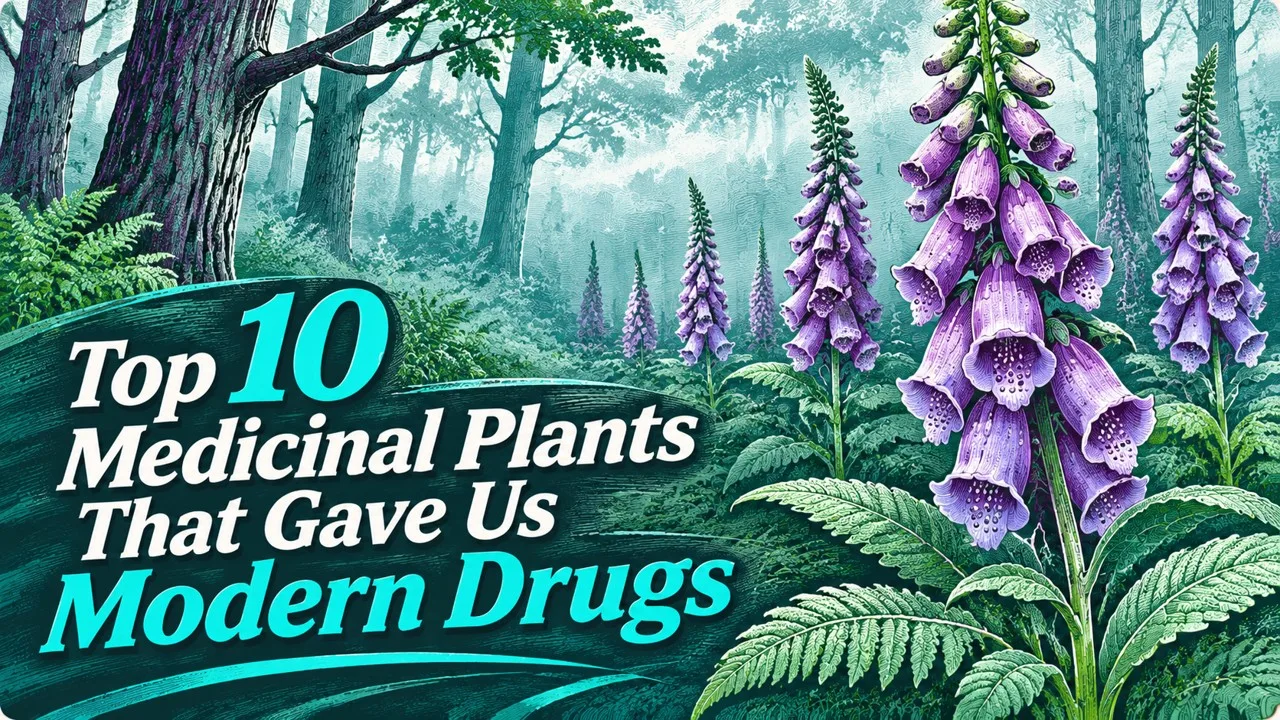
Foxglove is a tall plant with purple bell-shaped flowers. It is highly poisonous, but in the right dose it is a powerful heart medicine. [2]
In 1785, the English doctor William Withering published a study on using foxglove to treat dropsy, a swelling caused by heart failure. He had learned of the remedy from a folk healer. [2]
Withering carefully worked out safe doses, an early example of systematic drug testing.
The active substances, called cardiac glycosides, make the heart beat more strongly and slowly.
Digoxin, derived from a related foxglove species, is still used today for heart failure and some irregular heart rhythms.
Because the difference between a helpful and a toxic dose is small, patients taking digoxin need careful monitoring.
Related: General Knowledge Facts About the Aloe Vera Plant: Botany, Uses and Safety
Key Figures
- Plant: foxglove
- Drug: digoxin
- Key study: William Withering, 1785
- Uses: heart failure and irregular heartbeat
Why It Made the List
Foxglove gave medicine one of its oldest heart drugs. Withering's careful work helped found modern pharmacology.
3. Opium Poppy
The opium poppy has been used for pain relief for thousands of years. Its dried sap, called opium, contains powerful compounds. [3]
Around 1804, the German pharmacist Friedrich Serturner isolated morphine from opium. It was the first active alkaloid ever isolated from a plant. [3]
He named it after Morpheus, the Greek god of dreams, because of its sleep-inducing effects.
Morphine and related drugs, such as codeine, remain essential for treating severe pain, including after surgery and in cancer care.
However, these drugs are highly addictive, and their misuse has caused serious public health problems.
India is one of the few countries licensed to grow opium poppy legally for the pharmaceutical industry, mainly in Madhya Pradesh, Rajasthan and Uttar Pradesh, under strict government control.
Key Figures
- Plant: opium poppy
- Drug: morphine
- Isolated: around 1804
- Uses: severe pain
Why It Made the List
The opium poppy gave us the most important painkillers in medicine. It also shows the risks of powerful drugs.
4. Cinchona
Cinchona trees grow in the Andes of South America. Their bark was used to treat fevers, and by the 1630s Jesuit missionaries were sending it to Europe as a cure for malaria. [4]
In 1820, the French chemists Pierre Joseph Pelletier and Joseph Bienaime Caventou isolated quinine, the bark's active ingredient. [4]
Quinine became the main treatment for malaria for more than a century and helped European powers expand into tropical regions.
In the 1860s, the British established cinchona plantations in India, in the Nilgiri Hills and near Darjeeling, to produce quinine locally.
Quinine is also the source of the bitter taste in tonic water.
Today quinine has largely been replaced by newer drugs, but it is still used in some cases of severe malaria.
Key Figures
- Plant: cinchona tree
- Drug: quinine
- Isolated: 1820
- Indian plantations: Nilgiris and Darjeeling
Why It Made the List
Cinchona gave the world its first effective malaria drug. Its history is linked to colonial India.
5. Coca
People in the Andes have chewed coca leaves for thousands of years to fight hunger, fatigue and altitude sickness. [5]
Related: Top 10 Accidental Medical Discoveries
In 1860, the chemist Albert Niemann isolated cocaine from coca leaves. [5]
In 1884, the Austrian eye doctor Carl Koller discovered that cocaine could numb the eye, making eye surgery far less painful. It became the first local anaesthetic.
Cocaine's dangers soon became clear, including addiction. Chemists searched for safer alternatives.
This led to drugs such as procaine and lidocaine, which are used today by dentists and surgeons around the world.
Every time a dentist numbs a tooth, patients benefit from research that began with the coca plant.
In the Andes, coca leaf tea is still widely drunk and is legal in some countries, although the plant is strictly controlled elsewhere because of cocaine production.
Key Figures
- Plant: coca
- First local anaesthetic: cocaine, 1884
- Pioneer: Carl Koller
- Modern descendants: procaine and lidocaine
Why It Made the List
Coca led to the invention of local anaesthesia. Its descendants make countless procedures painless.
6. Sarpagandha, or Indian Snakeroot
Rauvolfia serpentina, known in India as sarpagandha, has been used in traditional Indian medicine for centuries to treat snakebite, fever and mental illness. [6]
In 1931, the chemist Salimuzzaman Siddiqui, then working in Delhi, isolated ajmaline and other alkaloids from its roots. [6]
In 1949, the Indian cardiologist Rustom Jal Vakil published a study showing that the plant lowered blood pressure, attracting international attention.
In 1952, chemists isolated its most important active compound, reserpine.
Reserpine became one of the first effective drugs for high blood pressure and was also used to treat some mental illnesses.
It is used less today because of side effects, but it helped transform the treatment of hypertension and the understanding of brain chemistry.
Key Figures
- Plant: Rauvolfia serpentina
- Drug: reserpine
- Indian pioneers: the Siddiquis and Rustom Jal Vakil
- Uses: high blood pressure
Why It Made the List
Sarpagandha is a gift from Indian traditional medicine to the world. It led to one of the first blood pressure drugs.
7. Goat's Rue
Goat's rue, also called French lilac, is a flowering plant from Europe and western Asia. In medieval times it was used to treat frequent urination, a symptom of diabetes. [7]
In the early 20th century, scientists found that the plant contains galegine, which lowers blood sugar but was too toxic for regular use. [7]
Related: Top 10 Best Foods to Relieve Constipation
Chemists developed related compounds, and metformin was first made in 1922.
In 1957, the French doctor Jean Sterne published results showing that metformin could treat diabetes.
Today metformin is the main first-line medicine for type 2 diabetes worldwide, taken by many millions of people, including in India.
Researchers continue to study it for other possible benefits.
The plant itself is poisonous to livestock, and some countries treat it as a noxious weed. Metformin is on the World Health Organization's list of essential medicines.
Key Figures
- Plant: goat's rue
- Drug: metformin
- First used for diabetes: 1957
- Uses: type 2 diabetes
Why It Made the List
Goat's rue led to one of the most widely used drugs on Earth. Millions of diabetes patients depend on its descendant.
8. Madagascar Periwinkle
The Madagascar periwinkle is a small flowering plant with pink or white flowers. It is common in Indian gardens, where it is called sadabahar, meaning ever-blooming. [8]
In the 1950s, researchers investigating its traditional use for diabetes discovered that its extracts lowered white blood cell counts. [8]
This led to the discovery of two important cancer drugs, vinblastine and vincristine.
Vincristine helped transform the treatment of childhood leukaemia, which had been almost always fatal. Survival rates have since risen dramatically.
Vinblastine is used to treat Hodgkin lymphoma and other cancers.
The plant contains only tiny amounts of these compounds, so huge quantities of leaves are needed to produce them.
The drugs were developed by researchers in Canada and at the American company Eli Lilly. The plant itself is toxic if eaten.
Key Figures
- Plant: Madagascar periwinkle
- Drugs: vinblastine and vincristine
- Indian name: sadabahar
- Uses: leukaemia and lymphoma
Why It Made the List
The periwinkle gave doctors powerful tools against childhood cancer. A garden flower became a lifesaver.
9. Pacific Yew
In 1962, a botanist working for a United States cancer research programme collected bark from the Pacific yew, a slow-growing tree of the northwestern United States. [9]
In 1971, the chemists Monroe Wall and Mansukh Wani identified its active ingredient, paclitaxel, later sold as Taxol. [9]
Mansukh Wani was born in Nandurbar, Maharashtra, and studied chemistry at the University of Bombay before moving to the United States.
Related: Top 10 Most Bizarre Phobias: Strange Fears That Exist
Paclitaxel works by preventing cancer cells from dividing. It was approved for ovarian cancer in 1992 and later for breast and lung cancers.
Harvesting the bark killed the trees, so scientists developed ways to make the drug from the needles of other yews and through cell culture.
The Himalayan yew, which grows in India, has also been used as a source and is now protected because of overharvesting.
Key Figures
- Plant: Pacific yew
- Drug: paclitaxel, or Taxol
- Identified: 1971
- Indian link: Mansukh Wani
Why It Made the List
The Pacific yew gave us one of the most important cancer drugs. Its story highlights the need to protect medicinal plants.
10. Sweet Wormwood
Sweet wormwood, called qinghao in Chinese, has been used in traditional Chinese medicine for fevers for centuries. [10]
In the 1960s and 1970s, the Chinese scientist Tu Youyou led a team searching traditional remedies for a new malaria treatment. [10]
Inspired by a 4th-century text that described soaking the plant in cold water, she used a low-temperature extraction method. In 1972 her team isolated artemisinin.
Artemisinin-based combination therapies are now the main treatment for malaria and have saved millions of lives, including in India.
In 2015, Tu Youyou shared the Nobel Prize in Physiology or Medicine, becoming the first Chinese woman to win a Nobel Prize in science.
Scientists are now monitoring resistance to artemisinin in some regions, which makes new research important.
Key Figures
- Plant: sweet wormwood
- Drug: artemisinin
- Isolated: 1972
- Nobel Prize: Tu Youyou, 2015
Why It Made the List
Sweet wormwood gave the world its most powerful malaria drug. It shows the value of studying traditional medicine scientifically.
Conclusion
Plants have given medicine some of its most important drugs, from painkillers to cancer treatments. Many were discovered by studying traditional knowledge.
Scientists believe many more useful compounds remain to be found in the world's plants. Protecting biodiversity and respecting traditional knowledge are vital for future discoveries.
- ^ [1] "White Willow". Wikipedia. Wikipedia: Aspirin Wikipedia: Salix alba
- ^ [2] "Foxglove". Wikipedia. Wikipedia: Digitalis Wikipedia: William Withering Wikipedia: Digoxin
- ^ [3] "Opium Poppy". Wikipedia. Wikipedia: Morphine Wikipedia: Friedrich Sertürner Wikipedia: Papaver somniferum
- ^ [4] "Cinchona". Wikipedia. Wikipedia: Quinine Wikipedia: Cinchona
- ^ [5] "Coca". Wikipedia. Wikipedia: Coca Wikipedia: Carl Koller Wikipedia: Lidocaine
- ^ [6] "Sarpagandha, or Indian Snakeroot". Wikipedia. Wikipedia: Rauvolfia serpentina Wikipedia: Reserpine Wikipedia: Rustom Jal Vakil
- ^ [7] "Goat's Rue". Wikipedia. Wikipedia: Galega officinalis Wikipedia: Metformin
- ^ [8] "Madagascar Periwinkle". Wikipedia. Wikipedia: Catharanthus roseus Wikipedia: Vincristine
- ^ [9] "Pacific Yew". Wikipedia. Wikipedia: Paclitaxel Wikipedia: Taxus brevifolia Wikipedia: Mansukh C. Wani
- ^ [10] "Sweet Wormwood". Wikipedia. Wikipedia: Artemisinin Wikipedia: Tu Youyou Wikipedia: Artemisia annua



















Discussion
Log in with