






 By
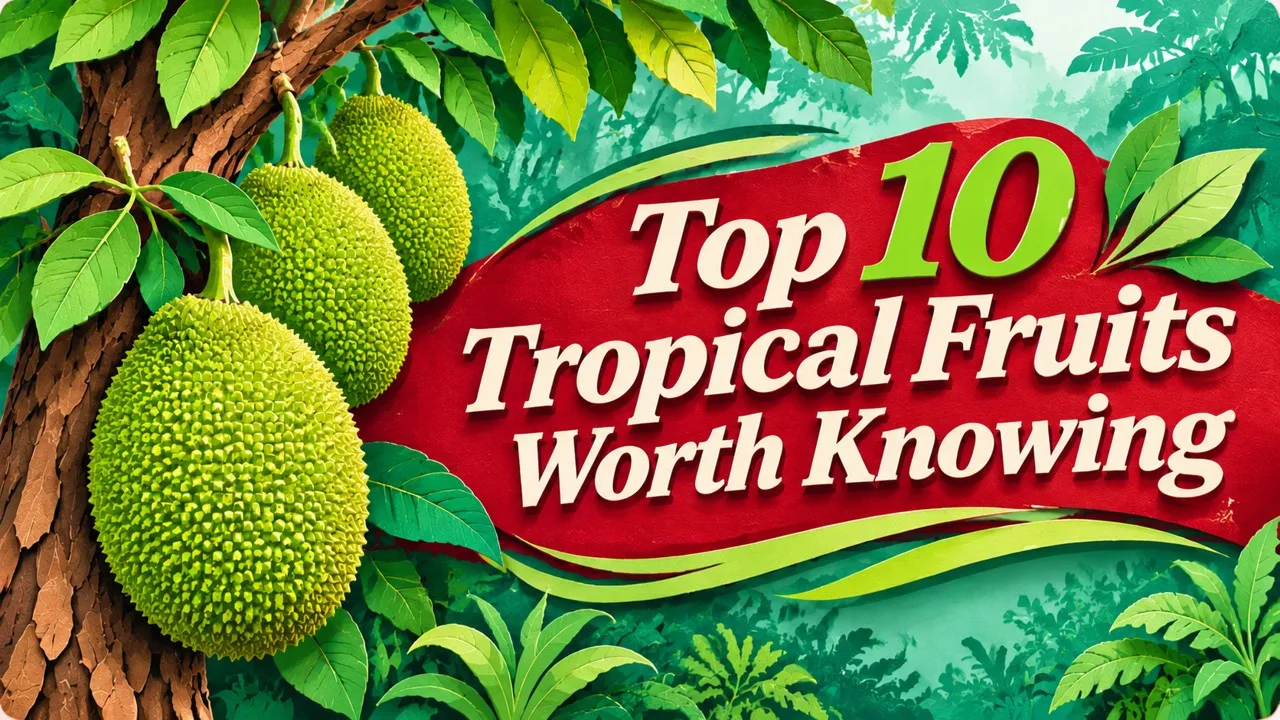
From India's beloved mango and giant jackfruit to mangosteen, durian and dragon fruit, these ten tropical fruits worth knowing have rich histories and flavours. Tropical regions produce an extraordinary variety of fruits, shaped by warm temperatures, heavy rains and rich biodiversity. Many of them have travelled around the world through ancient trade routes and colonial voyages.
India is one of the world's great fruit-growing countries, leading global production of mangoes and bananas. This list introduces ten tropical fruits worth knowing, from everyday favourites to exotic treats, with notes on their origins, flavours and the stories behind them.
Key Facts
The ten fruits below include giants, delicacies and a cactus fruit, each with its own place in history and culture.
Tropical Fruits Worth Knowing at a Glance
| # | Fruit | Native region | Top producers or hubs | Known for |
|---|---|---|---|---|
| 1 | Mango | Northeastern India and Myanmar | India | The king of fruits in India |
| 2 | Banana | Southeast Asia and New Guinea | India | The world's favourite fruit |
| 3 | Jackfruit | The Western Ghats of India | India and Bangladesh | The largest tree-borne fruit |
| 4 | Pineapple | South America | Costa Rica, the Philippines and India | A symbol of hospitality |
| 5 | Papaya | Southern Mexico and Central America | India | A fruit with a useful enzyme |
| 6 | Guava | Tropical America | India | A vitamin C powerhouse |
| 7 | Lychee | Southern China | China and India | A fragrant summer treat |
| 8 | Mangosteen | The Malay Peninsula and Borneo | Thailand and Indonesia | The queen of fruits |
| 9 | Durian | Southeast Asia | Thailand, Malaysia and Indonesia | The king of fruits in Southeast Asia |
| 10 | Dragon Fruit | Southern Mexico and Central America | Vietnam | A cactus fruit with a night-blooming flower |
1. Mango
The mango originated in the region between northeastern India and Myanmar and has been cultivated in South Asia for thousands of years. [1]
It is the national fruit of India, and India produces far more mangoes than any other country. [1]
There are hundreds of varieties. Indian favourites include Alphonso from Ratnagiri, Kesar from Gujarat, Dasheri and Langra from the north, and Banganapalli from Andhra Pradesh.
The Mughal emperor Akbar is said to have planted an orchard of 100,000 mango trees, known as the Lakhi Bagh.
Mangoes appear in Indian poetry, festivals and rituals. Mango leaves are hung over doorways on auspicious occasions.
The fruit is eaten fresh, made into aamras, pickles and chutneys, and used in drinks such as aam panna and mango lassi.
Ripe mangoes are a highlight of the Indian summer.
Key Figures
- Native region: northeastern India and Myanmar
- National fruit: India
- Famous varieties: Alphonso, Kesar, Dasheri, Langra
- Uses: fresh, pickles, drinks
Why It Made the List
The mango is India's most cherished fruit. Its varieties and traditions are unmatched.
2. Banana
Bananas were first domesticated in Southeast Asia and New Guinea thousands of years ago. [2]
India is the world's largest banana producer, growing many varieties, from small elaichi bananas to red bananas and the large Nendran of Kerala. [2]
The banana plant is not a tree but a giant herb, and botanically the fruit is a berry.
Most bananas sold internationally are of a single variety, the Cavendish. An earlier export variety, the Gros Michel, was largely wiped out by a fungal disease in the 20th century.
A new strain of that disease now threatens the Cavendish, prompting scientists to search for resistant varieties.
In South India, banana leaves are used as plates, and banana flowers and stems are cooked as vegetables.
Key Figures
- Native region: Southeast Asia and New Guinea
- Top producer: India
- Export variety: Cavendish
- Plant type: giant herb
Why It Made the List
The banana is one of the world's most important fruits. Its history warns of the risks of relying on one variety.
Related: Top 10 Surprising Facts About Bananas
3. Jackfruit
Jackfruit is native to India, and it is the largest fruit that grows on trees. A single fruit can weigh several tens of kilograms. [3]
The fruits grow directly from the trunk and thick branches, because thin twigs could not support their weight. [3]
Inside the spiky green skin are sweet, fragrant yellow bulbs and large seeds, which can be roasted or added to curries.
Unripe jackfruit has a meaty texture and is popular as a meat substitute in vegetarian dishes.
It is the state fruit of Kerala and Tamil Nadu, and the national fruit of Bangladesh.
A single tree can produce many fruits a year, making it important for food security in South India.
Its sticky latex sap makes cutting the fruit messy, so people often oil their hands and knives first.
Key Figures
- Native region: India
- Record: largest tree-borne fruit
- State fruit: Kerala and Tamil Nadu
- Use: vegetarian meat substitute
Why It Made the List
Jackfruit is a giant among fruits. It is gaining global attention as a sustainable food.
4. Pineapple
The pineapple is native to South America, in the region of present-day Paraguay and southern Brazil. [4]
Christopher Columbus encountered it in the Caribbean in 1493 and brought it back to Europe, where it caused a sensation. [4]
Pineapples were so hard to grow in Europe that they became status symbols, sometimes rented for display at parties.
A pineapple is not a single fruit but many small fruits fused together around a central core.
It contains an enzyme called bromelain, which breaks down proteins. This is why fresh pineapple can make the mouth tingle and cannot be used to set gelatin desserts.
In India, pineapples are widely grown in the northeast. The Queen pineapple is the state fruit of Tripura.
Each plant usually produces only one large fruit at a time, after a growing period of well over a year.
Related: Top 10 Surprising Facts About Bananas
Key Figures
- Native region: South America
- Reached Europe: after 1493
- Enzyme: bromelain
- Indian hub: the northeast
Why It Made the List
The pineapple went from luxury to everyday fruit. Its biology is as interesting as its history.
5. Papaya
Papaya is native to southern Mexico and Central America, and Spanish and Portuguese traders spread it across the tropics. [5]
India is the world's largest producer of papaya. [5]
The fruit contains papain, an enzyme that breaks down proteins. Papain is used to tenderise meat and in some medical and industrial products.
Papaya trees grow quickly and can bear fruit within a year of planting.
In Hawaii, the papaya industry was saved in the 1990s by a genetically engineered variety resistant to the ringspot virus.
In India, ripe papaya is eaten fresh, while green papaya is used in salads and cooked dishes.
Its black seeds are edible and have a peppery taste, and in some places they are dried and used as a pepper substitute. Papaya leaves are also cooked as a vegetable in parts of Southeast Asia.
Key Figures
- Native region: southern Mexico and Central America
- Top producer: India
- Enzyme: papain
- Growth: fruit within a year
Why It Made the List
Papaya is fast-growing and nutritious. It is one of the most widely grown tropical fruits.
6. Guava
Guava is native to tropical America and was brought to India by Portuguese traders, probably in the 17th century. [6]
It quickly became a popular fruit across India, and India is now one of the largest producers. [6]
Guava is very rich in vitamin C, containing several times more than an orange by weight.
The Allahabad Safeda is one of India's best-known guava varieties, with white flesh and a sweet flavour.
Guavas are eaten fresh with salt and chilli powder, or made into jellies, juices and sweets.
Guava leaves have been used in traditional remedies in many countries.
Pink-fleshed varieties are also popular, and guava trees grow easily in home gardens across the country. In winter, roadside vendors in north India sell guavas sliced and sprinkled with spiced salt.
Key Figures
- Native region: tropical America
- Arrived in India: around the 17th century
- Nutrient: very rich in vitamin C
- Famous variety: Allahabad Safeda
Why It Made the List
The guava is an everyday superfruit. It has become an integral part of Indian food culture.
Related: Top 10 Most Bizarre Phobias: Strange Fears That Exist
7. Lychee
The lychee is native to southern China, where it has been cultivated for more than 2,000 years. [7]
According to legend, a Tang dynasty emperor had lychees carried by relays of horsemen to the capital for his consort Yang Guifei, who loved the fruit. [7]
The fruit has a rough pink-red skin, white translucent flesh and a floral, rose-like aroma.
India is the second-largest producer of lychees. The Shahi litchi of Muzaffarpur in Bihar has a Geographical Indication tag.
Lychees are very perishable, so they are often eaten fresh in season or canned and dried.
Dried lychees are sometimes called lychee nuts.
The trees need a cool, dry winter followed by a warm, humid summer to fruit well, which limits where they can be grown. The harvest season in Bihar is short, usually in May and June.
Key Figures
- Native region: southern China
- Cultivated for: over 2,000 years
- Indian hub: Muzaffarpur, Bihar
- Aroma: rose-like
Why It Made the List
The lychee is a fragrant fruit with a long history. Bihar's Shahi litchi is a proud Indian speciality.
8. Mangosteen
The mangosteen is native to the Malay Peninsula and Borneo and is grown in Southeast Asia and parts of southwestern India. [8]
It has a thick, deep purple rind and soft white segments with a sweet and slightly tangy flavour. It is often called the queen of fruits. [8]
Mangosteen trees grow slowly and may take many years to begin fruiting.
A popular story claims that Queen Victoria offered a reward to anyone who could bring her a fresh mangosteen, but there is no evidence for this.
The purple rind stains clothes and was traditionally used as a dye.
In Kerala and coastal Karnataka, mangosteen is grown in small orchards and sold in season.
The number of segments inside matches the number of small lobes on the base of the fruit, a handy trick for buyers.
Key Figures
- Native region: Malay Peninsula and Borneo
- Nickname: queen of fruits
- Rind: thick and purple
- Indian growing area: Kerala and Karnataka
Why It Made the List
The mangosteen is prized for its delicate flavour. It is a true delicacy of the tropics.
9. Durian
The durian is famous for its spiky husk and its powerful smell, which some people love and others find unbearable. [9]
Related: Top 10 Oldest Buildings in the World
In Southeast Asia, it is known as the king of fruits. Its creamy flesh has a rich, sweet, custard-like flavour. [9]
The smell is so strong that durians are banned on public transport and in many hotels in Singapore.
The 19th-century naturalist Alfred Russel Wallace wrote that eating durian was worth a journey to the East.
Famous varieties include Musang King from Malaysia and Monthong from Thailand, and premium fruits can be very expensive.
Durian trees are pollinated mainly by bats at night.
Some durians can weigh several kilograms.
In Thailand and Malaysia, durian festivals and roadside stalls draw crowds during the fruiting season.
Key Figures
- Native region: Southeast Asia
- Nickname: king of fruits
- Famous for: its strong smell
- Pollinators: bats
Why It Made the List
The durian is one of the world's most controversial fruits. It inspires devotion and disgust in equal measure.
10. Dragon Fruit
Dragon fruit comes from climbing cactus plants native to southern Mexico and Central America. [10]
The plants produce large white flowers that bloom for only one night, often called moonflowers. [10]
The fruit has bright pink skin with green-tipped scales, and white or red flesh speckled with tiny black seeds.
Vietnam is one of the largest producers and exporters, and the fruit has become popular across Asia.
In India, dragon fruit farming has grown rapidly in states such as Gujarat, Maharashtra and Karnataka. In 2021, Gujarat announced that it would call the fruit kamalam, after its lotus-like shape.
The plant needs little water, making it suitable for dry regions.
Its mild, lightly sweet taste is often compared to kiwi fruit and pear.
Key Figures
- Native region: southern Mexico and Central America
- Plant: climbing cactus
- Top exporter: Vietnam
- Indian name: kamalam in Gujarat
Why It Made the List
Dragon fruit is a striking cactus fruit. It is one of India's fastest-growing new crops.
Conclusion
Tropical fruits offer an amazing range of flavours, colours and stories. Many have travelled across the world through trade and exploration.
India's diverse climates allow it to grow most of these fruits. Trying them in season is one of the joys of the tropics.
- ^ [1] "Mango". Wikipedia. Wikipedia: Mango Wikipedia: Alphonso mango
- ^ [2] "Banana". Wikipedia. Wikipedia: Banana Wikipedia: Cavendish banana
- ^ [3] "Jackfruit". Wikipedia. Wikipedia: Jackfruit Wikipedia: Artocarpus
- ^ [4] "Pineapple". Wikipedia. Wikipedia: Pineapple Wikipedia: Bromelain
- ^ [5] "Papaya". Wikipedia. Wikipedia: Papaya Wikipedia: Papain
- ^ [6] "Guava". Wikipedia. Wikipedia: Guava Wikipedia: Psidium guajava
- ^ [7] "Lychee". Wikipedia. Wikipedia: Lychee Wikipedia: Muzaffarpur
- ^ [8] "Mangosteen". Wikipedia. Wikipedia: Mangosteen Wikipedia: Garcinia
- ^ [9] "Durian". Wikipedia. Wikipedia: Durian Wikipedia: Alfred Russel Wallace
- ^ [10] "Dragon Fruit". Wikipedia. Wikipedia: Pitaya Wikipedia: Selenicereus undatus





















Discussion
Log in with