





 By
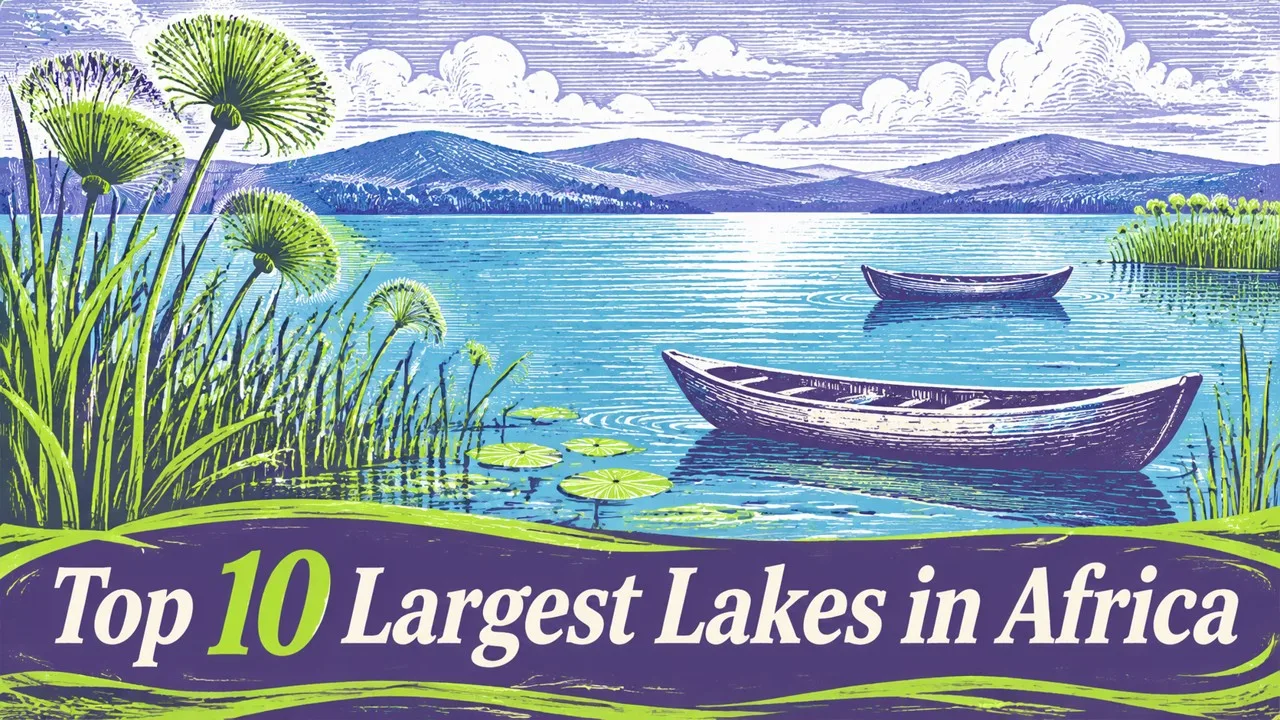
From Lake Victoria and Lake Tanganyika to Lake Volta and Lake Tana, explore the ten largest lakes in Africa by surface area and the life they support. Africa's great lakes are among the largest and oldest bodies of fresh water on Earth. Many lie in the Great Rift Valley, where the continent is slowly pulling apart, and their deep basins hold an astonishing variety of fish.
This list ranks lakes by surface area and includes large reservoirs created by dams. Lake Chad, once one of the largest lakes in Africa, is left out because it has shrunk dramatically since the 1960s and its area varies greatly with the seasons. Figures are approximate and can change with rainfall and water use.
Key Facts
These ten lakes provide water, food, power and transport for tens of millions of people.
The Largest Lakes in Africa at a Glance
| # | Lake | Area | Countries | Notable feature |
|---|---|---|---|---|
| 1 | Lake Victoria | About 59,900 square km | Uganda, Kenya, Tanzania | Source of the White Nile |
| 2 | Lake Tanganyika | About 32,900 square km | Tanzania, DR Congo, Burundi, Zambia | Longest freshwater lake |
| 3 | Lake Malawi | About 29,600 square km | Malawi, Mozambique, Tanzania | Richest lake for fish species |
| 4 | Lake Volta | About 8,500 square km | Ghana | Largest reservoir by surface area |
| 5 | Lake Turkana | About 6,400 square km | Kenya, Ethiopia | The Jade Sea |
| 6 | Lake Albert | About 5,600 square km | Uganda, DR Congo | A lake of the Albertine Rift |
| 7 | Lake Kariba | About 5,580 square km | Zambia, Zimbabwe | Largest reservoir by volume |
| 8 | Lake Nasser | About 5,250 square km | Egypt, Sudan | Created by the Aswan High Dam |
| 9 | Lake Mweru | About 5,120 square km | Zambia, DR Congo | A lake on the Congo river system |
| 10 | Lake Tana | About 3,200 square km | Ethiopia | Source of the Blue Nile |
1. Lake Victoria
Lake Victoria is the largest lake in Africa and the largest tropical lake in the world, covering about 59,900 square kilometres. Among the world's freshwater lakes, only Lake Superior in North America is larger by area. [1]
The lake is shared by Uganda, Kenya and Tanzania, while Rwanda and Burundi lie within its wider basin. Despite its size it is relatively shallow, reaching only about 80 metres at its deepest point. [1]
The British explorer John Hanning Speke reached its southern shore in 1858 and named it after Queen Victoria, identifying it as the main source of the Nile.
The White Nile flows out of the lake at Jinja in Uganda, where the Owen Falls Dam, now the Nalubaale Dam, was completed in 1954.
The lake once held hundreds of species of cichlid fish found nowhere else. The introduction of the predatory Nile perch in the 1950s contributed to the disappearance of many of them, one of the largest extinction events among vertebrates in modern times.
Lake Victoria also suffers from pollution and from invasions of water hyacinth, a floating plant that can choke harbours and fishing grounds.
Even so, its fisheries support millions of people, and cities such as Kampala, Kisumu and Mwanza grew up on or near its shores. The lake has around 985 islands.
Key Figures
- Area: about 59,900 square km
- Countries: Uganda, Kenya, Tanzania
- Outflow: White Nile
- Named: 1858, by John Hanning Speke
Why It Made the List
Lake Victoria is Africa's greatest lake. It is the source of the White Nile and a lifeline for millions.
2. Lake Tanganyika
Lake Tanganyika covers about 32,900 square kilometres and stretches about 673 kilometres from north to south, making it the longest freshwater lake in the world. [2]
It is also the second-deepest lake on Earth, reaching about 1,470 metres, and the second-largest by volume of fresh water, after Lake Baikal in Siberia. [2]
The lake is shared by four countries, Tanzania, the Democratic Republic of the Congo, Burundi and Zambia, and lies in the western branch of the Great Rift Valley.
It is one of the oldest lakes in the world, estimated to be millions of years old, and its deep waters contain hundreds of species of cichlid fish, most found nowhere else.
Below a depth of about 100 to 200 metres the water contains almost no oxygen, so nearly all life is concentrated near the surface.
In 1871 the journalist Henry Morton Stanley found the missionary David Livingstone at Ujiji, on the lake's eastern shore, reportedly greeting him with the famous words, Dr. Livingstone, I presume?
Small sardine-like fish called kapenta support major fisheries, and the lake drains westward through the Lukuga River into the Congo basin.
Key Figures
- Area: about 32,900 square km
- Length: about 673 km
- Maximum depth: about 1,470 metres
- Countries: four
Why It Made the List
Lake Tanganyika is one of the world's great natural wonders. Its age, depth and biodiversity are remarkable.
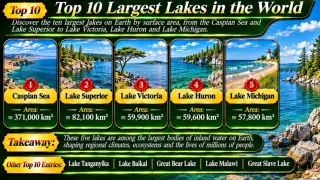
Related: Top 10 Largest Lakes in the World
3. Lake Malawi
Lake Malawi, also called Lake Nyasa, covers about 29,600 square kilometres and is the southernmost of the great lakes of the Rift Valley. [3]
It is shared by Malawi, Mozambique and Tanzania, and Malawi and Tanzania have long disagreed over where their border lies on the lake. [3]
The lake is thought to contain more species of fish than any other lake in the world, mostly colourful cichlids. Scientists estimate there are many hundreds of species, and new ones are still being described.
Many of these fish, such as the rock-dwelling mbuna, have become popular in home aquariums around the world.
Lake Malawi National Park, at the southern end of the lake, was listed as a UNESCO World Heritage Site in 1984 for its remarkable fish diversity.
The lake reaches a depth of more than 700 metres, and its clear water makes it popular for snorkelling and diving.
The missionary David Livingstone reached the lake in 1859, and fishing remains vital to communities along its shores, which depend on fish such as chambo and usipa.
Key Figures
- Area: about 29,600 square km
- Other name: Lake Nyasa
- Countries: Malawi, Mozambique, Tanzania
- UNESCO: Lake Malawi National Park, 1984
Why It Made the List
Lake Malawi is a living laboratory of evolution. Its fish diversity is unmatched by any other lake.
4. Lake Volta
Lake Volta in Ghana covers about 8,500 square kilometres and is the largest artificial lake in the world by surface area. [4]
It was created when the Akosombo Dam on the Volta River was completed in 1965, flooding a large part of eastern Ghana. [4]
The project was championed by Ghana's first president, Kwame Nkrumah, as a symbol of independence and industrial progress.
The dam's hydroelectric plant supplies much of Ghana's electricity and powered a large aluminium smelter.
Creating the lake displaced around 78,000 people from hundreds of villages, who had to be resettled in new towns.
The lake is now an important transport route and fishery, though its fishing industry has faced concerns about child labour.
Large areas of forest were flooded when the lake formed, and some companies have harvested the submerged trees for timber using underwater logging.
Key Figures
- Area: about 8,500 square km
- Country: Ghana
- Created: 1965, by the Akosombo Dam
- Distinction: largest reservoir by area
Why It Made the List
Lake Volta is the world's largest artificial lake by area. It transformed Ghana's economy and landscape.
5. Lake Turkana
Lake Turkana in northern Kenya, with its northern tip in Ethiopia, covers about 6,400 square kilometres. It is the world's largest permanent desert lake and its largest alkaline lake. [5]
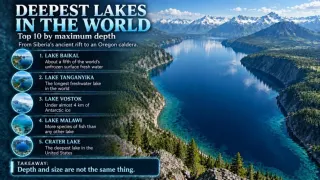
Related: Top 10 Deepest Lakes in the World
Its striking blue-green colour, caused by algae, has earned it the name the Jade Sea. [5]
The lake has no outlet and loses water only by evaporation, so its water is slightly salty. Its main source is the Omo River from Ethiopia.
Turkana's shores are among the most important sites for the study of human evolution. At Koobi Fora and other sites, scientists have found many fossils of early humans and their relatives.
In 1984 the nearly complete skeleton known as Turkana Boy, about 1.5 million years old, was discovered on the lake's western side.
Lake Turkana National Parks became a UNESCO World Heritage Site in 1997, and the lake has one of the largest populations of Nile crocodiles in Africa.
The European explorers Samuel Teleki and Ludwig von Höhnel reached it in 1888 and named it Lake Rudolf. Dams on the Omo River now threaten its water levels and the people who depend on it.
Key Figures
- Area: about 6,400 square km
- Nickname: the Jade Sea
- Fossil: Turkana Boy, 1984
- UNESCO: 1997
Why It Made the List
Lake Turkana is a lake of the desert and of human origins. It is one of the most remarkable places on Earth.
6. Lake Albert
Lake Albert covers about 5,600 square kilometres on the border between Uganda and the Democratic Republic of the Congo. [6]
It lies in the Albertine Rift, the western branch of the Great Rift Valley, and is one of the lakes that feed the Nile. [6]
The Victoria Nile flows into its northern end after plunging over Murchison Falls, and the Albert Nile flows out again a short distance away.
The British explorer Samuel Baker reached the lake in 1864 and named it after Prince Albert, the late husband of Queen Victoria.
For a time in the 1970s and 1980s, Zaire's ruler Mobutu Sese Seko renamed it after himself, but the old name returned after his fall.
Large oil deposits were discovered near the lake in 2006, and their development, including a pipeline to the Indian Ocean coast, has raised environmental concerns.
The lake supports important fisheries, and steep escarpments rise along its shores, giving it a dramatic setting.
Key Figures
- Area: about 5,600 square km
- Countries: Uganda and DR Congo
- Named: 1864, by Samuel Baker
- Inflow: Victoria Nile
Why It Made the List
Lake Albert is a key link in the Nile system. Its setting and history are fascinating.
7. Lake Kariba
Lake Kariba, on the border between Zambia and Zimbabwe, covers about 5,580 square kilometres and is the largest artificial reservoir in the world by volume. [7]
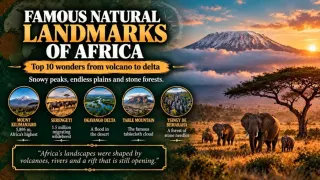
Related: Top 10 Famous Natural Landmarks of Africa
It was created by the Kariba Dam on the Zambezi River, built between 1955 and 1959. [7]
As the waters rose, a rescue mission called Operation Noah saved thousands of animals stranded on shrinking islands.
About 57,000 Tonga people were moved from their homes in the valley. They tell of Nyami Nyami, a river god who they say was angered by the dam.
Small sardine-like fish called kapenta were introduced from Lake Tanganyika and now support a large commercial fishery.
The dam's power stations supply electricity to both countries, but severe droughts in recent years have sharply reduced water levels and power output.
The lake's shores and islands are home to elephants, hippos and crocodiles, and its sunsets and houseboats attract many visitors.
Key Figures
- Area: about 5,580 square km
- Countries: Zambia and Zimbabwe
- Dam built: 1955 to 1959
- Distinction: largest reservoir by volume
Why It Made the List
Lake Kariba is a giant of engineering. Its creation reshaped the Zambezi valley.
8. Lake Nasser
Lake Nasser is a huge reservoir on the Nile, about 550 kilometres long, created by the Aswan High Dam in southern Egypt. [8]
Its main body in Egypt covers about 5,250 square kilometres, and the southern part in Sudan is called Lake Nubia. [8]
The Aswan High Dam was built between 1960 and 1970 to control the Nile's annual floods, store water for farming and generate electricity.
The lake is named after Gamal Abdel Nasser, Egypt's president when the dam was planned and built.
Rising waters flooded much of ancient Nubia and displaced around 100,000 Nubian people in Egypt and Sudan.
An international campaign led by UNESCO moved several ancient monuments, including the temples of Abu Simbel, to higher ground.
The lake is home to Nile crocodiles and large fish such as Nile perch, and cruise boats now travel between its relocated temples.
Key Figures
- Length: about 550 km
- Area in Egypt: about 5,250 square km
- Dam: Aswan High Dam, 1960 to 1970
- Named after: Gamal Abdel Nasser
Why It Made the List
Lake Nasser transformed Egypt's relationship with the Nile. Its creation reshaped an ancient landscape.
9. Lake Mweru
Lake Mweru covers about 5,120 square kilometres on the border between Zambia and the Democratic Republic of the Congo. [9]
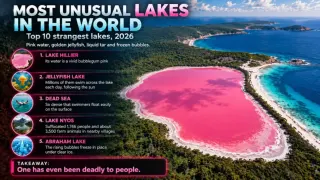
Related: Top 10 Most Unusual Lakes in the World
Its name simply means lake in several Bantu languages. [9]
The lake lies on the longest arm of the Congo River system. The Luapula River flows in from the south, and the Luvua River flows out to the north.
The missionary David Livingstone reached the lake in 1867 and wrote about the slave trade in the region.
Lake Mweru is one of the most productive fishing lakes in Africa, and fish caught there are sold across Zambia and the Congo.
Several inhabited islands lie in the lake, including Kilwa Island in Zambian waters.
The towns of Nchelenge in Zambia and Pweto in the Congo are among the main settlements on its shores.
Key Figures
- Area: about 5,120 square km
- Countries: Zambia and DR Congo
- Inflow: Luapula River
- Outflow: Luvua River
Why It Made the List
Lake Mweru is a vital source of food for the region. It is one of Africa's lesser-known great lakes.
10. Lake Tana
Lake Tana is the largest lake in Ethiopia, covering about 3,200 square kilometres on the northwestern highlands at an altitude of about 1,790 metres. [10]
It is the source of the Blue Nile, which supplies most of the water reaching Egypt. [10]
The lake has dozens of islands, many of which hold ancient Orthodox Christian monasteries, some dating back to the 14th century, with painted churches and precious manuscripts.
Local fishermen still use tankwa, light boats made of papyrus reeds, a tradition going back thousands of years.
The region around the lake was named a UNESCO biosphere reserve in 2015.
The city of Bahir Dar stands on its southern shore, and the Blue Nile Falls lie a short distance downstream.
The lake supports fisheries and farming, but it faces threats from invasive water hyacinth and pollution.
Key Figures
- Area: about 3,200 square km
- Country: Ethiopia
- Outflow: Blue Nile
- Islands: ancient monasteries
Why It Made the List
Lake Tana is the cradle of the Blue Nile. Its island monasteries are a cultural treasure.
Conclusion
Africa's great lakes are vital sources of water, food and energy, and some are home to extraordinary biodiversity.
They face growing threats from pollution, invasive species, overfishing, dams and climate change. Protecting them is essential for the people and wildlife that depend on them.
- ^ [1] "Lake Victoria". Wikipedia. Wikipedia: Lake Victoria Wikipedia: John Hanning Speke Wikipedia: Nile perch
- ^ [2] "Lake Tanganyika". Wikipedia. Wikipedia: Lake Tanganyika Wikipedia: Ujiji Wikipedia: Great Rift Valley
- ^ [3] "Lake Malawi". Wikipedia. Wikipedia: Lake Malawi Wikipedia: Lake Malawi National Park Wikipedia: Mbuna
- ^ [4] "Lake Volta". Wikipedia. Wikipedia: Lake Volta Wikipedia: Akosombo Dam Wikipedia: Kwame Nkrumah
- ^ [5] "Lake Turkana". Wikipedia. Wikipedia: Lake Turkana Wikipedia: Turkana Boy Wikipedia: Koobi Fora
- ^ [6] "Lake Albert". Wikipedia. Wikipedia: Lake Albert (Africa) Wikipedia: Samuel Baker Wikipedia: Murchison Falls
- ^ [7] "Lake Kariba". Wikipedia. Wikipedia: Lake Kariba Wikipedia: Kariba Dam Wikipedia: Operation Noah (Kariba)
- ^ [8] "Lake Nasser". Wikipedia. Wikipedia: Lake Nasser Wikipedia: Aswan Dam Wikipedia: Gamal Abdel Nasser
- ^ [9] "Lake Mweru". Wikipedia. Wikipedia: Lake Mweru Wikipedia: Luapula River Wikipedia: Congo River
- ^ [10] "Lake Tana". Wikipedia. Wikipedia: Lake Tana Wikipedia: Blue Nile Wikipedia: Bahir Dar


















Discussion
Log in with