






 By

From Takshashila and Nalanda to Vikramashila, Valabhi and Sharada Peeth, these ten ancient universities of India drew scholars from across Asia for centuries. Long before the universities of medieval Europe, the Indian subcontinent was home to great centres of learning. Students travelled from China, Korea, Tibet, Sri Lanka and Southeast Asia to study philosophy, grammar, medicine, logic, mathematics and astronomy.
Many of these institutions were Buddhist monasteries, called mahaviharas, supported by kings and wealthy donors. Others were Hindu temple schools and centres of Vedic learning. This list covers ten famous seats of learning across ancient India, including some now located in Pakistan and Bangladesh.
Key Facts
The ten centres below flourished at different times between roughly the 5th century BCE and the 12th century CE.
Ancient Universities of India at a Glance
| # | University | Region | Period of greatness | Known for |
|---|---|---|---|---|
| 1 | Takshashila | Gandhara, now in Pakistan | About 5th century BCE to 5th century CE | One of the oldest centres of learning |
| 2 | Nalanda | Bihar | 5th to 12th century CE | The most famous ancient university |
| 3 | Vikramashila | Bihar | Late 8th to 12th century CE | A royal university of the Pala kings |
| 4 | Odantapuri | Bihar | 8th to 12th century CE | A model for Tibet's first monastery |
| 5 | Valabhi | Gujarat | About 6th to 8th century CE | The great centre of western India |
| 6 | Somapura Mahavihara | Bengal, now in Bangladesh | 8th to 12th century CE | One of the largest monasteries south of the Himalayas |
| 7 | Jagaddala | Bengal, now in Bangladesh | Late 11th to 12th century CE | The last great Pala mahavihara |
| 8 | Pushpagiri | Odisha | Early centuries CE to about the 11th century | A hilltop monastery in Odisha |
| 9 | Sharada Peeth | Kashmir | 6th to 12th century CE | A temple university of Kashmir |
| 10 | Kanchipuram | Tamil Nadu | About 4th to 9th century CE | A southern seat of learning |
1. Takshashila
Takshashila, known to the Greeks as Taxila, stood in the ancient region of Gandhara, near present-day Rawalpindi in Pakistan. [1]
It was a major city on trade routes linking India with Central Asia and Persia, and it became famous for its teachers. [1]
Unlike later monastic universities, learning at Takshashila was organised around individual teachers who took students into their homes.
Students studied the Vedas, grammar, medicine, law, military science and the arts. Tradition links the political thinker Chanakya, also called Kautilya, with Takshashila.
The ancient grammarian Panini is also traditionally associated with the region.
The city declined after invasions in the 5th century CE. Its ruins are a UNESCO World Heritage Site.
Archaeologists have uncovered three ancient city sites at Taxila, as well as many stupas and monasteries.
Key Figures
- Location: near Rawalpindi, Pakistan
- Region: Gandhara
- Famous names: Chanakya and Panini, by tradition
- Recognition: UNESCO World Heritage Site
Why It Made the List
Takshashila is often called one of the world's earliest centres of higher learning. It shaped Indian scholarship for centuries.
2. Nalanda
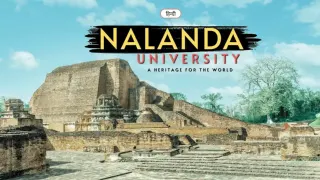
Nalanda was a great Buddhist monastery and centre of learning near Rajgir in present-day Bihar. It was founded in the 5th century CE under the Gupta rulers. [2]
At its height, it had thousands of monks and students, many large buildings, temples and a famous library. [2]
The Chinese pilgrim Xuanzang studied at Nalanda in the 7th century and left a detailed account of its daily life and rigorous entrance standards.
Subjects included Buddhist philosophy, logic, grammar, medicine and astronomy.
Nalanda was attacked and badly damaged in the late 12th century, and it gradually fell into ruin.
Its ruins became a UNESCO World Heritage Site in 2016, and a new Nalanda University was established nearby in the 21st century.
Students came from China, Korea, Tibet and Southeast Asia.
Key Figures
- Location: near Rajgir, Bihar
- Founded: 5th century CE
- Famous student: Xuanzang
- UNESCO listing: 2016
Why It Made the List
Nalanda is often described as one of the world's first residential universities. Its name still symbolises Indian learning.
3. Vikramashila
Vikramashila was founded by the Pala king Dharmapala between the late 8th and early 9th centuries. Its site is at Antichak, near Bhagalpur in Bihar. [3]
Related: Nalanda University: History of Ancient India's Great Mahavihara
It became one of the three most important Buddhist centres of its time, along with Nalanda and Odantapuri. [3]
It had more than a hundred teachers and about a thousand students, and was known for tantric Buddhist studies.
Its most famous scholar, Atisha Dipankara, travelled to Tibet in the 11th century and played a major role in reviving Buddhism there.
Vikramashila was destroyed around 1200.
Excavations have uncovered a large central stupa and rows of monks' cells around a square courtyard.
Graduates who completed their studies received the title of pandita. The Indian government has announced plans for a new central university near the site.
Key Figures
- Location: Antichak, Bhagalpur, Bihar
- Founder: King Dharmapala
- Famous scholar: Atisha
- Students: about a thousand
Why It Made the List
Vikramashila spread Indian Buddhist learning to Tibet. It was a jewel of the Pala era.
4. Odantapuri
Odantapuri was a Buddhist monastic university located in what is now Bihar Sharif in Bihar. [4]
It is believed to have been established by the Pala ruler Gopala I in the 8th century, making it one of the oldest great mahaviharas after Nalanda. [4]
It is said to have served as a model for Samye, the first Buddhist monastery in Tibet.
Odantapuri was supported by local rulers and attracted scholars from across the region.
It declined in the 11th century and was destroyed in the late 12th century during raids on Bihar.
Because modern Bihar Sharif has been built over the area, few remains of Odantapuri can be seen today.
According to Tibetan sources, it housed hundreds or even thousands of monks at its peak and had a fine library.
Key Figures
- Location: Bihar Sharif, Bihar
- Founded: 8th century
- Founder: Gopala I, by tradition
- Influence: Samye monastery, Tibet
Why It Made the List
Odantapuri linked Indian learning with Tibetan Buddhism. Its influence outlived its buildings.
5. Valabhi
Valabhi was the capital of the Maitraka kings, who ruled Saurashtra from the late 5th to the 8th century. Its site is in Bhavnagar district of Gujarat. [5]
Related: Top 10 Oldest Universities in the World
It was a busy port and trading city, and its monasteries became an important centre of Buddhist learning. [5]
The Chinese traveller Yijing wrote that education at Valabhi was comparable to that at Nalanda.
Students studied Buddhist philosophy as well as subjects such as law, economics and administration.
Famous teachers associated with Valabhi include the Buddhist scholars Gunamati and Sthiramati.
In recent years, there have been proposals to revive the university in its historic location.
Inscriptions record land grants made by Maitraka rulers to support monasteries, showing royal patronage of learning.
Key Figures
- Location: Bhavnagar district, Gujarat
- Rulers: Maitraka dynasty
- Compared with: Nalanda, by Yijing
- Scholars: Gunamati and Sthiramati
Why It Made the List
Valabhi was western India's great centre of learning. It shows that ancient Indian education extended far beyond Bihar.
6. Somapura Mahavihara
Somapura Mahavihara, at Paharpur in present-day Bangladesh, was built by the Pala king Dharmapala in the late 8th century. [6]
It is one of the largest Buddhist monasteries known south of the Himalayas, with a huge square courtyard surrounded by about 177 cells. [6]
At its centre stands a massive terraced temple decorated with terracotta plaques.
Somapura was a major centre of Mahayana and Vajrayana Buddhism and attracted monks from across Asia.
Its architectural design influenced Buddhist buildings in Southeast Asia.
It became a UNESCO World Heritage Site in 1985.
The square monastery measured roughly 280 metres on each side, and its cells housed monks who studied, prayed and copied texts. Inscriptions found at the site show that it received support from rulers and merchants for several centuries. After a fire in the 10th or 11th century it was repaired, but it was eventually abandoned.
Key Figures
- Location: Paharpur, Bangladesh
- Founder: King Dharmapala
- Cells: about 177
- UNESCO listing: 1985
Why It Made the List
Somapura was a giant of Buddhist architecture and learning. Its design echoed across Asia.
7. Jagaddala
Jagaddala Mahavihara was founded by the later Pala kings, probably by Ramapala in the late 11th century, in northern Bengal. [7]
Related: Top 10 Most Beautiful Universities in the World
Its likely site is near the village of Jagdal in northwestern Bangladesh, close to the Indian border. [7]
Jagaddala was an important centre for Vajrayana Buddhist studies and the translation of texts into Tibetan.
Several important Buddhist works were composed or copied there.
It flourished for only around a century before being destroyed in the upheavals of the early 13th century.
Scholars who fled from Jagaddala carried manuscripts to Tibet and Nepal, helping to preserve Indian Buddhist texts.
Its exact site has still not been fully excavated.
Archaeologists in Bangladesh have explored the area.
Key Figures
- Location: northwestern Bangladesh
- Founder: probably King Ramapala
- Period: late 11th to 12th century
- Legacy: texts preserved in Tibet and Nepal
Why It Made the List
Jagaddala was one of the last great Buddhist universities of India. Its scholars saved knowledge that might otherwise have been lost.
8. Pushpagiri
Pushpagiri was an ancient Buddhist monastic complex on the Langudi Hills in Jajpur district of Odisha. [8]
The Chinese traveller Xuanzang mentioned Pushpagiri in his writings in the 7th century. [8]
For many years, scholars thought it might be the same as the nearby sites of Lalitgiri, Ratnagiri and Udayagiri.
Excavations between 1996 and 2006 at Langudi Hill uncovered stupas, rock-cut sculptures and other remains, strengthening its identification.
The Odisha region had several important Buddhist centres, together sometimes called the Diamond Triangle.
Pushpagiri shows that eastern India was dotted with places of Buddhist learning beyond the better-known sites of Bihar.
Some of the finest sculptures from these sites are displayed in museums in Odisha and Delhi.
The site is now protected.
Key Figures
- Location: Langudi Hills, Jajpur, Odisha
- Mentioned by: Xuanzang
- Excavations: 1996 to 2006
- Nearby sites: Lalitgiri, Ratnagiri, Udayagiri
Why It Made the List
Pushpagiri reveals Odisha's important place in Buddhist history. Its rediscovery is an archaeological success story.
9. Sharada Peeth
Sharada Peeth was an ancient temple and centre of learning dedicated to the goddess Sharada, a form of Saraswati, the goddess of knowledge. [9]
Related: Top 10 Most Bizarre Phobias: Strange Fears That Exist
Its ruins lie in the Neelum Valley, in Pakistan-administered Kashmir. [9]
Between the 6th and 12th centuries, it was one of the most prominent temple universities in South Asia, famous for its library.
Scholars are said to have travelled long distances to consult its texts and debate with its teachers.
The Sharada script, used to write Sanskrit and Kashmiri, was named after it, and Kashmir came to be called Sharada Desh, the land of Sharada.
Sharada Peeth remains an important pilgrimage site for Kashmiri Pandits, who have long hoped for easier access.
Key Figures
- Location: Neelum Valley, Kashmir
- Dedicated to: goddess Sharada
- Legacy: the Sharada script
- Period of fame: 6th to 12th century
Why It Made the List
Sharada Peeth made Kashmir a land of learning. Its name lives on in a script and a cultural identity.
10. Kanchipuram
Kanchipuram, the capital of the Pallava kings, was a major centre of learning in South India. [10]
It was home to a ghatika, an institution for Vedic and Sanskrit studies, mentioned in Pallava-era inscriptions. [10]
Kanchipuram also had important Buddhist and Jain communities, and the Chinese traveller Xuanzang visited it in the 7th century.
Several famous scholars are linked with the city, including the Buddhist logician Dignaga and Dharmapala, who later headed Nalanda.
Kanchipuram became known as one of the seven sacred cities of Hinduism, and it is still famous for its temples.
Today it is also renowned for its silk saris, woven in the city for centuries.
Pallava kings issued land grants to support teachers and students at temples and learning centres.
Key Figures
- Location: Tamil Nadu
- Rulers: the Pallavas
- Institution: the ghatika
- Famous scholars: Dignaga and Dharmapala
Why It Made the List
Kanchipuram was the intellectual heart of South India. It brought together Hindu, Buddhist and Jain learning.
Conclusion
Ancient India's centres of learning attracted students from across Asia and preserved knowledge for centuries. Their teachings spread to Tibet, China, Southeast Asia and beyond.
Today their ruins remind us of a remarkable tradition of scholarship. Efforts such as the new Nalanda University aim to revive that spirit of learning.
- ^ [1] "Takshashila". Wikipedia. Wikipedia: Taxila Wikipedia: Chanakya
- ^ [2] "Nalanda". Wikipedia. Wikipedia: Nalanda mahavihara Wikipedia: Xuanzang
- ^ [3] "Vikramashila". Wikipedia. Wikipedia: Vikramashila Wikipedia: Atiśa
- ^ [4] "Odantapuri". Wikipedia. Wikipedia: Odantapuri Wikipedia: Samye
- ^ [5] "Valabhi". Wikipedia. Wikipedia: Valabhi University Wikipedia: Maitraka dynasty
- ^ [6] "Somapura Mahavihara". Wikipedia. Wikipedia: Somapura Mahavihara Wikipedia: Pala Empire
- ^ [7] "Jagaddala". Wikipedia. Wikipedia: Jagaddala Mahavihara Wikipedia: Ramapala
- ^ [8] "Pushpagiri". Wikipedia. Wikipedia: Pushpagiri Vihara Wikipedia: Ratnagiri, Odisha
- ^ [9] "Sharada Peeth". Wikipedia. Wikipedia: Sharada Peeth Wikipedia: Sharada script
- ^ [10] "Kanchipuram". Wikipedia. Wikipedia: Kanchipuram Wikipedia: Pallava dynasty Wikipedia: Dignāga




















Discussion
Log in with