





 By
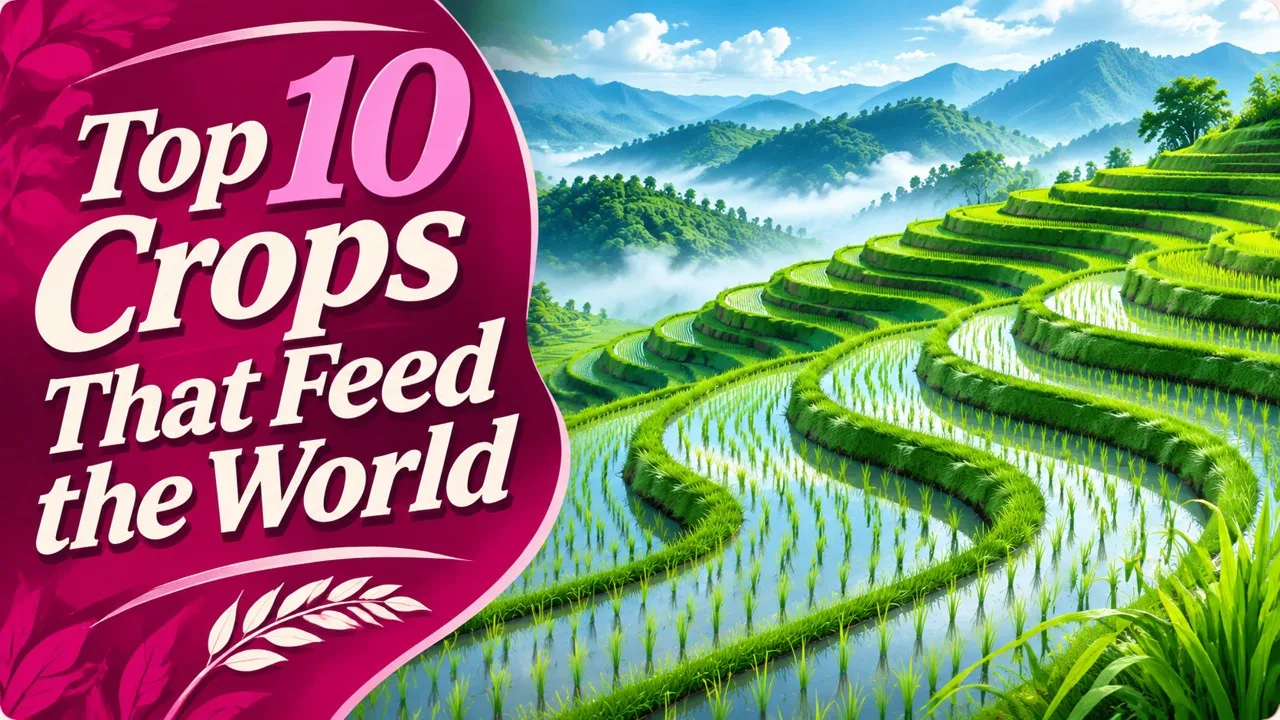
From maize, rice and wheat to cassava and India's pearl millet, these ten crops that feed the world supply most of the calories eaten on Earth. Humans eat thousands of different plants, but just a handful of crops provide most of the world's food. Grains, roots and a few other plants supply the bulk of the calories and much of the protein that people and livestock eat every day.
Most of these crops were domesticated thousands of years ago in different parts of the world and then spread through trade, migration and colonisation. India is a leading producer of several of them. This list looks at ten crops that feed humanity, ordered roughly by global production.
Key Facts
The ten crops below range from giant harvests measured in billions of tonnes to hardy millets that feed people in dry regions.
Crops That Feed the World at a Glance
| # | Crop | Where first grown | Top producers | Main uses |
|---|---|---|---|---|
| 1 | Sugarcane | New Guinea | Brazil and India | Sugar, jaggery and ethanol |
| 2 | Maize | Southern Mexico | United States and China | Food, animal feed and biofuel |
| 3 | Wheat | The Fertile Crescent | China and India | Bread, chapati and pasta |
| 4 | Rice | China and India | China and India | Staple food for billions |
| 5 | Potato | The Andes of South America | China and India | A cheap and nutritious staple |
| 6 | Soybean | Northeastern China | Brazil and the United States | Oil, animal feed and tofu |
| 7 | Cassava | South America | Nigeria | A drought-hardy root crop |
| 8 | Barley | The Fertile Crescent | Russia and Europe | Animal feed, malt and food |
| 9 | Sorghum | Africa | United States, Nigeria and India | Jowar, a drought-tolerant grain |
| 10 | Pearl Millet | West Africa | India | Bajra, the grain of the desert |
1. Sugarcane
Sugarcane is the world's largest crop by weight, with harvests of nearly two billion tonnes a year. [1]
It was first domesticated in New Guinea thousands of years ago and spread to Southeast Asia and India. [1]
India was the first place to make crystallised sugar, more than 1,500 years ago. The English word sugar comes, through Arabic and Persian, from the Sanskrit sharkara.
Brazil and India are the largest producers. Uttar Pradesh and Maharashtra grow much of India's cane.
Besides sugar, cane is used to make jaggery, molasses and ethanol fuel. Brazil runs many of its cars on sugarcane ethanol.
Growing sugarcane needs a great deal of water, which is a concern in drought-prone regions.
The crop is harvested by hand in many places, and the work is physically demanding. After the juice is extracted, the leftover fibre, called bagasse, is burned to power sugar mills or used to make paper.
Key Figures
- Origin: New Guinea
- Top producers: Brazil and India
- Global harvest: nearly 2 billion tonnes a year
- Uses: sugar, jaggery, ethanol
Why It Made the List
Sugarcane is the biggest crop on Earth by weight. India gave the world crystallised sugar.
2. Maize
Maize, also called corn, is the world's most produced grain, with more than a billion tonnes harvested each year. [2]
It was domesticated around 9,000 years ago in southern Mexico from a wild grass called teosinte, which looked very different from modern corn. [2]
After 1492, maize spread rapidly around the world, becoming a staple in Africa, Europe and Asia.
Much of the world's maize is used to feed livestock or make ethanol, rather than being eaten directly.
The United States and China are the largest producers. In India, maize is grown widely and eaten as makki ki roti and roasted bhutta.
Maize also provides corn syrup, cooking oil and starch used in many products.
Scientists have bred thousands of maize varieties, including hybrids that greatly increased yields in the 20th century.
Related: Top 10 Forgotten Fruits and Vegetables
Key Figures
- Origin: southern Mexico
- Global harvest: over 1 billion tonnes a year
- Top producers: United States and China
- Uses: food, feed, ethanol
Why It Made the List
Maize is the world's biggest grain crop. It transformed diets across the globe.
3. Wheat
Wheat was among the first crops domesticated, around 10,000 years ago in the Fertile Crescent of the Middle East. [3]
It is grown on more land than any other food crop, and its harvests reach about 800 million tonnes a year. [3]
Wheat contains gluten, proteins that make dough stretchy, which is why it is used for bread, noodles, pasta and chapatis.
China is the largest producer, and India is the second. Punjab, Haryana and Uttar Pradesh are India's wheat bowls.
In the 1960s, high-yield dwarf wheat varieties developed by Norman Borlaug, and introduced to India with the help of M. S. Swaminathan, sparked the Green Revolution.
This helped India move from food shortages to self-sufficiency in grain.
Key Figures
- Origin: the Fertile Crescent
- Global harvest: about 800 million tonnes a year
- Top producers: China and India
- Indian milestone: the Green Revolution
Why It Made the List
Wheat is one of humanity's oldest and most important crops. It played a central role in India's food security.
4. Rice
Rice is the main food for more than half the world's population, especially in Asia. [4]
It was domesticated in the Yangtze valley of China around 9,000 years ago, and was also cultivated early in India. [4]
China and India are the largest producers, and India is the world's largest rice exporter, famous for basmati rice from the Himalayan foothills.
Rice is usually grown in flooded paddies, which control weeds but use large amounts of water.
In 1966, the International Rice Research Institute released IR8, a high-yielding variety known as miracle rice, which helped prevent famines in Asia.
There are thousands of rice varieties, from sticky rice in Southeast Asia to red rice in Kerala.
The crop is also central to festivals such as Pongal, when freshly harvested rice is cooked to celebrate the harvest.
Key Figures
- Origin: China and India
- Eaten by: more than half the world's people
- Top exporter: India
- Famous variety: IR8, 1966
Why It Made the List
Rice feeds more people than any other crop. It is central to Indian culture and cuisine.
5. Potato
The potato was domesticated in the Andes of Peru and Bolivia several thousand years ago, and Andean farmers grew thousands of varieties. [5]
Related: History of Human Civilization: From Ancient Times to the Modern Age
Spanish explorers brought it to Europe in the 16th century, and it later spread across the world. [5]
Potatoes produce more food per unit of land than most grain crops, which made them a key staple in Europe.
The dependence on a single type of potato in Ireland led to disaster when blight destroyed crops in the 1840s, causing the Great Famine.
China and India are now the largest producers. In India, Uttar Pradesh and West Bengal grow the most.
The International Potato Center in Lima, Peru, conserves thousands of potato varieties.
Key Figures
- Origin: the Andes
- Arrived in Europe: 16th century
- Top producers: China and India
- Historic disaster: the Irish Famine
Why It Made the List
The potato is one of the most efficient food crops. Its history shows both its value and the dangers of relying on one variety.
6. Soybean
The soybean was domesticated in China thousands of years ago and has long been used for tofu, soy sauce and soy milk. [6]
Today most soybeans are crushed to make oil and protein-rich meal for animal feed. [6]
Brazil and the United States are the largest producers, and China is the largest importer.
Soybeans are legumes. Bacteria in their roots capture nitrogen from the air, enriching the soil.
In India, Madhya Pradesh produces so many soybeans that it is sometimes called the soya state.
The expansion of soybean farming in South America has been linked to deforestation in the Amazon and Cerrado.
Soy-based foods such as soya chunks have become popular in India as an affordable source of protein. The plant is also used to make inks, plastics and biodiesel.
Key Figures
- Origin: China
- Top producers: Brazil and United States
- Main uses: oil and animal feed
- Indian hub: Madhya Pradesh
Why It Made the List
The soybean is a major source of protein and oil. It is central to the global food and feed trade.
Related: Top 10 Most Bizarre Phobias: Strange Fears That Exist
7. Cassava
Cassava is a woody shrub with starchy roots. It was domesticated in South America, probably in the Amazon basin. [7]
Portuguese traders brought it to Africa in the 16th century, where it became a staple. Nigeria is now the largest producer. [7]
Cassava feeds hundreds of millions of people in tropical regions. It grows in poor soils and survives droughts.
Its roots contain natural compounds that can release cyanide, so they must be properly peeled, soaked or cooked before eating.
Cassava flour is used to make tapioca, and in Kerala, where it is called kappa, it is a much-loved staple served with fish curry.
The roots can stay in the ground for months until needed, acting as a living food store.
Key Figures
- Origin: South America
- Top producer: Nigeria
- Indian name: kappa or tapioca in Kerala
- Caution: must be processed to remove toxins
Why It Made the List
Cassava is a lifeline for millions in the tropics. Its hardiness makes it vital for food security.
8. Barley
Barley was one of the first crops ever domesticated, about 10,000 years ago in the Fertile Crescent, alongside wheat. [8]
Today it is grown mainly for animal feed and for malting, used to make beer and whisky. [8]
Barley is hardy and can grow in colder, drier and higher places than wheat.
In the Himalayas, including Ladakh, roasted barley flour called tsampa is a traditional staple.
In India, barley, known as jau, is used in foods and in religious rituals.
Barley grains contain fibre that may help lower cholesterol.
It was one of the main grains of ancient Egypt and Mesopotamia, where it was used to make bread and beer and was even used to pay workers. Barley water, made by boiling the grains, is a traditional drink in many countries, including India.
Key Figures
- Origin: the Fertile Crescent
- Main uses: feed and malt
- Himalayan food: tsampa
- Indian name: jau
Why It Made the List
Barley is one of humanity's oldest crops. Its hardiness makes it valuable in harsh climates.
9. Sorghum
Sorghum was domesticated in Africa, probably in the region of present-day Sudan, several thousand years ago. [9]
It is one of the most drought-tolerant cereals, able to grow in hot, dry conditions where maize fails. [9]
Related: Top 10 Oldest Buildings in the World
In India, sorghum is known as jowar. It is widely eaten as jowar bhakri or roti in Maharashtra and Karnataka.
Sorghum is gluten-free, rich in fibre and increasingly popular as a healthy grain.
Some varieties have sweet stalks used to make syrup, and others are grown for animal feed.
As climates warm, sorghum may become even more important for food security.
It is the fifth most important cereal crop in the world by production, after maize, wheat, rice and barley. In parts of Africa, sorghum is also used to make traditional beers and porridges.
Key Figures
- Origin: Africa
- Indian name: jowar
- Strength: drought tolerance
- Indian dish: jowar bhakri
Why It Made the List
Sorghum is a resilient grain for dry lands. It is a traditional staple across Africa and India.
10. Pearl Millet
Pearl millet was domesticated in West Africa around 4,500 years ago and reached India thousands of years ago. [10]
India is now the largest producer, with Rajasthan the leading state. [10]
Pearl millet, known as bajra, can grow in extreme heat and sandy soils with very little rain.
It is rich in iron, fibre and protein, and is eaten as bajra roti and khichdi.
At India's suggestion, the United Nations declared 2023 the International Year of Millets to promote these nutritious grains.
Indian researchers have developed iron-rich pearl millet varieties to help fight anaemia.
Its tall plants produce long, cylindrical heads packed with small grains. The crop matures quickly, often in less than three months, which helps farmers cope with short and uncertain rainy seasons.
Key Figures
- Origin: West Africa
- Top producer: India
- Indian name: bajra
- Milestone: International Year of Millets, 2023
Why It Made the List
Pearl millet is a climate-smart crop for dry regions. India leads the world in growing it.
Conclusion
A small number of crops feed most of the world, which makes protecting them from disease, pests and climate change vital.
Scientists are also looking to diverse crops such as millets to make food systems more resilient. The story of these crops is the story of human civilisation.
- ^ [1] "Sugarcane". Wikipedia. Wikipedia: Sugarcane Wikipedia: Sugar
- ^ [2] "Maize". Wikipedia. Wikipedia: Maize Wikipedia: Teosinte
- ^ [3] "Wheat". Wikipedia. Wikipedia: Wheat Wikipedia: Green Revolution in India
- ^ [4] "Rice". Wikipedia. Wikipedia: Rice Wikipedia: IR8
- ^ [5] "Potato". Wikipedia. Wikipedia: Potato Wikipedia: Great Famine (Ireland)
- ^ [6] "Soybean". Wikipedia. Wikipedia: Soybean Wikipedia: Nitrogen fixation
- ^ [7] "Cassava". Wikipedia. Wikipedia: Cassava Wikipedia: Tapioca
- ^ [8] "Barley". Wikipedia. Wikipedia: Barley Wikipedia: Tsampa
- ^ [9] "Sorghum". Wikipedia. Wikipedia: Sorghum bicolor Wikipedia: Jowar
- ^ [10] "Pearl Millet". Wikipedia. Wikipedia: Pearl millet Wikipedia: International Year of Millets




















Discussion
Log in with