






Top 10 Everyday Foods with Origins in Military Rations
 By Dhiraj Sharma · Published
Share Post
Loading…
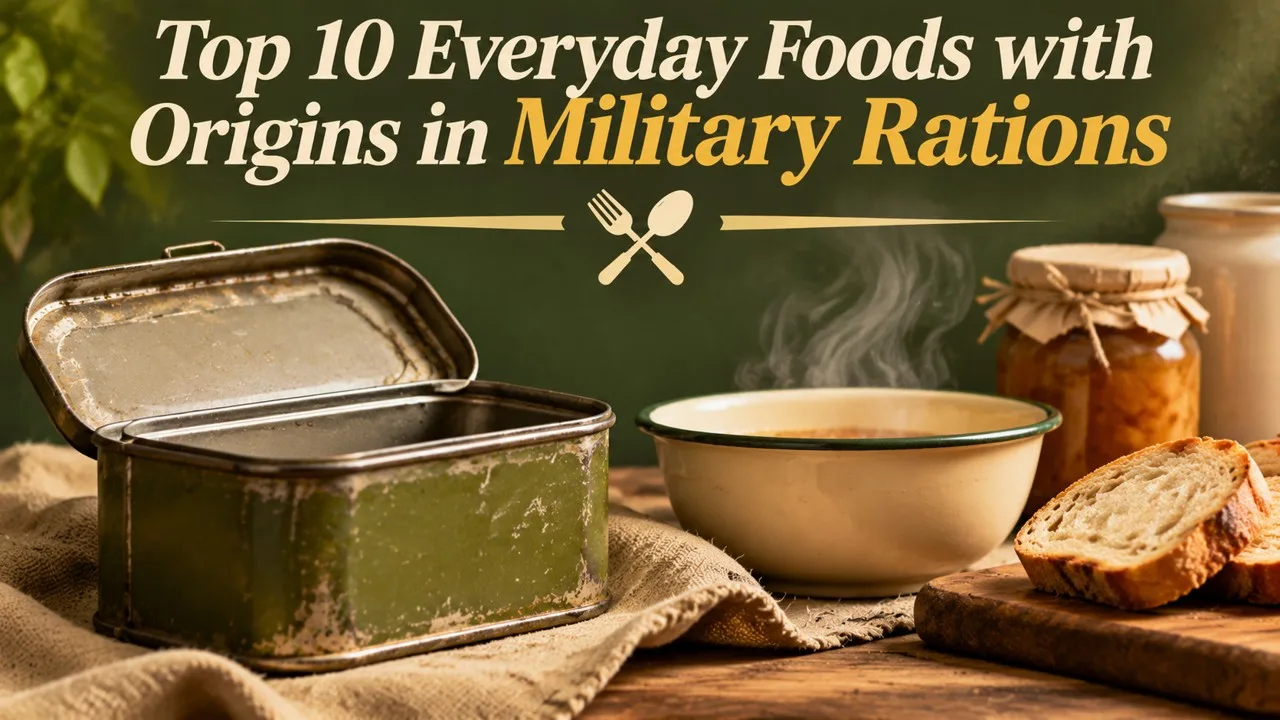
Some pantry staples have a military chapter, but calling them Army inventions often skips a longer civilian and laboratory story.
The ten foods below are instant coffee, frozen orange-juice concentrate, longer-lasting soft bread, restructured meat, fortified bars, freeze-drying, modified-atmosphere packaging, cheese powder, heat-tolerant ration chocolate, and potato flakes. In several cases the armed services were a huge customer, a funder, or a later popularizer, not the sole inventor. This article will not treat a supermarket aisle as a munitions list, and it will not use company marks as if they were the history.
Key Facts
| Food or method | The better-supported military link | A limit |
|---|---|---|
| 1 | Instant coffee had earlier civilian patents and brands; wartime orders made it ordinary | A trench mug is not the same thing as a first invention |
| 2 | Frozen concentrate was perfected in a wartime USDA and Florida laboratory context | A planned Army order did not have to be fully shipped for the process to reach shops |
| 3 | Armies wanted bread that traveled; bakery chemistry has several civilian roots | One college contract is not the parent of every soft loaf |
| 4 | Restructured meat was studied in military and university labs | A later commercial sandwich is an adaptation, not a ration recipe |
| 5 | Dense ration bars and later space-food bars sit in a related family | They are not a straight line to every modern energy bar |
| 6 | Freeze-drying was scaled in wartime medicine and later applied to food | The process is older than that scale-up |
| 7 | Controlled-atmosphere storage is older than bagged salad | Retail salad kits are a later commercial use of related packaging science |
| 8 | Wartime demand scaled dehydrated cheese | Boxed dinners and snack coatings already had, or soon found, civilian lives |
| 9 | A 1930s ration bar was designed not to melt, and not to be a treat | Palatability was later improved in a tropical bar; this is not a brand history |
| 10 | USDA researchers patented a potato-flake process in the early 1950s, with military logistics in the background | Earlier dried potato already existed |
1. Instant Coffee Was Older Than the Trench
Soluble coffee was already a civilian problem and a civilian product before the world wars [1]. Early twentieth-century patents and brands, including work associated with Satori Kato and with George C. Washington's soluble coffee, were on the market when armies began to buy the stuff in volume. During the First World War, United States forces issued large amounts of soluble coffee, and the Second World War repeated the pattern on a still larger scale, including later European brands that had been developed for a civilian market [1].
The unexpected fact is how much of the "military invention" story is actually a procurement story [1]. This article will not award the drink to a single army or firm. The careful fact is earlier civilian chemistry, a documented wartime surge in demand, and a postwar public that already knew the taste. Soldiers came home used to a jar. The jar had existed. The habit spread.
A ration can make a product national without having been, in the strict sense, its first author.
2. Frozen Juice, a Laboratory, and an Order That Outlived the War
Orange juice is bulky, and it spoils. During the Second World War, United States laboratories, including USDA work in Florida, improved a vacuum-concentration and freezing method that kept more of the flavor than earlier drying had done [2]. A new Florida company was organized around a large government order. The war ended before that order could mean as much in the field as planners had hoped. The process, and then the retail can of frozen concentrate, went forward anyway as a grocery product [2].
The unexpected fact is that a contract can matter even when the last crate never sees a mess hall [2]. This article will not treat scurvy as the automatic 1940s explanation; older navies had that crisis, while mid-century planners wanted a compact, palatable citrus drink that kept. The careful fact is a documented laboratory process, a documented wartime customer, and a documented civilian afterlife. Vitamin talk in advertising is a later layer, not a field manual.
A freezer aisle can be a demobilized laboratory. That is a quieter origin than a battlefield myth, and a more accurate one.
3. Bread That Had to Travel, and Chemistry That Had Many Parents
Armies have always wanted bread that does not go stale in a few days, and they have often settled for hard biscuit instead [3]. In the twentieth century, military buyers took an interest in better dry yeast and in loaves that stayed soft longer. Bakery science on emulsifiers, enzymes, wrapping, and staling is also a civilian story, with more than one university and industrial laboratory in it. A 1950s research relationship with a grain-science department is part of that file. It is not, by itself, the birth certificate of every supermarket sandwich loaf or chain bun [3].
Related: Top 10 Inventions That Changed Warfare: Chariots to Drones
The unexpected fact is how easy it is to fold a whole industry into one contract [3]. This article will not give a formula for a longer-lasting loaf. The careful fact is a real military appetite for bread that could be shipped, a real body of bakery chemistry, and a later soft loaf that has several ancestors. Staling is a starch problem. The solutions did not come from a single quartermaster memo.
A packaged loaf can be ordinary now because a lot of laboratories, not one army kitchen, worried about yesterday's crumb.
4. Restructured Meat Is a Method, Not a Mascot
Grinding cheaper cuts, binding them, and forming a uniform portion is a twentieth-century meat-technology family with military and university chapters [4]. Research centers that work on rations have studied fabricated or restructured portions because they pack and cook more evenly than an irregular cut. A later university line of work, often associated with Roger Mandigo, helped the civilian industry use similar methods. Later restaurant items that depend on a formed meat shape are commercial adaptations of that family, not issued ration recipes, and they should not be described here as if a brand mark were the science [4].
The unexpected fact is that a "new" sandwich can be, at bottom, a forming method [4]. This article will not reconstruct a commercial recipe or a trademarked shape. The careful fact is documented research on restructured meat, a documented path into industry, and a need to keep the army lab and the later menu in separate sentences. Uniformity was the military virtue. Marketing was the civilian one.
A formed portion can travel well and still not be, in origin, a product launched by a defense department.
5. Dense Bars, Emergency Chocolate, and a Later Snack Aisle
Compact, calorie-dense bars are older than any one army contract, but mid-twentieth-century United States ration work, including an intentionally unpalatable emergency chocolate, made the form famous [5]. Later space-program foods, including compact fruit bars and commercial "space" sticks, sit in a related family of moisture-controlled, high-calorie pieces. That family is not a straight line to every modern energy or granola bar, many of which grew from civilian breakfast and hiking products [5].
The unexpected fact is that some of the early official bars were designed to be eaten only if needed, which is the opposite of a snack [5]. This article will not offer a training diet or a calorie target. The careful fact is a documented ration-bar program, documented later space-food experiments, and a civilian aisle that borrowed the idea of a dense bar without inheriting a single official formula. Emergency and ordinary eating were supposed to stay apart. Marketing later closed the gap.
Related: Top 20 World War II Facts: Little-Known Details and Essential History
A bar can be a ration and later a habit. The habit has more parents than the emergency file.
6. Freeze-Drying Was Scaled for Medicine, Then Applied to Food
The idea of freezing a material and removing ice as vapor, lyophilization, is older than the Second World War [6]. What the war changed was scale and urgency: plasma, penicillin, and other medical supplies needed to travel without a reliable cold chain, and government-funded work, including academic engineering, helped make industrial freeze-drying practical. Food applications followed, in rations, in later space-program novelties, and in civilian instant meals and some coffees. Even there the story is mixed: some famous soluble coffees were spray-dried first, with freeze-dried versions coming later [6].
The unexpected fact is that a backpacking meal can be a descendant of a medical logistics problem [6]. This article will not treat a novelty "astronaut" ice cream as a staple field ration; it is better known as a visitor-center curiosity than as daily crew food. The careful fact is an older process, a wartime medical scale-up, and a later food industry that used the same physics. Sublimation was the method. The menu was a sequel.
A vacuum pump can serve a hospital and, years afterward, a grocery shelf, without the second use having been the first purpose.
7. A Bag of Greens Has Older Air Than a Navy Myth
Fruit and vegetable keepers have long known that the mix of oxygen, carbon dioxide, and nitrogen around produce changes how fast it ripens or spoils [7]. Controlled-atmosphere storage in warehouses and ships is a twentieth-century civilian and scientific technology with some military logistics interest beside it. Modified-atmosphere packaging, in which a retail bag or tray holds a chosen gas mix, is a later commercial development. Ready-to-eat salad kits of the late twentieth century belong to that packaging story. They are not a Navy invention in any simple sense, even if armed services also wanted greens that could travel [7].
The unexpected fact is that the "fresh" bag is a managed atmosphere, not a small garden [7]. This article will not give a packing method. The careful fact is an older storage science, a later retail film, and a need to keep a shipboard supply problem from swallowing a supermarket category. The air in the bag is the invention. The logo on the bag is not the history.
Related: Top 10 Food Preservation Methods and How They Work
A salad can last because someone adjusted the gases. That adjustment has more than one address.
8. Cheese Powder Was Scaled by War, Not Born in a Canteen
Drying cheese into a stable powder, or a packed dinner that carries a cheese sauce packet, was already a civilian product by the late 1930s [8]. Wartime buyers then purchased dairy and boxed dinners in huge amounts, which refined production and made the packet ordinary for a generation of service members and their families. Later snack coatings that use a cheese-flavored powder are commercial products from the later 1940s onward, not issued ration formulas, and they should be described without trademark display [8].
The unexpected fact is that a famous boxed dinner can predate the war that supposedly "invented" its powder [8]. This article will not treat a snack dust as a classified process. The careful fact is earlier civilian dehydration and packing, a documented wartime surge in demand, and a postwar grocery life that mixed surplus capacity with new marketing. The military was a customer at scale. It was not the first kitchen to want cheese that could wait.
A powder can travel when a wheel cannot. That useful fact does not require a single official birthday.
9. Chocolate That Was Built Not to Be a Treat
In the late 1930s the United States Army asked a confectionery firm for a dense chocolate bar that would stand heat and would not be so pleasant that troops ate it for fun [9]. The resulting emergency ration was intentionally harsh. In 1943 a better-tasting "tropical" bar was developed to stand high temperatures without becoming a pocketful of paste. Hundreds of millions of such bars were shipped during the war. The work is a documented chapter in confectionery engineering. It is not a license to retell the story as a brand advertisement, and it is not the origin of every later coated candy [9].
The unexpected fact is that official palatability could be a defect [9]. This article will not give a formula or a melting-point method. The careful fact is a documented request, a documented emergency bar, a documented later tropical bar, and a later civilian interest in coatings that stand heat. The ration was a tool. The tool was supposed to be unlovable until it was slightly reformed.
Related: Top 10 Overlooked Events of World War II
A bar can be chocolate and still have been, on purpose, a last resort. That is a stranger origin than a sweet-shop myth.
10. Potato Flakes Came from a Laboratory, with Logistics in the Room
Dried potato in several forms already traveled with armies before the flake process became famous [10]. In the early 1950s, USDA researchers, including work later associated with a 1953 patent by Edward A. Fisher and George W. Wagner, described a flaking method: the potato is cooked, mashed, and dried in thin sheets that reconstitute more like a mash than like a earlier, often gluey, dried product. Military interest in a lighter, more palatable starch was part of the background. The process was later licensed into the grocery trade [10].
The unexpected fact is that "instant" mash is a texture problem as much as a drying problem [10]. This article will not offer a factory method or a brand ranking. The careful fact is earlier dehydrated potato, a documented laboratory flake process, a documented later civilian market, and a need to credit a department of agriculture as well as a quartermaster's wish list. The Army wanted less bulk. The patent is a USDA document.
A box of flakes can look like a shortcut and still be, in origin, a research report about a tuber.
Conclusion
The ten cases above include a soluble coffee that predates the trench, a frozen juice that outlasted its wartime order, a soft loaf with many chemical parents, a restructured meat method later borrowed by restaurants, a dense bar family, a medical freeze-drying scale-up, a managed-atmosphere bag, a cheese powder scaled by war, a chocolate designed not to tempt, and a potato flake from a civilian laboratory. "Invented by the military" is, in most of these files, the wrong short title.
A ration can still change a kitchen. It does so more often as a customer, a funder, or a habit than as a lone inventor.
- ^ [1] Histories of soluble coffee, including early twentieth-century civilian patents and brands and the later wartime surge in military purchasing. Britannica: coffee Britannica: First World War
- ^ [2] Accounts of USDA and Florida work on frozen orange-juice concentrate in the 1940s, of a wartime government order, and of the product's later grocery life. Britannica and citrus-processing histories U.S. Department of Agriculture, Agricultural Research Service
- ^ [3] Food-science and bakery-history accounts of staling, dry yeast, emulsifiers, and military interest in bread that could be shipped, without treating one contract as the origin of all soft loaves. Britannica: bread Britannica: food preservation
- ^ [4] Accounts of restructured-meat research in military and university laboratories, including later civilian adaptations, described as a method rather than as a trademarked product. Britannica: meat processing University of Nebraska food-science histories
- ^ [5] Histories of United States emergency ration bars and of later space-program compact foods, distinguished from the later civilian energy-bar market. Britannica: ration NASA food-systems histories
- ^ [6] Scientific and historical accounts of lyophilization, of wartime scale-up for plasma and medicines, and of later food uses, including the difference between spray-dried and freeze-dried coffee. Britannica: freeze-drying https://www.britannica.com/science/lyophilization
- ^ [7] Accounts of controlled-atmosphere produce storage and of later modified-atmosphere retail packaging, including bagged salads as a commercial application rather than a simple military invention. Britannica: food preservation Britannica: packaging
- ^ [8] Histories of dehydrated cheese and of boxed macaroni-and-cheese products that already existed by the late 1930s, and of wartime purchasing that scaled the category. Britannica: cheese Britannica: food preservation
- ^ [9] Documented histories of the late-1930s emergency chocolate ration and of the later heat-tolerant tropical bar, treated as confectionery engineering and not as a brand advertisement. Britannica: chocolate Britannica: ration
- ^ [10] USDA and patent-historical accounts of the early-1950s potato-flake process, set against earlier forms of dried potato and later grocery licensing. U.S. Department of Agriculture, Eastern Regional Research Center histories Britannica: potato




















Discussion
Log in with