






Top 10 Memorable Moments in the Original Sherlock Holmes Stories
 By Dhiraj Sharma · Published
Share Post
Loading…

The original Holmes stories include a racist late tale, a fictional poison and a public grief when the detective was briefly killed on the page. Arthur Conan Doyle's Sherlock Holmes stories are in the public domain, which is a reason to read them, and not a reason to reprint them at length here [1][6]. The ten notes below are about odd, dated, or revealing moments in that canon: scientific dead ends, moral compromises, and one story whose language and caricature are indefensible [1][8][10]. They are described in original prose, without long quotations, without a gallery of wounds, and without a borrowed likeness from later films or series [2][9].
A canon can be loved and still be read with a pencil in the margin. That is the method of this list.
Key Facts
These are documented features of the original stories and of their first public life. Later adaptations are not the source, and they are not recreated here.
Ten Moments at a Glance
| Rank | Moment | Careful version |
|---|---|---|
| 1 | A racist late story | "The Adventure of the Three Gables" contains racist language and caricature that should be named and rejected, not reprinted |
| 2 | A man and a serum | "The Adventure of the Creeping Man" uses a fictional rejuvenating extract to explain ape-like behavior; it is a scientific romance, not biology |
| 3 | Phrenology and faces | The stories sometimes treat head and face reading as useful knowledge; that system has not survived as science |
| 4 | The Sherlockian game | Some readers play at the idea that Holmes was real and that Doyle was only an agent; it is a hobby, not a discovery of a ghostwriter |
| 5 | Grief at a fictional death | After "The Final Problem," readers mourned Holmes in public, and Doyle later brought him back |
| 6 | A made-up root | The poison in "The Adventure of the Devil's Foot" is an invention, a departure from Doyle's habit of using more recognizable hazards |
| 7 | A jellyfish, overstated | "The Adventure of the Lion's Mane" gives a real species a more conveniently fatal role than natural history supports |
| 8 | A "vampire" explained | "The Adventure of the Sussex Vampire" is not about the undead; the medical idea in the background should not be copied as first aid |
| 9 | Letting a killer walk | In "The Adventure of the Abbey Grange," Holmes and Watson conceal a death they judge as morally different from a murder they would report |
| 10 | A blackmailer left to die | In "The Adventure of Charles Augustus Milverton," Holmes stops Watson from intervening when the blackmailer is shot; the violence is not described here |
1. A Late Story that Should be Read with Shame
"The Adventure of the Three Gables," a late tale in The Case-Book of Sherlock Holmes, includes a Black character drawn in racist caricature and a conversation in which Holmes uses language that is ugly even by the low standard of some other period fiction [1]. This article will not reproduce those lines, and it will not treat the episode as a colorful bit of "period flavor." The unexpected fact, for a list of memorable moments, is a grim one: a writer who could be precise about a bootlace could also be crude and cruel about a person, and the story is weaker, and worse, for it [1]. The decent way to remember the moment is to say that it is racist, that it is in the canon, and that later readers are right to say so out loud.
A public-domain text is not a public-domain license to repeat a slur. The criticism is the point of this entry, not the quotation.
2. An Aging Scholar, and a Pulp Explanation
In "The Adventure of the Creeping Man," an aging academic begins to behave in a strangely animal way, and Holmes traces the change to a serum, taken in secret, that is supposed to restore youth and is derived, in the story's logic, from a langur [2]. The tale is late, odd, and closer to a scientific romance than to a locked-room puzzle. The unexpected fact is how willing Doyle was, by then, to use a fantasy biochemistry as the hidden spring [2]. There is no such rejuvenating extract, and a man does not "become a monkey" in the biological sense the plot toys with. The story is memorable because it shows the canon's edge, where the detective of traces meets a premise that a later science-fiction magazine might have bought.
A serum in a tale is a device. It should not be allowed to wander out of the tale as if it were a report from a laboratory.
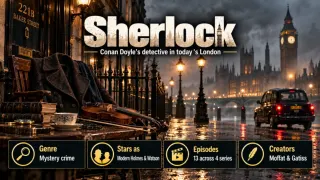
Related: Sherlock: A Modern Twist on Conan Doyle's Classic Detective
3. A Head, a Face, and a Discarded System
Holmes, and sometimes Watson, will read a brow, a jaw, or a "type" of head as if those features carried reliable information about character or capacity, a habit that sits in the same nineteenth-century neighborhood as phrenology and physiognomy [3]. The stories do not pause to treat that habit as a mistake. Later science has done that work: such systems are not a dependable map of a person, and they have a bad political history [3]. The unexpected fact is the unexamined furniture of the canon. A detective who scolds guesswork in one paragraph can, in another, lean on a popular error of his moment. Reading Holmes well includes noticing when he is a man of 1890, not a mascot of method.
A discarded science can still be in a beloved book. The book is not improved by pretending that the science later came through.
4. A Game about Authorship, not a Conspiracy File
Some Sherlockians, playing what is often called the Great Game, treat Holmes and Watson as historical figures and Doyle as a literary agent, or they argue, more loosely, that the inconsistencies in later stories hint at a hidden hand [4]. Those are pastimes with a long, often charming literature. They are not evidence of a real ghostwriting plot, and they should not be promoted as a discovery [4]. The unexpected fact is literary and social. A set of short stories can become, for a circle of readers, a world complete enough to support mock-scholarship, complete with maps, chronologies, and pretended problems of "canon." The careful fact is the word "mock." Doyle wrote the stories. The game is a way of loving them, not a second author hiding in the wallpaper.
A hobby can be learned, and left, without a secret. That is the right size for this entry.
5. A Death on a Cliff, and Mail on a Desk
In "The Final Problem," published in 1893, Holmes disappears at the Reichenbach Falls, in a struggle with Moriarty, and Doyle hoped to be rid of a character who was crowding out other work [5]. Readers did not take the death as a routine plot point. They protested, wore mourning in anecdote and in fact, and made the absence a public event, until Doyle brought Holmes back, notably in "The Empty House," a decade later [5]. The unexpected fact is the scale of the feeling. A magazine character can be grieved as if a neighbor had been lost, which is both a compliment to the writing and a warning about what a serial can do to a public. The return is part of the same story: the grief worked, as pressure, even if Doyle also missed the income.
Related: Top 10 Best-Selling Books of All Time
A fictional death can have a real afterlife in letters. The letters, in this case, helped undo the death.
6. A Root that Does not Exist
"The Adventure of the Devil's Foot" turns on a toxic root, imported in the story's telling and used as a powder that can kill or nearly destroy the mind when it is burned [6]. Commentators have long noted that this agent is essentially fictitious, a rare case in which Doyle did not bother to disguise a real toxin or a real plant [6]. The unexpected fact is technical, in a modest way. The Holmes stories often flatter the reader with recognizable bits of chemistry, medicine, or botany. Here the plot needs a convenient deadly fume, and the author invents one. This article will not offer a substitute recipe, or a real plant to stand in for the fake one.
A fictional poison is a kindness to later readers, if only because it cannot be followed. It is also a tell: the canon is literature first.
7. A Real Jellyfish, Asked to do too Much
"The Adventure of the Lion's Mane," narrated by Holmes himself, blames a death on Cyanea capillata, the lion's mane jellyfish, after a swim [7]. The animal is real, and its sting is genuinely painful, sometimes medically serious. The story, however, asks the jellyfish to be a conveniently fatal, almost detective-proof cause, a weight that natural-history accounts do not generally let it carry in British waters in that way [7]. The unexpected fact is the overclaim. Doyle, a physician, could still dramatize a hazard past the clinical record, especially in a late tale that wants a coastal puzzle and a beast instead of a man with a weapon. The careful fact is the difference between a bad sting and a plot device.
A species can be mis-cast without being invented. The lion's mane exists. The role it plays in the story is the part that should be marked "dramatized."
Related: Top 10 Most Bizarre Phobias: Strange Fears That Exist
8. A Family Crisis, Misread as the Undead
"The Adventure of the Sussex Vampire" begins with an apparent vampirism in a household and ends, as Holmes stories often do, with a human explanation: a mother, a child, a wound, and a fear that has been dressed in a word from folklore [8]. Part of the background involves the idea of drawing poison from a bite by the mouth, a piece of medical folklore that later first-aid teaching has rejected [8]. This article will not describe the injury in detail, and it will not offer medical advice. The unexpected fact is generic. The "vampire" story is a test of whether Holmes will accept the supernatural; he will not. The careful fact, beside that, is that some of the period's medical common sense was itself a bad idea, and should not travel out of the tale as a tip.
A folklore word can hide a family. Holmes's job, in the story, is to take the word away. Ours, here, is not to replace it with a dangerous household remedy.
9. A Confession, and a Decision not to Call
In "The Adventure of the Abbey Grange," Holmes hears a confession about the death of a brutal man and, with Watson, decides not to hand the killer to the official police, a choice the story presents as a kind of private jury [9]. They become, in a strict sense, accessories to a person's freedom after a killing. The unexpected fact is ethical, and it is supposed to be. The canon that often praises the law also reserves, more than once, a right to set the law aside when Holmes's own sense of justice is satisfied [9]. This article will not reconstruct the violence, or treat the tale as a guide to taking a similar decision in a real house. The careful fact is literary: the detective's morality is not identical with the criminal code, and the stories sometimes want the reader to be glad of the difference.
A fictional jury of two is a device. It is memorable because it sits uneasily next to the same detective's lectures about evidence.
Related: The Evolution of Stranger Things: Seasons, Themes, and Characters
10. A Blackmailer, and a Door Left Closed
In "The Adventure of Charles Augustus Milverton," Holmes and Watson are in the house of a professional blackmailer when a client of his shoots him; Holmes stops Watson from intervening, and they leave the man to die [10]. The moment is famous, and it is ugly, and it does not require a scene. The unexpected fact is the withholding. The same Holmes who will send a repentant killer into the night, in another story, will here refuse first aid because of the victim's trade [10]. Readers have argued about the ethics ever since. This article will not settle that argument, and it will not describe the shooting. The careful fact is that the canon contains a moment in which the detective chooses not to help a dying person, and that the moment is meant, by the tale, to be remembered.
A memorable moment can be a moral problem. The original stories are not improved by pretending that they only contain puzzles and tea.
Conclusion
The ten notes above are a way of taking the original Holmes seriously. The same canon that invented a lasting method also contains a racist late story, a pulp serum, a taste for reading faces, a fictional root, an overworked jellyfish, and a "vampire" that is only a family in trouble. It also contains a public that genuinely grieved a man on a page, a hobby that pretends he was not on a page, and two tales in which Holmes and Watson decide that the official ending is not the just one. None of those facts requires a long quotation, a later actor's face, or a graphic reconstruction.
The stories remain available, and they remain worth arguing with. That is a better tribute than a polished statue.
- ^ [1] "The Adventure of the Three Gables," in The Case-Book of Sherlock Holmes, discussed here as a text that contains racist language, without quotation of that language. Britannica: The Case-Book of Sherlock Holmes
- ^ [2] "The Adventure of the Creeping Man," a late tale whose rejuvenating-serum plot is treated as fiction, not as biology. Britannica: Sherlock Holmes
- ^ [3] The appearance of physiognomy and related head-reading habits in the Holmes stories, set against the later rejection of phrenology. Britannica: Phrenology
- ^ [4] Accounts of the Sherlockian "Great Game," distinguished from any real ghostwriting claim. Britannica: Arthur Conan Doyle
- ^ [5] The publication of "The Final Problem," the public response, and Holmes's later return in "The Empty House." Britannica: The Final Problem
- ^ [6] "The Adventure of the Devil's Foot" and commentary on its invented toxic root. Britannica: Sherlock Holmes
- ^ [7] "The Adventure of the Lion's Mane" and natural-history cautions about the lion's mane jellyfish. Britannica: Jellyfish
- ^ [8] "The Adventure of the Sussex Vampire," including the rejection of a supernatural reading and a caution against folk first aid. Britannica: Sherlock Holmes
- ^ [9] "The Adventure of the Abbey Grange," and Holmes's decision not to report a killer, described without a reconstruction of the death. Britannica: Sherlock Holmes
- ^ [10] "The Adventure of Charles Augustus Milverton," including Holmes's refusal to intervene, described without a scene of the shooting. Britannica: Sherlock Holmes




















Discussion
Log in with