





 By
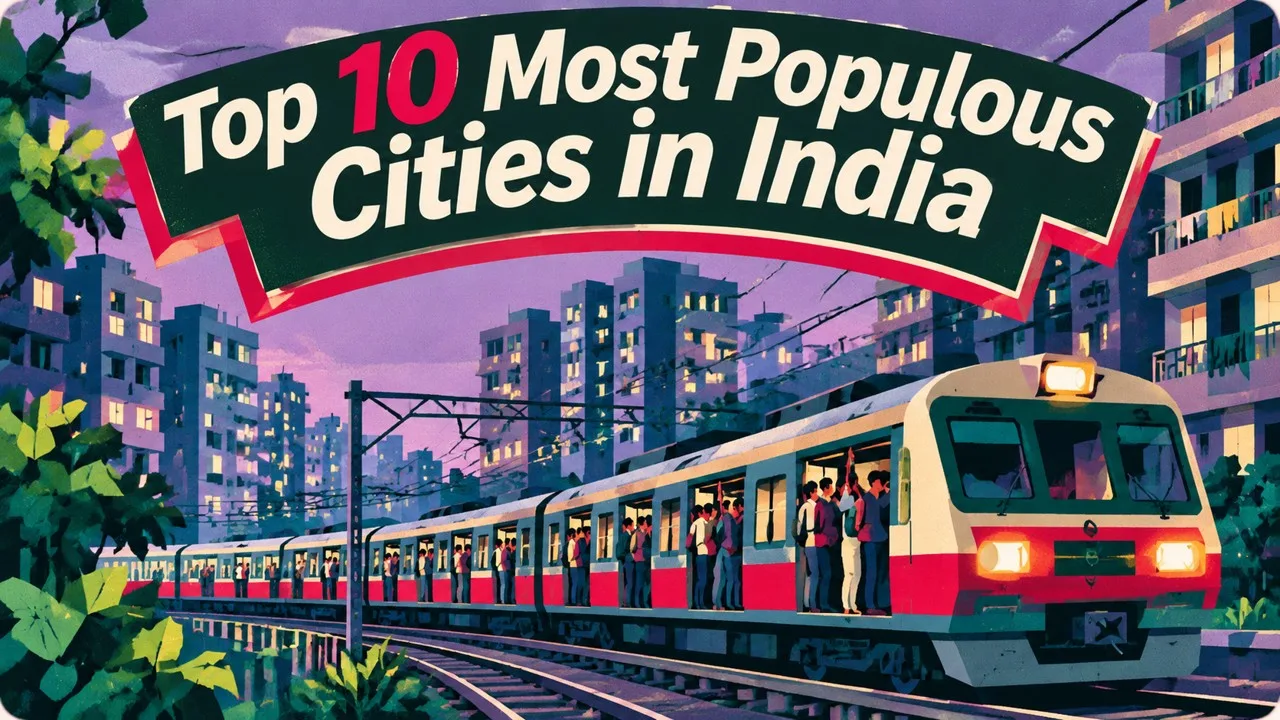
From Mumbai, Delhi and Kolkata to Bengaluru, Ahmedabad and Jaipur, these ten most populous cities in India drive the country's economy, history and culture. India is home to some of the largest cities on Earth. More than a third of Indians now live in urban areas, and the country's biggest cities have grown dramatically since independence.
The last completed national census was held in 2011, and the next is due later in the decade. This list ranks cities by the population of their urban agglomerations in the 2011 census. Today's populations are considerably higher, and the wider metropolitan regions of Delhi and Mumbai are each home to well over 20 million people by many estimates.
Key Facts
The ten cities below each had more than three million people in their urban areas in 2011.
The Most Populous Cities in India at a Glance
| # | City | State or territory | Urban population, 2011 census | Known for |
|---|---|---|---|---|
| 1 | Mumbai | Maharashtra | About 18.4 million | India's financial capital |
| 2 | Delhi | National Capital Territory of Delhi | About 16.3 million | The national capital |
| 3 | Kolkata | West Bengal | About 14.1 million | The cultural capital |
| 4 | Chennai | Tamil Nadu | About 8.7 million | Gateway to South India |
| 5 | Bengaluru | Karnataka | About 8.5 million | India's Silicon Valley |
| 6 | Hyderabad | Telangana | About 7.7 million | City of pearls and biryani |
| 7 | Ahmedabad | Gujarat | About 6.4 million | India's first World Heritage City |
| 8 | Pune | Maharashtra | About 5.0 million | The Oxford of the East |
| 9 | Surat | Gujarat | About 4.6 million | The diamond city |
| 10 | Jaipur | Rajasthan | About 3.1 million | The Pink City |
1. Mumbai
Mumbai had the largest urban population in India in the 2011 census, at about 18.4 million. [1]
The city was once a group of seven islands, joined over centuries by land reclamation into a single landmass. [1]
It is India's financial capital, home to the Reserve Bank of India and the Bombay Stock Exchange, founded in 1875 and one of the oldest in Asia.
Mumbai is also the centre of the Hindi film industry, popularly known as Bollywood.
Its suburban railway carries millions of passengers every day, and its dabbawalas deliver home-cooked lunches across the city with famous reliability.
The city's official name changed from Bombay to Mumbai in 1995.
Its Dharavi neighbourhood is one of the most densely populated areas in Asia and a hub of small-scale industry.
Key Figures
- State: Maharashtra
- 2011 urban population: about 18.4 million
- Role: financial capital
- Industry: Bollywood
Why It Made the List
Mumbai is India's city of dreams. Its economy and culture influence the whole country.
2. Delhi
Delhi had an urban population of about 16.3 million in 2011, and the wider National Capital Region is far larger. [2]
The city has been the seat of many empires, including the Delhi Sultanate and the Mughals, who built the walled city of Shahjahanabad. [2]
In 1911 the British announced the move of their capital from Calcutta to Delhi, and New Delhi was inaugurated in 1931.
Delhi has three UNESCO World Heritage Sites: the Red Fort Complex, the Qutb Minar and Humayun's Tomb.
The Delhi Metro, opened in 2002, has become one of the largest metro networks in the world.
Related: Top 10 Largest Cities in Africa by Population
The city faces serious air pollution, especially in winter, and efforts to tackle it are ongoing.
The city's food is famous, from the old lanes of Chandni Chowk to Punjabi dishes.
Key Figures
- Territory: National Capital Territory
- 2011 urban population: about 16.3 million
- Capital since: 1911, New Delhi from 1931
- Metro: opened 2002
Why It Made the List
Delhi is the political heart of India. Its layers of history span many centuries.
3. Kolkata
Kolkata had an urban population of about 14.1 million in 2011, making it India's third-largest urban area. [3]
It was the capital of British India until 1911 and grew into a major centre of trade, education and reform. [3]
The city is closely associated with the Bengal Renaissance and with Rabindranath Tagore, who won the Nobel Prize in Literature in 1913.
Kolkata's Durga Puja was added to UNESCO's list of the intangible cultural heritage of humanity in 2021.
The cantilever Howrah Bridge, opened in 1943, carries huge numbers of people and vehicles across the Hooghly River every day.
Kolkata still runs trams, the only city in India to do so.
The city is also known for its sweets, such as rosogolla and sandesh, and for its love of football and adda, long and lively conversations.
Key Figures
- State: West Bengal
- 2011 urban population: about 14.1 million
- Former role: capital of British India until 1911
- Festival: Durga Puja, UNESCO 2021
Why It Made the List
Kolkata is India's city of culture and intellect. Its literary and artistic heritage is unmatched.
4. Chennai
Chennai had an urban population of about 8.7 million in 2011. [4]
The English East India Company built Fort St George here in 1644, and the city of Madras grew around it. [4]
It was renamed Chennai in 1996.
Chennai is a major centre of the automobile industry, earning it the nickname the Detroit of India.
Marina Beach is one of the longest urban beaches in the world.
Every December and January, the city hosts a famous season of Carnatic music and Bharatanatyam dance.
The city is a leading centre of Tamil film and literature, and its port is one of the busiest in South India. It also has a large IT and healthcare sector, attracting patients from across India and abroad.
Related: Top 10 Most Bizarre Phobias: Strange Fears That Exist
Its metro rail system opened in 2015 and continues to expand.
Key Figures
- State: Tamil Nadu
- 2011 urban population: about 8.7 million
- Former name: Madras
- Industry: automobiles
Why It Made the List
Chennai blends industry with classical culture. It is South India's great coastal metropolis.
5. Bengaluru
Bengaluru had an urban population of about 8.5 million in 2011 and has grown very rapidly since. [5]
The city was founded in 1537 by Kempe Gowda, a local chieftain. [5]
Bengaluru is India's leading technology hub, home to major software companies, start-ups and research institutes. It is often called the Silicon Valley of India.
The Indian Space Research Organisation has its headquarters in Bengaluru.
Known as the Garden City for its parks and lakes, it has a pleasant climate thanks to its elevation of about 900 metres.
Rapid growth has brought traffic congestion and pressure on water supplies.
It is also a major centre of science and research, home to the Indian Institute of Science, founded in 1909. The city's pubs, cafes and start-up culture have made it popular with young professionals from across the country.
Key Figures
- State: Karnataka
- 2011 urban population: about 8.5 million
- Founded: 1537
- Role: technology hub
Why It Made the List
Bengaluru is the engine of India's tech economy. It symbolises modern, innovative India.
6. Hyderabad
Hyderabad had an urban population of about 7.7 million in 2011. [6]
It was founded in 1591 by Muhammad Quli Qutb Shah, and the Charminar was built at its heart. [6]
Later ruled by the Nizams, Hyderabad was one of the richest princely states of India.
The city is famous for its pearls, its biryani and its Deccani culture.
Today it is a major centre for information technology and pharmaceuticals, with large vaccine manufacturers based in its Genome Valley.
Hyderabad is the capital of Telangana.
The nearby Golconda Fort was once a centre of the diamond trade. The city's Urdu-influenced Dakhini dialect and its haleem, a slow-cooked dish of meat and grains, are distinctive local traditions.
Its twin city, Secunderabad, grew around a British military cantonment.
Key Figures
- State: Telangana
- 2011 urban population: about 7.7 million
- Founded: 1591
- Industries: IT and pharmaceuticals
Why It Made the List
Hyderabad combines royal heritage with high-tech industry. It is one of India's fastest-growing cities.
7. Ahmedabad
Ahmedabad had an urban population of about 6.4 million in 2011, making it the largest city in Gujarat. [7]
Related: Top 10 Oldest Buildings in the World
It was founded in 1411 by Sultan Ahmad Shah on the banks of the Sabarmati River. [7]
In 2017 its historic walled city became India's first city listed as a UNESCO World Heritage Site.
Mahatma Gandhi founded the Sabarmati Ashram here in 1917, and it became a centre of the freedom movement.
Ahmedabad was once called the Manchester of the East because of its textile mills.
The city is known for its kite festival during Uttarayan in January.
Its old city is organised into pols, close-knit residential neighbourhoods with carved wooden houses. It is also known for its street food.
A bus rapid transit system and a metro now serve the growing city.
Key Figures
- State: Gujarat
- 2011 urban population: about 6.4 million
- Founded: 1411
- UNESCO: World Heritage City, 2017
Why It Made the List
Ahmedabad combines history, industry and the legacy of Gandhi. It is a model of heritage conservation.
8. Pune
Pune had an urban population of about 5 million in 2011. [8]
It was the seat of the Peshwas, the chief ministers of the Maratha Empire, in the 18th century. [8]
Pune is known as the Oxford of the East because of its many universities and colleges.
It is a major centre for the automobile and IT industries.
The city has a pleasant climate and lies on the Deccan Plateau, close to the Western Ghats.
Pune is also known for its cultural life, theatre and festivals such as Ganeshotsav, which Bal Gangadhar Tilak helped popularise as a public festival.
The city's Sawai Gandharva festival is one of India's best-known gatherings of Hindustani classical music.
Its metro rail service opened in 2022 to ease growing traffic.
Key Figures
- State: Maharashtra
- 2011 urban population: about 5 million
- History: seat of the Peshwas
- Nickname: Oxford of the East
Why It Made the List
Pune combines education, industry and Maratha history. It is one of India's most liveable cities.
9. Surat
Surat had an urban population of about 4.6 million in 2011 and is one of the fastest-growing cities in India. [9]
Related: The Science Behind Auroras: How Solar Winds Create Colorful Skies
It was a major port in Mughal times and one of the first places where the English East India Company set up a trading post. [9]
Today Surat is the world's leading centre for cutting and polishing diamonds. A very large share of the world's diamonds pass through its workshops.
The city is also a major textile centre, especially for synthetic fabrics.
After an outbreak of plague in 1994, Surat transformed itself and is now often ranked among India's cleanest cities.
The Surat Diamond Bourse, opened in 2023, is one of the largest office buildings in the world.
Local food such as locho and undhiyu is famous across Gujarat.
Key Figures
- State: Gujarat
- 2011 urban population: about 4.6 million
- Industry: diamond cutting and polishing
- Landmark: Surat Diamond Bourse
Why It Made the List
Surat is the diamond capital of the world. Its transformation is a remarkable urban success story.
10. Jaipur
Jaipur had an urban population of about 3.1 million in 2011. [10]
It was founded in 1727 by Maharaja Sawai Jai Singh II and was one of the first planned cities in India, laid out in a grid. [10]
The old city was painted pink in 1876 to welcome the Prince of Wales, giving it the name the Pink City.
Jai Singh II also built the Jantar Mantar observatory, a UNESCO World Heritage Site.
The walled city of Jaipur was added to the UNESCO World Heritage list in 2019.
Jaipur is the capital of Rajasthan and a major centre for tourism, gemstones and handicrafts.
The city's markets sell block-printed textiles and blue pottery.
Its annual literature festival draws writers and readers from around the world.
Key Figures
- State: Rajasthan
- 2011 urban population: about 3.1 million
- Founded: 1727
- Nickname: the Pink City
Why It Made the List
Jaipur is one of India's most beautiful planned cities. Its heritage attracts visitors from around the world.
Conclusion
India's largest cities are engines of economic growth and centres of culture, but they also face challenges of housing, transport, pollution and water.
The next census will show how much these cities have grown. Many experts expect India's urban population to rise rapidly over the coming decades.
- ^ [1] "Mumbai". Wikipedia. Wikipedia: Mumbai Wikipedia: Mumbai Suburban Railway
- ^ [2] "Delhi". Wikipedia. Wikipedia: Delhi Wikipedia: Delhi Metro
- ^ [3] "Kolkata". Wikipedia. Wikipedia: Kolkata Wikipedia: Durga Puja
- ^ [4] "Chennai". Wikipedia. Wikipedia: Chennai Wikipedia: Fort St. George, India
- ^ [5] "Bengaluru". Wikipedia. Wikipedia: Bengaluru Wikipedia: Indian Space Research Organisation
- ^ [6] "Hyderabad". Wikipedia. Wikipedia: Hyderabad Wikipedia: Charminar
- ^ [7] "Ahmedabad". Wikipedia. Wikipedia: Ahmedabad Wikipedia: Sabarmati Ashram
- ^ [8] "Pune". Wikipedia. Wikipedia: Pune Wikipedia: Peshwa
- ^ [9] "Surat". Wikipedia. Wikipedia: Surat Wikipedia: Surat Diamond Bourse
- ^ [10] "Jaipur". Wikipedia. Wikipedia: Jaipur Wikipedia: Jantar Mantar, Jaipur




















Discussion
Log in with