










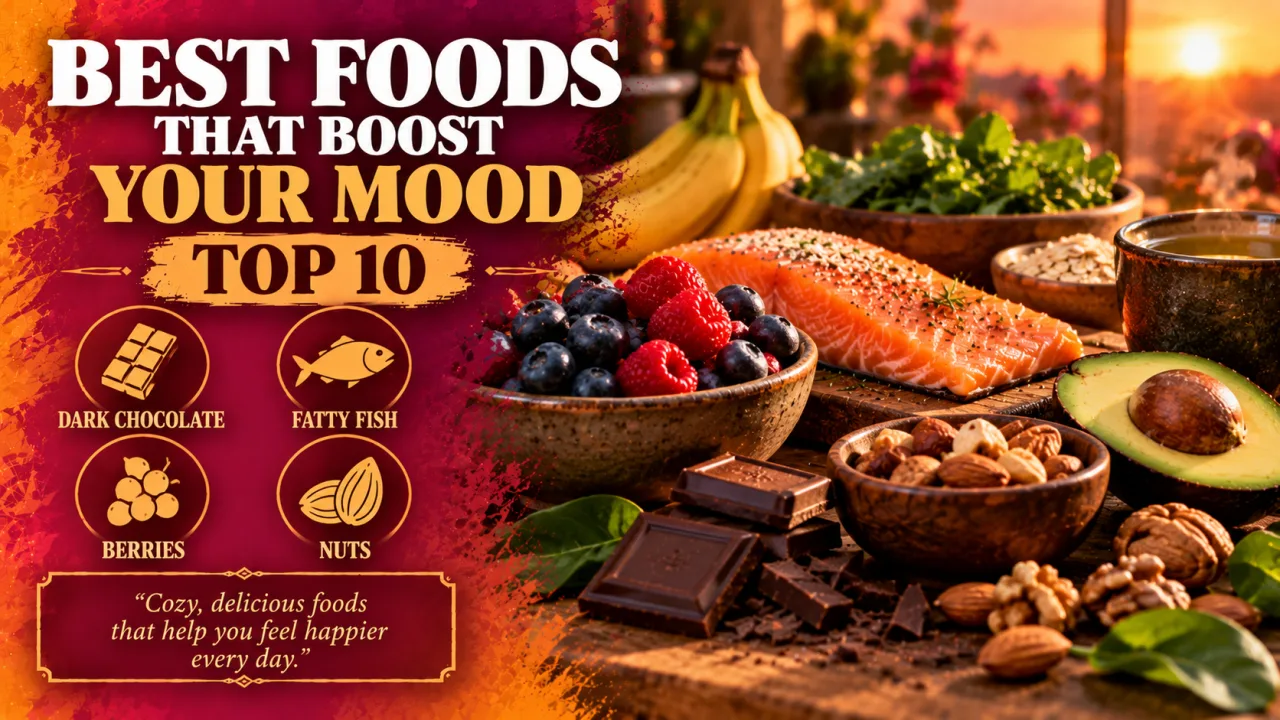
The best foods that boost your mood, led by oily fish, leafy greens and berries, supply omega-3s, folate and plant compounds linked to better mental health.
Most people know the quick lift that comes from a favourite snack, and most also know how fast that lift can fade. What researchers have been asking for the past two decades is a different question: can the everyday pattern of what we eat change how we feel over weeks and months? As of October 2026, the honest answer is a cautious yes. Large cohort studies tie diets rich in vegetables, fruit, fish, legumes, nuts and olive oil to a lower risk of depression, and a handful of randomised trials suggest that improving diet quality can help some people who are already struggling.
That research has given rise to a young field called nutritional psychiatry. It does not claim that any single food works like a medicine. Instead, it looks at how nutrients, inflammation, blood sugar and the trillions of microbes in the gut interact with the brain. Harvard Health notes that about 95 percent of the body's serotonin is made in the gastrointestinal tract, which is one reason scientists became interested in the gut in the first place, although gut serotonin does not travel into the brain directly and the links are more indirect than headlines suggest.
This guide ranks ten foods by how strong the human evidence is, what nutrients they bring and how easy they are to eat regularly. Each entry explains why it may help, what the studies actually found and how much to eat, with figures checked against PubMed, the US National Institutes of Health Office of Dietary Supplements (NIH ODS) and the NHS.
An important note before the list: this article is general information, not medical advice. Food is not a treatment for depression on its own. If your mood has been low for more than two weeks, or you have thoughts of harming yourself, please speak to a doctor or a mental health professional. Diet changes work best alongside proper care, not instead of it.
How We Ranked These Foods
Lists of happy foods are everywhere online, and many of them lean on a single nutrient or a single small study. For this ranking, every food had to meet several tests.
- Human evidence: priority went to foods backed by randomised trials or large prospective cohorts that measured depression or mood, ideally pooled in meta-analyses.
- A plausible mechanism: the food should supply nutrients or compounds with a known role in brain function, inflammation or gut health.
- Fit with proven dietary patterns: foods that form the backbone of the diets tested in trials, such as the modified Mediterranean diet used in the SMILES trial, scored higher.
- Practicality: the helpful amount has to be something an ordinary person can eat several times a week.
The order runs from the strongest and most consistent evidence to the most preliminary. Foods near the bottom are not useless, but their research is smaller, shorter or mostly observational. Nutrient figures come from the NIH ODS fact sheets, which draw on the USDA FoodData Central database, and serving advice comes from the NHS and from the trials themselves.
At a Glance
| No. | Food | Main mood-related nutrients | Amount used in research or guidance | Strength of evidence |
|---|---|---|---|---|
| 1 | Oily fish | Omega-3 EPA and DHA, vitamin D, B12 | 2 portions of fish a week, 1 of them oily (about 140 g each) | Meta-analyses of cohorts and RCTs |
| 2 | Leafy greens | Folate, magnesium, fibre | Daily, as part of about 6 vegetable servings | Cohorts, part of trial diets |
| 3 | Berries and colourful produce | Flavonoids, vitamin C, fibre | 5 or more portions of 80 g a day | Cohorts, small acute trials |
| 4 | Beans, lentils and chickpeas | Folate, vitamin B6, magnesium, fibre | 3 to 4 servings a week in SMILES | Part of trial diets, cohorts |
| 5 | Nuts and seeds | Magnesium, zinc, healthy fats | About 30 g (1 serving) a day | Large cohort, part of trial diets |
| 6 | Whole grains and oats | Slow-release carbohydrate, fibre | 5 to 8 servings a day in SMILES | Large cohort on glycaemic index |
| 7 | Yogurt, kefir and fermented foods | Live cultures, B12, protein | Daily servings in trials | Small RCTs on brain and gut |
| 8 | Extra virgin olive oil | Monounsaturated fat, polyphenols | 3 tablespoons a day in SMILES | Part of Mediterranean diet trials |
| 9 | Coffee | Caffeine, polyphenols | 2 to 4 cups a day in cohorts, under 400 mg caffeine | Large cohorts, meta-analysis |
| 10 | Dark chocolate | Cocoa flavanols | About 30 g of 85 percent cocoa in a trial | Small RCT, cross-sectional survey |
1. Oily Fish
| Quick Facts | Details |
|---|---|
| Key nutrients | Long-chain omega-3 fats (EPA and DHA), vitamin D, vitamin B12, protein |
| How it may help mood | Omega-3s are built into brain cell membranes and help dampen inflammation |
| Strength of evidence | Strong for diet patterns, moderate for EPA-rich supplements |
| Typical serving | About 140 g cooked, at least once a week |
| Best way to eat it | Baked, grilled or canned salmon, sardines, mackerel, trout or herring |
Salmon, sardines, mackerel, trout and herring top this list because they combine the best-studied mood nutrient, long-chain omega-3 fat, with vitamin D and vitamin B12 in a single, easy food.
Why It Works
The brain is rich in fat, and the omega-3 fatty acids EPA and DHA are part of the membranes that wrap every nerve cell. EPA in particular appears to have anti-inflammatory effects, and chronic low-grade inflammation is one of the biological threads that researchers have linked to depression. Oily fish is by far the richest food source of these two fats. Plant foods such as flaxseed and chia supply a different omega-3, ALA, which the body converts to EPA and DHA only in small amounts.
What the Research Says
A 2016 meta-analysis in the Journal of Epidemiology and Community Health pooled 26 studies with 150,278 participants and found that people who ate the most fish had a 17 percent lower risk of depression than those who ate the least (relative risk 0.83). The link held in cohort studies that followed people over time, not only in snapshot surveys, and the NIH ODS omega-3 fact sheet cites the same result.
Supplement trials add useful detail. A 2019 meta-analysis in Translational Psychiatry covering 26 randomised trials and 2,160 participants found an overall benefit of omega-3s on depressive symptoms, but the effect came from formulas in which EPA made up at least 60 percent of the omega-3 content, at doses of up to 1 g of EPA a day. Formulas dominated by DHA showed no clear benefit. In the same year, the International Society for Nutritional Psychiatry Research published practice guidelines suggesting 1 to 2 g of EPA a day, used alongside standard treatment, for people with major depressive disorder.
Not every review agrees. A 2015 Cochrane review, summarised by the NIH ODS, judged the evidence too weak to say omega-3 supplements meaningfully treat major depression. That is why fish ranks first as a food that supports overall diet quality, not as a stand-in for medical care.
How Much to Eat
The NHS advises at least 2 portions of fish a week, including 1 portion of oily fish, with a portion being about 140 g. People who could become pregnant, are pregnant or are breastfeeding should have no more than 2 portions of oily fish a week because of pollutants. The SMILES trial diet also asked for at least 2 servings of fish a week.
Easy Ways to Add It
- Mash canned sardines or salmon with lemon and herbs on wholegrain toast.
- Bake a tray of salmon fillets with vegetables for two dinners in one go.
- Add smoked mackerel to a potato and green bean salad.
- Swap one meat-based meal a week for grilled trout.
Key Figures
- 3 ounces (about 85 g) of cooked farmed Atlantic salmon: about 1.24 g DHA and 0.59 g EPA (NIH ODS)
- 3 ounces of cooked sockeye salmon: about 570 IU (14.2 mcg) of vitamin D (NIH ODS)
- 3 ounces of cooked Atlantic salmon: about 2.6 mcg of vitamin B12, more than the daily value (NIH ODS)
- Highest versus lowest fish intake: 17 percent lower depression risk across 26 studies
2. Leafy Greens
| Quick Facts | Details |
|---|---|
| Key nutrients | Folate, magnesium, fibre, vitamin K |
| How it may help mood | Folate helps the body make brain chemical messengers; low folate is linked to depression |
| Strength of evidence | Moderate, mostly from cohort studies and whole-diet trials |
| Typical serving | Half a cup cooked or a large handful raw |
| Best way to eat it | Spinach, kale, chard, rocket or spring greens in meals every day |
Spinach, kale, Swiss chard and other dark greens are among the richest sources of folate, a B vitamin that keeps turning up in depression research.
Why It Works
Folate takes part in methylation, a set of chemical reactions the body uses to build neurotransmitters such as serotonin, dopamine and noradrenaline, and to clear homocysteine from the blood. The NIH ODS notes that low folate status has been linked to depression and to a poorer response to antidepressants in some, but not all, studies. Greens also supply magnesium and fibre, and fibre feeds the gut bacteria that are now a major focus of mood research.
What the Research Says
In an American population study of 2,948 people aged 15 to 39 described by the NIH ODS, blood folate levels were significantly lower in people with major depression than in those who had never been depressed. Evidence from supplements is mixed, and the high doses used in some trials should only be taken under medical supervision.
Whole-diet studies are more encouraging. In the Women's Health Initiative, which followed tens of thousands of postmenopausal women, higher intakes of vegetables and fibre were linked to lower odds of developing depression. In the HELFIMED trial in Australia, the people whose depression improved most were those who ate a wider variety of vegetables. Greens are an easy way to raise both quantity and variety.
How Much to Eat
Adults need 400 mcg of dietary folate equivalents (DFE) a day, according to the NIH ODS. The SMILES trial diet aimed for 6 servings of vegetables a day. A daily serving of greens, plus other vegetables at meals, gets most people a long way towards both targets.
Easy Ways to Add It
- Stir two handfuls of spinach into soups, dals, curries or pasta sauce in the last minute of cooking.
- Use rocket or baby kale as the base of a lunchtime salad.
- Blend a handful of spinach into a fruit smoothie; the taste almost disappears.
- Sauté chard or spring greens with garlic and olive oil as a side dish.
Key Figures
- Half a cup of boiled spinach: 131 mcg DFE of folate, 33 percent of the daily value (NIH ODS)
- Half a cup of boiled spinach: 78 mg of magnesium, 19 percent of the daily value (NIH ODS)
- Adult folate requirement: 400 mcg DFE a day
- Spinach, liver, asparagus and brussels sprouts are among the foods highest in folate (NIH ODS)
3. Berries and Colourful Fruit and Vegetables
| Quick Facts | Details |
|---|---|
| Key nutrients | Flavonoids such as anthocyanins, vitamin C, fibre |
| How it may help mood | Plant pigments may support blood flow to the brain and reduce oxidative stress |
| Strength of evidence | Moderate for overall produce intake, early for berries alone |
| Typical serving | 80 g, about a handful |
| Best way to eat it | Fresh or frozen berries, plus a mix of differently coloured produce |
Blueberries, strawberries and raspberries get the attention, but the best evidence covers fruit and vegetables as a group, and the more colours on the plate, the better.
Why It Works
The deep reds, purples and blues of berries come from anthocyanins, part of a larger family of plant compounds called flavonoids. In laboratory and short human studies, flavonoids appear to improve blood flow and reduce oxidative stress in the brain. Fruit and vegetables also bring fibre and vitamin C, and they tend to replace less helpful snacks.
What the Research Says
A study in the American Journal of Public Health followed 12,385 randomly selected Australian adults across 2007, 2009 and 2013. People who increased their fruit and vegetable intake reported higher happiness and life satisfaction within 24 months. Moving from no portions to 8 portions a day was linked to a gain of up to 0.24 life-satisfaction points, which the authors compared to the boost from moving from unemployment into a job.
On berries specifically, a 2017 study in the journal Nutrients gave a flavonoid-rich wild blueberry drink to 21 young adults and 50 children aged 7 to 10. Two hours later, positive mood was higher than after a placebo drink, although negative mood did not change. The Women's Health Initiative cohort also linked whole fruit, rather than juice, to lower odds of new depression.
How Much to Eat
The NHS counts 80 g of fresh, canned or frozen fruit or vegetables as 1 of your 5 A Day, and 30 g of dried fruit as 1 portion. The Australian study suggests that benefits keep rising well beyond 5 portions.
Easy Ways to Add It
- Keep a bag of frozen mixed berries for porridge, yogurt and smoothies.
- Aim for three colours at dinner, such as red peppers, purple cabbage and green beans.
- Choose whole fruit over juice to keep the fibre.
- Pack a handful of grapes or cherry tomatoes as a desk snack.
Key Figures
- 12,385 Australian adults tracked in the fruit and vegetable happiness study
- Up to 0.24 extra life-satisfaction points with 8 more portions a day
- 2 hours: time after a blueberry drink when positive mood was measured higher
- 80 g: one NHS portion of fruit or vegetables
4. Beans, Lentils and Chickpeas
| Quick Facts | Details |
|---|---|
| Key nutrients | Folate, vitamin B6, magnesium, plant protein, fibre |
| How it may help mood | B vitamins support neurotransmitter production; fibre steadies blood sugar and feeds gut microbes |
| Strength of evidence | Moderate, as a core part of successful trial diets |
| Typical serving | Half a cup cooked, or 80 g |
| Best way to eat it | Lentil soups, bean stews, hummus, chickpea curries |
Pulses are the quiet workhorse of every diet linked to better mental health, delivering several mood-related nutrients for very little money.
Why It Works
Chickpeas are one of the best plant sources of vitamin B6, which the body needs to turn the amino acid tryptophan into serotonin. Beans and lentils supply folate and magnesium, and their mix of fibre and protein releases energy slowly, avoiding the sharp rises and falls in blood sugar that can leave people irritable and tired.
What the Research Says
No large trial has tested beans on their own against depression. Their place on this list comes from the diets that have been tested. The SMILES trial, the first randomised trial of diet as a treatment for major depression, asked participants to eat legumes 3 to 4 times a week as one of 12 key food groups. The Mediterranean-style eating patterns that cohort studies link to lower depression risk also feature pulses heavily.
How Much to Eat
The NHS counts 80 g of beans or pulses as 1 of your 5 A Day, though they only count once however much you eat. A practical target is the SMILES amount of 3 to 4 servings a week.
Easy Ways to Add It
- Replace half the meat in chilli, bolognese or tacos with lentils or kidney beans.
- Make a big pot of lentil or split pea soup for lunches.
- Roast drained chickpeas with spices for a crunchy snack.
- Spread hummus instead of butter on sandwiches.
Key Figures
- 1 cup of canned chickpeas: 1.1 mg of vitamin B6, 65 percent of the daily value (NIH ODS)
- Half a cup of boiled black-eyed peas: 105 mcg DFE of folate, 26 percent of the daily value (NIH ODS)
- Half a cup of cooked black beans: 60 mg of magnesium (NIH ODS)
- 3 to 4 servings of legumes a week in the SMILES trial diet
5. Nuts and Seeds
| Quick Facts | Details |
|---|---|
| Key nutrients | Magnesium, zinc, vitamin E, healthy fats, fibre |
| How it may help mood | Supply minerals involved in nerve signalling and the stress response |
| Strength of evidence | Moderate, from a large cohort and whole-diet trials |
| Typical serving | About 30 g, a small handful |
| Best way to eat it | Raw or dry-roasted, unsalted, as a snack or topping |
Walnuts, almonds, cashews and pumpkin seeds carry minerals that many diets run short of, and a large British study has now tied a daily handful to lower depression risk.
Why It Works
Magnesium is a helper for more than 300 enzyme systems in the body, according to the NIH ODS, including some involved in nerve signalling. Pumpkin seeds also supply zinc. Nuts and seeds provide both, along with healthy unsaturated fats and polyphenols that may help limit inflammation.
What the Research Says
A 2023 study in Clinical Nutrition used data from 13,504 adults in the UK Biobank who were free of depression at the start. Over an average of 5.3 years, 1,122 developed depression. People who ate more than zero and up to one 30 g serving of nuts a day had a 17 percent lower risk (hazard ratio 0.83) than people who ate none. The SMILES diet included 1 daily serving of raw, unsalted nuts, and in the HELFIMED trial, eating more nuts was one of the changes linked to greater improvement in depression.
How Much to Eat
About 30 g a day is the amount that appears in both the UK Biobank analysis and the SMILES diet. The UK study found its benefit at low-to-moderate intakes, and nuts are energy-dense, so a modest handful is the sensible target. Visit our guide to the most nutritious seeds for your diet for more seed options.
Easy Ways to Add It
- Sprinkle pumpkin seeds or chopped walnuts over porridge or salad.
- Keep a small tub of unsalted mixed nuts for an afternoon snack.
- Stir a spoonful of nut butter into overnight oats.
- Toast cashews and add them to stir-fries.
Key Figures
- 13,504 UK Biobank participants followed for an average of 5.3 years
- 17 percent lower depression risk with up to 30 g of nuts a day
- 1 ounce (28 g) of roasted pumpkin seeds: 156 mg of magnesium and 2.2 mg of zinc (NIH ODS)
- 1 ounce of dry-roasted almonds: 80 mg of magnesium (NIH ODS)
6. Whole Grains and Oats
| Quick Facts | Details |
|---|---|
| Key nutrients | Slow-digesting carbohydrate, fibre, B vitamins, magnesium |
| How it may help mood | Steady blood sugar avoids energy crashes; fibre supports gut bacteria |
| Strength of evidence | Moderate, from a large cohort on glycaemic index and trial diets |
| Typical serving | A bowl of porridge, a slice of wholegrain bread or half a cup of brown rice |
| Best way to eat it | Oats, brown rice, wholegrain bread, barley, quinoa |
The type of carbohydrate you eat may matter as much as the amount, and whole grains are the steady, slow-burning kind.
Why It Works
Refined carbohydrates such as white bread and sugary cereals are digested quickly, causing a rapid rise in blood sugar followed by a fall. These swings trigger hormonal responses that may affect mood and energy. Whole grains keep their bran and germ, so they digest more slowly and bring fibre that gut microbes ferment into helpful compounds. Harvard Health also lists oats among everyday sources of tryptophan.
What the Research Says
A study in the American Journal of Clinical Nutrition examined 87,618 postmenopausal women in the Women's Health Initiative, with 69,954 of them reassessed three years later. Women whose diets had the highest glycaemic index had 22 percent higher odds of new depression than those with the lowest (odds ratio 1.22). Refined grain intake was linked to higher odds of depression, while fibre, whole fruit and vegetables were linked to lower odds. As an observational study, it cannot prove cause and effect, but the pattern fits other research.
How Much to Eat
The SMILES diet recommended 5 to 8 servings of whole grains a day, a generous amount that replaces most refined grains rather than adding to them. A simple starting point is to make breakfast and one other meal wholegrain.
Easy Ways to Add It
- Start the day with porridge or overnight oats topped with fruit and seeds.
- Swap white rice for brown rice, barley or quinoa.
- Choose bread where a whole grain is the first ingredient.
- Use wholewheat pasta or mix it half and half with regular pasta.
Key Figures
- 87,618 women in the glycaemic index and depression study
- 22 percent higher odds of new depression with the highest glycaemic index diets
- 5 to 8 daily servings of whole grains in the SMILES trial diet
- Refined grains raised odds of depression; fibre lowered them
7. Yogurt, Kefir and Fermented Foods
| Quick Facts | Details |
|---|---|
| Key nutrients | Live bacterial cultures, protein, calcium, vitamin B12 |
| How it may help mood | May shape gut microbes that communicate with the brain through the gut-brain axis |
| Strength of evidence | Early but growing, from small randomised trials |
| Typical serving | A pot of yogurt or a glass of kefir |
| Best way to eat it | Plain yogurt, kefir, kimchi, sauerkraut, miso |
Fermented foods are the newest arrivals on mood food lists, and the research, while still small, is some of the most intriguing in the field.
Why It Works
The gut and brain talk to each other constantly through the vagus nerve, hormones and immune signals, a two-way link that Harvard Health describes as the gut-brain axis. Fermented foods carry live microbes and the compounds they produce. They may increase the diversity of gut bacteria and lower inflammation, both of which have been linked to mental health.
What the Research Says
In a 2013 study in the journal Gastroenterology, healthy women ate a fermented milk product with probiotic bacteria twice a day for four weeks. Brain scans showed reduced activity in a network of regions involved in processing emotion and sensation, compared with women who had a non-fermented milk product or nothing. The groups held just 12, 11 and 13 women, so the results are a first signal, not proof of better mood.
A 2021 Stanford study in the journal Cell randomised healthy adults to a high-fibre or high-fermented-food diet for 17 weeks, with 18 people in each arm. The fermented food group saw steadily rising gut microbe diversity and falling markers of inflammation. The trial did not measure depression, but it shows that ordinary foods can shift the gut in a direction researchers think is helpful for the brain.
How Much to Eat
There is no official target for fermented foods. The SMILES diet included 2 to 3 servings a day of low-fat, unsweetened dairy. Starting with one serving a day and choosing products labelled with live cultures is a sensible approach.
Easy Ways to Add It
- Top plain yogurt with berries and walnuts instead of a sweetened dessert.
- Use kefir as the base of a breakfast smoothie.
- Add a forkful of kimchi or sauerkraut to rice bowls, eggs or sandwiches.
- Stir miso into soups and dressings at the end of cooking.
Key Figures
- 4 weeks of fermented milk changed brain activity in emotion-processing regions in healthy women
- 17-week Stanford trial: fermented foods raised gut microbe diversity and lowered inflammation markers
- A 6-ounce pot of plain fat-free yogurt: about 1.0 mcg of vitamin B12 (NIH ODS)
- Gut health also matters for digestion; see our guide to the best foods to relieve constipation
8. Extra Virgin Olive Oil and the Mediterranean Pattern
| Quick Facts | Details |
|---|---|
| Key nutrients | Monounsaturated fat, polyphenols, vitamin E |
| How it may help mood | Anti-inflammatory compounds; makes vegetables and pulses tastier and more filling |
| Strength of evidence | Moderate to strong for the overall Mediterranean pattern |
| Typical serving | 1 tablespoon, used daily in cooking and dressings |
| Best way to eat it | Drizzled over salads, vegetables and beans, or used for gentle cooking |
Olive oil earns its place less as a stand-alone superfood and more as the glue that holds together the diet with the best mood evidence.
Why It Works
Extra virgin olive oil is the main fat in the Mediterranean diet, a pattern the Mayo Clinic describes as rich in vegetables, fruit, whole grains and olive oil, with fish, legumes, poultry, nuts and eggs a few times a week. Its polyphenols have anti-inflammatory effects, and it makes large servings of vegetables and pulses far more appealing.
What the Research Says
The 2017 SMILES trial, published in BMC Medicine, recruited adults with moderate to severe depression and gave 33 of them seven sessions with a dietitian to adopt a modified Mediterranean diet, while 34 received social support. After 12 weeks, 32.3 percent of the diet group were in remission, compared with 8.0 percent of the social support group. The diet included 3 tablespoons of olive oil a day and was used alongside participants' existing treatment.
The HELFIMED trial in Adelaide, with 152 adults, combined food hampers and Mediterranean cooking workshops with fish oil and found greater improvements in depression at 3 months, sustained at 6 months. A 2019 meta-analysis in Molecular Psychiatry found that people who followed a Mediterranean diet most closely had a 33 percent lower risk of depression in longitudinal studies (relative risk 0.67). Trials are still small, but together they make the Mediterranean pattern the best-supported diet for mood.
How Much to Eat
The SMILES amount was 3 tablespoons a day, used in place of butter, margarine and other fats rather than in addition. Olive oil is energy-dense, so swapping fats rather than adding more is key.
Easy Ways to Add It
- Make a simple dressing of olive oil, lemon juice and mustard for salads and greens.
- Roast vegetables and chickpeas in olive oil instead of butter.
- Dip wholegrain bread in olive oil instead of spreading margarine.
- Finish soups and bean dishes with a swirl of oil.
Key Figures
- 32.3 percent remission with the SMILES diet versus 8.0 percent with social support after 12 weeks
- 3 tablespoons of olive oil a day in the SMILES diet
- 152 adults in the HELFIMED trial, with benefits lasting to 6 months
- 33 percent lower depression risk with the highest Mediterranean diet adherence
9. Coffee
| Quick Facts | Details |
|---|---|
| Key nutrients | Caffeine, chlorogenic acids and other polyphenols |
| How it may help mood | Caffeine increases alertness and affects dopamine signalling |
| Strength of evidence | Moderate, from large observational studies only |
| Typical serving | 1 cup of brewed coffee |
| Best way to eat it | Plain or with milk, in the morning, with little or no added sugar |
For many people, coffee is the most reliable morning mood lift, and long-term studies suggest regular drinkers may also have a slightly lower risk of depression.
Why It Works
Caffeine blocks adenosine, a brain chemical that builds up during the day and makes us feel tired, and it influences dopamine, which is involved in motivation and reward. Coffee also contains polyphenols with anti-inflammatory properties. The effect on mood is fast, but too much can trigger jitteriness, poor sleep and anxiety.
What the Research Says
A Harvard study of 50,739 American women, published in the Archives of Internal Medicine, followed participants for 10 years. Compared with women who drank 1 cup of caffeinated coffee a week or less, those who drank 2 to 3 cups a day had a 15 percent lower risk of depression and those who drank 4 or more cups had a 20 percent lower risk. Decaffeinated coffee showed no link. A 2016 meta-analysis of observational studies found that depression risk fell by 8 percent for each additional daily cup of coffee. These are associations, and people who feel well may simply drink more coffee.
How Much to Eat
The US Food and Drug Administration says up to 400 mg of caffeine a day, about two to three 12-ounce cups of coffee, is not generally linked to negative effects in healthy adults. People who are pregnant, sensitive to caffeine or prone to anxiety should drink less. If you notice a racing heart or restlessness, our guide to the physical symptoms of anxiety explains how caffeine can mimic them.
Easy Ways to Add It
- Keep coffee to the morning and early afternoon to protect sleep.
- Skip syrups and sugar, which add a later energy dip.
- Pair coffee with breakfast rather than drinking it on an empty stomach.
- Switch to decaf after lunch if sleep is a problem.
Key Figures
- 50,739 women followed for 10 years in the Harvard coffee study
- 20 percent lower depression risk with 4 or more cups a day
- 8 percent lower risk per extra daily cup in a 2016 meta-analysis
- 400 mg of caffeine a day: the FDA level not generally linked to negative effects
Read more in our article on the health benefits of coffee.
10. Dark Chocolate
| Quick Facts | Details |
|---|---|
| Key nutrients | Cocoa flavanols, fibre, magnesium, a little caffeine and theobromine |
| How it may help mood | Flavanols and cocoa fibre may act on blood flow and gut bacteria |
| Strength of evidence | Preliminary, from one small trial and a cross-sectional survey |
| Typical serving | 20 to 30 g, two or three squares |
| Best way to eat it | 70 percent cocoa or higher, eaten slowly as a treat |
Dark chocolate rounds out the list because the research is genuinely interesting, but it is also the smallest, so treat it as a pleasant bonus rather than a strategy.
Why It Works
Cocoa is rich in flavanols, the same family of plant compounds found in berries and tea. High-cocoa chocolate also contains fibre that gut bacteria can ferment. Some of the lift from chocolate is simple pleasure, which is not a bad thing in itself, but milk chocolate adds a lot of sugar that may undo the benefit.
What the Research Says
A 2022 randomised trial in the Journal of Nutritional Biochemistry gave healthy young adults 30 g a day of 85 percent cocoa chocolate, 70 percent cocoa chocolate or no chocolate for three weeks. Only the 85 percent group showed a significant fall in negative mood, alongside greater diversity of gut bacteria. The groups held only 18, 16 and 14 people.
A survey of 13,626 American adults in the National Health and Nutrition Examination Survey found that those who reported eating dark chocolate had 70 percent lower odds of clinically relevant depressive symptoms (odds ratio 0.30). Only 1.4 percent of people reported eating dark chocolate, and the survey could not show which came first, so the authors called for longer studies.
How Much to Eat
The trial amount was 30 g a day of very dark chocolate. Because chocolate is high in calories and saturated fat, 20 to 30 g, about two or three squares, is a reasonable ceiling.
Easy Ways to Add It
- Choose bars with 70 percent cocoa or more, and work up to 85 percent.
- Grate dark chocolate over yogurt and berries.
- Pair two squares with a handful of almonds as an afternoon snack.
- Stir unsweetened cocoa powder into porridge or hot milk.
Key Figures
- 30 g a day of 85 percent cocoa chocolate reduced negative mood over 3 weeks in a small trial
- 13,626 US adults in the chocolate and depression survey
- 1.4 percent of surveyed adults reported eating dark chocolate
- 70 percent lower odds of depressive symptoms among dark chocolate eaters, an association only
Mood Foods Compared
| Food | Standout nutrient per serving | Best-known study | Type of evidence | How often |
|---|---|---|---|---|
| Oily fish | 1.24 g DHA and 0.59 g EPA in 3 oz farmed salmon | Li et al. 2016, 26 studies | Meta-analysis of observational studies | 1 to 2 times a week |
| Leafy greens | 131 mcg DFE folate in half a cup boiled spinach | Women's Health Initiative | Large cohort | Daily |
| Berries and produce | Flavonoids, vitamin C | Mujcic and Oswald 2016 | Large cohort, small acute trial | 5 or more portions daily |
| Beans and lentils | 1.1 mg vitamin B6 in 1 cup chickpeas | SMILES diet | Part of RCT diet | 3 to 4 times a week |
| Nuts and seeds | 156 mg magnesium in 1 oz pumpkin seeds | UK Biobank 2023 | Large cohort | Daily, about 30 g |
| Whole grains | Slow-release carbohydrate, fibre | Gangwisch et al. 2015 | Large cohort | Most meals |
| Fermented foods | Live cultures, B12 | Wastyk et al. 2021 | Small RCT | Daily |
| Olive oil | Polyphenols, monounsaturated fat | SMILES 2017 | RCT of whole diet | Daily |
| Coffee | Caffeine | Lucas et al. 2011 | Large cohort | 2 to 4 cups a day |
| Dark chocolate | Cocoa flavanols | Shin et al. 2022 | Small RCT | A few squares, occasionally |
Honourable Mentions
Several popular mood foods narrowly missed the list, usually because the evidence rests on a single nutrient rather than on mood studies.
Bananas
A medium banana supplies 0.4 mg of vitamin B6, 25 percent of the daily value, according to the NIH ODS, and Harvard Health lists bananas among everyday sources of tryptophan. They are a handy, portable carbohydrate, but there are no strong trials of bananas and mood.
Eggs
One large egg provides about 0.5 mcg of vitamin B12 and 44 IU of vitamin D, along with protein and choline. Eggs featured in the SMILES diet at up to 6 a week and make an easy breakfast partner for greens and wholegrain toast.
Turkey
Turkey is often said to boost serotonin because it contains tryptophan. Harvard Health calls the famous turkey coma a myth: a 3-ounce serving contains about 250 mg of tryptophan, similar to chicken or beef, and the brain tightly regulates serotonin production. Turkey is a lean protein worth eating, but it is not special for mood.
Oysters, Clams and Mussels
Shellfish are exceptional sources of zinc and vitamin B12. Three ounces of farmed Eastern oysters contain 32 mg of zinc, nearly three times the daily value, and 3 ounces of cooked clams contain 17 mcg of vitamin B12, according to the NIH ODS. They count towards the NHS fish target too.
Foods That Can Drag Your Mood Down
What you cut back on may matter as much as what you add. Three groups stand out in the research.
Ultra-Processed Foods
A 2023 study in JAMA Network Open followed 31,712 middle-aged women in the Nurses' Health Study II from 2003 to 2017. Women eating the most ultra-processed food had a 49 percent higher risk of depression than those eating the least, using a strict definition of depression. Artificially sweetened drinks and artificial sweeteners showed the clearest links. Women who cut ultra-processed foods by at least 3 servings a day had a lower risk than those whose intake stayed stable. Our guide to the most unhealthy foods to limit suggests practical swaps.
Added Sugar
In the Whitehall II study of British civil servants, men in the top third for sugar from sweet foods and drinks had 23 percent higher odds of a new common mental disorder five years later, and mood did not predict later sugar intake, which argues against simple reverse causation. In the Women's Health Initiative, the highest added sugar intakes were linked to 23 percent higher odds of new depression.
Alcohol
Drinkaware, the UK alcohol charity, explains that alcohol is a depressant that interferes with the brain chemicals needed for good mental health. Any relaxed feeling is short-lived, and regular heavy drinking can worsen low mood and anxiety. Many people whose depression is linked to alcohol start to feel better within a few weeks of cutting down or stopping. The SMILES diet capped wine at 2 standard drinks a day, with meals, and counted all other alcohol as an extra to limit.
Sample Mood-Boosting Day of Eating
This sample day shows how the ten foods fit into ordinary meals. Adjust portions to your appetite, culture and any medical advice you have been given.
| Meal | What to eat | Mood foods included |
|---|---|---|
| Breakfast | Porridge made with milk, topped with blueberries, walnuts and pumpkin seeds; a cup of coffee | Whole grains, berries, nuts and seeds, coffee |
| Mid-morning | Plain yogurt or a glass of kefir with a sliced banana | Fermented foods, banana |
| Lunch | Lentil and spinach soup with wholegrain bread dipped in olive oil | Beans, leafy greens, whole grains, olive oil |
| Afternoon | A small handful of almonds and two squares of 85 percent dark chocolate | Nuts, dark chocolate |
| Dinner | Baked salmon with brown rice, roasted peppers and a rocket salad with olive oil dressing | Oily fish, whole grains, colourful vegetables, leafy greens, olive oil |
| Evening | Herbal tea and a bowl of mixed berries | Berries |
Frequently Asked Questions
What is the best food to boost your mood quickly?
There is no instant fix, but some foods act within hours. Coffee raises alertness within minutes, and one small study found a flavonoid-rich blueberry drink lifted positive mood after two hours. For lasting change, research points to the overall pattern of what you eat over weeks and months, not one food.
Can changing my diet cure depression?
No. Diet is not a cure or a replacement for treatment. In the SMILES trial, a healthier diet helped about a third of participants reach remission, but it was used alongside existing care. If your mood has been low for more than two weeks, the NHS advises seeing a GP or doctor.
Are omega-3 supplements as good as eating fish?
Not necessarily. Fish provides vitamin D, B12 and protein as well as omega-3s. Trials suggest EPA-rich supplements can help some people with depression when used with treatment, but results vary. Talk to a doctor before starting high-dose supplements, especially if you take blood thinners.
Does sugar make you happy?
Sugar can give a short lift, but long-term studies link high intakes of added sugar and sweet drinks to higher odds of depression and common mental disorders. Fruit, whole grains and dark chocolate in small amounts give sweetness with fibre or flavanols, and tend to produce steadier energy than sweets or soft drinks.
Which nutrients are most linked to mood?
The best-studied are the omega-3 fats EPA and DHA, folate and other B vitamins such as B6 and B12, vitamin D, magnesium and zinc, plus fibre for gut health. Most people can get enough from a varied diet built on fish, vegetables, pulses, nuts, whole grains and fermented foods.
How long does it take for diet changes to affect mood?
Studies vary. The SMILES trial measured results after 12 weeks, HELFIMED saw benefits at 3 months that lasted to 6 months, and the Australian fruit and vegetable study found higher life satisfaction within 24 months. Expect gradual change over several weeks rather than an overnight shift.
Conclusion
The search for a single happy food is understandable, but the research points somewhere more useful. Oily fish, leafy greens, colourful fruit and vegetables, pulses, nuts, whole grains, fermented foods and olive oil all form part of eating patterns that are linked, in large studies and in small but promising trials, to a lower risk of depression and better wellbeing. Coffee and dark chocolate can sit comfortably on top of that foundation in moderate amounts.
Just as important is what comes off the plate: ultra-processed foods, added sugar and heavy drinking all show links with poorer mental health. None of this replaces professional help. Food is not a treatment for depression on its own, and anyone who has felt low for more than two weeks should talk to a doctor. But for most people, as of October 2026, eating more of the foods on this list is one of the simplest, safest and most affordable steps they can take for their mood and their overall health.
- Jacka FN, et al. A randomised controlled trial of dietary improvement for adults with major depression (the SMILES trial), BMC Medicine 2017: https://pmc.ncbi.nlm.nih.gov/articles/PMC5282719/
- Parletta N, et al. A Mediterranean-style dietary intervention supplemented with fish oil improves diet quality and mental health in people with depression (HELFIMED), Nutr Neurosci 2019: https://pubmed.ncbi.nlm.nih.gov/29215971/
- Lassale C, et al. Healthy dietary indices and risk of depressive outcomes: a systematic review and meta-analysis of observational studies, Mol Psychiatry 2019: https://pubmed.ncbi.nlm.nih.gov/30254236/
- Li F, Liu X, Zhang D. Fish consumption and risk of depression: a meta-analysis, J Epidemiol Community Health 2016: https://pubmed.ncbi.nlm.nih.gov/26359502/
- Liao Y, et al. Efficacy of omega-3 PUFAs in depression: a meta-analysis, Transl Psychiatry 2019: https://pmc.ncbi.nlm.nih.gov/articles/PMC6683166/
- Guu TW, et al. International Society for Nutritional Psychiatry Research practice guidelines for omega-3 fatty acids in the treatment of major depressive disorder, Psychother Psychosom 2019: https://pubmed.ncbi.nlm.nih.gov/31480057/
- Bizzozero-Peroni B, et al. Nut consumption is associated with a lower risk of depression in adults: a prospective analysis with data from the UK Biobank cohort, Clin Nutr 2023: https://pubmed.ncbi.nlm.nih.gov/37542950/
- Mujcic R, Oswald AJ. Evolution of well-being and happiness after increases in consumption of fruit and vegetables, Am J Public Health 2016: https://pmc.ncbi.nlm.nih.gov/articles/PMC4940663/
- Khalid S, et al. Effects of acute blueberry flavonoids on mood in children and young adults, Nutrients 2017: https://pmc.ncbi.nlm.nih.gov/articles/PMC5331589/
- Gangwisch JE, et al. High glycemic index diet as a risk factor for depression: analyses from the Women's Health Initiative, Am J Clin Nutr 2015: https://pmc.ncbi.nlm.nih.gov/articles/PMC4515860/
- Tillisch K, et al. Consumption of fermented milk product with probiotic modulates brain activity, Gastroenterology 2013: https://pmc.ncbi.nlm.nih.gov/articles/PMC3839572/
- Wastyk HC, et al. Gut-microbiota-targeted diets modulate human immune status, Cell 2021: https://pmc.ncbi.nlm.nih.gov/articles/PMC9020749/
- Lucas M, et al. Coffee, caffeine, and risk of depression among women, Arch Intern Med 2011: https://pmc.ncbi.nlm.nih.gov/articles/PMC3296361/
- Wang L, et al. Coffee and caffeine consumption and depression: a meta-analysis of observational studies, Aust N Z J Psychiatry 2016: https://pubmed.ncbi.nlm.nih.gov/26339067/
- Shin JH, et al. Consumption of 85% cocoa dark chocolate improves mood in association with gut microbial changes in healthy adults, J Nutr Biochem 2022: https://pubmed.ncbi.nlm.nih.gov/34530112/
- Jackson SE, et al. Is there a relationship between chocolate consumption and symptoms of depression? Depress Anxiety 2019: https://pubmed.ncbi.nlm.nih.gov/31356717/
- Samuthpongtorn C, et al. Consumption of ultraprocessed food and risk of depression, JAMA Netw Open 2023: https://pmc.ncbi.nlm.nih.gov/articles/PMC10512104/
- Knüppel A, et al. Sugar intake from sweet food and beverages, common mental disorder and depression: prospective findings from the Whitehall II study, Sci Rep 2017: https://pmc.ncbi.nlm.nih.gov/articles/PMC5532289/
- NIH Office of Dietary Supplements, Folate fact sheet: https://ods.od.nih.gov/factsheets/Folate-HealthProfessional/
- NIH Office of Dietary Supplements, Omega-3 Fatty Acids fact sheet: https://ods.od.nih.gov/factsheets/Omega3FattyAcids-HealthProfessional/
- NIH Office of Dietary Supplements, Vitamin B6 fact sheet: https://ods.od.nih.gov/factsheets/VitaminB6-HealthProfessional/
- NIH Office of Dietary Supplements, Magnesium fact sheet: https://ods.od.nih.gov/factsheets/Magnesium-HealthProfessional/
- NIH Office of Dietary Supplements, Vitamin D fact sheet: https://ods.od.nih.gov/factsheets/VitaminD-HealthProfessional/
- NIH Office of Dietary Supplements, Vitamin B12 fact sheet: https://ods.od.nih.gov/factsheets/VitaminB12-HealthProfessional/
- NIH Office of Dietary Supplements, Zinc fact sheet: https://ods.od.nih.gov/factsheets/Zinc-HealthProfessional/
- NHS, Fish and shellfish: https://www.nhs.uk/live-well/eat-well/food-types/fish-and-shellfish-nutrition/
- NHS, 5 A Day: what counts: https://www.nhs.uk/live-well/eat-well/5-a-day/5-a-day-what-counts/
- NHS, Low mood, sadness and depression: https://www.nhs.uk/mental-health/feelings-symptoms-behaviours/feelings-and-symptoms/low-mood-sadness-depression/
- US Food and Drug Administration, Spilling the beans: how much caffeine is too much?: https://www.fda.gov/consumers/consumer-updates/spilling-beans-how-much-caffeine-too-much
- Harvard Health Publishing, Nutritional psychiatry: your brain on food: https://www.health.harvard.edu/blog/nutritional-psychiatry-your-brain-on-food-201511168626
- Harvard Health Publishing, Gut feelings: how food affects your mood: https://www.health.harvard.edu/blog/gut-feelings-how-food-affects-your-mood-2018120715548
- Harvard Health Publishing, The turkey coma: fact or fiction?: https://www.health.harvard.edu/diet-and-nutrition/the-turkey-coma-fact-or-fiction
- Mayo Clinic, Mediterranean diet for heart health: https://www.mayoclinic.org/healthy-lifestyle/nutrition-and-healthy-eating/in-depth/mediterranean-diet/art-20047801
- Drinkaware, Alcohol and mental health: https://www.drinkaware.co.uk/facts/health-effects-of-alcohol/mental-health/alcohol-and-mental-health
- Deakin University Food and Mood Centre, The SMILES trial: https://foodandmoodcentre.com.au/smiles-trial/
- 10MostToday, mood food list (topic prompt): https://10mosttoday.com/10-yummy-foods-to-boost-your-mood/


















Log in with