






 By
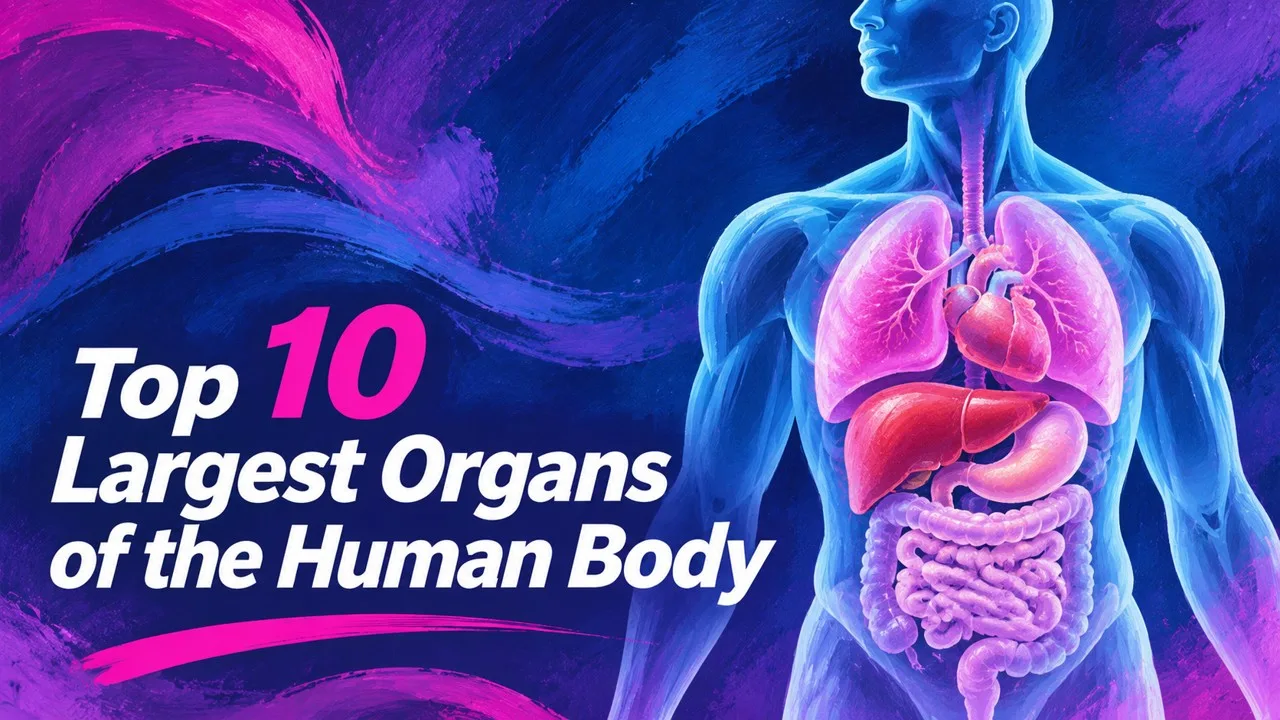
From the skin and liver to the brain, lungs and spleen, these ten largest organs of the human body reveal how much work goes on inside us every day. The human body contains dozens of organs, each made of tissues working together to do a particular job. Some are small, like the thyroid gland, while others are surprisingly large and heavy.
This list ranks the biggest organs, mainly by weight in a typical adult, while using length for the intestines, which are long and narrow. Sizes vary between people, so the figures are approximate. This article is for general knowledge and is not medical advice.
Key Facts
The ten organs below range from the skin, which covers the whole body, to the pancreas, a gland that helps control blood sugar.
The Largest Organs of the Human Body at a Glance
| # | Organ | Typical size | Body system | Main job |
|---|---|---|---|---|
| 1 | Skin | About 1.5 to 2 square metres | Integumentary system | Protects the body |
| 2 | Liver | About 1.5 kilograms | Digestive system | Processes nutrients and removes toxins |
| 3 | Brain | About 1.3 to 1.4 kilograms | Nervous system | Controls thought and the body |
| 4 | Lungs | About 1.3 kilograms together | Respiratory system | Exchange oxygen and carbon dioxide |
| 5 | Small intestine | About 6 metres long | Digestive system | Absorbs nutrients |
| 6 | Large intestine | About 1.5 metres long | Digestive system | Absorbs water and houses gut bacteria |
| 7 | Heart | About 250 to 350 grams | Circulatory system | Pumps blood |
| 8 | Kidneys | About 150 grams each | Urinary system | Filter the blood |
| 9 | Spleen | About 150 grams | Lymphatic system | Filters blood and fights infection |
| 10 | Pancreas | About 80 to 100 grams | Digestive and endocrine systems | Makes enzymes and insulin |
1. Skin
The skin is the largest organ of the human body. In an adult, it covers about 1.5 to 2 square metres and makes up a significant share of body weight. [1]
It has three main layers: the outer epidermis, the dermis beneath it, which contains blood vessels, nerves and sweat glands, and a deeper layer of fat called the hypodermis. [1]
The skin protects the body from germs, injury and ultraviolet light. It also helps control body temperature by sweating and by changing blood flow near the surface.
When exposed to sunlight, skin produces vitamin D, which is important for healthy bones.
The outer layer constantly renews itself. People shed tens of thousands of dead skin cells every minute, and much household dust contains these tiny flakes.
The skin is also a sensory organ, filled with receptors that detect touch, pressure, heat, cold and pain.
Key Figures
- Area: about 1.5 to 2 square metres
- Layers: epidermis, dermis, hypodermis
- Makes: vitamin D
- Role: protection and temperature control
Why It Made the List
The skin is the body's largest organ and its first line of defence. It also lets us feel the world around us.
2. Liver
The liver is the largest internal organ and the largest gland in the body, weighing about 1.5 kilograms in adults. It sits in the upper right part of the abdomen, under the ribs. [2]
It performs hundreds of tasks. It processes nutrients from food, stores energy as glycogen, makes proteins for blood clotting and breaks down drugs and toxins. [2]
The liver produces bile, a fluid that helps digest fats. Bile is stored in the gallbladder before being released into the intestine.
It receives blood from two sources: the hepatic artery, which brings oxygen, and the portal vein, which carries nutrient-rich blood from the gut.
The liver has a remarkable ability to regenerate. If part of it is removed, the remaining tissue can grow back to nearly full size.
This ability makes living-donor liver transplants possible, where a portion of a healthy person's liver is given to a patient.
Related: Top 10 Common Misconceptions About the Human Body
Key Figures
- Weight: about 1.5 kg
- Location: upper right abdomen
- Makes: bile
- Special ability: regeneration
Why It Made the List
The liver is the body's chemical factory. Its power to regrow is unique among major organs.
3. Brain
The adult human brain weighs about 1.3 to 1.4 kilograms. It is protected by the skull and cushioned by a clear liquid called cerebrospinal fluid. [3]
It contains about 86 billion nerve cells, called neurons, connected by trillions of links called synapses. [3]
The brain has three main parts. The cerebrum handles thought, memory, language and voluntary movement, the cerebellum coordinates balance and movement, and the brainstem controls breathing and heart rate.
Although it makes up only about 2 percent of body weight, the brain uses around 20 percent of the body's energy.
Its outer layer, the cerebral cortex, is deeply folded, which allows a large surface area to fit inside the skull.
Scientists are still discovering how the brain stores memories and produces consciousness.
Key Figures
- Weight: about 1.3 to 1.4 kg
- Neurons: about 86 billion
- Main parts: cerebrum, cerebellum, brainstem
- Energy use: about 20 percent of the body's
Why It Made the List
The brain is the control centre of the body. It is among the most complex structures known.
4. Lungs
The two lungs together weigh about 1.3 kilograms. They fill most of the chest and are protected by the ribcage. [4]
The right lung has three lobes, while the left lung has only two, leaving room for the heart. [4]
Air travels down the windpipe into branching tubes that end in hundreds of millions of tiny air sacs called alveoli.
The walls of the alveoli are extremely thin, allowing oxygen to pass into the blood and carbon dioxide to pass out. Their combined surface area is around 70 square metres, close to half a tennis court.
An adult breathes around 12 to 20 times a minute at rest, adding up to more than 17,000 breaths a day.
The lungs are not muscles. Breathing is driven mainly by the diaphragm, a dome-shaped muscle below them.
Key Figures
- Weight: about 1.3 kg together
- Lobes: three right, two left
- Air sacs: hundreds of millions of alveoli
- Surface area: about 70 square metres
Why It Made the List
The lungs supply every cell with oxygen. Their huge internal surface makes breathing efficient.
Related: Nalanda University: History of Ancient India's Great Mahavihara
5. Small intestine
The small intestine is the longest part of the digestive system, measuring around 6 metres in adults, although it is folded tightly into the abdomen. [5]
Despite its name, it is called small because of its narrow width, not its length. [5]
It has three sections: the duodenum, the jejunum and the ileum. Food is mixed with digestive juices from the pancreas and bile from the liver in the duodenum.
Its inner surface is covered with tiny finger-like projections called villi, which are in turn covered with even smaller microvilli. These greatly increase the area for absorbing nutrients.
Most of the nutrients from food, including sugars, proteins, fats and vitamins, are absorbed here.
Food usually takes several hours to pass through the small intestine.
Key Figures
- Length: about 6 metres
- Sections: duodenum, jejunum, ileum
- Surface features: villi and microvilli
- Role: nutrient absorption
Why It Made the List
The small intestine is where most digestion and absorption take place. Its folded surface makes it highly efficient.
6. Large intestine
The large intestine is about 1.5 metres long and wider than the small intestine. It frames the small intestine in the abdomen. [6]
It includes the caecum, the colon and the rectum. The small appendix is attached to the caecum. [6]
Its main job is to absorb water and salts from undigested food, turning it into solid waste.
The large intestine is home to trillions of bacteria, known as the gut microbiota. These microbes help break down fibre, produce some vitamins and support the immune system.
Research suggests that gut bacteria may influence many aspects of health, from digestion to mood, although much remains to be learned.
Food remains may spend a day or more in the large intestine before leaving the body.
Key Figures
- Length: about 1.5 metres
- Parts: caecum, colon, rectum
- Role: absorbs water and salts
- Residents: trillions of bacteria
Why It Made the List
The large intestine completes digestion. It also hosts a vast community of helpful microbes.
Related: Quasars: Distant Beacons or Local Oddballs?
7. Heart
The heart weighs about 250 to 350 grams and is roughly the size of a fist. It sits in the chest between the lungs, slightly to the left. [7]
It has four chambers, two upper atria and two lower ventricles, separated by valves that keep blood flowing in one direction. [7]
The right side pumps blood to the lungs to collect oxygen, while the stronger left side pumps oxygen-rich blood to the rest of the body.
The heart beats about 100,000 times a day, pumping thousands of litres of blood through the body.
Its rhythm is set by a natural pacemaker called the sinoatrial node, which sends electrical signals across the heart muscle.
Over an average lifetime, the heart beats more than two billion times without rest.
Key Figures
- Weight: about 250 to 350 g
- Chambers: four
- Beats per day: about 100,000
- Natural pacemaker: sinoatrial node
Why It Made the List
The heart keeps every organ supplied with blood. It works nonstop from before birth until death.
8. Kidneys
The two kidneys are bean-shaped organs, each weighing about 150 grams and roughly the size of a fist. They sit against the back wall of the abdomen. [8]
Each kidney contains about a million tiny filtering units called nephrons. [8]
Together, the kidneys filter around 180 litres of blood plasma every day, returning most of the water and useful substances to the blood and producing about 1 to 2 litres of urine.
They also control the balance of salts and water in the body, help regulate blood pressure and release a hormone that tells the body to make red blood cells.
A person can live a healthy life with just one working kidney, which is why kidney donation from living donors is possible.
When the kidneys fail, patients may need dialysis, which uses a machine to filter the blood, or a transplant.
Key Figures
- Weight: about 150 g each
- Filtering units: about 1 million nephrons each
- Daily filtering: about 180 litres of plasma
- Urine produced: about 1 to 2 litres a day
Why It Made the List
The kidneys keep the blood clean and balanced. Their work is essential for life.
9. Spleen
The spleen is a soft organ in the upper left part of the abdomen, behind the stomach and under the ribs. In adults it weighs roughly 150 grams. [9]
Related: Top 10 Most Deadly Diseases in the World
It filters the blood, removing old and damaged red blood cells and recycling their iron. [9]
The spleen is also an important part of the immune system, helping the body fight certain bacteria.
It stores white blood cells and platelets, which can be released when needed.
People can live without a spleen, for example after an injury, but they become more vulnerable to some infections and may need extra vaccinations.
The spleen can become enlarged during some illnesses, such as malaria and glandular fever.
Key Figures
- Weight: about 150 g
- Location: upper left abdomen
- Role: filters blood and supports immunity
- Can live without it: yes, with care
Why It Made the List
The spleen quietly filters blood and guards against infection. It is a vital part of the immune system.
10. Pancreas
The pancreas is a long, flat gland about 15 centimetres long, lying behind the stomach. It weighs around 80 to 100 grams. [10]
It has two main jobs. It produces digestive enzymes, which flow into the small intestine to break down proteins, fats and carbohydrates. [10]
It also contains clusters of cells called the islets of Langerhans, which release the hormones insulin and glucagon into the blood.
Insulin lowers blood sugar levels, while glucagon raises them. Together they keep blood sugar in balance.
When the pancreas does not make enough insulin, or the body does not respond to it properly, the result is diabetes, a condition affecting millions of people in India and around the world.
The discovery of insulin in 1921 transformed the treatment of diabetes.
Key Figures
- Weight: about 80 to 100 g
- Length: about 15 cm
- Hormones: insulin and glucagon
- Linked condition: diabetes
Why It Made the List
The pancreas helps digest food and control blood sugar. Its health is closely linked to diabetes.
Conclusion
Each of these organs plays a vital part in keeping the body alive and healthy. Together, they form a system far more complex than any machine.
A healthy diet, regular exercise and routine medical check-ups help keep these organs working well for a lifetime.
- ^ [1] "Skin". Wikipedia. Wikipedia: Human skin Wikipedia: Epidermis
- ^ [2] "Liver". Wikipedia. Wikipedia: Liver Wikipedia: Liver regeneration
- ^ [3] "Brain". Wikipedia. Wikipedia: Human brain Wikipedia: Neuron
- ^ [4] "Lungs". Wikipedia. Wikipedia: Lung Wikipedia: Pulmonary alveolus
- ^ [5] "Small intestine". Wikipedia. Wikipedia: Small intestine Wikipedia: Intestinal villus
- ^ [6] "Large intestine". Wikipedia. Wikipedia: Large intestine Wikipedia: Gut microbiota
- ^ [7] "Heart". Wikipedia. Wikipedia: Heart Wikipedia: Sinoatrial node
- ^ [8] "Kidneys". Wikipedia. Wikipedia: Kidney Wikipedia: Nephron
- ^ [9] "Spleen". Wikipedia. Wikipedia: Spleen Wikipedia: Red blood cell
- ^ [10] "Pancreas". Wikipedia. Wikipedia: Pancreas Wikipedia: Pancreatic islets
























Discussion
Log in with