






Top 10 Medical Mysteries That Turned Out to Be Poisoning
 By Dhiraj Sharma · Published
Share Post
Loading…
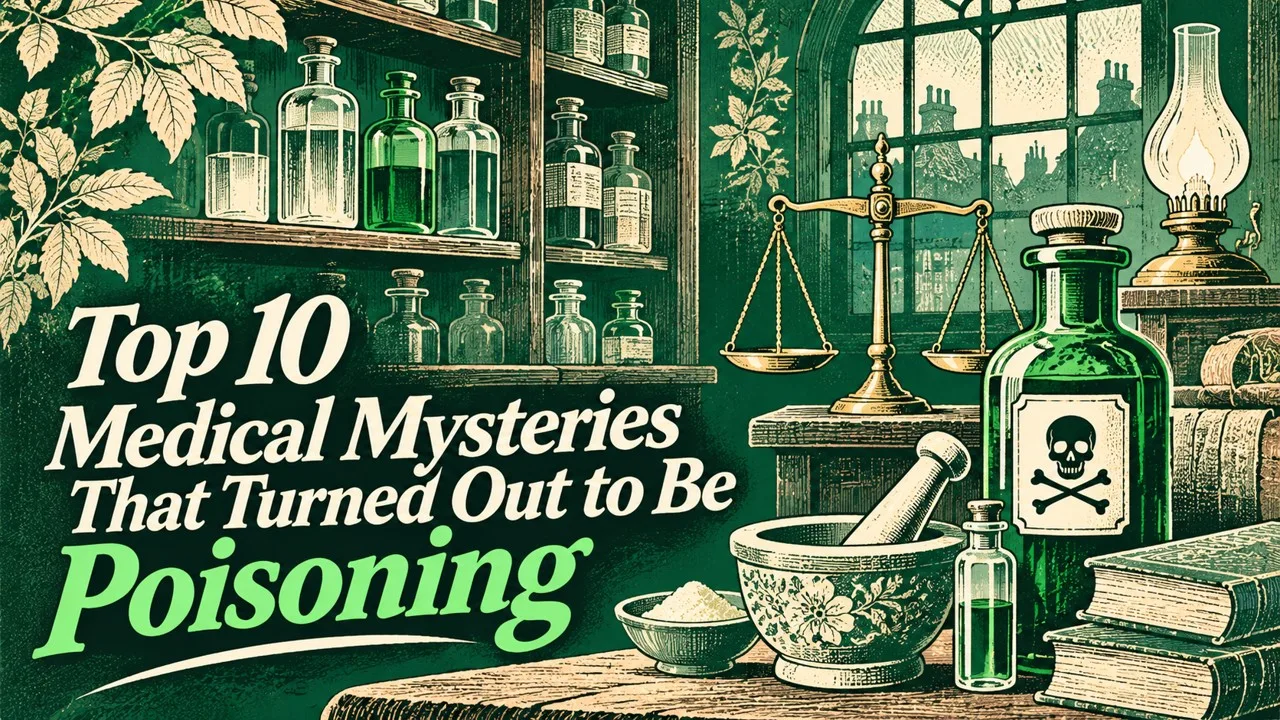
Paralysed drinkers, dancing cats and children with painful pink hands: ten baffling medical mysteries that turned out to be caused by poisoning. Throughout history, doctors have encountered mysterious illnesses that struck groups of people without any obvious explanation. Patients developed strange symptoms, and physicians struggled to find a cause.
Some of these outbreaks were eventually traced to infections. But others turned out to have a very different cause: poisoning by substances hidden in food, drink, medicine, water or the environment.
In many cases, the poison was not deliberately added to harm people. It entered daily life through industrial pollution, contaminated equipment, adulterated products or natural sources that no one suspected.
Solving these mysteries required careful detective work. Doctors and scientists had to identify patterns among patients, trace what they had eaten or drunk and test suspected sources for toxic substances.
Many of these discoveries led to important changes in law, regulation and public health. Some helped establish the field of environmental medicine.
The cases in this list come from Britain, the United States, Japan, Canada, Iraq, Spain, Bangladesh and Panama. They span more than two centuries.
The numbers of people affected in such disasters are often uncertain, and official figures may differ from independent estimates. The figures given here are approximate.
Each entry names the mystery illness, the place where it occurred and the hidden cause, followed by an account of how the mystery was solved.
The entries are arranged in chronological order.
Together, they show how hidden poisons can masquerade as mysterious diseases, and why careful investigation is essential to protect public health.
The methods used to solve these mysteries form the basis of modern epidemiology and toxicology. Investigators map where patients live, compare what sick and healthy people ate, drank or used, and look for a common factor. Laboratory analysis can then confirm the presence of a toxic substance in suspected products and in patients' blood, hair or tissues. The famous principle that the dose makes the poison, often attributed to the Renaissance physician Paracelsus, reminds investigators that even familiar substances can harm people when exposure is high or prolonged.
Key Facts
| # | Mystery illness | Place | Hidden cause |
|---|---|---|---|
| 1 | Devon colic | Devon, England | Lead from cider-making equipment |
| 2 | Jake leg | United States | An adulterated ginger extract |
| 3 | Acrodynia | Britain, Australia and other countries | Mercury in teething powders |
| 4 | Minamata disease | Minamata, Japan | Methylmercury from factory waste |
| 5 | Beer drinkers' cardiomyopathy | Quebec City, Canada | Cobalt added to beer |
| 6 | Itai-itai disease | Toyama, Japan | Cadmium from mining |
| 7 | The Iraq grain disaster | Iraq | Mercury-treated wheat |
| 8 | Toxic oil syndrome | Spain | Adulterated industrial oil |
| 9 | Arsenic poisoning | Bangladesh | Natural arsenic in groundwater |
| 10 | Diethylene glycol poisoning | Panama | Contaminated medicine |
1. The Colic of the Cider Country
In the seventeenth and eighteenth centuries, people in the English county of Devon suffered from a painful illness known as Devon colic. Symptoms included severe stomach pains, and in serious cases paralysis. The illness was associated with drinking cider, and many believed that the acidity of the cider itself was to blame [1].
In 1767, the physician George Baker published research showing that the illness was caused by lead. Lead was used in cider presses and other equipment, and the acidic cider dissolved it [1].
Related: Top 10 Indicator Species That Reveal Environmental Health
Baker's findings were initially resisted by some cider makers, but the use of lead in cider-making equipment gradually declined, and Devon colic became rare. The case is an early example of identifying an environmental cause of disease.
2. The Paralysis of the Prohibition Era
In 1930, during Prohibition in the United States, thousands of people began suffering from a strange paralysis. Many could not control their feet and walked with a distinctive gait. The condition became known as jake leg [2].
Investigators discovered that the victims had drunk Jamaica ginger extract, known as jake, a patent medicine with a high alcohol content that was popular as a way to get around Prohibition. A batch had been adulterated with a chemical called tri-ortho-cresyl phosphate, which damages nerves [2].
Tens of thousands of people are thought to have been affected, and many were permanently disabled. The outbreak inspired blues songs about the jake leg, and it highlighted the dangers of unregulated products.
3. The Painful Pink Disease
In the first half of the twentieth century, doctors in several countries saw a puzzling illness in young children. Affected children had pink, swollen and painful hands and feet, along with irritability, sweating and sensitivity to light. It was called pink disease, or acrodynia [3].
For decades, the cause was unknown. In the 1950s, researchers found that many affected children had been exposed to mercury, particularly through teething powders and other medicines given to infants [3].
When mercury-containing teething powders were withdrawn from sale, the disease became much rarer. It is now recognised as a form of mercury poisoning in susceptible children.
4. The Dancing Cats of Minamata
In the 1950s, residents of the fishing town of Minamata in Japan began suffering from a mysterious neurological illness. Symptoms included numbness, loss of coordination, difficulty speaking and, in severe cases, convulsions and death. Local cats also behaved strangely, appearing to dance before dying [4].
The disease was officially identified in 1956. Researchers traced it to methylmercury released into the bay in wastewater from a chemical factory operated by the Chisso Corporation. The mercury accumulated in fish and shellfish, which local people ate [4].
The Japanese government officially recognised the cause in 1968. The disaster affected thousands of people and inspired the Minamata Convention, an international treaty on mercury signed in 2013.
Related: Top 10 Most Bizarre Phobias: Strange Fears That Exist
5. Heart Failure Among Beer Drinkers
In 1965 and 1966, doctors in Quebec City noticed a cluster of cases of severe heart failure among heavy beer drinkers. Many of the patients died, and the outbreak puzzled physicians [5].
Investigators discovered that a local brewery had added small amounts of cobalt to its beer as a foam stabiliser. Heavy drinkers consumed large amounts of cobalt, which, combined with poor diet and alcohol, damaged their hearts [5].
Similar outbreaks occurred in a few other cities where cobalt was used in beer. Once the practice was stopped, the cases ceased. The episode led to closer scrutiny of food additives.
6. The Ouch-Ouch Disease
In the early twentieth century, people living along the Jinzu River in Toyama Prefecture, Japan, began suffering from severe bone pain and fractures. The illness was named itai-itai disease, which roughly means ouch-ouch disease, after the cries of patients [6].
Investigators eventually linked the disease to cadmium released by mining operations upstream. Cadmium contaminated the river water used to irrigate rice fields, and it accumulated in the people who ate the rice [6].
In 1968, itai-itai disease became the first disease officially recognised by the Japanese government as caused by pollution. The case led to major environmental clean-up efforts.
7. Poisoned Seed Grain
In late 1971, Iraq imported large quantities of seed grain treated with a mercury-based fungicide. The grain was intended for planting, not eating, and it was dyed and labelled as a warning [7].
However, many farmers did not understand the warnings, which were not in a language or form they could easily read. They ground the grain into flour and made bread. Within weeks, people began developing neurological symptoms [7].
Thousands of people were hospitalised, and hundreds died, according to official figures, though some estimates are much higher. The disaster is one of the worst cases of mass mercury poisoning ever recorded.
Related: Top 10 Oldest Buildings in the World
8. The Oil That Was Not Olive Oil
In 1981, a mysterious illness struck people in and around Madrid. At first, doctors thought it was a form of pneumonia, but patients developed a range of symptoms affecting the lungs, muscles and nerves [8].
Investigators traced the illness to cooking oil sold by street vendors. The oil was rapeseed oil intended for industrial use, which had been denatured with a chemical and then illegally processed and sold as olive oil [8].
Around 20,000 people were affected, and hundreds died. The exact toxic substance responsible has never been definitively identified, but the link to the adulterated oil is widely accepted.
9. Poison From the Wells
In the 1970s and 1980s, millions of tube wells were installed in Bangladesh to provide drinking water free from the bacteria found in surface water. The wells helped reduce some diseases, but in later years doctors began seeing skin lesions and other symptoms in many people [9].
In the 1990s, researchers confirmed that the groundwater in many areas contained high levels of naturally occurring arsenic. Long-term exposure can cause skin problems, cancers and other serious illnesses [9].
The World Health Organization described the situation as the largest mass poisoning of a population in history. Efforts to test wells and provide safer water continue.
10. A Deadly Cough Syrup
In 2006, doctors in Panama noticed a growing number of patients suffering from sudden kidney failure and paralysis. Many died, and the cause was initially a mystery [10].
Investigators traced the illness to cough syrup and other medicines made by a government agency. A chemical labelled as glycerine, imported through international traders, was actually diethylene glycol, a toxic substance used in antifreeze [10].
The disaster killed many people, and the exact number remains disputed. It was one of several similar poisonings around the world caused by diethylene glycol in medicines, which have led to calls for stronger testing of pharmaceutical ingredients.
Related: 10 Sikh Gurus: The Pillars of Sikhism Who Shaped Faith, Equality, Courage, and Humanity
Conclusion
These medical mysteries show how poisons can hide in everyday products and environments. Cider, beer, bread, cooking oil, medicine and water all became sources of harm.
In many cases, the people affected had no way of knowing they were being poisoned. The poisons were invisible, and the symptoms resembled those of other diseases.
Solving these mysteries required careful investigation, often involving doctors, chemists and public health officials working together.
Many of these cases led to important reforms, including stronger regulation of food additives, medicines, industrial pollution and mining.
Some of the affected communities continue to live with the consequences, and many survivors have fought long battles for recognition and compensation.
Modern public health systems use surveillance and testing to detect such outbreaks more quickly, though new cases still occur around the world.
For readers, these stories are a reminder of the importance of safety regulations, independent testing and transparency in protecting public health.
Environmental and industrial poisoning disasters have also helped shape the rights of victims. In Japan, lawsuits brought by people affected by mercury and cadmium pollution led to landmark court rulings and compensation schemes, and they influenced environmental law across the country.
Journalists, local doctors and affected families often played a crucial role in bringing these poisonings to light, sometimes pressing for answers long before officials accepted the evidence.
- ^ [1] Accounts of Devon colic. Wikipedia: Devon colic Wikipedia: Lead poisoning
- ^ [2] Accounts of jake leg. Wikipedia: Jamaica ginger Wikipedia: Prohibition in the United States
- ^ [3] Accounts of pink disease. Wikipedia: Acrodynia Wikipedia: Mercury poisoning
- ^ [4] Accounts of Minamata disease. Wikipedia: Minamata disease Wikipedia: Minamata Convention on Mercury
- ^ [5] Accounts of cobalt in beer. Wikipedia: Cobalt poisoning Wikipedia: Cardiomyopathy
- ^ [6] Accounts of itai-itai disease. Wikipedia: Itai-itai disease Wikipedia: Cadmium poisoning
- ^ [7] Accounts of the Iraq grain disaster. Wikipedia: 1971 Iraq poison grain disaster Wikipedia: Methylmercury
- ^ [8] Accounts of toxic oil syndrome. Wikipedia: Toxic oil syndrome Wikipedia: Rapeseed oil
- ^ [9] Accounts of arsenic in Bangladesh. Wikipedia: Arsenic contamination of groundwater in Bangladesh Wikipedia: Arsenic poisoning
- ^ [10] Accounts of diethylene glycol poisoning. Wikipedia: Diethylene glycol Wikipedia: Panama





















Discussion
Log in with