



Top 10 Examples of Molecular Genetics in Everyday Life
 By Dhiraj Sharma · Published
Share Post
Loading…
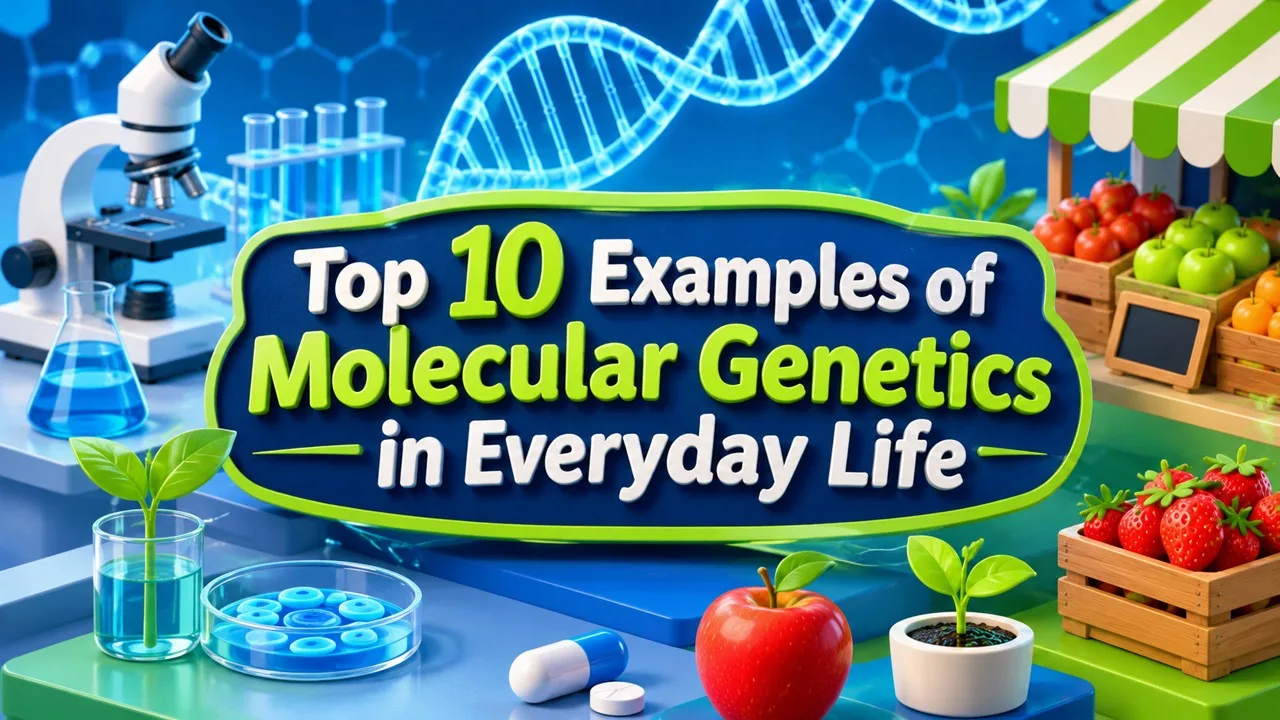
From the cheese on your sandwich to the soap in your washing machine and the test that detects a virus: ten ways molecular genetics shapes everyday life. Molecular genetics is the study of genes at the level of DNA and the molecules that read and copy it. It might sound like a subject confined to laboratories, but its results are all around us.
Since the structure of DNA was described in 1953, scientists have learned to read, copy, cut and transfer genes. These abilities have transformed medicine, agriculture, food production, law enforcement and even household products.
Many applications of molecular genetics are invisible to the people who benefit from them. Few shoppers know that enzymes in their laundry detergent or cheese were produced by genetically modified microbes.
Other applications are more visible and sometimes controversial. Genetically modified crops, DNA databases and gene editing raise questions about safety, ethics, privacy and fairness.
The examples in this list show how a scientific field that began with basic research has entered daily life. Several of them were recognised with Nobel Prizes.
They come from medicine, food, farming, forensic science and consumer products. They range from techniques developed in the 1970s and 1980s to therapies approved in recent years.
This article describes these applications factually and notes where debates about them continue. It does not offer medical advice.
Each entry names the application, the key technique involved and when it began, followed by an explanation of how it works and how it affects everyday life.
The entries are arranged in roughly chronological order.
Together, they show how deeply molecular genetics has become woven into the fabric of modern life.
The basic tools of molecular genetics were developed in the 1970s. Scientists learned to use restriction enzymes, natural molecular scissors found in bacteria, to cut DNA at specific sequences, and to join pieces of DNA from different sources. In 1977, Frederick Sanger and others developed practical methods for reading the sequence of DNA. The Human Genome Project, completed in 2003, produced a reference sequence of the human genome, and the cost of sequencing has since fallen dramatically, making genetic analysis faster and cheaper than ever.
Key Facts
| # | Application | Key technique | When it began |
|---|---|---|---|
| 1 | Recombinant insulin | Recombinant DNA technology | 1978 to 1982 |
| 2 | Diagnostic testing | The polymerase chain reaction | 1983 |
| 3 | DNA profiling | Analysis of variable DNA regions | 1984 |
| 4 | Fermentation-produced chymosin | Genetically modified microbes | 1990 |
| 5 | Biological laundry detergents | Engineered enzymes | Late twentieth century onwards |
| 6 | Bt cotton | Genes from a soil bacterium | 1990s and 2002 in India |
| 7 | GloFish | Fluorescent protein genes | 2003 |
| 8 | Food authentication | DNA analysis | 2013 horse meat scandal |
| 9 | mRNA vaccines | Messenger RNA technology | 2020 |
| 10 | Casgevy | CRISPR gene editing | 2023 |
1. Human Insulin Made by Bacteria
For decades, people with diabetes depended on insulin extracted from the pancreases of cattle and pigs. Supplies were limited, and some patients had reactions to animal insulin [1].
In 1978, scientists at the biotechnology company Genentech succeeded in producing human insulin using bacteria into which the human insulin gene had been inserted. In 1982, recombinant human insulin became the first medicine made with genetic engineering to be approved for sale in the United States [1].
Related: Top 10 Attempts to Bring Species Back From Extinction
Today, most insulin used around the world is made by genetically modified microbes. The success of recombinant insulin opened the way for many other biotechnology medicines, including growth hormone and blood-clotting factors.
2. Copying DNA Millions of Times
In 1983, the American biochemist Kary Mullis developed the polymerase chain reaction, known as PCR. The technique allows scientists to make millions of copies of a specific piece of DNA in a short time, using repeated cycles of heating and cooling [2].
A key ingredient is a heat-resistant enzyme from a bacterium first found in hot springs in Yellowstone National Park. Mullis shared the Nobel Prize in Chemistry in 1993 for his invention [2].
PCR is now used in medical diagnosis, forensic science, research and food testing. During the COVID-19 pandemic, PCR-based tests were used worldwide to detect the virus, making the technique familiar to millions of people.
3. Identifying People by Their DNA
In 1984, the British geneticist Alec Jeffreys, working at the University of Leicester, discovered a way to produce patterns from DNA that were unique to individuals, except identical twins. The technique became known as DNA fingerprinting, and later DNA profiling [3].
The technique was soon used to resolve immigration and paternity disputes. In the late 1980s, it helped to clear an innocent suspect and to convict the killer in a double murder case in Leicestershire, the first murder conviction based on DNA evidence [3].
DNA profiling is now used in criminal investigations, paternity testing and the identification of disaster victims around the world. National DNA databases have raised debates about privacy and civil liberties.
4. The Enzyme That Makes Cheese
Cheese making traditionally relies on rennet, a mixture of enzymes taken from the stomachs of young calves. The key enzyme, chymosin, causes milk to curdle [4].
Scientists inserted the gene for chymosin into microbes, which could then produce the enzyme in large fermentation tanks. In 1990, the United States approved fermentation-produced chymosin, one of the first products of genetic engineering to be approved for use in food [4].
Today, a large share of the cheese made in the United States and many other countries uses chymosin produced in this way. It is more consistent, cheaper and does not require animal stomachs.
Related: Top 10 Unexpected Things Scientists Have Made with DNA
5. Enzymes in the Washing Machine
Many laundry detergents contain enzymes that break down stains made of proteins, starches and fats. These enzymes allow clothes to be washed effectively at lower temperatures, saving energy [5].
Most of these enzymes are produced by microbes in large fermentation tanks. Genetic engineering has been used both to increase production and to modify enzymes so that they work better in cold water and in the presence of detergents [5].
Few people realise that their washing powder is a product of biotechnology. Enzyme-based detergents are now common, and research continues to develop enzymes that are even more efficient.
6. Insect-Resistant Crops
The soil bacterium Bacillus thuringiensis produces proteins that are toxic to certain insect pests but considered safe for humans. Scientists transferred the genes for these proteins into crops such as cotton and maize [6].
Bt crops were first grown commercially in the 1990s. In 2002, India approved Bt cotton, and it quickly spread to become the dominant type of cotton grown in the country [6].
Supporters say Bt crops reduce pesticide use and increase yields, while critics raise concerns about costs to farmers, pest resistance and corporate control of seeds. The debate continues, and outcomes have varied by region and over time.
7. Pets That Glow
In 2003, fluorescent fish known as GloFish went on sale in the United States. They were the first genetically modified animals to be sold as pets. The original GloFish were zebrafish carrying a gene for a fluorescent protein [7].
Fluorescent proteins were first discovered in a jellyfish. Scientists use them as markers in research, allowing them to see where genes are active inside cells. The 2008 Nobel Prize in Chemistry was awarded for the discovery and development of green fluorescent protein [7].
GloFish were originally developed in research to detect water pollution. Their sale as pets was approved in the United States, though some places have restricted them.
Related: Top 10 Most Bizarre Phobias: Strange Fears That Exist
8. DNA Testing of Food
In January 2013, food safety authorities in Ireland reported that DNA testing had found horse meat in products sold as beef burgers. Further testing across Europe revealed horse meat in many processed beef products [8].
The scandal led to product recalls, investigations into supply chains and new testing programmes. It showed that DNA testing could expose food fraud that would be impossible to detect by sight or taste [8].
DNA testing is now widely used to check the identity of meat, fish and other foods. Studies using DNA testing have found that seafood is sometimes sold under the wrong species name.
9. Vaccines That Deliver Genetic Instructions
Messenger RNA, or mRNA, carries genetic instructions from DNA to the cell's protein-making machinery. Scientists spent decades working on ways to use mRNA as a medicine, overcoming problems such as unwanted immune reactions [9].
In 2020, mRNA vaccines against COVID-19 were authorised for emergency use, becoming the first mRNA vaccines widely used in humans. They instruct cells to make a harmless piece of the virus's spike protein, training the immune system to recognise it [9].
The Hungarian-American biochemist Katalin Kariko and the American immunologist Drew Weissman were awarded the 2023 Nobel Prize in Physiology or Medicine for discoveries that enabled these vaccines. Researchers are now exploring mRNA technology for other diseases.
10. Editing Genes to Treat Disease
CRISPR is a gene-editing technique based on a natural defence system found in bacteria. It allows scientists to cut DNA at precise locations and make targeted changes. Emmanuelle Charpentier and Jennifer Doudna were awarded the 2020 Nobel Prize in Chemistry for developing the method [10].
In November 2023, the United Kingdom became the first country to approve a CRISPR-based therapy, called Casgevy, for sickle cell disease and a blood disorder called beta thalassaemia. The United States approved it shortly afterwards [10].
The treatment involves editing a patient's own blood stem cells and returning them to the body. It is complex and expensive, and access remains limited, but it marks a milestone in the use of gene editing in medicine.
Related: Top 10 Oldest Buildings in the World
Conclusion
These examples show how molecular genetics has moved from laboratories into everyday life. Medicines, food, household products and forensic science all rely on it.
Many applications are invisible to the people who benefit from them, from the enzymes in cheese and detergent to the insulin used by millions of people with diabetes.
Some applications remain controversial, including genetically modified crops, DNA databases and gene editing. Public debate about their risks and benefits continues.
Several of these developments were recognised with Nobel Prizes, reflecting their scientific importance.
New applications, such as gene therapies and mRNA medicines for other diseases, are being developed and tested.
Regulators around the world assess the safety of genetic technologies, and rules differ between countries.
For anyone curious about science, these examples show how discoveries about the molecules of life have changed the world in practical ways.
Genetic information also raises personal questions. Tests can reveal information about a person's health risks and family relationships, and that information may also affect relatives. Many countries have introduced laws to protect genetic privacy and to prevent discrimination based on genetic information.
Science education has also changed, as schools and universities now teach students how to extract DNA, run simple genetic tests and discuss the ethical questions these technologies raise.
- ^ [1] Accounts of recombinant insulin. Wikipedia: Insulin (medication) Wikipedia: Genentech
- ^ [2] Accounts of PCR. Wikipedia: Polymerase chain reaction Wikipedia: Kary Mullis
- ^ [3] Accounts of DNA profiling. Wikipedia: DNA profiling Wikipedia: Alec Jeffreys
- ^ [4] Accounts of chymosin. Wikipedia: Chymosin Wikipedia: Rennet
- ^ [5] Accounts of detergent enzymes. Wikipedia: Laundry detergent Wikipedia: Industrial enzymes
- ^ [6] Accounts of Bt cotton. Wikipedia: Bt cotton Wikipedia: Bacillus thuringiensis
- ^ [7] Accounts of GloFish. Wikipedia: GloFish Wikipedia: Green fluorescent protein
- ^ [8] Accounts of the horse meat scandal. Wikipedia: 2013 horse meat scandal Wikipedia: DNA barcoding
- ^ [9] Accounts of mRNA vaccines. Wikipedia: mRNA vaccine Wikipedia: Katalin Kariko
- ^ [10] Accounts of Casgevy. Wikipedia: Exagamglogene autotemcel Wikipedia: CRISPR gene editing



















Discussion
Log in with