




 By
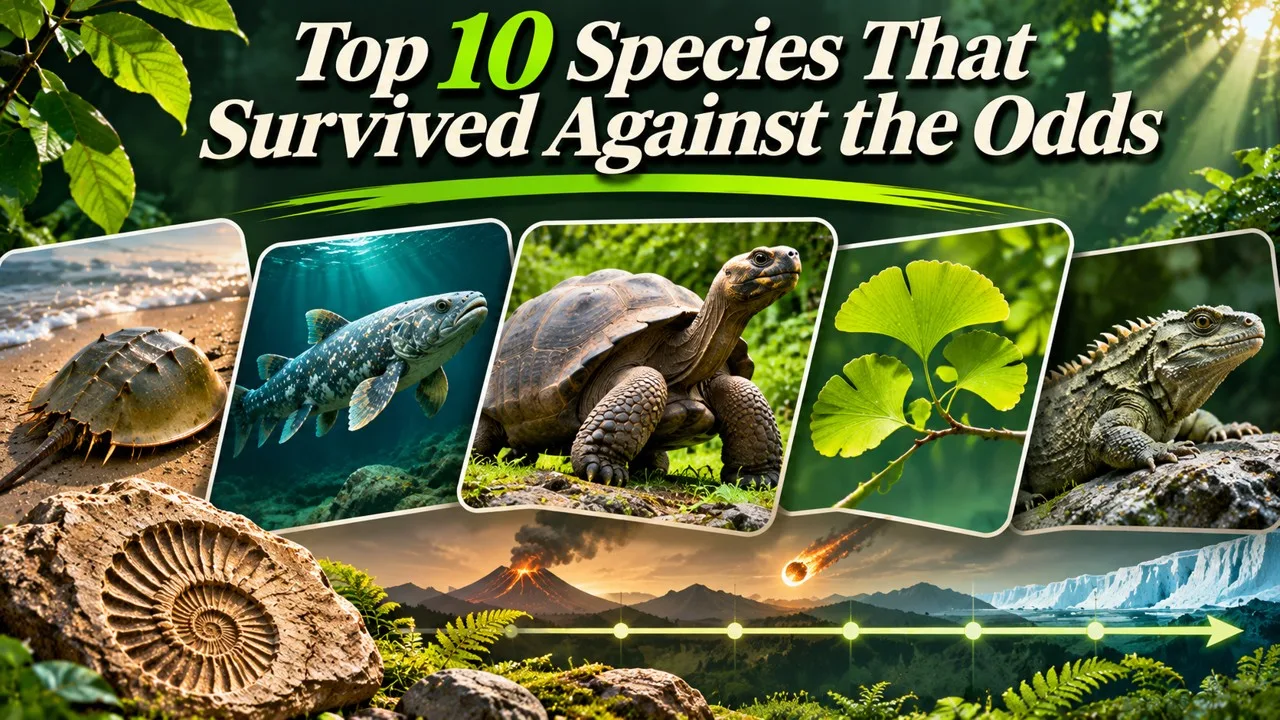
Peregrines, bison and the bald eagle recovered after protection and breeding programs; several other successes remain endangered, not finished miracles. A species that "refused to go extinct" makes a stirring title, and a slightly misleading one [1][7]. In most of the cases below, people caused the collapse, and people, later, built the laws, the captive flocks, the reserve, or the reintroduction that made a rebound possible [2][6][10]. The ten entries are conservation histories, not a list of stubborn personalities [4][9]. Some of the animals are still in serious trouble. A downlisting is not always a happy ending, only a better chapter than the one before [4][8].
The unexpected fact, where it exists, is that a collapse can be reversed at all, once the cause is named and the work is funded.
Key Facts
These are documented recoveries or partial recoveries. Several species remain endangered. None of the entries is a scene of predation or of slaughter.
Ten Recoveries at a Glance
| Rank | Species | Careful version |
|---|---|---|
| 1 | Peregrine falcon | DDT and other organochlorines wrecked reproduction; bans and captive breeding brought a major recovery |
| 2 | Aleutian cackling goose | Introduced foxes nearly erased the goose; fox removal and hunting limits allowed a rebound and a delisting |
| 3 | Galápagos giant tortoises | Several island populations were nearly lost; breeding and translocations have helped, unevenly, and some lineages remain in crisis |
| 4 | American bison | Market hunting and policy brought the bison to a few hundred; conservation herds rebuilt numbers, not the original range |
| 5 | Golden lion tamarin | Brazilian captive breeding and reintroduction raised a tiny wild population; the species is still endangered |
| 6 | Pemba flying fox | A fruit bat of Pemba Island recovered after forest protection and local agreements, from a very low count |
| 7 | Siamese crocodile | Almost gone in the wild; reintroduction in Cambodia has started a small wild presence, still critically endangered |
| 8 | Monito gecko | A tiny gecko of Monito Island improved after rats were removed and the island was protected |
| 9 | Przewalski's horse | Extinct in the wild, then reintroduced from captive stock to steppe reserves; the wild status is a managed success |
| 10 | Bald eagle | Organochlorines and shooting cut the birds down; legal protection and cleaner chemistry produced a famous recovery |
1. A Falcon, and a Chemical Ban
By the middle of the twentieth century, peregrine falcons had vanished from large parts of their range in North America and Europe, not because they had forgotten how to hunt, but because organochlorine pesticides, especially DDT and its relatives, thinned eggshells and wrecked breeding [1]. Bans on those chemicals, combined with captive-breeding and release programs, brought the species back in a way that is now a textbook example of conservation [1]. The bird is still not equally abundant everywhere, and new threats, including some rodenticides and collisions, have not disappeared. The unexpected fact is the lever. A legal change in a chemical, plus a lot of patient breeding, can reverse a collapse that looked, in the 1960s, almost finished.
A recovery is a policy success as much as a biological one. The falcon did not do it alone.
2. Foxes, a Chain of Islands, and a Delisting
The Aleutian cackling goose, long called the Aleutian Canada goose, nests on a chain of remote Alaskan islands and wintered, in shrinking numbers, in the Pacific states [2]. Fur traders had released arctic foxes on many of those islands, and the foxes ate eggs and birds until the goose was listed as endangered and thought, in some seasons, to be down to a few hundred [2]. Removal of foxes, protection of nesting islands, and limits on hunting in the winter range allowed a rebound large enough that the bird was later taken off the United States endangered list. The unexpected fact is the cause, once named: not a mysterious decline, but an introduced predator, which could be taken back off the islands, island by island.
A delisting is a bureaucratic event with feathers behind it. The work of removing foxes was the unromantic part, and the essential one.
Related: Top 10 Animals Once Thought Extinct That Turned Up Alive
3. Islands, Breeding Pens, and Uneven Hope
Galápagos giant tortoises were pushed close to disappearance on several islands by hunting, by introduced mammals, and by the slow math of a long-lived animal that does not breed quickly [3]. Captive breeding at the Charles Darwin Research Station and later translocations have rebuilt some populations, and a few animals from lineages once thought gone have turned up in later surveys [3]. Other island forms remain small, and the death, in 2012, of the last known Pinta tortoise was a reminder that a breeding program cannot invent a mate that no longer exists. This article will not dwell on a famous individual's face. The unexpected fact is logistical: a slow reptile can be walked back from the edge, island by island, if goats can be removed and hatchlings can be kept until they are too large for rats.
"The tortoise" is not one success. It is a set of island stories, some better than others.
4. A Herd in the Hundreds, then a Managed Multitude
American bison once moved across a huge swath of the continent. By the 1880s, market hunting, and a policy that treated the herds as disposable, had reduced them to a few hundred animals in wild and semi-wild pockets [4]. Private ranchers, zoos, and later public herds, including the Yellowstone population, rebuilt numbers into the hundreds of thousands, a genuine escape from extinction [4]. The careful version is that this is not a restoration of the old ecology. Most bison today live as conservation or ranch animals, often with some cattle ancestry in the broader population, and the free-ranging share of the historic range is still small. The unexpected fact is that the species exists in large numbers at all, after a collapse that was meant, by some of its authors, to be final.
A count in the hundreds of thousands can still be a managed animal. Survival, in this case, came with a fence in the picture.
5. A Small Monkey, Returned to a Fragment of Forest
The golden lion tamarin, a bright, small primate of Brazil's Atlantic Forest, had fallen, by the 1970s and early 1980s, to a few hundred animals in a shattered habitat [5]. A coordinated program of captive breeding, reintroduction, translocations, and local forest protection raised the wild population into the thousands, a rarely clean example of a zoo population being used as a source, not only as a display [5]. The species remains endangered. The forest is still fragmented, and a modest population can be knocked back by disease or fire. The unexpected fact is cooperation: zoos, Brazilian institutions, and local landowners built a pipeline that actually put animals back into trees, and those animals bred.
Related: Top 10 Remarkable Frogs of the World
A reintroduction is a beginning. The tamarin is still a conservation-dependent animal, which is a success, and also a warning not to declare a miracle.
6. A Fruit Bat, and an Agreement about Trees
The Pemba flying fox, a large fruit bat found only on Pemba Island, off Tanzania, was estimated in the early 1990s at a few hundred individuals, after hunting and the cutting of roost forests [6]. Work with local communities, protection of remaining roosts, and a reduction in killing allowed the population to climb into the tens of thousands, a recovery large enough to change the species' official outlook, though monitoring still matters [6]. Fruit bats are not usually the mascots of conservation posters. The unexpected fact is that a hunted, forest-dependent bat can rebound when the trees and the hunting rules change together, and when the people who live with the animal have a reason to keep it.
A count that rises is not automatic. It is a political and a botanical event, as well as a zoological one.
7. A Crocodile Still on the Edge
The Siamese crocodile was all but gone from the wild by the late twentieth century, the victim of hunting, of skin farms, and of wetlands made into something else [7]. Surveys later found a few remnant groups, and a reintroduction program in Cambodia's Cardamom region has put captive-bred animals back into protected water, with some evidence of breeding in the wild [7]. The species is still critically endangered. A small, reintroduced population is not a range restored, and farms that still hold mixed or poorly identified crocodiles complicate the genetics. The unexpected fact is simply that a wild population exists again in some rivers, after a period when "extinct in the wild" was a reasonable fear.
This is a beginning that must not be written as a finish. The crocodile is still a ward of a program, not a guarantee.
Related: Top 10 Wild Members of the Dog Family
8. A Tiny Lizard, after the Rats
The Monito gecko, Sphaerodactylus micropithecus, lives on Monito Island, a small, steep reserve off Puerto Rico [8]. Introduced rats, and the simple fact of a tiny range, had made the lizard one of the rarer reptiles on official lists. After rat eradication and continued protection of the island, surveys found many more geckos than the grim earlier counts, and the species' official status was later eased [8]. The unexpected fact is scale, in the other direction from bison. A whole species can turn on the ecology of one rock, and on whether rats are allowed to keep it.
A delisting of a lizard that most people will never see is still a conservation event. The work was the bait and the waiting, not a speech.
9. A Horse that Had to Be Reassembled
Przewalski's horse, the stocky wild horse of the Central Asian steppe, disappeared from the wild in the 1960s, leaving only captive animals in zoos and parks [9]. A coordinated breeding program, later followed by reintroductions in Mongolia, China, and other reserves, produced free-ranging herds again, and the species was eventually moved, in official lists, out of the "extinct in the wild" category [9]. The careful version is that this is a managed wildness. The founding captive population was small, inbreeding remains a concern, and the herds live in protected landscapes, not in an untouched Pleistocene. The unexpected fact is still large: a mammal can be gone from its range and then be put back, if the captive book has been kept honestly and the steppe is guarded.
A reintroduction is a human act. The horses, once out, do the grazing. The survival was a joint project, and it still is.
Related: Top 10 Animals Rediscovered After They Seemed Lost
10. A National Bird, and a Quieter Chemistry
The bald eagle was in serious decline over much of the lower United States by the mid-twentieth century, hit by shooting, by habitat loss, and, especially, by the same organochlorine story that broke the peregrine: thin eggs, failed nests, empty territories [10]. Legal protection, a ban on DDT, and active management brought a recovery so large that the bird was taken off the federal endangered list in 2007, a rare public success [10]. Threats have not vanished, including lead and collisions, and some regional populations still need watching. The unexpected fact is cultural as well as biological. A species can be a symbol and still be allowed, by policy, to become common again, which is a better use of a symbol than a eulogy.
A delisting can be deserved. It should be read as a test that was passed, not as a promise that the test will never return.
Conclusion
The ten recoveries above are arguments for work, not for a faith in stubbornness. Falcons and eagles came back when a chemical was withdrawn and shooting was curbed. A goose came back when foxes were taken off islands. Tortoises, tamarins, a fruit bat, a crocodile, a gecko, and a wild horse came back, or partway back, when people bred, guarded, reintroduced, and made agreements about land. The bison exists in numbers because a remnant was kept, not because the old landscape was returned. Several of these species are still endangered. That is not a reason to talk down the wins. It is a reason to keep the file open.
Survival, in this list, is a program. The unexpected gift is that such programs sometimes work.
- ^ [1] Histories of peregrine falcon decline under organochlorine pesticides and later recovery through bans and captive breeding. Britannica: Peregrine falcon
- ^ [2] Recovery and delisting records of the Aleutian cackling goose after fox removal and hunting limits. Britannica: Cackling goose, and official recovery accounts
- ^ [3] Conservation breeding and translocation programs for Galápagos giant tortoises. Britannica: Galapagos tortoise
- ^ [4] The near-extinction and later conservation-herd recovery of the American bison. Britannica: Bison
- ^ [5] The golden lion tamarin captive-breeding and reintroduction program in Brazil's Atlantic Forest. Britannica: Golden lion tamarin
- ^ [6] Population monitoring and community-based conservation of the Pemba flying fox. Britannica: Flying fox, and species-recovery reports
- ^ [7] Remnant surveys and Cambodian reintroduction of the Siamese crocodile, which remains critically endangered. Britannica: Siamese crocodile
- ^ [8] Protection of Monito Island, rat removal, and later status changes for the Monito gecko. Britannica: Gecko, and official species accounts
- ^ [9] The extinction in the wild and later reintroduction of Przewalski's horse. Britannica: Przewalski's horse
- ^ [10] Bald eagle decline and recovery in the United States, including the 2007 federal delisting. Britannica: Bald eagle



















Discussion
Log in with