





 By
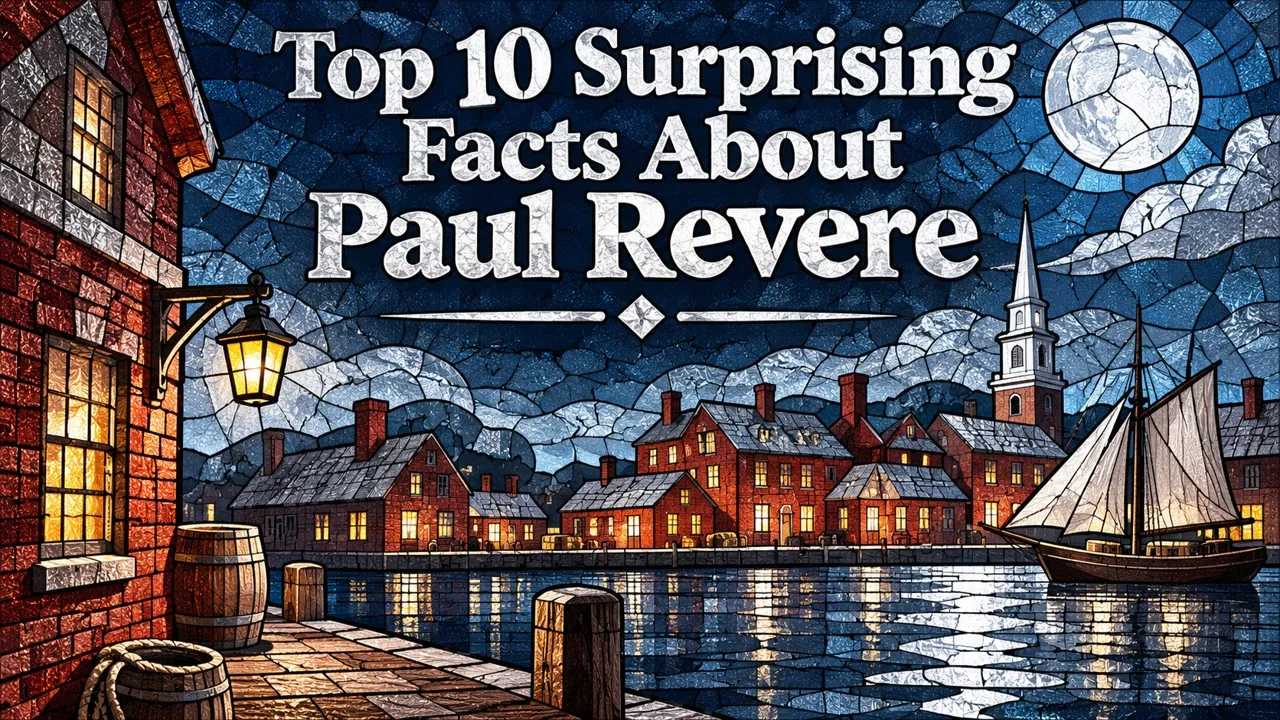
He never shouted that the British were coming, he was captured before reaching Concord and he also worked as a dentist: ten surprising facts about Paul Revere. Paul Revere is one of the most famous figures of the American Revolution. His midnight ride on April 18, 1775, to warn colonial leaders that British troops were on the move has become a celebrated part of American history and folklore.
Yet much of what people think they know about Revere comes from a poem written more than eighty years after the event. Henry Wadsworth Longfellow's Paul Revere's Ride turned him into a national hero, but it also introduced several inaccuracies that have been repeated ever since.
The real Revere was a more complex and interesting figure than the solitary rider of legend. He was a skilled silversmith, an engraver, an amateur dentist, a militia officer, a businessman and an industrial pioneer.
He was also part of a large network of patriots in Boston who organized resistance to British rule. His famous ride was one part of a carefully planned effort involving many people.
Revere lived a long and busy life. He married twice and had sixteen children, and he continued working and starting new businesses well into his old age.
The facts below cover his famous ride, his work as an artist and craftsman, his military career and his later achievements in manufacturing.
Some of them correct popular myths, while others highlight lesser-known parts of his life. They are drawn from historical records, including Revere's own written accounts of the ride.
Each entry gives the fact, the topic it relates to and the year involved, followed by an explanation.
The entries are arranged roughly in chronological order of the events described, beginning with his work in the years before the Revolution.
Together, they show that Paul Revere's real story is even more remarkable than the legend, and that his contributions to American life extended far beyond a single night in 1775.
Revere was born in Boston in 1734 to a French Huguenot father, Apollos Rivoire, who had anglicized his name after emigrating and trained as a silversmith. Paul learned the trade in his father's workshop and took over the business as a young man after his father's death. His silver work, including teapots, bowls and spoons, was admired for its quality, and examples are now displayed in major museums. The famous Sons of Liberty Bowl, which he made in 1768 to honor members of the Massachusetts legislature who defied the British, is one of the most treasured pieces of American silver.
Key Facts
| # | Fact | Topic | Year |
|---|---|---|---|
| 1 | Revere's print of the Boston Massacre | Engraving and propaganda | 1770 |
| 2 | One if by land, two if by sea | The Old North Church signal | 1775 |
| 3 | What Revere actually said | The midnight ride | 1775 |
| 4 | William Dawes and other messengers | The warning network | 1775 |
| 5 | Captured by a British patrol | The end of the ride | 1775 |
| 6 | Revere's work as a dentist | Forensic dentistry | 1776 |
| 7 | The Penobscot Expedition | Military career | 1779 |
| 8 | Revere's bell foundry | Bell making | From 1792 |
| 9 | America's first copper rolling mill | Copper manufacturing | 1801 |
| 10 | Longfellow's Paul Revere's Ride | Legend and memory | 1860 |
1. An Engraving That Shaped Public Opinion
In March 1770, British soldiers fired on a crowd in Boston, killing five people in an event that became known as the Boston Massacre. Shortly afterward, Paul Revere produced an engraving of the scene, which was widely sold and reproduced across the colonies [1].
Related: Martin Luther King Jr.: The Legacy of a Civil Rights Icon
The engraving showed British soldiers firing in an orderly line at peaceful citizens, a dramatic image that was more propaganda than accurate depiction. It helped stir anger against British rule throughout the colonies [1].
Revere's engraving was based on a design by the artist Henry Pelham, who complained that Revere had copied his work without permission or credit. Despite the controversy, Revere's version became one of the most famous images of the revolutionary era.
2. The Lanterns Were Not for Revere
According to Longfellow's poem, Revere waited across the river for a lantern signal from the Old North Church in Boston. In reality, Revere arranged the signal himself before leaving [2].
The lanterns were meant to warn patriots in Charlestown how British troops were leaving Boston, in case Revere was unable to get across the river. Two lanterns indicated that the troops were crossing by water [2].
Revere was then rowed secretly across the Charles River, past a British warship, to Charlestown, where he borrowed a horse and set off on his ride.
3. He Never Shouted That the British Were Coming
Popular retellings often show Revere galloping through the countryside shouting that the British were coming. Historians consider this very unlikely [3].
The mission depended on secrecy, since British patrols were active in the area and many residents were loyal to the Crown. In addition, most colonists still considered themselves British at the time [3].
According to accounts, Revere is more likely to have warned people that the Regulars, meaning British army troops, were coming out. His aim was to reach Samuel Adams and John Hancock in Lexington.
4. He Was Not the Only Rider
Revere was not the only rider sent out that night. William Dawes was dispatched separately by a different route, over the narrow neck of land connecting Boston to the mainland [4].
Both men reached Lexington and warned Adams and Hancock. Along the way, other riders spread the alarm, creating a network of messengers that alerted many towns in the region [4].
Related: Top 20 Robin Hood Facts and Myths: The Legend vs the Evidence
Historians estimate that dozens of riders took part in spreading the warning. Dawes and the others received far less recognition, largely because Longfellow's poem focused on Revere alone.
5. He Never Reached Concord
After leaving Lexington, Revere, Dawes and a young doctor named Samuel Prescott headed toward Concord, where colonial military supplies were stored. On the way, they were stopped by a British patrol [5].
Prescott escaped and was the rider who actually carried the warning to Concord. Dawes also escaped but was thrown from his horse [5].
Revere was held and questioned by British soldiers, who eventually released him but kept his horse. He walked back to Lexington, where he helped carry away a trunk of important papers belonging to John Hancock as the fighting began.
6. A Dentist Who Identified a Fallen Friend
In addition to working as a silversmith, Revere practiced dentistry, making and fitting false teeth carved from ivory or animal teeth and fastened with wire [6].
His friend Joseph Warren, a leading patriot, was killed at the Battle of Bunker Hill in 1775 and buried in a mass grave. In 1776, when Warren's remains were recovered, Revere identified them by recognizing a dental bridge he had made [6].
This identification is often cited as one of the first recorded examples of forensic dentistry in America. It allowed Warren to be given a proper funeral.
7. A Military Disaster and a Court-Martial
During the Revolutionary War, Revere served as an officer in the Massachusetts militia. In 1779, he commanded the artillery during the Penobscot Expedition, an attempt to drive British forces from a base in what is now Maine [7].
The expedition was a disaster. The American fleet was destroyed when British reinforcements arrived, and it is often described as one of the worst American naval defeats before the twentieth century [7].
Revere was accused of disobedience and cowardice and was dismissed from the militia. He demanded a court-martial to clear his name, and he was eventually acquitted in 1782.
Related: Top 10 Longest-Reigning Monarchs
8. He Cast Bells for Churches
After the war, Revere expanded his metalworking businesses. In 1792, he cast his first church bell, reportedly the first bell made in Boston [8].
Revere and his sons went on to cast hundreds of bells for churches and other buildings across New England and beyond. Some of these bells are still in use today [8].
Revere bells are prized by historians and collectors. Their survival makes them some of the most tangible links to Revere's work as a craftsman.
9. An Industrial Pioneer
In 1801, at the age of sixty-six, Revere established a copper rolling mill in Canton, Massachusetts. It is often described as the first successful copper rolling mill in North America [9].
The mill produced copper sheets used to protect the hulls of ships, including the famous warship USS Constitution. Revere's copper also covered the dome of the Massachusetts State House in Boston [9].
The business continued after his death and eventually developed into Revere Copper Products, a company that still operates today. It is a lasting legacy of Revere's work as an entrepreneur.
10. Made Famous by a Poem
For many years after the Revolution, Revere was respected in Boston but not especially famous nationally. That changed when Henry Wadsworth Longfellow wrote the poem Paul Revere's Ride in 1860 [10].
The poem was published in early 1861, on the eve of the American Civil War, and it was intended partly to inspire patriotism. It became enormously popular and was memorized by generations of schoolchildren [10].
The poem contains several inaccuracies, including its portrayal of Revere as a solitary rider who reached Concord. Yet it turned Revere into one of the best-known figures in American history.
Related: Top 10 Unsung People Behind Famous Journeys
Conclusion
Paul Revere's real story is richer and more surprising than the legend. He was a talented craftsman, engraver, dentist, militia officer and businessman, as well as a dedicated patriot.
His famous ride was part of a larger effort involving many riders and a network of patriots. Several popular details, such as his supposed cry about the British, are not supported by evidence.
Revere's later achievements in bell casting and copper manufacturing helped build American industry in the decades after independence.
Longfellow's poem made him famous, but it also obscured the contributions of others and the complexity of Revere's life.
Revere died in 1818 at the age of eighty-three and was buried in Boston's Granary Burying Ground, near other leading figures of the Revolution.
His house in Boston's North End still stands and is now a museum, one of the oldest surviving buildings in downtown Boston.
Learning about the real Paul Revere offers a fuller picture of the American Revolution and the many people who helped shape it.
Revere also left valuable written records of his own. Years after the ride, he wrote detailed accounts of what happened that night, including a letter and a deposition, which historians have used to reconstruct events. These documents reveal a careful, practical man who described his role modestly and gave credit to others involved in the effort.
Each April, reenactments of the ride and the battles of Lexington and Concord draw large crowds in Massachusetts, keeping the memory of that night alive.
- ^ [1] Accounts of the Boston Massacre engraving. Wikipedia: Boston Massacre Wikipedia: Henry Pelham
- ^ [2] Accounts of the Old North Church signal. Wikipedia: Old North Church Wikipedia: Midnight Ride of Paul Revere
- ^ [3] Accounts of the midnight ride. Wikipedia: Midnight Ride of Paul Revere Wikipedia: Paul Revere
- ^ [4] Accounts of William Dawes. Wikipedia: William Dawes Wikipedia: Battles of Lexington and Concord
- ^ [5] Accounts of Samuel Prescott. Wikipedia: Samuel Prescott Wikipedia: Battles of Lexington and Concord
- ^ [6] Accounts of Joseph Warren. Wikipedia: Joseph Warren Wikipedia: Forensic dentistry
- ^ [7] Accounts of the Penobscot Expedition. Wikipedia: Penobscot Expedition Wikipedia: Paul Revere
- ^ [8] Accounts of Revere's bells. Wikipedia: Paul Revere Wikipedia: Church bell
- ^ [9] Accounts of Revere's copper mill. Wikipedia: Revere Copper Products Wikipedia: USS Constitution
- ^ [10] Accounts of Longfellow's poem. Wikipedia: Paul Revere's Ride Wikipedia: Henry Wadsworth Longfellow




















Discussion
Log in with