





 By
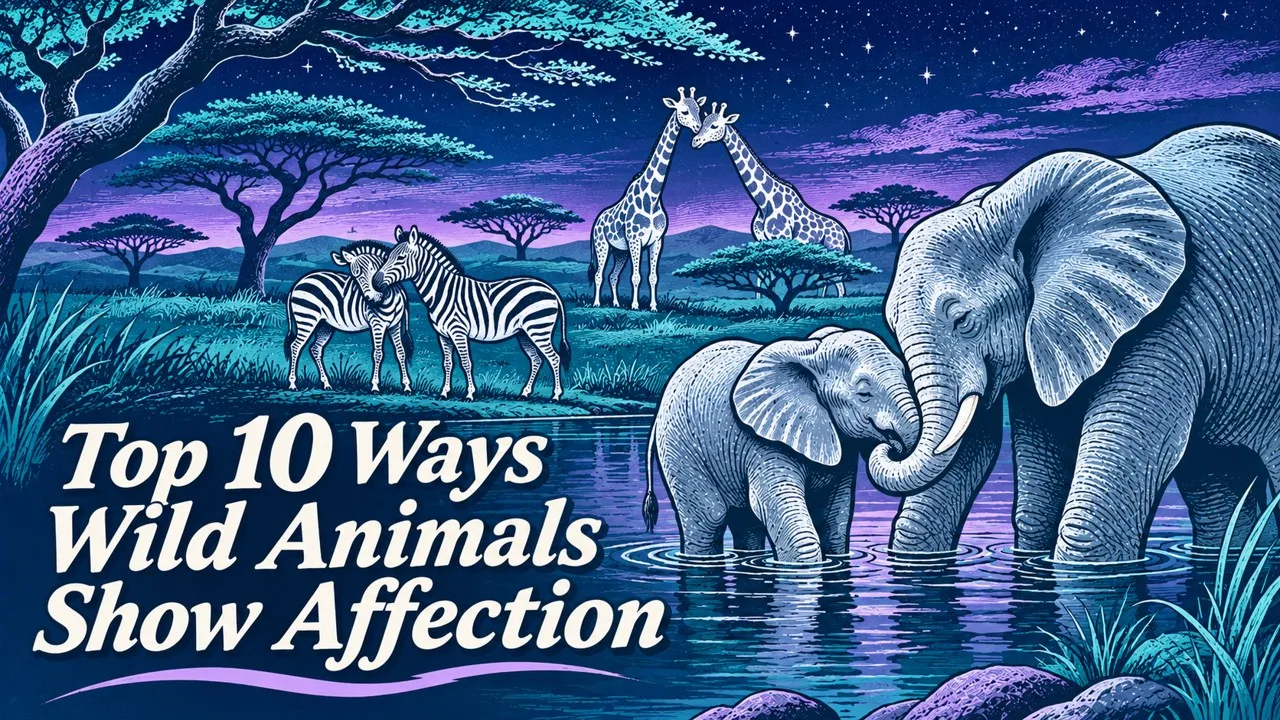
Grooming chimpanzees, pebble-giving penguins, dancing albatrosses and blood-sharing bats: ten ways wild animals show affection and build social bonds. People often wonder whether animals feel affection. Pet owners have little doubt, but scientists have traditionally been cautious about describing animal behavior in human emotional terms.
Even so, researchers have documented many behaviors in wild animals that serve to build and maintain close social bonds. Animals groom one another, share food, touch, play and stay close to their partners and family members.
These behaviors are not just pleasant. They often have important practical functions, such as reducing stress, strengthening alliances, keeping pairs together through the breeding season and ensuring that group members help one another in times of need.
Scientists debate how closely these behaviors resemble human emotions. Some argue that terms like affection should be used carefully, while others point to evidence from brain chemistry and behavior suggesting that many animals experience something similar to our feelings of attachment.
Hormones such as oxytocin, which is linked to bonding in humans, have been found to play a role in social behavior in a number of other species as well.
The behaviors below come from mammals and birds living in many different environments, from African savannas and Arctic seas to prairie grasslands and remote ocean islands.
Some are familiar, like grooming among monkeys and apes. Others are more surprising, such as penguins presenting pebbles to potential mates or bats sharing meals with hungry roostmates.
Each entry names the animal, the behavior and its likely purpose, followed by a description based on scientific observations.
Where scientists are uncertain about the meaning of a behavior, or where popular accounts have exaggerated it, that is noted.
Together, these examples show that social bonds are an important part of life for many species, and that the roots of affection may run deep in the animal kingdom.
The scientific study of animal emotions has changed considerably over the past century. For much of the twentieth century, many researchers avoided discussing animal feelings, arguing that only observable behavior could be studied objectively. Pioneers such as Jane Goodall, who described the personalities and relationships of wild chimpanzees in Tanzania, helped shift attitudes. Today, many scientists accept that animals can experience emotions such as fear, pleasure and attachment, even if their inner lives remain difficult to measure directly. Long-term field studies, which follow the same individuals over many years, have been especially important in revealing the depth of animal relationships.
Careful observation remains the foundation of this research. Scientists record who grooms whom, how long animals stay together and how they react when separated, building a detailed picture of their relationships over time.
Related: Top 10 Most Intelligent Animals
Key Facts
| # | Animal | Behavior | Purpose |
|---|---|---|---|
| 1 | Chimpanzees and other primates | Grooming one another's fur | Building relationships and reducing tension |
| 2 | Elephants | Touching and entwining trunks | Reassurance and family bonding |
| 3 | Sea otters | Resting in groups and holding on | Staying together while sleeping |
| 4 | Prairie dogs | Touching teeth in greeting | Identifying family members |
| 5 | Gentoo and Adélie penguins | Presenting stones to mates | Building nests and strengthening pair bonds |
| 6 | Albatrosses | Elaborate courtship dances | Forming long-lasting pair bonds |
| 7 | Wolves | Nuzzling, licking and play | Maintaining pack relationships |
| 8 | Bottlenose dolphins | Rubbing flippers and swimming in synchrony | Building and maintaining alliances |
| 9 | Vampire bats | Regurgitating blood to hungry roostmates | Reciprocal support |
| 10 | Wild horses | Mutual grooming with teeth | Strengthening bonds within the herd |
1. Grooming as Social Glue
Many primates, including chimpanzees, baboons and macaques, spend a large part of their day grooming one another. They carefully pick through each other's fur, removing dirt, parasites and dead skin with their fingers and lips [1].
Grooming has hygienic benefits, but it also plays a major social role. Studies have shown that grooming can reduce stress and help animals form alliances. Individuals often groom those they are closest to or those whose support they need [1].
Chimpanzees may groom after conflicts as a way of reconciling. Scientists have suggested that grooming in primates is similar in function to the conversations and physical contact that strengthen human relationships.
2. Trunks That Touch and Comfort
Elephants live in close-knit family groups led by older females. They frequently touch one another with their trunks, entwining them in greeting or running them over each other's heads and bodies [2].
Researchers have observed elephants comforting distressed companions by touching them with their trunks and making soft rumbling sounds. In one study, Asian elephants were seen to approach and touch upset group members more often than at other times [2].
Elephants have also been observed showing interest in the bones of dead elephants, touching them gently with their trunks and feet. Scientists debate the meaning of this behavior, but it suggests strong social awareness.
3. Floating Together in Rafts
Sea otters often rest on the surface of the water in groups called rafts. They sometimes wrap themselves in kelp to avoid drifting away while they sleep [3].
Videos of sea otters holding paws while floating have become popular online. This behavior has been documented especially among otters in aquariums, and it may help them stay together. In the wild, otters in rafts often rest close to one another [3].
Mother sea otters are especially devoted. They carry their pups on their chests while floating on their backs, grooming them constantly to keep their fur clean and waterproof.
4. A Kiss of Recognition
Prairie dogs live in large underground colonies divided into family groups called coteries. When members of a group meet, they often greet each other by touching their mouths together in what looks like a kiss [4].
This greeting is thought to help prairie dogs recognize members of their own group. If an animal does not belong, the encounter may turn hostile [4].
Related: Top 10 Unexpected Abilities Found in Animals
Prairie dogs also groom one another and play together. Their complex social lives and communication calls have made them a subject of extensive research.
5. Gifts of Pebbles
Some penguins, such as gentoo and Adélie penguins, build nests from small stones. Good pebbles can be scarce, and penguins compete for them [5].
Male penguins sometimes present pebbles to females as part of courtship. If the female accepts, the pair may use the stones to build a nest together [5].
The behavior is often described as a gift of affection, though it also has a practical purpose. Nests made of pebbles help keep eggs above melting snow and water. Penguins have even been seen stealing pebbles from neighboring nests.
6. A Lifelong Dance
Albatrosses are known for forming long-lasting pair bonds, often staying with the same partner for many years. Before settling down, young albatrosses perform elaborate courtship dances involving bowing, bill clapping, calling and sky-pointing [6].
Once a pair has formed, the partners may perform a simplified version of the dance when they reunite at the breeding colony after months apart at sea [6].
These bonds are important because raising a chick requires both parents to take turns feeding it, sometimes flying thousands of kilometers to find food. Pairs that stay together tend to breed more successfully.
7. Family Bonds in the Pack
Wolves live in packs, which usually consist of a breeding pair and their offspring. Pack members frequently nuzzle, lick and play with one another, especially when greeting after time apart [7].
Young wolves often lick the mouths of adults, which can prompt them to regurgitate food. As they grow, this behavior also becomes a greeting and a sign of respect [7].
Related: Top 10 Courtship Displays in the Animal Kingdom
Breeding pairs often stay together for years. Researchers have documented wolves staying close to injured or sick pack members, showing the strength of their social bonds.
8. Touching Fins
Bottlenose dolphins are highly social animals that live in groups called pods. They often rub against one another and touch each other with their flippers [8].
Researchers studying wild dolphins have found that flipper rubbing seems to play a role similar to grooming in primates, helping to strengthen relationships and reduce tension [8].
Dolphins also swim side by side in synchrony, especially with close companions. Male dolphins in some populations form strong alliances that can last for many years.
9. Sharing a Meal
Vampire bats feed on the blood of other animals, and a bat that fails to find food for a couple of nights can face starvation. To survive, they share food with one another [9].
A bat that has fed successfully may regurgitate some blood to feed a hungry roostmate. Studies have shown that bats are more likely to share with relatives and with bats that have previously shared with them [9].
Researchers have also found that vampire bats groom one another, and that grooming relationships can help build trust before food sharing begins.
10. Grooming Partners
Horses living in wild or feral herds often engage in mutual grooming. Two horses stand side by side, facing in opposite directions, and nibble each other's necks, backs and withers with their teeth [10].
Mutual grooming helps remove parasites and loose hair from areas that are hard to reach. It also helps strengthen bonds between particular horses, which often have preferred grooming partners [10].
Studies have suggested that grooming can lower horses' heart rates, indicating that it helps them relax. Horses that are separated from their companions may show signs of stress.
Related: Top 10 Animals That Make Music in the Wild
Conclusion
These examples show that many wild animals engage in behaviors that build and maintain close social bonds. Grooming, touching, sharing food and spending time together are common across many species.
These behaviors often have practical benefits, such as hygiene, cooperation and successful breeding. But they also suggest that many animals have rich social lives.
Scientists continue to debate how closely animal emotions resemble human feelings. Research in fields such as neuroscience and animal behavior is shedding new light on this question.
What is clear is that social connection is important for many species, not just for humans.
Some researchers argue that recognizing these bonds should influence how we treat animals, from the design of zoos and farms to the protection of wild habitats.
Studying animal relationships may also help us understand the origins of our own capacity for affection, empathy and cooperation.
The next time you see animals grooming or playing together, it may be worth remembering that their relationships may be deeper than they first appear.
Many of these behaviors can be observed by anyone with patience. Watching birds at a feeder, squirrels in a park or animals in a nature documentary with an eye for touching, grooming and sharing can reveal a surprising amount about their social lives. Field guides and wildlife organizations often encourage people to record such observations, which can sometimes contribute to scientific research through citizen science projects.
Protecting wild habitats helps ensure that these remarkable social lives can continue for generations to come.
- ^ [1] Accounts of primate grooming. Wikipedia: Social grooming Wikipedia: Chimpanzee
- ^ [2] Accounts of elephant behavior. Wikipedia: Elephant cognition Wikipedia: Elephant
- ^ [3] Accounts of sea otters. Wikipedia: Sea otter Wikipedia: Kelp forest
- ^ [4] Accounts of prairie dogs. Wikipedia: Prairie dog Wikipedia: Black-tailed prairie dog
- ^ [5] Accounts of penguin pebbles. Wikipedia: Gentoo penguin Wikipedia: Adélie penguin
- ^ [6] Accounts of albatross courtship. Wikipedia: Albatross Wikipedia: Laysan albatross
- ^ [7] Accounts of wolf behavior. Wikipedia: Wolf Wikipedia: Pack (canine)
- ^ [8] Accounts of dolphin behavior. Wikipedia: Common bottlenose dolphin Wikipedia: Dolphin
- ^ [9] Accounts of vampire bat food sharing. Wikipedia: Vampire bat Wikipedia: Reciprocal altruism
- ^ [10] Accounts of horse grooming. Wikipedia: Horse behavior Wikipedia: Feral horse




















Discussion
Log in with