






 By

Ancient honey, bog butter, shipwreck champagne, a Roman wine bottle and a polar fruitcake: ten foods and drinks that have survived for centuries. Most food spoils within days or weeks, broken down by bacteria, molds, oxygen and moisture. But under the right conditions, certain foods and drinks can survive for centuries or even thousands of years.
Some, such as honey, resist spoilage because of their chemistry. Others were preserved by cold, darkness, sealed containers or oxygen-poor environments like peat bogs and deep water. Archaeologists, divers and conservators have found remarkable examples in tombs, shipwrecks and polar huts.
Surviving is not the same as being safe to eat. Many of these finds were never tasted, and experts strongly advise against eating ancient food. Still, they offer clues about how people in the past cooked, stored and traded their food.
The ten examples below range from familiar pantry items to extraordinary archaeological discoveries.
Key Facts
| # | Food or drink | Age when found | What preserved it |
|---|---|---|---|
| 1 | Honey | Thousands of years in some finds | Low water, high acidity and natural peroxide |
| 2 | Bog butter | Up to thousands of years | Cold, acidic, oxygen-poor peat |
| 3 | Shipwreck champagne | About 170 years | Cold, dark water at a steady temperature |
| 4 | Speyer wine bottle | About 1,650 years | Olive oil and a wax seal |
| 5 | Madeira | Two centuries or more | Heat, oxidation and fortification |
| 6 | Antarctic fruitcake | More than 100 years | Extreme cold and dry air |
| 7 | Bertrand cargo | About 110 years when tested | Airtight cans and cool mud |
| 8 | Ancient cheese | More than 3,000 years | Dry desert conditions |
| 9 | Judean date palm | About 2,000 years | Dry conditions at Masada |
| 10 | Century eggs | Weeks or months, not a century | Alkaline preservation |
1. Honey That Resists Spoilage
Honey is one of the most durable natural foods. It contains little water, usually under a fifth by weight, and its high sugar content draws moisture out of microbes, preventing them from growing [1].
Honey is also acidic, and an enzyme added by bees produces small amounts of hydrogen peroxide when honey is diluted, which further inhibits bacteria. Properly sealed honey can last for many years, though it may crystallize [1].
Archaeologists in Georgia reported finding honey residues in jars in a tomb about 5,000 years old. Claims that edible honey has been recovered from ancient Egyptian tombs are often repeated, though detailed documentation is harder to find. Because of its stability, honey was used in many ancient cultures to treat wounds, and medical-grade honey is still used in some wound dressings today. Doctors advise against giving honey to babies under one year old because it can contain bacterial spores that cause infant botulism.
2. Butter Buried in Bogs
In Ireland and Scotland, people digging peat have uncovered hundreds of lumps of butter buried in bogs, often in wooden containers or wrapped in animal skins. Some have been dated to more than two thousand years ago [2].
Bogs are cold, acidic and low in oxygen, conditions that slow decay. The butter often turns into a waxy substance called adipocere, but it can keep a recognizable texture and smell [2].
Historians are not sure why people buried butter. It may have been a way to store it or to protect it, or it may have been offered to gods. Experts advise against tasting such finds. Many examples are kept in the National Museum of Ireland. In 2016, a turf cutter in County Meath found a lump of bog butter weighing about ten kilograms, estimated to be around two thousand years old.
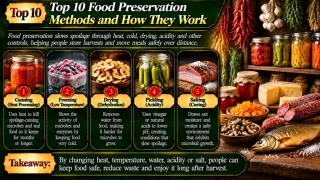
Related: Top 10 Food Preservation Methods and How They Work
3. Champagne From the Seafloor
In 2010, divers exploring a shipwreck near the Aland Islands in the Baltic Sea found 168 bottles of champagne dating from the 1840s. The bottles had remained in cold, dark water at a steady temperature [3].
Some of the champagne was tasted and analyzed. Chemists found that it was much sweeter than modern champagne, reflecting tastes of the nineteenth century, and that it had remained remarkably well preserved [3].
In 2011, one of the bottles sold at auction for 30,000 euros, then a record for champagne. The find also included bottles of beer, which researchers studied for traces of yeast. The champagne came from houses that still exist, including Veuve Clicquot, and the bottles were identified partly from the brands burned into their corks. The government of the Aland Islands, which took ownership of the find, sold some bottles to raise money for local projects.
4. A Roman Bottle Never Opened
The Speyer wine bottle, found in a Roman tomb near Speyer in Germany in 1867, is thought to date from the fourth century AD. It is considered the oldest known bottle of wine that still contains liquid [4].
The wine was sealed with a layer of olive oil and a wax plug, which kept out air. The bottle is displayed at the Historical Museum of the Palatinate in Speyer [4].
Experts have discussed opening it for analysis but have so far decided against it, partly out of concern that the liquid would react with air. Scientists say the wine is unlikely to be pleasant to drink. The bottle was buried alongside two people, believed to have been a Roman nobleman and a woman, together with other glass vessels. It holds about one and a half liters and has handles shaped like dolphins.
5. A Wine Built to Last
Madeira is a fortified wine from the Portuguese island of Madeira. It became popular in the eighteenth century, when merchants found that barrels shipped through the tropics improved after being heated and shaken [5].
Producers now heat the wine deliberately in a process called estufagem. Because it is already exposed to heat and oxygen during production, Madeira is highly resistant to spoiling [5].
Related: Top 10 Unusual Foods of the Ancient World
Bottles from the eighteenth and nineteenth centuries are still opened and drunk today, and some are said to remain in good condition. Madeira was popular in colonial America, and toasts with it are often linked to the founding of the United States. Opened bottles of Madeira can last for months, far longer than most wines. The island's producers today make several styles, from dry to sweet, named after grape varieties such as Sercial, Verdelho, Bual and Malmsey.
6. A Fruitcake From Antarctica
In 2017, conservators from the Antarctic Heritage Trust found a fruitcake wrapped in paper inside a tin in a hut at Cape Adare, Antarctica. The cake was believed to have been brought by members of Robert Falcon Scott's Terra Nova expedition of 1910 to 1913 [6].
The conservators said that the cake looked and smelled almost edible, despite being more than a century old. The extreme cold and dry air of Antarctica had helped preserve it [6].
The hut was built in 1899 by an earlier expedition and was used by Scott's men. The fruitcake was made by Huntley and Palmers, a British company that supplied food for polar expeditions. The conservators were working through around 1,500 objects from the huts at Cape Adare, which are among the oldest buildings in Antarctica. After conservation, the cake was returned to the hut along with other artifacts.
7. Canned Goods From a Sunken Steamboat
The steamboat Bertrand sank in the Missouri River in 1865 while carrying supplies to mining towns in Montana. In the 1960s, its well-preserved cargo was excavated [7].
In 1974, scientists from the National Food Processors Association tested canned foods from the wreck, including oysters, tomatoes and peaches. They found no signs of microbial growth, and the foods retained much of their nutritional value, although their color and flavor had changed [7].
The tests helped show how well canning can preserve food. Modern canned goods are generally considered safe to eat for years if the cans are not damaged. The Bertrand's cargo, including bottles, clothing and tools, is now displayed at the DeSoto National Wildlife Refuge in Nebraska. The wreck had been buried in silt after the river changed course, which helped protect its contents.
Related: Top 10 Oldest Surviving Buildings on Earth
8. Cheese From Ancient Tombs
In 2018, researchers reported identifying a solidified substance in a jar from the tomb of Ptahmes, an Egyptian official, as cheese about 3,200 years old. It had been preserved by the dry conditions of the desert near Saqqara [8].
Even older cheese was found with mummies buried at the Xiaohe cemetery in northwestern China. The remains, dated to around 3,600 years ago, were identified as a type of kefir cheese [8].
Analysis of the Egyptian cheese suggested that it was made from the milk of cows and sheep or goats. Researchers also reported traces of bacteria that can cause disease, a reminder that ancient food can carry risks. The Xiaohe cheese was found as clumps on the necks and chests of mummies, which suggests it may have been placed there as food for the afterlife. DNA analysis of the cheese has helped scientists trace the history of the microbes used to make kefir.
9. Seeds That Grew After 2,000 Years
In the 1960s, archaeologists excavating the ancient fortress of Masada in Israel found date palm seeds about 2,000 years old. The Judean date palm, prized in ancient times, had long since disappeared from the region [9].
In 2005, researchers succeeded in germinating one of the seeds. The resulting tree, nicknamed Methuselah, was one of the oldest seeds known to have sprouted [9].
Researchers later germinated more ancient seeds, and some of the trees have produced fruit. The project offers a glimpse of a variety of date eaten by people in ancient Judea. The seeds had been stored for decades in a drawer at a university after the excavation before being planted. Radiocarbon dating confirmed their age, and the trees are now grown at a kibbutz in southern Israel.
10. Eggs With a Misleading Name
Century eggs are a Chinese delicacy made by preserving duck, chicken or quail eggs in a mixture of clay, ash, quicklime and salt. Despite their name, they take weeks or months to make, not a century [10].
Related: Top 10 Most Popular Food Rivalries in the World
The alkaline mixture transforms the egg, turning the white into a dark brown jelly and the yolk into a creamy, dark green substance with a strong smell [10].
The method is believed to date back several centuries in China. Century eggs are often eaten with tofu or rice porridge, and they remain popular throughout East and Southeast Asia. A popular story claims that the method was discovered when a farmer found duck eggs that had been sitting in a pool of slaked lime for months, but this account cannot be verified. Other names for the dish include thousand-year eggs and millennium eggs, equally exaggerated.
Conclusion
These foods and drinks show how chemistry, cold, darkness and airtight containers can slow or halt decay. Some foods are naturally durable, while others survived only under rare conditions.
Their discovery has helped archaeologists and food scientists learn about past diets, trade and preservation methods.
Experts warn that ancient food may contain harmful bacteria or toxins, so tasting historical finds is not advised.
In a world of expiration dates, these examples are a reminder that food can sometimes outlast the people who made it.
- ^ [1] Accounts of honey. Wikipedia: Honey Wikipedia: glucose oxidase
- ^ [2] Accounts of bog butter. Wikipedia: Bog butter Wikipedia: bog
- ^ [3] Accounts of shipwreck champagne. Wikipedia: Champagne Wikipedia: Aland
- ^ [4] Accounts of the Speyer bottle. Wikipedia: Speyer wine bottle Wikipedia: history of wine
- ^ [5] Accounts of Madeira. Wikipedia: Madeira wine Wikipedia: fortified wine
- ^ [6] Accounts of the Antarctic fruitcake. Wikipedia: Cape Adare Wikipedia: Terra Nova Expedition
- ^ [7] Accounts of the Bertrand. Wikipedia: Bertrand (steamboat) Wikipedia: Canning
- ^ [8] Accounts of ancient cheese. Wikipedia: Xiaohe Cemetery Wikipedia: Cheese
- ^ [9] Accounts of the Judean date palm. Wikipedia: Judean date palm Wikipedia: Masada
- ^ [10] Accounts of century eggs. Wikipedia: Century egg Wikipedia: Chinese cuisine





















Discussion
Log in with