




 By
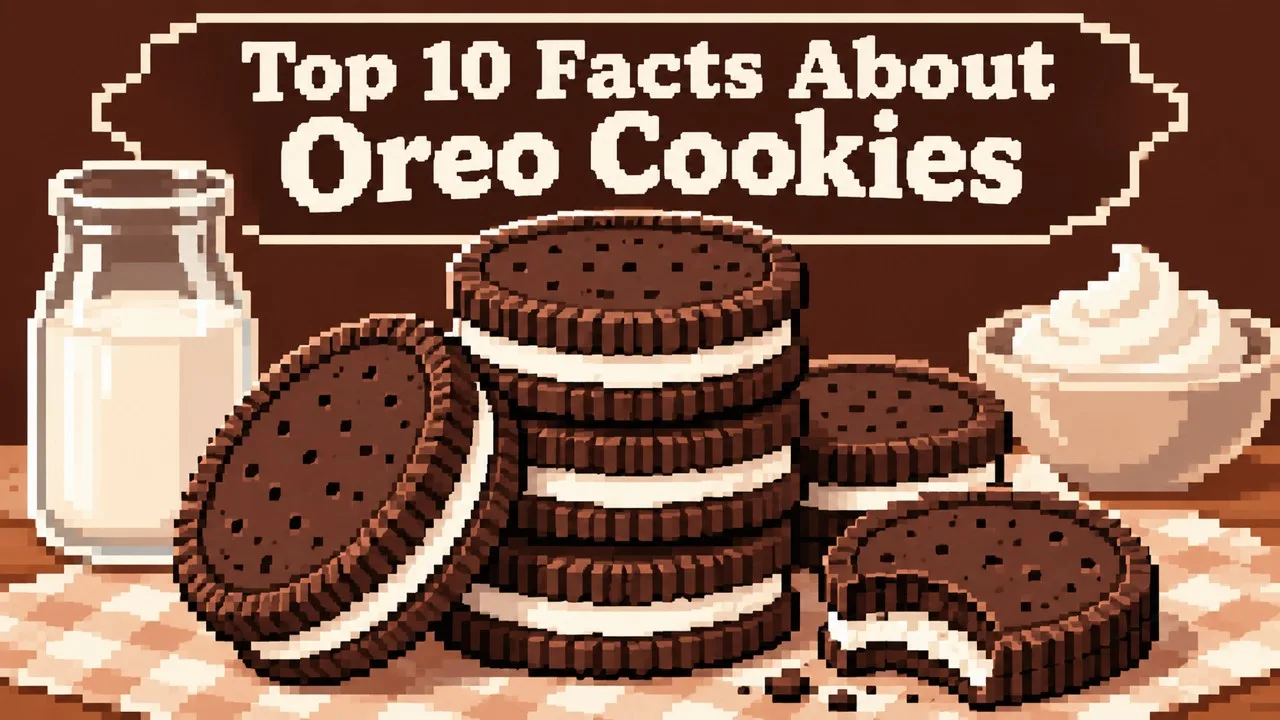
The Oreo began in a New York bakery in 1912, copied an older rival and later inspired a phone system. Ten facts about the famous sandwich cookie. The Oreo is one of the most recognizable foods in the world. Two dark chocolate wafers with a sweet white filling in between, it is twisted apart, licked, dunked in milk and crushed into ice cream and desserts in countries around the globe.
It is often described as one of the best-selling cookie brands in the world, sold in more than a hundred countries. Yet its history includes surprises, from its origins as an imitation of another cookie to the mystery of its name.
Over more than a century, the Oreo has changed in many ways. Its recipe, design and marketing have all evolved, and its makers have produced a remarkable range of flavors and varieties for different markets.
The ten facts below cover the cookie's beginnings in New York, its rivalry with an older brand, changes to its recipe and design, and some of the ways it has appeared in popular culture and technology.
They show how a simple snack can become a global brand, and how even familiar foods have stories that few people know.
Sandwich cookies were not new when the Oreo arrived. Bakers had long joined biscuits with jam, cream or other fillings. What made the Oreo different was the scale of the company that made it and the power of its marketing, which helped turn a modest product into an icon.
The cookie has also become a favorite ingredient for cooks and bakers. Crushed Oreos form the base of cheesecakes, are blended into milkshakes and are mixed into ice cream, while fairground stalls sell them dipped in batter and deep fried. These uses show how deeply the brand has entered popular food culture far beyond the original packet.
Part of the Oreo's success comes from the ritual of eating it. For decades, advertisements encouraged people to twist the wafers apart, lick the filling and dunk the cookie in milk. This playful routine turned a snack into an experience, and it helped the brand build strong emotional ties with children and their parents, who often passed the habit down through the generations.
Key Facts
| # | Fact | When | Where |
|---|---|---|---|
| 1 | The first Oreos | 1912 | Chelsea, New York City |
| 2 | Hydrox came first | 1908 and 1912 | United States |
| 3 | The mystery of the name | Since 1912 | Origin unknown |
| 4 | The embossed pattern | 1952 | Designed for Nabisco |
| 5 | Lard replaced | 1990s | Kosher certification |
| 6 | Double Stuf | 1974 | United States |
| 7 | Adapting to local tastes | 2000s | China |
| 8 | Dunk in the dark | 2013 | Super Bowl XLVII |
| 9 | Android Oreo | 2017 | Worldwide |
| 10 | Mondelez International | 2012 onward | Worldwide |
1. Born in a New York Bakery
The Oreo was first produced in 1912 by the National Biscuit Company, later known as Nabisco. It was made at the company's large bakery complex in the Chelsea neighborhood of Manhattan, and the first cookies were sold in March of that year [1].
The original product was called the Oreo Biscuit, and it was sold in tins and by weight. Over the following decades, the name changed several times before settling on the familiar form of today [1].
The former bakery complex now houses Chelsea Market, a popular food hall and office building. The street outside has been honored with a sign marking the area's connection to the famous cookie.
Related: Top 10 Most Popular Desserts in the World
2. It Followed an Older Rival
The Oreo was not the first chocolate sandwich cookie with a white filling. A similar cookie called Hydrox was introduced by the Sunshine Biscuit Company in 1908, four years before the Oreo appeared [2].
Over time, the Oreo became far more successful, thanks in part to Nabisco's size and marketing. Many consumers came to assume that Hydrox was the copy, even though it had been on the market first [2].
Hydrox was discontinued in the late 1990s, then revived by another company in the 2010s. Its story is often cited as an example of how marketing can matter more than being first.
3. Nobody Knows What the Name Means
The origin of the name Oreo is uncertain. Nabisco itself has said that it does not know exactly where the name came from, and several theories have been proposed over the years [3].
One theory suggests that it comes from the French word for gold, or, because the original packaging used gold lettering. Another links it to the Greek word for mountain, perhaps because early test versions were shaped like hills [3].
Others suggest that the name was chosen simply because it was short, easy to say and easy to remember. Whatever its origin, the name has become one of the best-known brand names in the world.
4. The Famous Design Dates From 1952
The pattern embossed on each Oreo wafer has changed several times since 1912. The design used today dates from 1952 and is generally credited to William Turnier, who worked for Nabisco [4].
The pattern includes the company's logo, a circle topped with a two-barred cross, along with a ring of small flowers and leaves. The intricate design is pressed into each wafer during baking [4].
Some writers have speculated that the symbols have hidden meanings linked to medieval history or secret societies. There is no evidence for these claims, and the logo is usually described as a version of an old symbol used by early printers.
Related: Top 10 Most Bizarre Phobias: Strange Fears That Exist
5. The Recipe Changed to Become Kosher
For much of its history, the filling of the Oreo contained lard, a fat made from pigs. This meant that people who kept kosher or halal diets, as well as vegetarians, could not eat the cookies [5].
In the 1990s, Nabisco replaced the lard with vegetable oil. After the change, the cookies in the United States received kosher certification in the late 1990s, opening them to a large new group of customers [5].
The filling is officially described as creme rather than cream, since it does not contain dairy cream. The recipe varies in different countries, partly to suit local tastes and regulations.
6. Double the Filling
In 1974, Nabisco introduced Double Stuf Oreos, with a thicker layer of filling. The new variety quickly became popular and is now one of the brand's best-known products [6].
The name suggests twice the filling of a regular Oreo. Some curious students and teachers have measured the cookies and found that the filling was somewhat less than double, though the company has said its recipe uses the intended amount [6].
Since then, many other variations have followed, including thinner cookies and versions with even more filling. Double Stuf remains one of the most widely sold types.
7. Reinvented for China
Oreos were introduced in China in the 1990s, but sales were disappointing at first. Research suggested that many Chinese consumers found the cookies too sweet, and that the packages were too large and expensive [7].
The company changed the cookies for the Chinese market, making them less sweet and offering smaller packages. It also introduced new formats, such as wafer sticks, and flavors such as green tea [7].
The changes helped turn China into one of the brand's most important markets. The story is often used in business schools as an example of adapting a global product to local tastes.
Related: Top 10 Oldest Buildings in the World
8. A Famous Tweet During a Blackout
During the Super Bowl in February 2013, a power outage stopped the game for around half an hour. Oreo's social media team quickly posted an image on Twitter with the message that you can still dunk in the dark [8].
The tweet was shared thousands of times within minutes and widely praised as one of the smartest pieces of marketing that night. It showed how brands could respond quickly to live events on social media [8].
The moment is often cited as a turning point in real-time marketing, and it encouraged many companies to build teams that could react instantly to news and events.
9. A Phone Operating System Named After It
Google traditionally named versions of its Android mobile operating system after sweets and desserts, in alphabetical order. In 2017, version 8.0 was named Android Oreo [9].
The name was the result of a partnership with the brand's owner, and the launch included promotions and a special version of the Android mascot. It was one of the few times that the series used a trademarked brand name [9].
Later versions dropped the dessert names in public branding. Android Oreo remains a curious example of how a cookie became part of the history of technology.
10. Owned by a Global Snack Company
Nabisco became part of larger companies over the years, and the Oreo brand eventually came under the ownership of Kraft Foods. In 2012, Kraft split its business, and Oreo became part of Mondelez International, a global snack company [10].
Today, Oreos are made in factories in many countries and sold around the world. The brand regularly launches limited-edition flavors, sometimes inspired by other foods, holidays or popular culture [10].
Related: 10 Sikh Gurus: The Pillars of Sikhism Who Shaped Faith, Equality, Courage, and Humanity
The company has also produced special promotions, such as cookies decorated for anniversaries and collaborations with entertainment brands. More than a century after its launch, the Oreo remains one of the world's most valuable snack brands.
Conclusion
The Oreo's story shows how a simple product can grow into a global brand. From a bakery in New York, it spread around the world, adapting its recipe, packaging and flavors along the way.
Its history includes rivalry, mystery and clever marketing. It came after Hydrox, its name remains unexplained and its design has inspired speculation.
The cookie's ability to change with the times has helped it remain popular for more than a century. New flavors and formats keep customers interested, while the classic version remains a favorite.
Whether twisted, dunked or eaten whole, the Oreo has secured its place as one of the most famous snacks in the world.
Its long success is a reminder that a simple idea, carefully marketed and adapted over time, can last for generations.
The Oreo has also faced criticism, like many sugary snacks. Health campaigners have raised concerns about sugar and fat, and in the early 2000s a lawsuit over trans fats in the cookies drew wide attention before it was withdrawn when the company said it would change its recipe. Such debates are part of the wider discussion about processed foods and diet.
For a cookie whose name nobody can fully explain, it has done remarkably well. Each new generation discovers it in its own way, whether through a lunchbox, a birthday cake or a late-night snack shared with friends.
Few snacks can claim such a long and colorful story.
- ^ [1] Accounts of the Oreo. Wikipedia: Oreo Wikipedia: sandwich cookie
- ^ [2] Accounts of Nabisco and Chelsea. Wikipedia: Nabisco Wikipedia: Chelsea Market
- ^ [3] Accounts of Hydrox. Wikipedia: Hydrox Wikipedia: brand
- ^ [4] Accounts of the name and design. Wikipedia: Cross of Lorraine Wikipedia: embossing
- ^ [5] Accounts of the recipe change. Wikipedia: lard Wikipedia: kosher foods
- ^ [6] Accounts of Double Stuf. Wikipedia: biscuit Wikipedia: cookie
- ^ [7] Accounts of Oreo in China. Wikipedia: Chinese cuisine Wikipedia: localization
- ^ [8] Accounts of the Super Bowl blackout. Wikipedia: Super Bowl XLVII Wikipedia: real-time marketing
- ^ [9] Accounts of Android Oreo. Wikipedia: Android Oreo Wikipedia: Android
- ^ [10] Accounts of Kraft and Mondelez. Wikipedia: Kraft Foods Inc. Wikipedia: Mondelez International





















Discussion
Log in with