






 By
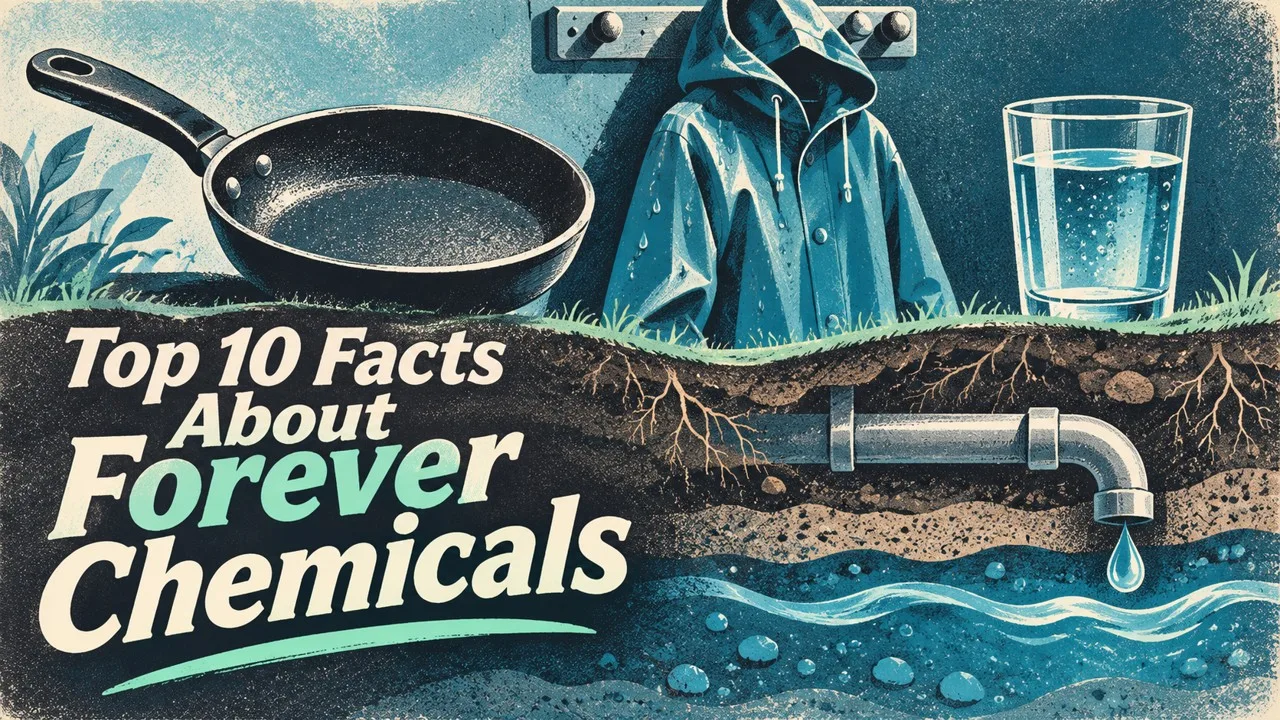
PFAS, the so-called forever chemicals, are in nonstick pans, firefighting foam, rain and human blood. Ten facts about where they came from and why they last. Per- and polyfluoroalkyl substances, known as PFAS, are a large family of synthetic chemicals that resist water, grease, heat and stains. Since the mid-twentieth century, they have been used in thousands of products, from nonstick cookware and raincoats to food packaging and firefighting foam.
The same chemical stability that makes them useful also makes them extremely persistent. Many PFAS barely break down in the environment, and some build up in living things. This persistence earned them the nickname forever chemicals.
Over the past few decades, scientists, regulators, lawyers and communities have uncovered how widely these substances have spread and have linked some of them to health problems. Governments are now restricting them, and companies are searching for alternatives.
The facts below explain the chemistry, history and current debates surrounding PFAS. Research on their health effects continues, and the risks differ among the individual compounds.
Key Facts
| # | Fact | Key compound or case | Why it matters |
|---|---|---|---|
| 1 | Carbon-fluorine bond | Origin of the nickname | Why PFAS persist |
| 2 | Teflon | 1938 laboratory accident | The start of the industry |
| 3 | Many PFAS compounds | Consumer products | Hard to regulate one by one |
| 4 | Human exposure | National health surveys | Exposure is almost universal |
| 5 | Parkersburg, West Virginia | DuPont lawsuits | Revealed the health risks |
| 6 | Aqueous film-forming foam | Military bases and airports | A major source of contamination |
| 7 | Global spread | Arctic and Antarctic | No place untouched |
| 8 | GenX | Cape Fear River, North Carolina | Shorter chains, similar concerns |
| 9 | Regulation | United States and Europe | A slow response |
| 10 | Destruction technologies | Laboratories and treatment plants | Cleanup is costly |
1. Built on One of Chemistry's Strongest Bonds
PFAS contain chains of carbon atoms bonded to fluorine atoms. The bond between carbon and fluorine is one of the strongest in organic chemistry, so sunlight, water and microbes struggle to break these molecules apart [1].
As a result, some PFAS are expected to persist in the environment for hundreds or even thousands of years. Certain compounds also remain in the human body for years; the half-life of PFOS and PFOA in people is estimated at several years [1].
The nickname forever chemicals was popularized in 2018 by Joseph Allen, a public health researcher at Harvard, in a newspaper opinion article. The phrase has since become common in news coverage and political debates. Chemists divide PFAS into long-chain and short-chain compounds, depending on the number of carbon atoms. Longer chains generally build up more in the body, which is one reason the best-studied compounds, PFOA and PFOS, both have eight carbon atoms.
2. An Accidental Discovery
In 1938, the chemist Roy Plunkett at the DuPont company was experimenting with gases for refrigerants. When he opened a cylinder that should have contained gas, he found that it had turned into a slippery white solid [2].
The substance was polytetrafluoroethylene, later sold under the brand name Teflon. It proved to be extremely resistant to heat and chemicals and was used during World War II in the Manhattan Project, where it helped handle corrosive uranium compounds [2].
Teflon nonstick pans became popular in the 1960s. Making the material for decades involved the use of PFOA, a related PFAS chemical that later became the focus of major health concerns and lawsuits. Plunkett was later inducted into the National Inventors Hall of Fame. PTFE itself is very stable at normal cooking temperatures, but it can release harmful fumes if an empty pan is heated far above normal cooking temperatures.
Related: Top 25 Interesting Facts About the Solar System
3. A Family of Thousands
PFAS are not a single chemical but a large family. Depending on the definition used, the number of compounds ranges from several thousand to millions, though a much smaller number are widely produced and used [3].
They have been used in stain-resistant carpets, waterproof clothing, grease-resistant food wrappers, cosmetics, dental floss, ski wax, paints and electronics. Industries such as semiconductor manufacturing and aerospace also rely on them for specialized purposes [3].
Because there are so many, regulators often struggle to test and restrict them individually. Some authorities, including those in the European Union, have proposed controlling PFAS as a group rather than one compound at a time. In 2023, five European countries submitted a proposal to restrict the manufacture and use of around ten thousand PFAS across the European Union, with exemptions for some essential uses. The proposal has been the subject of extensive consultation with industry and scientists.
4. In Nearly Everyone's Blood
Studies by the United States Centers for Disease Control and Prevention have detected PFAS in the blood of nearly all people tested in national health surveys. Similar results have been found in many other countries [4].
People are exposed through drinking water, food, dust and consumer products. Levels of some older compounds, such as PFOS and PFOA, have fallen in the US since their production was phased out, but they remain detectable [4].
Research has linked exposure to certain PFAS with health effects including higher cholesterol, reduced vaccine response in children, lower birth weight and an increased risk of some cancers, such as kidney cancer. The strength of the evidence varies among compounds and health outcomes. In 2023, the International Agency for Research on Cancer classified PFOA as carcinogenic to humans and PFOS as possibly carcinogenic. The 3M company, which made PFOS for products such as Scotchgard, phased it out in the early 2000s.
5. A Farmer, a Lawyer and a Landmark Case
In the late 1990s, a West Virginia farmer named Wilbur Tennant believed that waste from a nearby DuPont landfill was killing his cattle. He contacted the lawyer Robert Bilott, who began investigating [5].
Bilott's work uncovered internal documents showing that DuPont had studied the health effects of PFOA, also called C8, for decades. A class action lawsuit led to a large study of residents, and an independent science panel found probable links between PFOA and six diseases, including kidney and testicular cancer [5].
Related: Top 25 Interesting Facts About the Universe
In 2017, DuPont and its spinoff Chemours agreed to pay about 671 million dollars to settle thousands of lawsuits. The story was dramatized in the 2019 film Dark Waters, starring Mark Ruffalo as Bilott. DuPont also agreed to provide clean water to affected communities. Bilott described the case in his book Exposure, published in 2019, and has received several awards for his environmental legal work.
6. Firefighting Foam and Water Supplies
Firefighting foams containing PFAS have been used for decades to extinguish fuel fires at airports, military bases and refineries. The foams are highly effective, but repeated training exercises allowed chemicals to soak into the ground [6].
As a result, groundwater and drinking water near many military bases and airports have been contaminated. The US Department of Defense has identified hundreds of sites where it is investigating PFAS contamination [6].
In 2023, the manufacturer 3M agreed to pay at least 10.3 billion dollars to settle claims from public water systems, without admitting liability. The company also announced that it would stop manufacturing PFAS by the end of 2025. Many fire departments and military services are switching to fluorine-free foams, and several US states have banned PFAS-containing firefighting foams for most uses. Firefighters' protective clothing has also been studied as a possible source of exposure.
7. Found in Rain and Remote Places
Because PFAS move through water and air, they have been detected around the globe, including in Arctic sea ice, polar bears, seabirds and remote mountain lakes [7].
A study by researchers at Stockholm University, published in 2022, concluded that levels of some PFAS in rainwater around the world often exceeded the strictest drinking water guidelines, including in remote areas [7].
The researchers argued that humanity had crossed a planetary boundary for these chemicals, although other scientists noted that guideline levels vary widely between countries and that the risks of such low levels are still being studied. Sea spray can carry PFAS from the ocean back into the air and onto land, contributing to their global cycling. Scientists have also detected PFAS in the eggs of seabirds and in the livers of Arctic seals.
Related: Top 10 Mythical Creatures in World Mythology - That Inspired Myths Across Civilizations (unchanged)
8. Replacements With Similar Problems
As concerns grew about PFOA and PFOS, manufacturers replaced them with other PFAS, often with shorter carbon chains. One of these replacements, a chemical known as GenX, was introduced by DuPont in the late 2000s [8].
In 2017, researchers and journalists reported that GenX had been detected in the Cape Fear River in North Carolina, a source of drinking water for many residents, downstream from a Chemours plant. The company was later ordered to reduce its discharges [8].
Studies have found that some shorter-chain PFAS, while leaving the body faster, are still highly persistent in the environment. Regulators in several countries have since moved to restrict GenX and related substances. In 2019, the European Chemicals Agency listed GenX chemicals as substances of very high concern. North Carolina officials required Chemours to provide filtration systems or bottled water to some households near the plant.
9. New Limits on Drinking Water
For years, PFAS in drinking water were addressed mainly through voluntary health advisories. PFOS was added to the Stockholm Convention on persistent organic pollutants in 2009, and PFOA was added in 2019 [9].
In 2024, the US Environmental Protection Agency set the first enforceable national limits for several PFAS in drinking water, including limits of 4 parts per trillion for PFOA and PFOS. Water utilities were given several years to comply [9].
In 2025, the agency announced that it planned to keep the limits for PFOA and PFOS while extending the deadline and reconsidering limits for other compounds. The European Union has also set limits for PFAS in drinking water.
10. Breaking the Unbreakable
Removing PFAS from water is possible using activated carbon filters, ion exchange resins and reverse osmosis membranes. However, these methods capture the chemicals rather than destroy them [10].
Related: Top 25 Weird Facts About Left-Handed People
Destroying PFAS usually requires very high temperatures or other intense conditions. Researchers are testing methods such as supercritical water oxidation, electrochemical treatment and plasma [10].
In 2022, chemists at Northwestern University reported a low-temperature method that broke down some PFAS using common chemicals. Scaling up such methods and treating large volumes of contaminated soil and water remain major challenges.
Conclusion
Forever chemicals illustrate how a useful invention can create long-lasting problems. Their stability, once seen as an advantage, now makes cleanup difficult and expensive.
Many uncertainties remain, especially about the health effects of individual compounds and low-level exposure. Scientists are continuing to study how PFAS behave in the body and the environment.
Consumers can reduce some exposure by filtering drinking water and choosing products made without PFAS, but much of the solution depends on regulation and industrial change.
The story of PFAS is still unfolding, as new science, lawsuits and rules continue to shape how these substances are used and managed.
- ^ [1] Accounts of PFAS. Wikipedia: PFAS Wikipedia: Carbon-fluorine bond
- ^ [2] Accounts of Teflon. Wikipedia: Polytetrafluoroethylene Wikipedia: Roy J. Plunkett
- ^ [3] Accounts of PFAS uses. Wikipedia: PFAS Wikipedia: fluorosurfactant
- ^ [4] Accounts of exposure. Wikipedia: Perfluorooctanoic acid Wikipedia: Perfluorooctanesulfonic acid
- ^ [5] Accounts of the DuPont case. Wikipedia: Robert Bilott Wikipedia: Dark Waters
- ^ [6] Accounts of firefighting foam. Wikipedia: Firefighting foam Wikipedia: 3M
- ^ [7] Accounts of global spread. Wikipedia: PFAS Wikipedia: planetary boundaries
- ^ [8] Accounts of GenX. Wikipedia: GenX Wikipedia: Chemours
- ^ [9] Accounts of regulation. Wikipedia: Stockholm Convention Wikipedia: Safe Drinking Water Act
- ^ [10] Accounts of destruction methods. Wikipedia: Supercritical water oxidation Wikipedia: reverse osmosis





















Discussion
Log in with