



 By
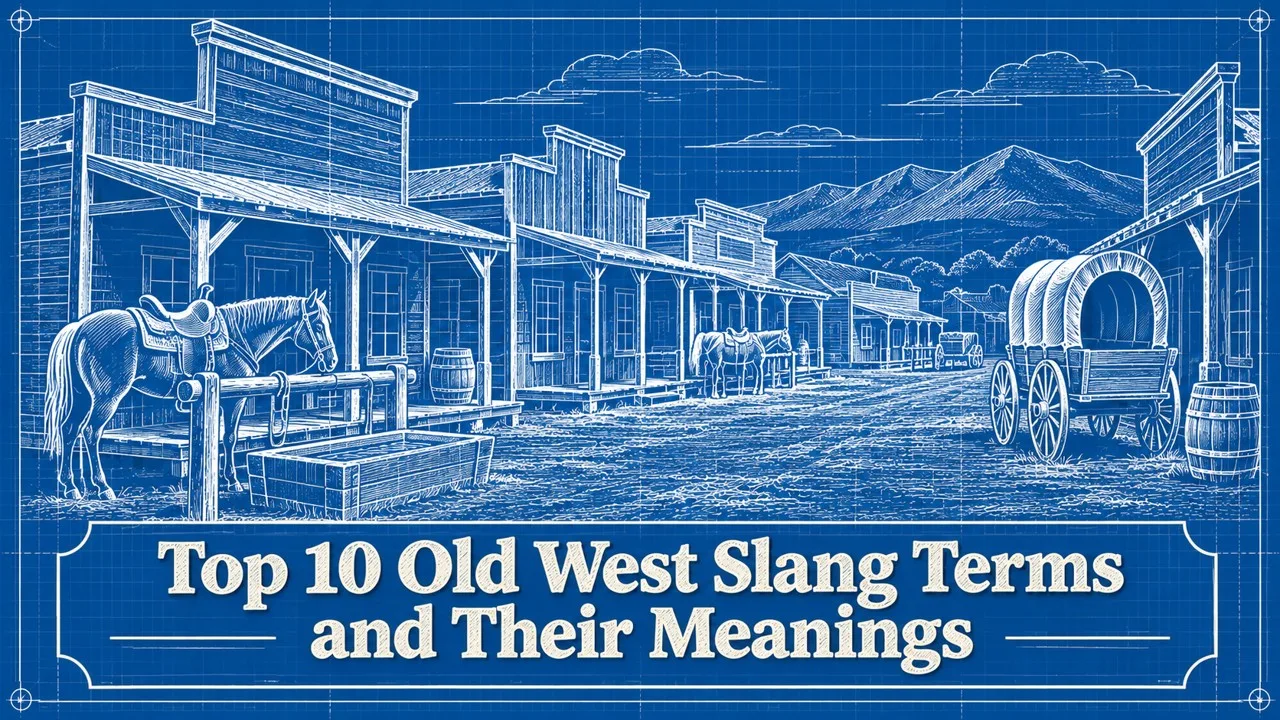
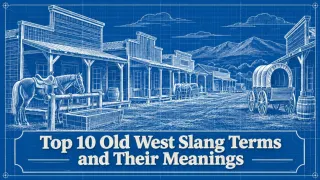
From maverick and buckaroo to riding shotgun and the dead man's hand, ten Old West slang terms, what they meant and where they came from. The American Old West lasted only a few decades in the second half of the nineteenth century, but it left a lasting mark on the English language. Cowboys, miners, gamblers, lawmen and settlers created a colorful vocabulary that described their work, their dangers and their pastimes.
Many of these words came from contact between English speakers and Mexican vaqueros, the skilled horsemen who had herded cattle in the region long before American cowboys arrived. Spanish terms were borrowed and reshaped by English speakers, sometimes so much that their origins are hard to recognize.
Other terms grew out of particular people, places and events. A Texas landowner, a famous card game and a famous town cemetery all gave rise to phrases still heard today.
Some Old West slang was later spread and popularized by dime novels, Wild West shows and Hollywood films, which sometimes invented or exaggerated the language of the frontier. That means that the exact history of certain phrases is debated.
The ten terms below were all associated with the Old West, and many of them have survived into modern English, sometimes with changed meanings. For each, the article explains what it meant and where it came from, noting where the origin is uncertain.
Together, they show how a short but dramatic period of history continues to shape the way millions of people speak.
Language from the frontier has spread far beyond the United States. Thanks to films, television and novels, people around the world recognize words like cowboy, sheriff and saloon, and some of the phrases below are used in countries far from the American West.
Cowboy work itself was hard and often poorly paid. Many cowboys were young men, and historians estimate that a significant share of them were Black, Mexican or Native American, a diversity often missing from later films. Life on the trail meant long days in the saddle, dust, storms and the constant risk of stampedes. Slang offered a way to joke about these hardships and to build a sense of belonging among the riders who shared them.
Key Facts
| # | Term | Meaning | Origin |
|---|---|---|---|
| 1 | Maverick | An independent person who goes their own way | Named after the Texas landowner Samuel Maverick |
| 2 | Riding shotgun | Sitting in the front passenger seat | From armed guards on stagecoaches |
| 3 | Buckaroo | A cowboy | Widely believed to come from the Spanish vaquero |
| 4 | Hoosegow | A jail or prison | From the Spanish juzgado |
| 5 | Dead man's hand | Aces and eights | Linked to Wild Bill Hickok's death in 1876 |
| 6 | Boot Hill | A cemetery for gunfighters and outlaws | From those who died with their boots on |
| 7 | Chuck wagon | A wagon carrying food and cooking supplies | Credited to the rancher Charles Goodnight in 1866 |
| 8 | Ten-gallon hat | A large cowboy hat | Origin debated |
| 9 | Rustler | A cattle or horse thief | From an older meaning of rustle, to move quickly |
| 10 | Tenderfoot and greenhorn | An inexperienced newcomer | From soft feet and young animals |
1. An Unbranded Calf
In the Old West, a maverick was an unbranded calf or cow, roaming without a known owner. Ranchers who found mavericks often claimed them by putting their own brand on them [1].
The word comes from Samuel Maverick, a Texas lawyer, politician and landowner in the nineteenth century. According to the usual account, he did not brand his cattle, so unbranded animals in his area came to be called Maverick's, and the name spread [1].
Over time, the meaning broadened to describe a person who refuses to follow the crowd. Today, a maverick is an independent thinker, a meaning used in politics, business and popular culture, including film titles.
Related: Top 10 Old West Slang Terms and Their Meanings
2. The Guard Beside the Driver
Stagecoaches in the Old West often carried valuable cargo, such as gold, cash and mail, making them targets for robbers. Companies such as Wells Fargo employed armed guards, known as shotgun messengers, who sat beside the driver holding a shotgun [2].
The phrase riding shotgun came to describe this role. It appears to have been popularized later, especially in Western novels and films of the twentieth century, which helped spread it to a wide audience [2].
Today, riding shotgun means sitting in the front passenger seat of a car. Many people still call out shotgun to claim that seat, though few think of armed guards on stagecoaches.
3. A Spanish Word in Disguise
A buckaroo is a cowboy, especially one in the Great Basin region of the western United States. The term is widely believed to come from vaquero, the Spanish word for a cowherd, adapted to English pronunciation [3].
Vaqueros developed many of the skills, tools and traditions later adopted by American cowboys, including roping, riding and the use of the lariat. Their influence can be seen in many words of the Old West [3].
Some scholars have suggested other possible influences on the word, but the link to vaquero is the most widely accepted explanation. Buckaroo is still used today, often with a playful or nostalgic tone.
4. Slang for a Jail
A hoosegow is a jail, and the word has long been associated with the American West. It comes from the Spanish juzgado, meaning a court or tribunal [4].
English speakers in the Southwest heard the Spanish word and adapted its sound, turning it into hoosegow. The term appears in print from the early twentieth century, though it was probably used in speech earlier [4].
Hoosegow is now mostly used humorously. Another Western word for jail, calaboose, also comes from Spanish, from calabozo, meaning a dungeon.
Related: Top 10 Most Bizarre Phobias: Strange Fears That Exist
5. The Final Poker Hand
Wild Bill Hickok was one of the most famous gunfighters and lawmen of the Old West. On August 2, 1876, he was shot from behind and killed while playing poker in a saloon in Deadwood, in the Dakota Territory [5].
According to popular tradition, Hickok was holding a pair of black aces and a pair of black eights when he died. The combination became known as the dead man's hand [5].
The identity of the fifth card is disputed, and some historians question whether the story of the hand is accurate at all. Nonetheless, the phrase remains part of poker culture and appears often in films, songs and games.
6. A Gunfighter's Graveyard
In several frontier towns, the local cemetery came to be called Boot Hill. The name referred to the idea that many of those buried there had died violently, with their boots still on, rather than peacefully in bed [6].
Famous Boot Hill cemeteries include those in Tombstone, Arizona, and Dodge City, Kansas. They contained the graves of gunfighters, outlaws and ordinary residents, sometimes with humorous or grim epitaphs [6].
Today, Boot Hill cemeteries are popular tourist attractions, and the name has become a byword for the violent reputation of the Old West, though historians note that such violence was often exaggerated.
7. The Cowboy Kitchen on Wheels
On long cattle drives, cowboys needed food and supplies for weeks or months on the trail. In 1866, the Texas rancher Charles Goodnight is credited with adapting a sturdy army wagon to carry food, water, cooking equipment and tools [7].
The wagon became known as the chuck wagon, since chuck was a slang word for food. It was run by a cook, who was often one of the most important people on the drive [7].
Related: Top 10 Oldest Buildings in the World
Chuck wagons became a symbol of cowboy life. Today, they appear at rodeos, festivals and chuck wagon races, and the term is still used for food served from a mobile kitchen.
8. A Hat That Holds No Ten Gallons
The ten-gallon hat is a tall, wide-brimmed cowboy hat, closely associated with Texas and the American West. Despite its name, it cannot hold anywhere near ten gallons of liquid [8].
The origin of the name is debated. One theory links it to the Spanish word galon, meaning a braid, which some vaqueros wore around their hats. Another suggests it simply exaggerated the size of the hat, perhaps in advertising [8].
The hat became especially popular through Western films in the twentieth century. Today, it is a symbol of the cowboy image, worn at rodeos and by fans of Western fashion.
9. Stealing Cattle
A rustler was someone who stole cattle or horses, a serious crime in the Old West. Rustling could ruin ranchers, and those caught were sometimes punished harshly, occasionally without trial [9].
The word rustle originally meant to make a soft crackling sound, but in American English it also came to mean to move busily or energetically. Rustling cattle may have described quickly rounding up and driving off animals [9].
Conflicts over rustling contributed to violent episodes, such as the Johnson County War in Wyoming in 1892. Today, rustler is still used in some rural areas for livestock thieves.
10. The Newcomer
Old West slang had several words for newcomers who did not yet understand frontier life. A tenderfoot was someone unused to the hardships of the West, perhaps because their feet were soft from city living [10].
Related: 10 Sikh Gurus: The Pillars of Sikhism Who Shaped Faith, Equality, Courage, and Humanity
A greenhorn was another term for an inexperienced person. It originally described a young animal with new horns and was used in English long before the Old West, but it became widely associated with newcomers to the frontier [10].
Both terms survive today. Tenderfoot is also the name of a rank in some scouting organizations, and greenhorn is still used to describe a beginner in many fields.
Conclusion
Old West slang shows how language grows from the meeting of cultures and the challenges of daily life. Spanish words, local personalities and dramatic events all left their mark on the way people spoke.
Many of these terms have survived for well over a century, sometimes changing their meanings as the world around them changed. A maverick is now an independent thinker, and riding shotgun is about car seats rather than stagecoaches.
Films, novels and television helped preserve and spread this vocabulary, sometimes adding new layers of myth. That makes it challenging to trace the exact origins of some phrases.
Still, every time someone calls shotgun or describes a maverick, they are echoing the language of the American frontier.
The Old West may be long gone, but its words continue to ride on in everyday speech.
Writers and historians who study frontier language rely on old newspapers, diaries, letters and court records to trace when words first appeared. These sources often show that a term was in use earlier, or in a different sense, than popular stories suggest. That careful work helps separate genuine frontier speech from the colorful inventions of later storytellers.
- ^ [1] Accounts of Western American English. Wikipedia: Western American English Wikipedia: American frontier
- ^ [2] Accounts of the maverick. Wikipedia: Samuel Maverick Wikipedia: livestock branding
- ^ [3] Accounts of riding shotgun. Wikipedia: shotgun messenger Wikipedia: stagecoach
- ^ [4] Accounts of the buckaroo. Wikipedia: buckaroo Wikipedia: vaquero
- ^ [5] Accounts of the hoosegow. Wikipedia: hoosegow Wikipedia: prison
- ^ [6] Accounts of the dead man's hand. Wikipedia: dead man's hand Wikipedia: Wild Bill Hickok
- ^ [7] Accounts of Boot Hill. Wikipedia: Boot Hill Wikipedia: Tombstone, Arizona
- ^ [8] Accounts of the chuck wagon. Wikipedia: chuckwagon Wikipedia: Charles Goodnight
- ^ [9] Accounts of the ten-gallon hat. Wikipedia: ten-gallon hat Wikipedia: cowboy hat
- ^ [10] Accounts of rustlers and newcomers. Wikipedia: cattle raiding Wikipedia: Johnson County War




















Discussion
Log in with