





 By
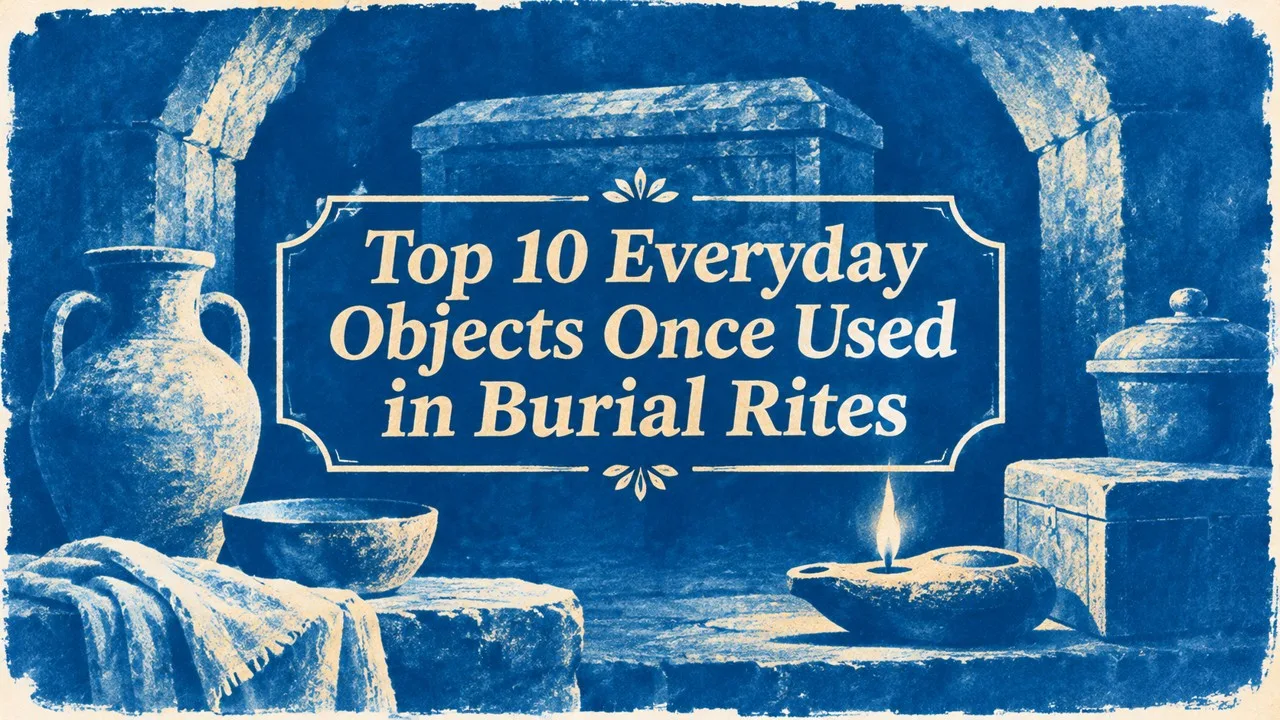
Ordinary objects played key roles in burial rites, from coins for the ferryman and pillows of stone to combs, mirrors, boats, biscuits and bells. Every culture has developed ways to honor the dead, and many of those rituals involve objects from everyday life. A coin, a comb, a pillow or a biscuit might seem ordinary, but placed in a grave or handed to mourners, it could carry deep meaning about the afterlife, memory and respect.
Archaeologists call objects buried with the dead grave goods. They reveal what people valued, what they believed the dead would need and how they wished to be remembered. In many cases, the items found in graves are the best surviving evidence of daily life in the past.
The ten objects below are coins, servant figurines, headrests, mirrors, combs, boats, storage jars, bells, biscuits and jewelry made from hair. They come from ancient Greece and Egypt, Han China, Viking Scandinavia, Anglo-Saxon England and the Victorian world.
Beliefs about death are deeply personal and varied, and the meanings given here reflect the interpretations of historians and archaeologists. Some popular stories about burial customs are exaggerated or false, and where that is the case, it is noted.
These customs show how closely the worlds of the living and the dead were linked. Ordinary objects became bridges between them, carrying hopes for comfort, protection and remembrance.
Many of these customs have faded, but some survive in new forms. Flowers, photographs and personal items are still placed with the dead or at graves today, continuing a very old human impulse.
Grave goods have been found in some of the oldest known human burials. Archaeologists have reported shells, ochre, tools and animal remains placed deliberately with the dead tens of thousands of years ago, suggesting that the idea of equipping the dead for a journey, or honoring them with meaningful things, is extremely ancient. The examples below come from much later periods, but they belong to the same long tradition.
Key Facts
| # | Object | Culture | Role in the rite |
|---|---|---|---|
| 1 | Coins | Ancient Greece | Payment for passage to the underworld |
| 2 | Shabti figurines | Ancient Egypt | Doing work on behalf of the dead |
| 3 | Headrests | Ancient Egypt | Supporting and protecting the head |
| 4 | Bronze mirrors | Ancient China | Protection and cosmic symbolism |
| 5 | Combs | Viking Age Scandinavia | Grooming and personal identity |
| 6 | Boats | Anglo-Saxon England and Viking Scandinavia | Carrying the dead to the next world |
| 7 | Canopic jars | Ancient Egypt | Storing and protecting internal organs |
| 8 | Safety coffins | Eighteenth and nineteenth century Europe and America | Guarding against premature burial |
| 9 | Funeral biscuits | England and colonial America | Hospitality and remembrance |
| 10 | Mourning jewelry | Victorian Britain and beyond | Keeping a loved one close |
1. Paying the Ferryman
In ancient Greek belief, the souls of the dead were carried across the river Styx or Acheron by a ferryman named Charon. According to literary sources, a small coin called an obol was placed with the dead to pay for the crossing [1].
Archaeologists have found coins in graves across the Greek world and in later Roman burials, sometimes in the mouth of the deceased. The practice was not universal, and its meaning may have varied from place to place. Some scholars suggest the coins were also symbolic payments to the gods or protection for the dead [1].
The custom of placing coins on the eyes of the dead appears in later European folklore. Coins have been found in graves in many cultures, showing how money, an everyday object, took on spiritual significance.
Related: Top 10 Oldest Surviving Buildings on Earth
2. Servants for the Afterlife
Ancient Egyptians believed the dead might be called upon to perform labor in the afterlife, such as farming. To avoid this, they placed small figurines called shabtis, or ushabtis, in their tombs. The figurines would do the work in their place [2].
Shabtis were often inscribed with a spell from the Book of the Dead, instructing the figure to answer when called. Wealthy people might be buried with hundreds of them, sometimes one for each day of the year, plus overseers to manage them [2].
The tomb of Tutankhamun contained more than four hundred shabtis. They are among the most common Egyptian antiquities in museums today, made from faience, wood, stone and other materials.
3. A Pillow for Eternity
Ancient Egyptians often slept with their heads supported by headrests made of wood, stone or ivory, rather than soft pillows. The curved support held the head above the bed, which may have helped keep people cool and avoided disturbing elaborate hairstyles [3].
Headrests were also placed in tombs to support the head of the dead. They were associated with protection and with the rising of the sun, since the curved shape could suggest the horizon. Some were decorated with images of protective gods [3].
Tutankhamun's tomb contained several headrests, including one made of ivory. These everyday objects show how Egyptians brought the comforts of daily life into their preparations for eternity.
4. Mirrors to Light the Way
In ancient China, polished bronze mirrors were valued objects in daily life. They were also placed in tombs, especially during the Warring States period and the Han dynasty [4].
Mirrors were believed to have protective powers, warding off evil spirits and bringing light into the darkness of the tomb. Many were decorated with cosmological designs, including patterns representing the universe and the directions of the world [4].
Thousands of bronze mirrors have been found in Chinese tombs. Their inscriptions often contain wishes for long life, prosperity and happiness, offering a glimpse into the hopes of their owners.
Related: Top 10 Famous Tombs and Mausoleums
5. Combs in Viking Graves
Combs made of antler and bone were common personal items in the Viking Age. Contrary to the image of wild, unkempt warriors, Scandinavians took grooming seriously, and combs were among their most important personal possessions [5].
Combs are frequently found in Viking graves, along with other personal items such as knives, beads and brooches. They may have been buried so the dead could continue caring for their appearance, or because they were closely linked to a person's identity [5].
Archaeologists study the styles of combs to understand trade and craft, since comb makers worked in specialized workshops in trading towns. A humble comb can help date a grave and trace connections between distant communities.
6. Ships for the Last Voyage
In early medieval northern Europe, some high-status people were buried in ships, which were dragged onto land and covered with mounds of earth. Boats were essential everyday tools for travel and trade, and burying them with the dead suggested a final journey [6].
The Sutton Hoo ship burial in eastern England, excavated in 1939, contained an Anglo-Saxon ship and a remarkable collection of treasures, including a famous helmet. It is often linked to King Raedwald of East Anglia, who died around 624, though this cannot be confirmed [6].
In Norway, the Oseberg ship burial contained the remains of two women and a richly decorated ship, buried in 834. Ship burials show how important the sea was to these societies.
7. Jars for the Organs
During mummification, Egyptian embalmers removed the internal organs of the dead to help preserve the body. The liver, lungs, stomach and intestines were dried and stored in special containers called canopic jars [7].
Each jar was associated with one of the Four Sons of Horus, protective deities. Over time, the jar lids were shaped like the heads of these gods: a human, a baboon, a jackal and a falcon. The heart was usually left in the body because Egyptians believed it would be weighed in the afterlife [7].
Related: Top 10 Strange Things People Have Done With Hearts in History
Storage jars were ordinary objects in Egyptian households, used for food, oil and wine. Canopic jars adapted this familiar form for a sacred purpose.
8. Bells for the Buried
In the eighteenth and nineteenth centuries, fear of being buried alive spread in Europe and North America. Medical knowledge was limited, and stories of premature burial circulated widely [8].
Inventors designed safety coffins with features such as breathing tubes, windows and bells attached to strings, which a person waking in the coffin could ring to alert people above ground. Several designs were patented [8].
There is no reliable evidence that anyone was ever saved by such a device. A popular claim that the phrase saved by the bell comes from safety coffins is generally considered false; the phrase is usually traced to boxing.
9. Biscuits for Mourners
In seventeenth and eighteenth century England and colonial America, mourners at funerals were often given special biscuits or cakes. They were sometimes wrapped in paper sealed with black wax and printed with verses or the name of the deceased [9].
The biscuits were a form of hospitality and remembrance, and some were kept as mementos. In some communities, they were flavored with caraway or other spices and stamped with designs [9].
The custom reflected the importance of sharing food at funerals, a tradition that continues today in many cultures. Funeral biscuits gradually disappeared in the nineteenth century, but the idea of food as comfort for mourners remains.
10. Jewelry Made From Hair
In the nineteenth century, especially in Britain, people often kept locks of hair from the dead as mementos. Hair was woven into brooches, rings, lockets and bracelets, sometimes in intricate patterns [10].
Related: Top 10 Most Bizarre Phobias: Strange Fears That Exist
Mourning jewelry became especially fashionable after the death of Prince Albert in 1861, when Queen Victoria entered a long period of mourning. Jet, a black stone found near Whitby in England, was also popular for mourning jewelry [10].
These pieces allowed mourners to keep a physical connection with their loved ones. Many survive in museums and private collections, offering moving reminders of personal grief in the Victorian era.
Conclusion
These objects show how everyday items took on new meaning in the context of death. A coin, a comb or a biscuit could become a symbol of hope, respect or remembrance.
They also show how burial customs reflect beliefs about the afterlife. Some cultures imagined a world where the dead needed tools, servants and transport, while others focused on comforting the living.
Many of these customs have faded, but the impulse behind them remains. People still place meaningful objects with the dead and keep mementos of those they have lost.
Archaeologists continue to learn from grave goods, using them to understand trade, technology and social structure. In this way, the objects buried with the dead continue to speak to the living.
Museums that display grave goods today increasingly consider how to do so respectfully. Many work with descendant communities and religious authorities, and in some cases objects and remains have been returned to the places and peoples they came from, recognizing that these items were once part of deeply personal acts of mourning.
- ^ [1] Accounts of Charon's obol. Wikipedia: Charon's obol Wikipedia: Charon
- ^ [2] Accounts of shabti figurines. Wikipedia: ushabti Wikipedia: Book of the Dead
- ^ [3] Accounts of Egyptian headrests. Wikipedia: headrest Wikipedia: Tutankhamun
- ^ [4] Accounts of Chinese bronze mirrors. Wikipedia: Chinese bronze mirror Wikipedia: Han dynasty
- ^ [5] Accounts of Viking combs and grave goods. Wikipedia: comb Wikipedia: grave goods
- ^ [6] Accounts of ship burials. Wikipedia: Sutton Hoo Wikipedia: Oseberg ship
- ^ [7] Accounts of canopic jars. Wikipedia: canopic jar Wikipedia: mummy
- ^ [8] Accounts of safety coffins. Wikipedia: safety coffin Wikipedia: premature burial
- ^ [9] Accounts of funeral biscuits. Wikipedia: funeral biscuit Wikipedia: funeral
- ^ [10] Accounts of mourning jewelry. Wikipedia: mourning jewellery Wikipedia: hair jewelry




















Discussion
Log in with