






 By
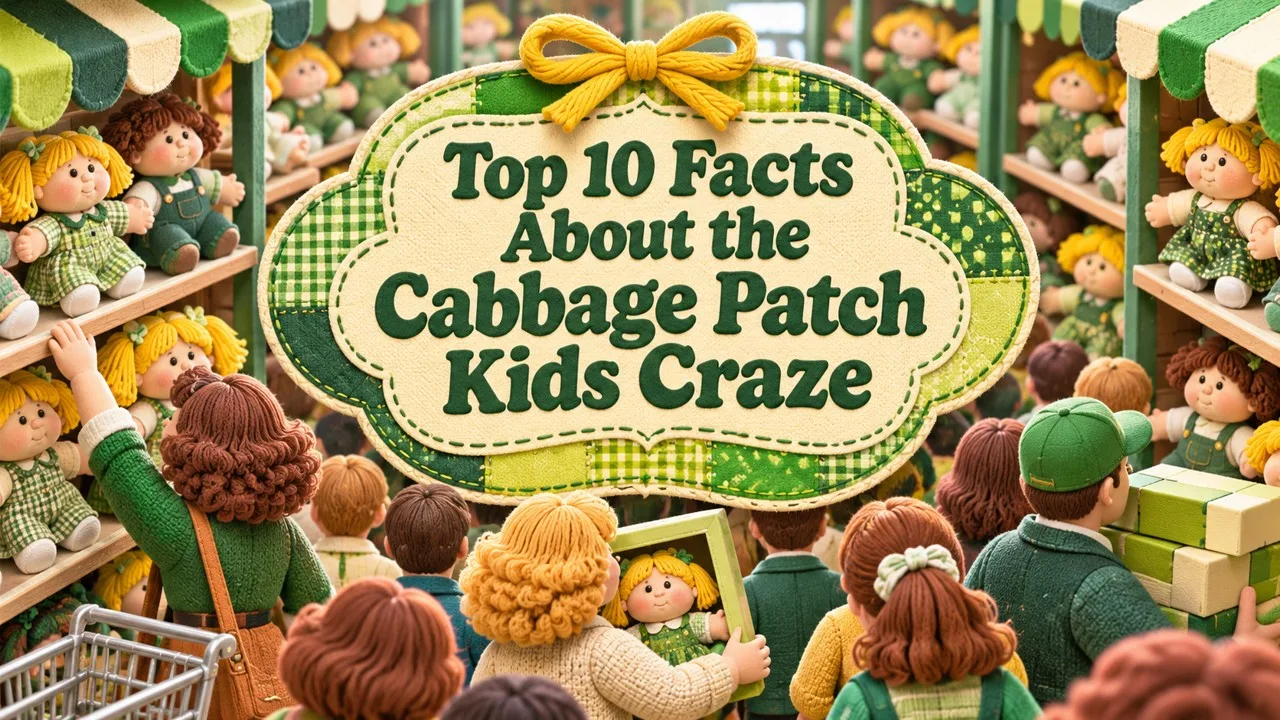
In 1983, shoppers scrambled for Cabbage Patch Kids, dolls that came with adoption papers. Ten facts about one of the biggest toy crazes ever. In the autumn of 1983, parents across the United States found themselves in a frantic race to buy one particular toy. Cabbage Patch Kids, soft dolls with round faces and yarn hair, had become the must-have Christmas gift, and stores could not keep them on the shelves.
News reports showed crowds pushing into shops, people waiting for hours in the cold and dolls being resold for many times their price. The craze became one of the most famous toy frenzies in history, and it helped define the way people think about holiday shopping manias.
Part of the appeal was that each doll was presented as unique. Children did not simply buy a Cabbage Patch Kid, they adopted one, receiving a birth certificate and adoption papers along with the doll. The idea made the dolls feel personal and special.
The dolls had begun as handmade creations in Georgia before a toy company turned them into a mass-market phenomenon. Their story includes artistic ambition, legal disputes, clever marketing and a few strange twists along the way.
The ten facts below cover where the dolls came from, why they became so popular, how the craze played out in stores and what happened to the brand after the frenzy faded.
They show how a toy can become a cultural event, and how the forces behind a craze can be both carefully planned and impossible to control.
Toy crazes were not new in 1983, but the Cabbage Patch frenzy set a pattern that would be repeated with later must-have gifts. Retailers, manufacturers and parents learned lessons from it that still shape the holiday shopping season.
The early 1980s were a difficult time for many American families, with high unemployment and a recent recession. Some commentators suggested that the dolls offered comfort and a sense of tradition at a time of uncertainty. Others pointed to the growing power of television advertising and news coverage, which spread excitement about the dolls faster than ever before and turned a popular toy into a national story.
Key Facts
| # | Fact | When | Where |
|---|---|---|---|
| 1 | Little People | Late 1970s | Georgia, United States |
| 2 | Martha Nelson Thomas | 1970s and 1980s | Kentucky and Georgia |
| 3 | Babyland General Hospital | 1978 onward | Cleveland, Georgia |
| 4 | Computer-made variety | 1983 onward | United States |
| 5 | The Christmas rush of 1983 | Late 1983 | Across the United States |
| 6 | Scalpers and newspaper ads | 1983 to 1984 | United States |
| 7 | Garbage Pail Kids | 1985 onward | United States |
| 8 | Coleco's collapse | 1988 onward | United States |
| 9 | Snacktime Kids | 1996 | United States |
| 10 | The Cabbage Patch | Late 1980s | United States |
1. They Began as Handmade Art Dolls
The dolls that became Cabbage Patch Kids were first sold by Xavier Roberts, a young art student and craftsman from Georgia. In the late 1970s, he began selling handmade soft sculpture dolls, which he called Little People, at craft fairs [1].
Instead of selling them as ordinary toys, Roberts presented the dolls as babies to be adopted. Each one had its own name and came with adoption papers, and buyers had to take an oath promising to care for their new child [1].
The idea was unusual and memorable. It turned the purchase of a doll into a small ceremony, and it laid the foundations for the marketing that would later make the dolls a national phenomenon.
Related: Top 10 Facts About the Cabbage Patch Kids Craze
2. Their Origins Led to a Legal Dispute
Before Roberts began selling his dolls, a Kentucky folk artist named Martha Nelson Thomas had been making soft sculpture dolls that she called Doll Babies. She also presented them as children to be adopted, with names and personalities of their own [2].
Roberts had sold some of her dolls before he started producing his own. Thomas later argued that the Cabbage Patch Kids were based on her work, and she took legal action [2].
The dispute was settled out of court in the mid-1980s. Thomas's role in the story was largely forgotten for years, but later articles and accounts brought renewed attention to her work as an artist.
3. The Dolls Were Born in a Hospital
Roberts set up a former medical clinic in Cleveland, Georgia, as Babyland General Hospital, where his dolls were displayed and adopted. Staff dressed as doctors and nurses, and the building was decorated like a maternity ward [3].
Visitors could watch as dolls were delivered from a large artificial cabbage, in a show that blended theater and marketing. The setting reinforced the idea that each doll was a baby rather than a product [3].
Babyland General Hospital became a tourist attraction and still operates today in a larger building. It continues to welcome visitors who want to see the dolls and their unusual birthplace.
4. Every Doll Was Different
When the toy company Coleco began mass-producing the dolls in 1982, it wanted to keep the idea that each one was unique. The company used a computer system to combine different facial features, hairstyles, eye colors, clothing and names [4].
As a result, every doll had a slightly different look and its own name, along with a birth certificate and adoption papers. Children felt that they were receiving an individual baby rather than one of millions of identical toys [4].
Some critics argued that the adoption theme trivialized real adoption. But for many children, the idea of caring for a unique doll was a large part of the appeal, and it set the brand apart from its rivals.
Related: Top 10 Most Expensive Toys Ever Sold
5. Shoppers Fought Over Them
By the autumn of 1983, demand for Cabbage Patch Kids had far outstripped supply. News reports described crowds of shoppers rushing into stores when shipments arrived, sometimes pushing, shoving and grabbing dolls from one another [5].
In some places, people were injured in the crush, and store staff struggled to keep order. The scenes were widely reported on television and in newspapers, and they became symbols of the commercial pressures of the holiday season [5].
Some families lined up for hours before stores opened, while others traveled long distances to find a doll. The craze became a story in its own right, which only increased demand further.
6. Prices Soared on the Resale Market
The shortage of Cabbage Patch Kids led to a thriving resale market. People who managed to buy dolls sold them through newspaper classified ads and by word of mouth for many times their original price [6].
Stories circulated of people paying very large sums for a single doll, and of buyers traveling to other countries in search of stock. Some people tried to sell fake dolls or dolls without the proper papers [6].
The resale market would later become a familiar part of toy crazes, from Tickle Me Elmo in the 1990s to later hit toys. The Cabbage Patch frenzy was one of the first to attract national attention for this reason.
7. A Parody Became a Hit Too
In 1985, the trading card company Topps released Garbage Pail Kids, a series of stickers featuring gross and humorous characters that parodied the look of Cabbage Patch Kids. The cards became hugely popular with children [7].
The makers of the dolls objected, and legal action led Topps to change the design of the characters so they looked less like the original dolls. Many schools banned the cards because of their crude humor [7].
Related: Top 10 Most Bizarre Phobias: Strange Fears That Exist
Garbage Pail Kids became a craze of their own and were later revived with new series, a film and an animated television show. They remain a nostalgic favorite for many who grew up in the 1980s.
8. The Brand Outlived Its First Maker
Cabbage Patch Kids made Coleco enormously successful in the early 1980s. However, the company also invested heavily in other products, including a home computer called the Adam, which suffered from technical problems and poor sales [8].
As sales of the dolls slowed after the peak of the craze, Coleco ran into financial trouble and filed for bankruptcy in 1988. The license for Cabbage Patch Kids passed to Hasbro, and later to other companies [8].
Despite the change in ownership, the dolls have continued to be produced and sold for decades. New versions have been released for anniversaries and for new generations of children.
9. A Doll That Ate Hair
In 1996, Mattel, which then held the license for the brand, released Snacktime Cabbage Patch Kids. The dolls had motorized mouths that appeared to eat plastic snacks, which then passed through to a pouch in the back [9].
Soon, reports emerged that the dolls were catching children's hair and fingers in their mouths. The mechanism did not stop easily, and some children needed help to free themselves [9].
Mattel offered refunds and stopped selling the dolls. The incident drew attention to toy safety and became a well-known example of a product design that went wrong.
10. They Gave Their Name to a Dance
The influence of Cabbage Patch Kids extended beyond the toy shop. In the late 1980s, a dance move called the Cabbage Patch became popular, involving a circular motion of the arms and body [10].
Related: Top 10 Oldest Buildings in the World
The move was popularized by a hip-hop song of the same name and was widely performed at parties and sporting events. Athletes, including some American football players, used it as a celebration [10].
The dance shows how the dolls became a broader cultural reference, recognized even by people who had never owned one. Decades later, the name still evokes memories of the 1980s.
Conclusion
The Cabbage Patch Kids craze was one of the most remarkable toy frenzies in history. A handmade doll from Georgia became a national obsession, driving crowds into stores and prices to astonishing heights.
The craze was shaped by clever marketing, especially the idea of adoption and uniqueness, as well as by a shortage of supply that made the dolls seem even more desirable.
It also had a more complicated side, including legal disputes over the dolls' origins and debates about the commercial pressures of the holiday season.
Decades later, Cabbage Patch Kids are still produced, and the dolls of the 1980s have become collectors' items. Their story remains a classic example of how a toy can capture the imagination of an entire country.
For those who remember the scramble of 1983, the dolls are a reminder of a time when one toy seemed to matter more than anything else.
Collectors today seek out early dolls, especially the original handmade versions signed by their creator and the first mass-produced dolls with particular features. Prices vary widely depending on condition, rarity and paperwork. While most dolls from the 1980s are worth far less than many people hope, the market shows that the affection people feel for the toys has lasted for decades.
- ^ [1] Accounts of Cabbage Patch Kids. Wikipedia: Cabbage Patch Kids Wikipedia: fad
- ^ [2] Accounts of Xavier Roberts. Wikipedia: Xavier Roberts Wikipedia: soft sculpture
- ^ [3] Accounts of Martha Nelson Thomas. Wikipedia: Martha Nelson Thomas Wikipedia: folk art
- ^ [4] Accounts of Babyland General Hospital. Wikipedia: Babyland General Hospital Wikipedia: Cleveland, Georgia
- ^ [5] Accounts of Coleco. Wikipedia: Coleco Wikipedia: doll
- ^ [6] Accounts of holiday shopping crazes. Wikipedia: Christmas shopping Wikipedia: Tickle Me Elmo
- ^ [7] Accounts of Garbage Pail Kids. Wikipedia: Garbage Pail Kids Wikipedia: Topps
- ^ [8] Accounts of Coleco's collapse. Wikipedia: Coleco Adam Wikipedia: Hasbro
- ^ [9] Accounts of Snacktime Kids. Wikipedia: Mattel Wikipedia: toy safety
- ^ [10] Accounts of the dance. Wikipedia: Cabbage Patch (dance) Wikipedia: hip hop dance




















Discussion
Log in with