






 By
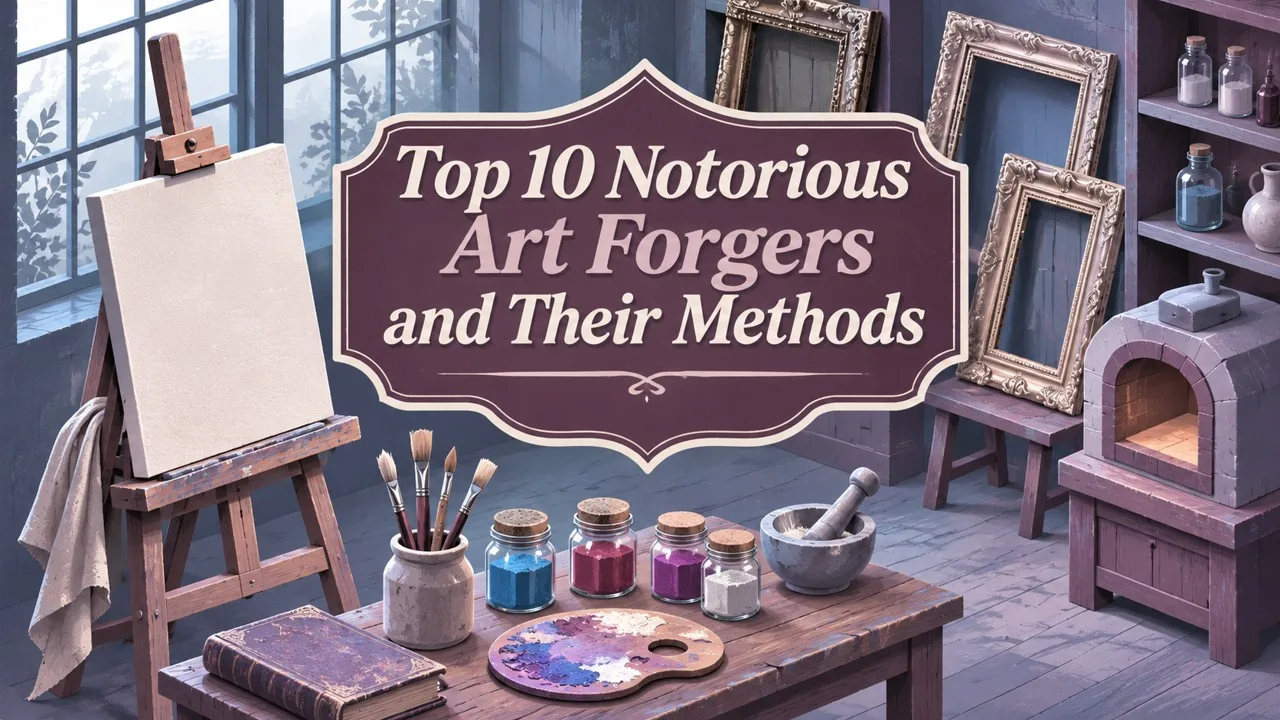
From a young Michelangelo to the man who fooled Hermann Goering, ten notorious art forgers and the clever techniques they used to deceive experts. Art forgery is almost as old as the art market itself. Wherever collectors are willing to pay high prices for works by famous artists, someone will be tempted to supply them with convincing fakes.
The most successful forgers combined real artistic skill with an understanding of how experts judge authenticity. They studied the materials, techniques and habits of the artists they imitated, and some invented entire histories for their fake works.
Many forgers also understood that a convincing story matters as much as a convincing painting. A forged letter, an old label or a believable account of where a work had been for decades could persuade buyers to overlook doubts.
Some of the forgers below fooled museums and wealthy collectors for years. Others were caught through scientific analysis, careless mistakes or the suspicions of a single attentive expert.
Several became celebrities after their exposure. Their stories were told in books, documentaries and films, and some of their fakes now command prices of their own as curiosities.
It is important to remember that forgery caused real harm. Buyers lost large sums of money, and fake works could distort the historical record of an artist's career.
The cases below range from the Renaissance to the twenty-first century. They are arranged roughly in chronological order and focus on cases that are well documented, including through court proceedings or the forgers' own confessions.
Together, they reveal the methods forgers used and the techniques experts developed to catch them, from chemical analysis of paint to careful research into a work's history.
Key Facts
| # | Forger | Specialty | Method |
|---|---|---|---|
| 1 | Michelangelo Buonarroti | Ancient Roman sculpture | Artificially aging a new marble statue |
| 2 | Han van Meegeren | Johannes Vermeer | New paintings hardened with Bakelite |
| 3 | Elmyr de Hory | Modern masters such as Picasso and Matisse | Quick drawings and paintings in modern styles |
| 4 | Tom Keating | Samuel Palmer and other British artists | Hidden time bombs in the paint |
| 5 | Eric Hebborn | Old master drawings | Using old paper and carefully mixed inks |
| 6 | John Myatt and John Drewe | Twentieth-century artists | Household paint and forged provenance records |
| 7 | Wolfgang Beltracchi | Early twentieth-century expressionists | New works supported by fake collection labels |
| 8 | Shaun Greenhalgh | Ancient sculpture and modern art | Working from a family home in Bolton |
| 9 | Mark Landis | Works in many styles | Donating fakes to museums |
| 10 | The Knoedler forgeries | Abstract expressionist paintings | Works painted by an unknown artist in New York |
1. The Young Michelangelo's Cupid
Around 1496, the young Michelangelo carved a marble figure of a sleeping Cupid. According to early accounts, the statue was treated to make it look like an ancient Roman work, reportedly by burying it or otherwise aging its surface, and was sold through a dealer as an antique [1].
The buyer, Cardinal Raffaele Riario, eventually discovered that the work was not ancient. Rather than being outraged, he was reportedly so impressed by the young sculptor's skill that he invited Michelangelo to Rome [1].
Accounts differ on how much Michelangelo himself knew about the deception, and the statue itself has since been lost. The episode is often cited as one of the earliest famous examples of art forgery and helped launch the career of one of history's greatest artists.
Related: Top 10 Most Expensive Paintings Ever Sold
2. The Man Who Fooled Goering
The Dutch painter Han van Meegeren created paintings in the style of the seventeenth-century master Johannes Vermeer. Instead of copying existing works, he invented new religious scenes, which experts were eager to believe were lost early works by Vermeer [2].
To make his paintings appear centuries old, van Meegeren mixed his paints with a synthetic resin called Bakelite and baked them so that they hardened and cracked like old paint. One of his works was sold to the Nazi leader Hermann Goering [2].
After the Second World War, van Meegeren was arrested for selling a national treasure to the enemy. To avoid a charge of collaboration, he confessed to forgery and painted another work in the style of Vermeer under supervision. He was convicted of forgery in 1947 but died before serving his sentence.
3. A Forger Who Became a Film Subject
The Hungarian-born painter Elmyr de Hory produced works in the styles of modern artists such as Pablo Picasso, Henri Matisse and Amedeo Modigliani. He is believed to have sold large numbers of forgeries through dealers over several decades [3].
Because modern styles were often more spontaneous than old master techniques, de Hory could produce drawings and paintings quickly. His dealers sometimes added forged documents to support the works' authenticity [3].
De Hory became the subject of a biography by the writer Clifford Irving and featured in Orson Welles's 1973 film F for Fake, a playful documentary about deception. He died in 1976 on the Spanish island of Ibiza while facing possible extradition to France.
4. The Forger Who Left Clues
The British art restorer Tom Keating claimed to have created many works in the styles of more than a hundred artists, including the English painter Samuel Palmer. He resented the art establishment and said he wanted to expose dealers who exploited artists [4].
Keating deliberately planted what he called time bombs in his works. He sometimes wrote messages in lead white paint on the canvas before painting over them, knowing they would show up under X-rays, and he added anachronistic materials or details [4].
His fakes were exposed in 1976 after questions were raised about a group of Palmer works. His trial was halted because of his poor health. He later presented a popular television series demonstrating the techniques of great painters.
Related: Top 10 Most Popular Artists of All Time
5. The Master of Old Master Drawings
The British artist Eric Hebborn specialized in drawings in the style of old masters. He claimed to have produced around a thousand forgeries, many of which were sold through major auction houses and dealers [5].
Hebborn often used genuine old paper taken from antique books and mixed his own inks according to historical recipes. He argued that if experts could not tell the difference, the fault lay with the experts rather than with him [5].
He wrote an autobiography, Drawn to Trouble, and a guide called The Art Forger's Handbook. He died in Rome in 1996 after suffering a head injury, under circumstances that have never been fully explained.
6. Fake Paintings and Fake Archives
The British painter John Myatt created works in the styles of twentieth-century artists such as Marc Chagall, Alberto Giacometti and Ben Nicholson. He reportedly used household emulsion paint, sometimes mixed with lubricating jelly, which dried quickly [6].
His partner, John Drewe, built false histories for the paintings. Drewe gained access to the archives of institutions including the Tate and inserted forged documents and catalogs to make the fakes appear to have a respectable history [6].
The scheme was uncovered in the 1990s. Myatt was sentenced to a year in prison, while Drewe received a longer sentence. After his release, Myatt continued painting openly as a maker of what he called genuine fakes.
7. Inventing Lost Masterpieces
The German forger Wolfgang Beltracchi did not copy existing paintings. Instead, he painted works that artists such as Max Ernst and Heinrich Campendonk might have created but never did, often based on titles of lost works [7].
To support the paintings' histories, he and his wife, Helene, created labels suggesting they came from a famous prewar collection. Helene was reportedly photographed in old-fashioned clothes to create a picture that appeared to show her grandmother with the paintings [7].
Related: Top 10 Iconic Statues Through the Ages
The scheme unraveled when analysis of a painting attributed to Campendonk revealed titanium white pigment, which was not available in the form used at the date claimed for the work. Beltracchi was sentenced in 2011 to six years in prison.
8. The Garden Shed Forger
Shaun Greenhalgh worked from his family's home in Bolton, England, creating a remarkable range of fakes, from ancient sculptures to modern paintings. His elderly parents helped sell the works, presenting them as items from family collections [8].
His most famous forgery was the Amarna Princess, a statue in the style of ancient Egypt. In 2003, Bolton Museum bought it for about four hundred and forty thousand pounds, believing it to be genuine [8].
The family was caught after experts at the British Museum noticed errors in the inscriptions on fake Assyrian reliefs they offered. Greenhalgh was jailed in 2007. His story was later told in books and documentaries.
9. The Forger Who Gave Works Away
The American artist Mark Landis spent decades giving forged works to museums across the United States. Unlike most forgers, he did not sell them, and he often posed as a philanthropist or priest donating art in memory of a relative [9].
Landis used inexpensive materials, sometimes printing images and coloring over them. His deception was uncovered after a museum registrar became suspicious and began tracking his donations to other institutions [9].
Because he did not take money for the works, he was not prosecuted. His story was the subject of the 2014 documentary Art and Craft, and museums later held exhibitions of his fakes.
10. A Gallery Closed by Fakes
The Knoedler gallery, one of the oldest art dealers in New York, closed in 2011 amid a scandal over forged paintings attributed to abstract expressionists such as Mark Rothko and Jackson Pollock [10].
Related: Top 10 Most Famous Paintings in the World
The works had been supplied by a dealer named Glafira Rosales, who later pleaded guilty to charges related to the scheme. Prosecutors said the paintings had been created by a painter living in New York, who left the United States for China before he could be tried [10].
Buyers had paid millions of dollars for the works. The case led to several lawsuits and was later explored in a documentary, highlighting how even prestigious galleries could be deceived.
Conclusion
Art forgery has been practiced for centuries, from Renaissance workshops to modern studios. The forgers in these cases combined artistic talent with a deep understanding of how experts and buyers think.
Many of them were eventually caught through scientific analysis, such as tests on pigments, or through careful investigation of a work's history. Others were undone by small mistakes that an attentive expert noticed.
Their stories have changed how museums and dealers approach authentication. Today, experts rely on a combination of art history, scientific testing and research into provenance.
Despite these advances, forgery remains a concern in the art world. As long as famous works command high prices, there will be people willing to try to fake them.
The cases also raise questions about what we value in art, whether it is the skill of the work itself or the name attached to it.
Some museums now display known forgeries alongside genuine works, using them to teach visitors how experts spot fakes and why careful research matters.
- ^ [1] Accounts of Michelangelo's Sleeping Cupid. Wikipedia: Sleeping Cupid Wikipedia: Art forgery
- ^ [2] Accounts of Han van Meegeren. Wikipedia: Han van Meegeren Wikipedia: Johannes Vermeer
- ^ [3] Accounts of Elmyr de Hory. Wikipedia: Elmyr de Hory Wikipedia: F for Fake
- ^ [4] Accounts of Tom Keating. Wikipedia: Tom Keating Wikipedia: Samuel Palmer
- ^ [5] Accounts of Eric Hebborn. Wikipedia: Eric Hebborn Wikipedia: Art forgery
- ^ [6] Accounts of John Myatt. Wikipedia: John Myatt Wikipedia: Art forgery
- ^ [7] Accounts of Wolfgang Beltracchi. Wikipedia: Wolfgang Beltracchi Wikipedia: Heinrich Campendonk
- ^ [8] Accounts of Shaun Greenhalgh. Wikipedia: Shaun Greenhalgh Wikipedia: Amarna Princess
- ^ [9] Accounts of Mark Landis. Wikipedia: Mark Landis Wikipedia: Art forgery
- ^ [10] Accounts of the Knoedler gallery. Wikipedia: Knoedler Wikipedia: Mark Rothko


















Discussion
Log in with