




Top 10 Facts About the U.S. Colonial Era in the Philippines
 By Dhiraj Sharma · Published
Share Post
Loading…
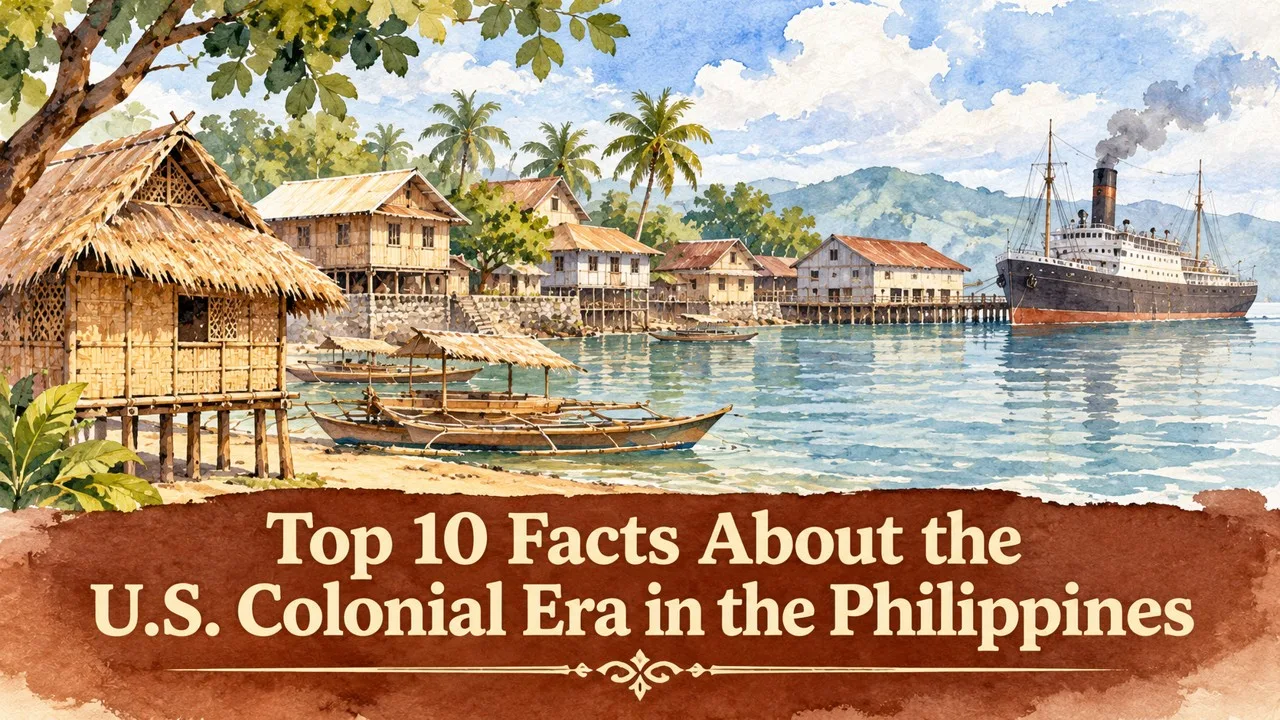
From a twenty million dollar treaty to a bitter war, English schools and a promised independence, ten facts about the US colonial era in the Philippines. For nearly half a century, from 1898 to 1946, the Philippines was under the control of the United States. It was the largest colony the United States ever held, and the period left a deep mark on both countries.
The era began at the end of more than three centuries of Spanish rule. Filipino revolutionaries had been fighting Spain and declared independence in 1898, but their hopes were dashed when the United States took control of the islands after defeating Spain in war.
What followed was a complex and often painful period. It included a brutal war, the introduction of public schools and the English language, the development of new political institutions and, eventually, a long transition toward independence.
Historians in both countries continue to debate the legacy of American rule. Some emphasize the violence of conquest and the economic dependence it created, while others point to the growth of education and democratic institutions. Most agree that the period was full of contradictions.
The ten facts below cover the beginning of American rule, the war that followed, the changes in education and government, the experiences of Filipinos who moved to the United States and the road to independence. Where figures are uncertain or disputed, that is noted.
Together, they help explain why the relationship between the Philippines and the United States remains close, complicated and sometimes tense to this day.
The period also shaped modern Filipino identity in lasting ways. English remains an official language, American popular culture is widely followed and millions of people of Filipino descent live in the United States, all legacies of the colonial era.
At the same time, many Filipinos remember the era through the stories of those who resisted American rule, and those memories continue to shape how the period is taught in schools today.
Key Facts
| # | Fact | When | Where |
|---|---|---|---|
| 1 | The Treaty of Paris | 1898 | Paris, France |
| 2 | The Philippine-American War | 1899 to 1902 and later | Across the Philippines |
| 3 | The bells of Balangiga | 1901 to 2018 | Samar, Philippines |
| 4 | The Thomasites | 1901 onward | Across the Philippines |
| 5 | The Philippine Assembly | 1907 | Manila |
| 6 | Baguio | 1900s | Northern Luzon |
| 7 | Migration to Hawaii and the mainland | 1906 onward | Hawaii and the United States |
| 8 | The Jones Act and the Commonwealth | 1916 to 1935 | Washington and Manila |
| 9 | The Japanese invasion | 1941 to 1945 | Across the Philippines |
| 10 | The Republic of the Philippines | 1946 | Manila |
1. Bought for Twenty Million Dollars
The Spanish-American War of 1898 began over Cuba, but it quickly spread to Spain's other colonies. In May 1898, an American fleet defeated the Spanish navy in Manila Bay, and American troops later occupied the city of Manila [1].
In the Treaty of Paris, signed in December 1898, Spain gave up control of the Philippines, Puerto Rico and Guam to the United States. As part of the agreement, the United States paid Spain twenty million dollars [1].
Filipino revolutionaries, who had declared independence in June 1898 and set up their own government, were not part of the negotiations. Many felt betrayed, and tensions between Filipino forces and American troops grew quickly.
Related: Abraham Lincoln: The 16th President Who Preserved the Union
2. A Bitter War Followed
In February 1899, fighting broke out between American and Filipino forces near Manila. The conflict, known as the Philippine-American War, became a long and bitter struggle as Filipino fighters turned to guerrilla tactics [2].
The United States officially declared the war over in 1902, but resistance continued in some regions for years afterward. Thousands of American soldiers and many more Filipino fighters died, and estimates of civilian deaths from violence, famine and disease range widely, from tens of thousands to several hundred thousand [2].
The war included documented atrocities, and it sparked fierce debate in the United States. The Anti-Imperialist League, whose members included prominent writers and politicians, argued that ruling the Philippines went against American principles.
3. Church Bells Taken as War Trophies
In September 1901, Filipino fighters launched a surprise attack on American soldiers stationed in the town of Balangiga, on the island of Samar, killing many of them. The attack was one of the worst American losses of the war [3].
The American response was severe. Troops carried out harsh reprisals across Samar, and an American general was later court-martialed over orders he gave during the campaign. American soldiers also took the church bells of Balangiga as war trophies [3].
For more than a century, the bells remained in the United States, and Filipinos repeatedly asked for their return. In 2018, the bells were finally returned to the Philippines, in a ceremony seen as an important gesture of reconciliation.
4. American Teachers Arrived by Ship
The American colonial government made public education a priority. In 1901, hundreds of American teachers arrived in the Philippines aboard a ship called the USAT Thomas, and they became known as the Thomasites [4].
The teachers set up schools across the islands, teaching in English and training Filipino teachers. Public education expanded rapidly, and literacy rates grew during the colonial period [4].
The spread of English had lasting effects. Today, English is one of the official languages of the Philippines and is widely used in government, business and education. Critics have noted that the schools also promoted American values and history, sometimes at the expense of Filipino culture.
Related: Top 10 Strange Effects of the Year Without a Summer
5. An Elected Assembly
In 1907, elections were held for the Philippine Assembly, a legislature with members chosen by Filipino voters. It shared power with an appointed commission dominated by Americans, and voting was limited to a small, educated part of the population [5].
The assembly was one of the earliest elected legislatures in Asia, and it gave Filipino politicians experience in government. Leaders such as Sergio Osmena and Manuel Quezon rose to prominence through it [5].
Over the following decades, Filipinos gained more control over their government. The assembly helped build the political institutions that would later serve the independent republic.
6. A Hill Station Planned by a Famous Architect
American officials wanted a cool retreat from the heat of Manila, as the British had in their hill stations in India. They chose a site in the mountains of northern Luzon, where the town of Baguio was developed [6].
The American architect and planner Daniel Burnham, famous for his plans for Chicago, drew up plans for both Manila and Baguio in the early twentieth century. Baguio became the summer capital of the Philippines, where officials moved during the hottest months [6].
Building the road to Baguio was difficult and expensive. Today, the city is a popular destination known for its cool climate, pine trees and parks, some of which reflect Burnham's original plans.
7. Filipinos Were Nationals but Not Citizens
During the colonial era, Filipinos were classified as American nationals rather than citizens. They could travel to the United States without the restrictions faced by many other Asian immigrants, but they did not have the full rights of citizens [7].
From 1906, large numbers of Filipino workers, known as sakadas, were recruited to work on sugar and pineapple plantations in Hawaii. Others moved to the mainland, especially California, where they worked on farms, in canneries and in service jobs [7].
Related: Top 10 Most Bizarre Phobias: Strange Fears That Exist
Filipino workers often faced discrimination and violence, and they played an important role in labor movements. The law changed in 1934, when Filipino immigration to the United States was sharply limited as part of the plan for independence.
8. Independence Was Promised
In 1916, the United States Congress passed the Jones Act, which promised independence to the Philippines once a stable government was established. It also created an elected Philippine Senate, giving Filipinos more control over lawmaking [8].
In 1934, the Tydings-McDuffie Act set a timetable for independence. It created the Commonwealth of the Philippines, with its own constitution and an elected president, and promised full independence after ten years [8].
The Commonwealth was established in 1935, with Manuel Quezon as its first president. During this period, Filipinos ran most domestic affairs, while the United States kept control of foreign policy and defense.
9. War Interrupted the Transition
In December 1941, only hours after the attack on Pearl Harbor, Japan attacked the Philippines. American and Filipino forces fought together but were eventually forced to surrender in 1942 [9].
After the surrender on the Bataan Peninsula, thousands of prisoners were forced to march to prison camps in the Bataan Death March, during which many died from abuse, exhaustion and disease. The Japanese occupation was harsh, and many Filipinos joined guerrilla resistance groups [9].
American forces returned in 1944, and the battle to retake Manila in 1945 left much of the city in ruins. The war caused enormous loss of life and destruction across the islands.
10. Independence Came on July 4
The Philippines became fully independent on July 4, 1946, as promised by the Tydings-McDuffie Act. The date was chosen to coincide with the American Independence Day [10].
Related: Top 10 Oldest Buildings in the World
The new republic kept close ties with the United States, including trade agreements and American military bases, which some Filipinos criticized as limiting the country's independence. The last major American bases closed in the early 1990s [10].
In 1962, the Philippine government moved its Independence Day celebration to June 12, the anniversary of the 1898 declaration of independence from Spain. July 4 is now marked as Philippine-American Friendship Day.
Conclusion
The American colonial era in the Philippines was a period of conflict, change and contradiction. It began with a war of conquest and ended with independence, and in between it transformed education, politics and society.
Its legacy remains visible today, in the use of English, in political institutions and in the large Filipino community in the United States. It is also remembered in the memory of the war and the resistance against American rule.
For both countries, understanding this history is important. It helps explain their close relationship, as well as the tensions that have sometimes arisen between them.
The story of the colonial era reminds us that history is rarely simple. It contains both suffering and progress, and different people remember it in different ways.
Above all, it is a story about Filipinos' long struggle for independence, which began long before 1898 and was finally achieved in 1946.
Museums, monuments and archives in both countries preserve records of the period, from photographs of the Thomasites to the returned bells of Balangiga. Scholars continue to uncover letters, diaries and official reports that add new detail to the story. Each new discovery helps build a fuller and more honest picture of a period that shaped the lives of millions of people on both sides of the Pacific.
- ^ [1] Accounts of the Treaty of Paris. Wikipedia: Treaty of Paris (1898) Wikipedia: Spanish-American War
- ^ [2] Accounts of the Philippine-American War. Wikipedia: Philippine-American War Wikipedia: American Anti-Imperialist League
- ^ [3] Accounts of Balangiga. Wikipedia: Balangiga massacre Wikipedia: Bells of Balangiga
- ^ [4] Accounts of the Thomasites. Wikipedia: Thomasites Wikipedia: Philippine English
- ^ [5] Accounts of the Philippine Assembly. Wikipedia: Philippine Assembly Wikipedia: Insular Government
- ^ [6] Accounts of Baguio. Wikipedia: Baguio Wikipedia: Daniel Burnham
- ^ [7] Accounts of Filipino migration. Wikipedia: Sakadas Wikipedia: Filipino Americans
- ^ [8] Accounts of the road to independence. Wikipedia: Jones Law Wikipedia: Tydings-McDuffie Act
- ^ [9] Accounts of the Second World War. Wikipedia: Bataan Death March Wikipedia: Commonwealth of the Philippines
- ^ [10] Accounts of independence. Wikipedia: Treaty of Manila (1946) Wikipedia: Independence Day (Philippines)





















Discussion
Log in with