






 By
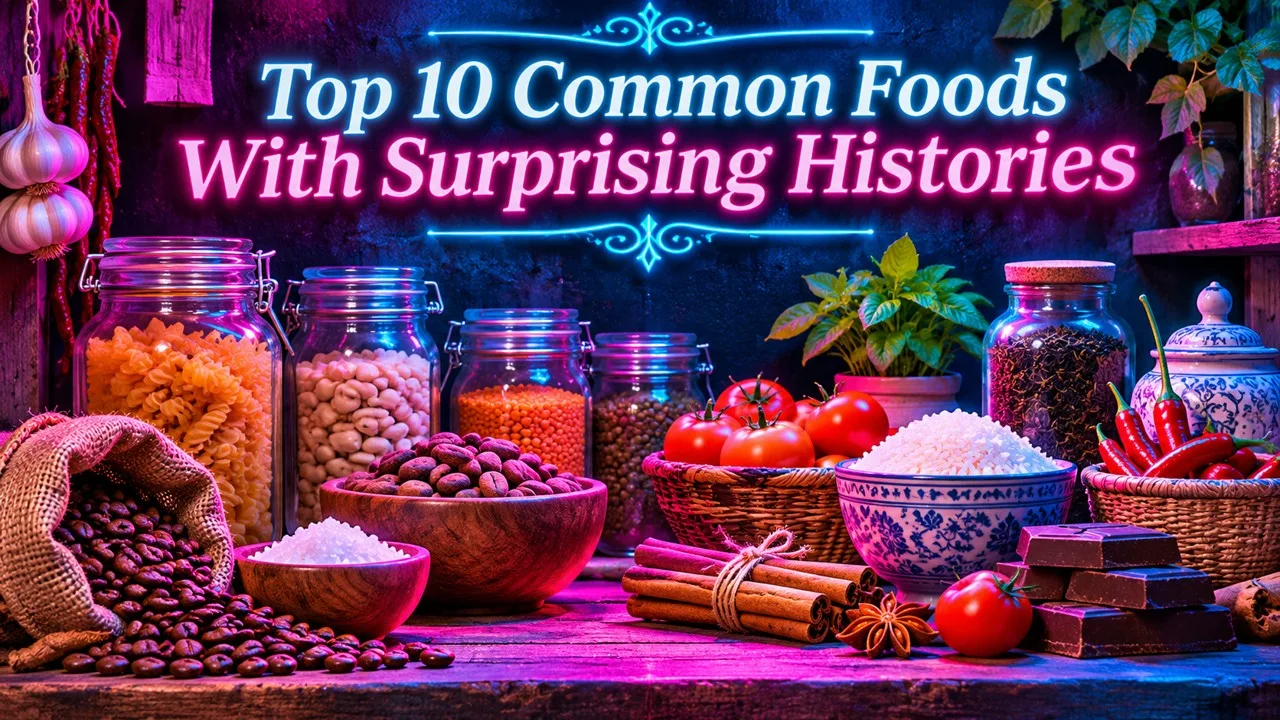
Ketchup began as a fish sauce, fortune cookies came from Japan and sliced bread was once banned. Ten everyday foods with surprising histories. Many of the foods we eat every day seem so ordinary that it is hard to imagine they have a history at all. Ketchup sits in the fridge, bread comes sliced in a bag and avocados are piled high in every supermarket. Yet behind each of these foods lies a story that few people know.
Some foods started out as something completely different. Others were once rare luxuries, available only to the rich, or were invented by accident, by entrepreneurs or by doctors who believed they had found a cure for disease.
Many also traveled a long way before reaching our plates. Ingredients and recipes crossed oceans with traders, migrants and colonizers, changing along the way to suit new tastes and new markets.
Some foods have been surrounded by legends that turn out to be untrue. Popular stories about where they came from are often more colorful than the real history, which can be harder to trace but just as interesting.
The ten foods below are all common in many parts of the world today. Each has a history that is surprising, whether because of where it started, how it changed or the strange episodes it went through along the way.
Where the origins are uncertain or disputed, that is noted. Food history is full of competing claims, and historians often have to piece together evidence from old cookbooks, advertisements, patents and newspapers.
Taken together, these stories show that what we eat is shaped not only by taste and nutrition but also by trade, technology, politics and chance. The next time you open the fridge, you may look at its contents a little differently.
Key Facts
| # | Food | Surprising history | Where |
|---|---|---|---|
| 1 | Ketchup | Fermented fish sauce | Southeast Asia and Britain |
| 2 | Fortune cookies | Japanese crackers | Japan and California |
| 3 | Croissant | Austrian kipferl | Vienna and Paris |
| 4 | Bagel | Gifts after childbirth | Krakow, Poland |
| 5 | Peanut butter | Health food for patients | North America |
| 6 | Ice cream cone | Earlier than the 1904 fair | Europe and the United States |
| 7 | Hass avocado | One backyard tree | California |
| 8 | Sliced bread | Banned in wartime | Missouri, United States |
| 9 | Pineapple | Luxury display item | Europe and Britain |
| 10 | Margarine | Dyed pink by law | France and the United States |
1. It Began as a Fish Sauce
The word ketchup is thought by many scholars to come from a word in the Hokkien Chinese language for a fermented fish sauce. Traders and sailors encountered such sauces in Southeast Asia and brought the idea back to Europe in the late seventeenth and eighteenth centuries [1].
In Britain, cooks made their own versions of ketchup using ingredients such as mushrooms, walnuts, oysters and anchovies. These sauces were thin and dark, and they were very different from the sweet red condiment known today [1].
Tomato ketchup recipes appeared in the United States in the early nineteenth century. For a time in the 1830s, tomato extracts were even sold as patent medicines that claimed to cure various ailments. Later in the century, companies such as Heinz turned tomato ketchup into a mass-produced product with a thick, sweet recipe.
Related: Top 10 Common Misconceptions in Food History
2. It Came From Japan, Not China
Fortune cookies are closely associated with Chinese restaurants in the United States, but they are rarely seen in China. Researchers have traced their likely origins to Japan, where bakeries near Kyoto made a similar cracker containing a small fortune, known as tsujiura senbei [2].
In the early twentieth century, Japanese immigrants in California made and sold fortune cookies, and several people in San Francisco and Los Angeles have been credited with introducing them. The exact inventor remains a matter of debate [2].
During the Second World War, many Japanese Americans were forced into internment camps, and Chinese American businesses took over much of the fortune cookie trade. By the second half of the century, the cookies had become a standard part of Chinese American restaurant meals.
3. Its Roots Are in Austria
The croissant is one of the most famous symbols of French baking, but its ancestor is the Austrian kipferl, a crescent-shaped roll that has been made for centuries. A popular legend claims the shape was created to celebrate the defeat of the Ottoman siege of Vienna in 1683, but historians have found no evidence for this story [3].
In the nineteenth century, an Austrian entrepreneur opened a Viennese bakery in Paris, introducing kipferl and other Austrian breads to French customers. The bakery inspired many imitators [3].
The flaky croissant made with laminated dough, in which butter is folded into the pastry many times, developed in France later, around the early twentieth century. It became a staple of French breakfasts and spread around the world.
4. It Was Mentioned in Rules About Childbirth
The earliest known written mention of bagels comes from community regulations in Krakow, Poland, in 1610. The rules mentioned bagels in connection with gifts given to women who had given birth [4].
Bagels became a common food among Jewish communities in Eastern Europe, and immigrants brought them to North America in the late nineteenth and early twentieth centuries. In New York City, bagel bakers formed a powerful trade union that controlled much of the production for decades [4].
In the mid-twentieth century, the introduction of machines and frozen bagels sold in supermarkets helped make bagels popular across the United States and beyond. Today, they are eaten around the world with a huge variety of toppings.
Related: Top 10 Historical Food Fads That Left a Mark
5. It Was Promoted as Health Food
People in South America ground peanuts into pastes long before Europeans arrived. But modern peanut butter was developed in North America in the late nineteenth century, when inventors sought ways to process peanuts into a smooth spread [5].
A Canadian chemist patented a process for making peanut paste in the 1880s, and the American doctor John Harvey Kellogg patented a process in the 1890s and promoted the food as a nutritious protein for patients at his health sanitarium [5].
In the early twentieth century, new methods helped prevent the oil from separating, making the spread more convenient. Peanut butter became a staple in American homes, especially during the Depression and the Second World War, when it was a cheap source of protein.
6. Its Famous Origin Story Is Disputed
A popular story says that the ice cream cone was invented at the 1904 World's Fair in St. Louis, when an ice cream seller ran out of dishes and a neighboring vendor rolled a waffle-like pastry into a cone. Several people later claimed credit for this moment [6].
In fact, edible cones for ice cream appeared earlier. Recipes for cones made of pastry or biscuit appeared in European cookbooks in the nineteenth century, and an Italian immigrant in New York was granted a patent for a mold for making edible cups in 1903 [6].
The 1904 fair certainly helped popularize the cone in the United States, and within a few years, machines were producing cones in large numbers. Today, it is hard to imagine ice cream without them.
7. Every One Came From a Single Tree
The Hass avocado is the most widely grown avocado variety in the world. All Hass avocados are descended from a single tree, grown from a seed in the backyard of a California postal worker named Rudolph Hass in the 1920s [7].
Related: Top 10 Most Popular Food Rivalries in the World
Hass noticed that the fruit from his tree had a rich flavor and a dark, bumpy skin. He patented the variety in 1935, one of the earliest patents for a tree, and growers began to propagate it by grafting branches onto other trees [7].
The original tree lived until 2002, when it died of root rot. By then, its descendants were growing in orchards around the world, and the Hass variety had come to dominate the avocado market.
8. It Was Briefly Banned
The first commercial bread-slicing machine was put into use in 1928 at a bakery in Chillicothe, Missouri. It was invented by Otto Rohwedder, who had worked on the idea for years. Sliced bread was advertised as a great step forward in convenience [8].
Sliced bread quickly became popular, especially after large bakeries began selling pre-sliced, wrapped loaves. It helped boost sales of toasters and spreads, and the phrase the best thing since sliced bread entered the language [8].
In early 1943, during the Second World War, the United States government banned the sale of sliced bread, reportedly to save resources such as wax paper and metal used in slicing machines. The ban was very unpopular and was lifted after only a few months.
9. It Was a Status Symbol
When Christopher Columbus and his crew encountered pineapples in the Caribbean in 1493, they were impressed by the sweet fruit. Pineapples were difficult to transport to Europe without spoiling, and growing them in the cool European climate was a challenge [9].
Wealthy Europeans built heated greenhouses, sometimes called pineries, to grow the fruit. In Britain, pineapples became a symbol of wealth and hospitality, displayed at parties and sometimes reportedly rented out rather than eaten [9].
The pineapple shape appeared in architecture and decoration, including a famous building in Scotland topped with a giant stone pineapple. In the late nineteenth and early twentieth centuries, plantations and canning made pineapples affordable for ordinary people.
Related: Top 10 Famous Foods Born from Kitchen Mistakes
10. It Was Dyed Pink by Law
Margarine was invented in France in 1869 by the chemist Hippolyte Mege-Mouries, who was responding to a prize offered by Napoleon III for a cheap substitute for butter. His original version was made from beef fat and milk [10].
When margarine spread to the United States, the dairy industry fought hard against it. Several states passed laws restricting its sale, and a few required margarine to be dyed pink so that it could not be mistaken for butter, though such rules were challenged in court [10].
Many states banned margarine colored yellow, so manufacturers sold it white with a packet of coloring that customers could mix in at home. Wisconsin, a major dairy state, did not allow the sale of yellow margarine until 1967.
Conclusion
These foods show that even the most ordinary items in our kitchens have unexpected histories. Ketchup began as a fish sauce, fortune cookies came from Japan and margarine was once dyed pink.
Their stories reveal how food is shaped by trade, migration, technology and politics. Ingredients and recipes travel across the world, changing as they adapt to new places and new tastes.
They also show how legends can grow around food. Many popular origin stories are more colorful than accurate, and historians continue to uncover the real history.
The next time you spread peanut butter on sliced bread or crack open a fortune cookie, it may be worth remembering the long and surprising journey that brought these foods to your table.
Food history, after all, is human history, told one bite at a time.
- ^ [1] Accounts of ketchup. Wikipedia: ketchup Wikipedia: fish sauce
- ^ [2] Accounts of fortune cookies. Wikipedia: fortune cookie Wikipedia: tsujiura senbei
- ^ [3] Accounts of the croissant. Wikipedia: croissant Wikipedia: kipferl
- ^ [4] Accounts of the bagel. Wikipedia: bagel Wikipedia: Krakow
- ^ [5] Accounts of peanut butter. Wikipedia: peanut butter Wikipedia: John Harvey Kellogg
- ^ [6] Accounts of the ice cream cone. Wikipedia: ice cream cone Wikipedia: Louisiana Purchase Exposition
- ^ [7] Accounts of the Hass avocado. Wikipedia: Hass avocado Wikipedia: avocado
- ^ [8] Accounts of sliced bread. Wikipedia: sliced bread Wikipedia: Otto Frederick Rohwedder
- ^ [9] Accounts of the pineapple. Wikipedia: pineapple Wikipedia: Dunmore Pineapple
- ^ [10] Accounts of margarine. Wikipedia: margarine Wikipedia: Hippolyte Mege-Mouries





















Discussion
Log in with