






 By
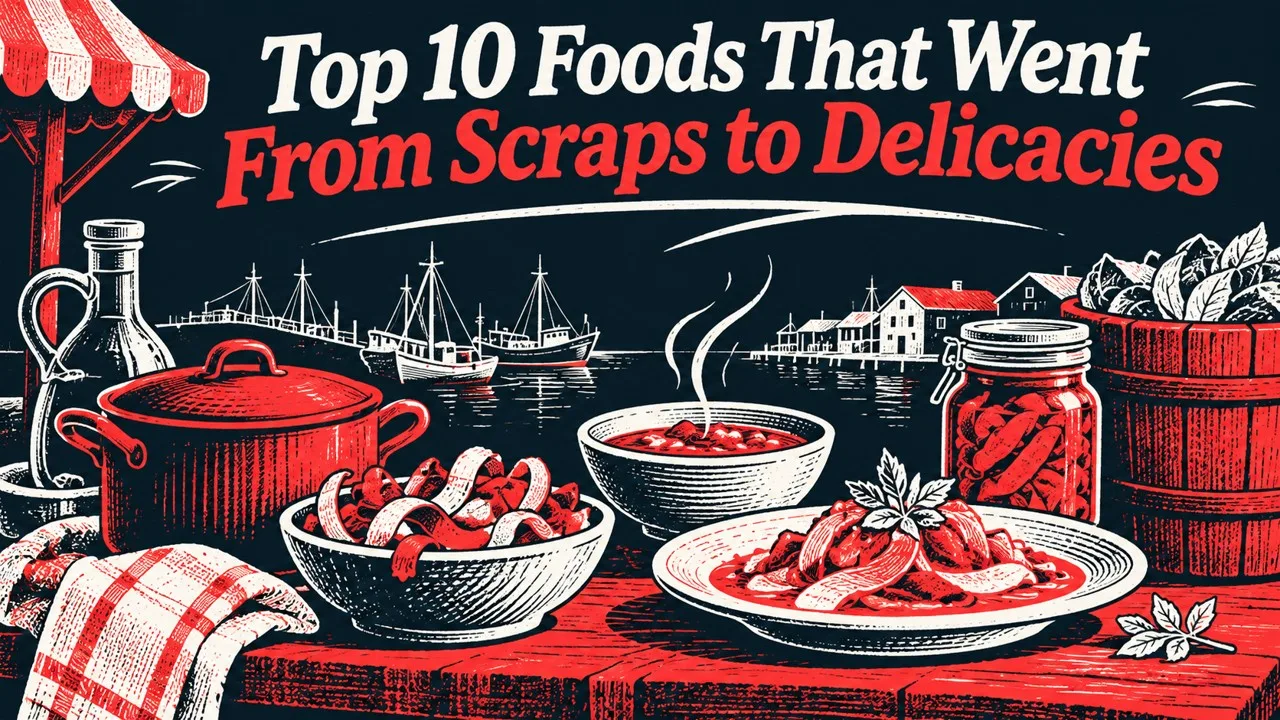
Some luxury foods began as cheap fare for the poor, from lobster and oysters to caviar once served free in bars, chicken wings and slow-cooked brisket. Food prices and food status change over time, sometimes dramatically. A dish eaten by the poorest people in one century can become an expensive treat in the next. The reverse also happens, but the rise of humble foods to luxury status is one of the most surprising patterns in culinary history.
Several forces drive these changes. Some foods became rare as people overfished or overharvested them, pushing up their prices. Others were transformed by railways, refrigeration and canning, which carried them to new markets. Still others were rediscovered by chefs and food writers who turned peasant cooking into restaurant fashion.
The ten foods below are lobster, oysters, caviar, pizza, bouillabaisse, ribollita, chicken wings, brisket, bone marrow and monkfish. Each began as something cheap, plentiful or even discarded, and each is now sold at prices its early eaters would have found hard to believe.
Some popular stories about these foods are exaggerated. Where a tale is widely repeated but poorly documented, such as claims about servants refusing to eat lobster too often, that is noted.
These histories also say something about how people value food. Scarcity, fashion and the stories attached to a dish often matter as much as its taste, and the same plate can signal poverty in one era and status in another.
Key Facts
| # | Food | Humble past | What changed |
|---|---|---|---|
| 1 | Lobster | So plentiful in colonial New England that it was used as bait and fertilizer | Canning, railroads and scarcity raised its status |
| 2 | Oysters | Cheap street food in nineteenth-century cities | Overharvesting and pollution made them scarce |
| 3 | Caviar | Once abundant from American rivers | Collapse of sturgeon populations made it rare |
| 4 | Pizza | Cheap street food in Naples | Immigration and global chains spread it worldwide |
| 5 | Bouillabaisse | Made with bony fish fishermen could not sell | Became a celebrated restaurant dish |
| 6 | Ribollita | Leftover bread and vegetables in Tuscany | Celebrated by chefs and food writers |
| 7 | Chicken wings | Cheap cuts often used for soup | Buffalo wings became a national craze |
| 8 | Brisket | Cheap, tough beef from the chest | Slow smoking made it a prized barbecue meat |
| 9 | Bone marrow | Eaten by early humans and the poor | Revived as a fashionable restaurant dish |
| 10 | Monkfish | Often discarded by fishermen | Demand grew as a poor man's lobster |
1. Food for Prisoners
In colonial New England, American lobsters were extraordinarily plentiful. Early accounts describe them washing up on shores after storms in piles. They were used as bait and fertilizer, and were associated with poverty, often eaten by the poor and reportedly fed to prisoners [1].
A widely repeated story claims that servants in Massachusetts had contracts limiting how often they could be served lobster. Historians have found little firm evidence for such contracts, so the tale should be treated with caution, but lobster's low status is well documented [1].
In the nineteenth century, lobster canning and the spread of railroads carried the food to inland cities, where people who had never seen it as cheap began to treat it as a delicacy. As stocks declined and demand rose, prices climbed, and by the early twentieth century lobster had become a symbol of luxury dining.
2. A Street Snack of the Poor
In the nineteenth century, oysters were among the cheapest sources of protein in cities such as London and New York. Street vendors sold them by the dozen, and oyster cellars in New York offered all you could eat for a small fee [2].
Charles Dickens captured their status in The Pickwick Papers, published in 1836 and 1837, where the character Sam Weller remarks that poverty and oysters always seem to go together. Oysters were often added to pies and stews to stretch more expensive meat [2].
Related: Top 10 Modern Dishes That Began as Poor Man's Food
Overharvesting, pollution and disease devastated many oyster beds in the late nineteenth and twentieth centuries. As wild oysters became scarce, prices rose, and they took on their modern image as a luxury food served in elegant restaurants, often with champagne.
3. Free Snacks in Saloons
Today caviar is one of the world's most expensive foods. But in the late nineteenth century, the United States was one of the largest caviar producers in the world, thanks to abundant sturgeon in rivers such as the Delaware and Hudson [3].
American caviar was so plentiful that much of it was exported to Europe, and some was reportedly relabeled as Russian caviar. Salty caviar was reportedly served free in some American saloons, like peanuts, because it encouraged customers to buy more drinks [3].
Overfishing destroyed the American sturgeon fisheries in the early twentieth century. Later, wild sturgeon in the Caspian Sea also declined, and international trade restrictions tightened. Today most caviar comes from farmed sturgeon, and its price reflects its long history of scarcity.
4. A Flatbread for the Workers of Naples
In the eighteenth and nineteenth centuries, pizza was a cheap food for the working poor of Naples. Flatbreads topped with simple ingredients such as tomatoes, garlic, cheese and oil were sold by street vendors and eaten quickly, often for breakfast [4].
A popular story says that in 1889, the pizza maker Raffaele Esposito created a pizza in the colors of the Italian flag for Queen Margherita, giving rise to pizza Margherita. Historians have questioned parts of this story, but it helped give pizza a more respectable image [4].
Italian immigrants brought pizza to the United States, where it became widely popular after the Second World War. Today it is eaten everywhere, from cheap slices to expensive versions made with truffles and rare cheeses, and Neapolitan pizza making has been recognized by UNESCO as intangible cultural heritage.
5. Fishermen's Leftovers
Bouillabaisse is a fish stew from the port city of Marseille in southern France. It began as a meal that fishermen cooked for themselves using the bony rockfish and other species left over after they had sold the more valuable parts of their catch [5].
Related: Top 10 Most Popular Food Rivalries in the World
The stew was cooked in a large pot over a fire, flavored with local herbs, olive oil and later saffron, which was itself expensive. It was usually served in two parts, with the broth poured over bread and the fish served separately [5].
Over time, bouillabaisse became a famous dish of Provencal cuisine, served in restaurants for high prices. In 1980, a group of Marseille restaurateurs created a charter defining the authentic recipe, to protect the dish from cheaper imitations.
6. Soup From Stale Bread
Ribollita is a thick Tuscan soup made from bread, beans and vegetables such as cabbage and kale. Its name means reboiled, because it was traditionally made by reheating leftover soup with stale bread [6].
The dish is a classic example of cucina povera, the cooking of the poor, which makes the most of cheap, seasonal ingredients and wastes as little as possible. Peasant families made it to stretch food through the week [6].
Today ribollita is served in restaurants in Florence and around the world, often as a symbol of authentic Italian home cooking. The rise of interest in rustic and regional food helped turn this frugal meal into something diners seek out deliberately.
7. The Part Once Used for Stock
For much of the twentieth century, chicken wings were among the least valued parts of the bird. They have little meat and were often thrown away or used to make stock [7].
According to the most common story, in 1964 Teressa Bellissimo at the Anchor Bar in Buffalo, New York, fried wings and tossed them in a spicy sauce, serving them with celery and blue cheese dressing. Others in Buffalo have also claimed to have invented the dish, so the exact origin is debated [7].
Related: Top 10 Common Misconceptions in Food History
Buffalo wings spread across the United States in the 1980s and became a staple of sports bars and parties. Demand rose so sharply that wing prices sometimes rose above prices for other cuts, and wing shortages have made national news during major sporting events.
8. A Tough Cut Turned Treasure
Brisket comes from the breast or lower chest of the cow. It contains a lot of connective tissue, which makes it tough unless it is cooked for a long time at low temperatures. For that reason it was traditionally one of the cheaper cuts [8].
Jewish communities in Europe and America braised brisket slowly for holidays, while in Texas, meat markets run by German and Czech immigrants smoked cheap cuts over wood. Central Texas barbecue made smoked brisket famous, and pitmasters developed techniques taking many hours [8].
In the twenty-first century, the popularity of Texas barbecue spread around the world. Lines at famous barbecue restaurants often stretch for hours, and brisket prices have risen accordingly. A cut once bought because it was cheap has become a test of a cook's skill.
9. From Prehistoric Meal to Restaurant Star
People have eaten bone marrow for an extremely long time. Archaeologists have found animal bones broken open with stone tools by early humans, suggesting marrow was a valuable source of fat and calories in prehistoric times [9].
For centuries, marrow bones were cheap and often used by poorer households for soups and stews. In much of the twentieth century, they were seen as old-fashioned food or as something to give to dogs [9].
In 1994, the chef Fergus Henderson opened St. John in London, focusing on so-called nose-to-tail eating, which uses every part of an animal. His roast bone marrow with parsley salad became famous, and marrow bones appeared on fashionable restaurant menus around the world.
Related: Top 10 Most Expensive Restaurants in the World (2026)
10. The Ugly Fish
Monkfish are large, strange-looking fish with huge heads and wide mouths full of teeth. For many years, fishermen in the North Atlantic often discarded them as unwanted bycatch, because their appearance put customers off [10].
The tail meat, however, is firm and sweet, and it was sometimes called poor man's lobster. As chefs began to promote it and diners became more adventurous, demand rose sharply in the late twentieth century [10].
Increased demand led to heavy fishing, and monkfish stocks came under pressure, leading to new fishing rules. Today monkfish appears on menus in fine restaurants, and the liver is especially prized in Japan. A fish once thrown back has become a valued catch.
Conclusion
These foods show how unstable culinary status can be. A dish can move from the tables of the poor to luxury menus because of scarcity, changing tastes, new technology or a clever marketing story.
The changes also have consequences. Rising demand has repeatedly led to overfishing and overharvesting, from sturgeon to oysters and monkfish. The history of these foods is closely tied to the history of the environment that produces them.
Perhaps the next luxury food is already sitting in a discount bin or being thrown away. If history is any guide, a combination of scarcity and fashion could someday make it a delicacy.
- ^ [1] Accounts of lobster history. Wikipedia: American lobster Wikipedia: lobster
- ^ [2] Accounts of oysters in the nineteenth century. Wikipedia: oyster Wikipedia: The Pickwick Papers
- ^ [3] Accounts of caviar and American sturgeon. Wikipedia: caviar Wikipedia: Atlantic sturgeon
- ^ [4] Accounts of pizza history. Wikipedia: history of pizza Wikipedia: pizza Margherita
- ^ [5] Accounts of bouillabaisse. Wikipedia: bouillabaisse Wikipedia: Marseille
- ^ [6] Accounts of ribollita. Wikipedia: ribollita Wikipedia: cucina povera
- ^ [7] Accounts of Buffalo wings. Wikipedia: Buffalo wing Wikipedia: Anchor Bar
- ^ [8] Accounts of brisket and barbecue. Wikipedia: brisket Wikipedia: Texas barbecue
- ^ [9] Accounts of bone marrow as food. Wikipedia: bone marrow (food) Wikipedia: Fergus Henderson
- ^ [10] Accounts of monkfish. Wikipedia: monkfish Wikipedia: bycatch






















Discussion
Log in with